



Roubený dům čp. 305 House
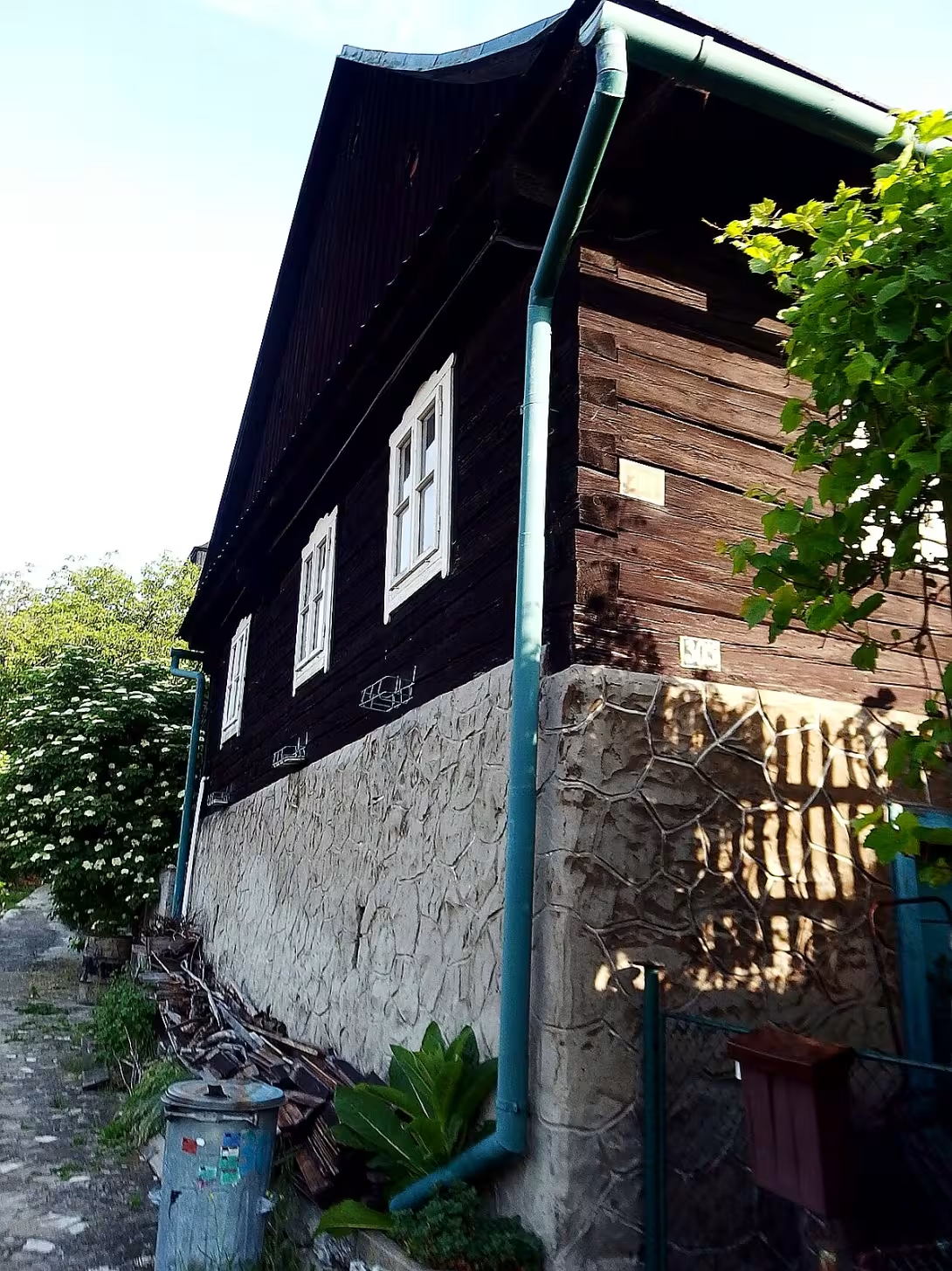
Roubený dům čp. 305 in Štramberk, a village in Nová Jicin district, is an important historical monument from the beginning of the 19th century. This empirical object on Upper Bašta Street belongs to the town monument reserve and represents the original suburban building, which has preserved its authenticity for centuries. The house is characterized by grafted construction with hobs, plastered stone suspicion and vaulted cellars, which contributes to its historical and architectural importance.
Štramberk's history is rich. According to the urbarian from 1558, there were originally 22 houses built in the square with wooden flooring, which had the beanery right, and seven settled in the suburbs. In 1614 there are 28 farms, rectory, church, school and behind the walls of 19 houses. 53 houses were listed under Jesuit rule in 1656. The first brick house No. 10 was built on the square in 1799. In the 1930s there were still twelve wooden houses near the square, among which there is also a grafted house no. 305.
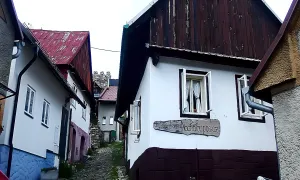
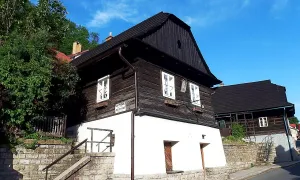
The house No. 305 is an architectural building with a tripartite layout, consisting of two of them, chamber and hall with original furnace. The construction is grafted from hobs and built on a high-plastered stone suspect that equalises the slope inequality. The house has arched cellars with entry from the right side and the shield facade is three-axis with triangular shield, which is vertically lined with lattes. In the heel of the shield there is a submersible and a leaf-shaped decoration. The roof is saddled with sheet metal, which gives the construction a characteristic aesthetic.
House No. 305 was built at the beginning of the 19th century and is attached by a shield side to the city wall, which underlines its historical importance as part of the ancient architecture of Štramberk. In the hall the house has a preserved original furnace which adds to the authenticity and historical value of the building.
In 1855, Štramberk caught a fire, burning down 40 houses and two barns. This incident highlights not only the historical vulnerability of the city, but also the resilience of its architecture, which has been able to maintain itself despite the time challenges.
Today the grafted house No. 305 is not only a monument of historical significance, but also an example of the original suburban building in Štramberk. Its preservation and inclusion in the Central List of Cultural Monuments of the Czech Republic before 1988 highlights its importance for local and national culture. For tourists and historians house No. 305 is not only an attractive destination but also a witness to the rich history of Štramberk.
Visiting this object offers a unique view of the past and reminds us of the value of preserving historical architecture. Roubený dům čp. 305 is a real pearl Štramberka that is worth discovering and appreciating.
Historical milestones
- around 1558
- According to the urbarian, 22 houses were built in the square with wooden flooring.
- 1614
- 28 farms, rectory, church and school in Štramberk.
- 1656
- 53 houses were listed under Jesuit rule.
- 1799
- The first walled house No. 10 built on the square.
- about 1830
- Position of the grafted house No. 305 in Štramberk.
- 1855
- A fire in Štramberk that burned down 40 houses and two barns.
Architectural development
House No. 305 has a grafted construction made of balls and is built on a high painted stone suspect. The layout divides the construction into two scars, chambers and chambers with the original furnace. The shield facade has three linings in the shape of a lime leaf.
Historical events
- 1855
- A fire in Štramberk that burned down 40 houses and two barns.
- 1656
- 53 houses were listed in the city under Jesuit rule.
Points of interest
- Roubený dům čp. 305 is an important historical monument from the beginning of the 19th century. - The house belongs to the town monument reserve and represents the original suburban building, which has preserved its authenticity for centuries. - Architecturally, the house is a ground-floor building with triple layout and vaulted cellars. - The house was built in the early 19th century and is attached by a shield side to the city wall. - In 1855, Štramberk caught fire, burning down 40 houses and two barns.
Guide
Show guide text
This text was created by artificial intelligence and has not been editorially reviewed. It may contain inaccuracies.
Welcome to the beautiful Štramberk, where history intersects with the present in every corner. Stop now and take a deep breath. You're standing in front of the house with the number three hundred and five. Look at him. Before you is a building that is a silent witness of ancient times and which in today's hasty times acts as an anchor of stability and tradition. This house is not just an ordinary building made of wood and stone, it's a living book about how people in this area lived, worked and built their homes almost two styles ago. Feel its atmosphere and note how it naturally fits in the vicinity of Upper Bastha, which now surrounds you with its peaceful history.
In order to understand why this house is so important, together we must go far further back in time than this particular house was built. Imagine Štramberk in the 16th century. According to the old files, specifically according to the so-called urbarian, only twenty-two houses were built in the square around a thousand and five hundred and fifty-eight, which were decorated by wooden arches. The town was small at the time, festering and gradually growing. Several decades later, in the year six hundred and fourteen, the records are already talking about twenty-eight housekeepers, the parish, the church and the school. Štramberk became a community centre. An even greater boom came in the year of a thousand six hundred fifty-six, when the city was administered by the Jesuit Order and the number of houses increased to five and fifty.
This gradual growth of the city brings us to the turn of the century when the materials from which it was built began to change. In the year one thousand seven hundred ninety-nine the first brick house was built in the square, which was at that time a big step forward in the area of security and modernity. And it was during this period of transition, when there were already stone structures, but the tradition of wooden construction was still strong, that the house you are now facing was built. Around the year a thousand eight hundred thirty was completed this blasphemous house number three hundred and five. It was built as part of a suburban development, which means it was located on the edge of the then urban core, where there was more space and where urban life mixed with elements of rural management.
Now I ask you to pay full attention to the architecture of the house itself. Look carefully at the walls. See those distinctive wooden beams? It's a grafted structure that's the foundation of the whole house. Notice the corners of the building. This is where you'll find the so-called marbles. These are precision-worked joints where the corrugated ends of the beams converge to hold the whole structure firmly without using modern nails or screws. It is a craftsmanship that required great patience and knowledge of material.
When your eyes fall below, to the very foundation of the house, you will see the cast stone suspects. This element wasn't just aesthetic. The stone base served as a necessary shield against moisture rising from the ground. If the wooden beams were standing right on the dirt, they would rot very quickly and the house would collapse. This stone foundation therefore ensured that the house will survive centuries in good condition. And underneath your feet is another fascinating detail that you can't see now, but it's good to know about. The house has vaulted cellars. In the nineteenth century, these spaces were key to the survival of the family, because it was cold and dry, allowing long-term storage of food, vegetables or beverages.
Notice also how the house is oriented. Its gutter side runs parallel to the street, which was a practical way to effectively drain rainwater away from the foundations while maximizing the use of space in a narrow street. The house has a so-called tripartite. This means that the inner space was divided into three main parts, which was typical of the then rural and suburban houses. Usually, one part was intended for living rooms, the other for kitchen and economic facilities, and the third for storage or stable. Even though the house serves other purposes today, this basic structure is still dormant in it.
When we think about the people who lived here, we have to realize that their lives were full of toil, but also strong belonging to the place. Although we don't know the names of the particular personalities who lived in this house, we know they faced great challenges. One of the biggest trials for Štramberk was the year of the thousand eight hundred and fifty-five. Think of the flames, the smoke and the panic that must have flown through the city. In that year, a devastating fire broke out, burning up to 40 houses and two barns. By the time most of the building was wooden, fire was the greatest enemy. It is fascinating and at the same time amazing that it was this house number three hundred and five that survived the fire. The fact that you stand before him today is proof of his resilience and perhaps the happiness that accompanied his people.
This house is now part of the city conservation for a very good reason. It represents the original suburban development, which has preserved its authenticity. Nowadays, when houses are often rebuilt and their original character disappears beneath layers of modern materials, this grafted house is like a precious jewel. It's a genuine original that allows us to look into the past without distortion. It is a place where time has stopped and where we can feel what Štramberk looked like in times when the rhythm of the day was determined by the sun and seasonal work in fields and workshops.
The interesting thing that may interest you is the combination of modesty and functionality. The house is not decorated with any spectacular elements, it has no statues or expensive ornaments. Its beauty lies in the trueness of the material and in the simplicity of the solution. It's an architecture of need where each element had a clear purpose. It is this sharpness that makes house number three hundred and five such an important monument. It's a reminder of a time when a man built a house so that his children and grandchildren could live in it, too, and he did it with respect for nature and available raw materials.
Now that you've seen the details of the grafting, the stone foundation and imagined life in the nineteenth century, I suggest you stop quietly for a while. Try to imagine the sounds of the Upper Bashta street centuries ago. Riding cars, calling neighbors, the sound of a hammer in one of the nearby workshops. This house heard it all.
Thank you for accompanying me in this brief view into the history of the grafted house number three hundred and five. I hope this visit has helped you better understand the spirit of Štramberk and its architecture. We now invite you to explore this beautiful city again. Go through the surrounding alleys, look for more clues of the past and be inspired by the atmosphere of this unique place. I wish you a pleasant continued journey and many new discoveries. Goodbye.
Tips for visitors
The best time to visit the grafted house No. 305 in Štramberk is autumn or spring when the weather is quiet and pleasant. This period also offers a beautiful green landscape around the city, which adds a romantic character to the visit.
When you visit, bring a suitable suit according to the weather. In the winter months it is recommended to wear warm clothes and protective glasses if you plan to walk around the sights.
For shooting house No. 305 you will best avoid the midday sun, which can interfere directly with the lens and create strong shadows. The best light will offer early morning or late afternoon.
In the vicinity of the house No. 305 it is possible to visit the local museum, which is nearby and provides interesting information about the history of Štramberka. For families with children it is convenient to walk around the traditional town square or to visit amusement parks nearby.
Frequently asked questions
Can the monument be visited?
This is a residential or farm building, not a museum with opening hours. Please view it from public space and respect the owners' privacy. We have no information about access to the interior.
Where is the monument?
Location: Štramberk, Moravskoslezský kraj. The map on this page shows the exact spot.
Why is the monument protected?
It is listed in the Central List of Cultural Monuments of the Czech Republic as a cultural monument (register no. 1000122456).
Businesses nearby
Do you run a restaurant, accommodation, shop, museum, rental, wellness or other visitor service near this monument? Show yourself directly to the people heading to it — this is how they will see you in the app and on the web:
Nearby
🏰 Historic sites (193)
- Muzeum loutek 0.1 km
- Muzeum Šipka 0.1 km
- Muzeum Zdeňka Buriana 0.1 km web
- Štramberk 0.1 km
- Galerii lidového řemesla a umění 0.2 km web
- Štramberská trúba 0.2 km web
- T.G. Masaryk 0.4 km
- Bohumír Jaroněk 0.4 km
- Karel Maska 0.4 km
- Leoš Janáček 0.5 km
- Jan Žižka 0.5 km
- Sv. Václav 0.5 km
- Památce padlým 0.5 km
- Bratru Janu Čapkovi 0.6 km
- Památce padlým ve světové válce 0.6 km
- Alois Jirásek 0.6 km
- František Palacký 0.6 km
- Bedřich Smetana 0.6 km
- Hradiště Kotouč 0.8 km
- Oldřich Bijok 0.8 km
🍽️ Restaurants and dining (362)
- Městský pivovar 0.0 km web
- Občerstvení pod Trúbou 0.1 km
- Bistro Bašta 20 0.1 km
- Obecní hospůdka 0.1 km
- Pizzerie Piccollo 0.1 km
- Hrstka kafé 0.1 km
- Chata doktora Hrstky 0.1 km
- Bar Ucho 0.4 km
- U Mámy 1.2 km
- Palárna 1.2 km Nádražní 167
- Maestro 1.3 km Nádražní 820 +420603830262 web
- U Matesa 1.6 km
- Restaurace Na hřišti Bařiny 1.7 km
- Restaurace Na Sluneční 1.7 km Zdeňka Buriana 1350
- PizzaKopr 1.8 km +420 737 056 950 web
- Hans 1.8 km
- Harlekýn 1.8 km
- Restaurace Pod Kaštany 1.9 km
- U Můstku 1.9 km
- Bubla City Ranč 2.0 km
🏨 Accommodation (112)
- Hotel Štramberk 0.1 km Náměstí 8
- Ubytování U Tížků 0.1 km Horní Bašta 309
- Chaloupka pod náměstím 0.1 km Dolní Bašta 254
- Šipka 0.1 km
- Josef Petráš 0.1 km Zauličí 242
- Stará škola 0.2 km
- Ubytování V Podhradí 0.2 km Dolní Bašta 366
- Hotel Roubenka 0.4 km Dolní 327
- GONG 0.4 km
- Rekreační středisko U Kateřiny 1.6 km
- ubytovna U Matesa 1.6 km
- Penzion pod Bílou horou 2.0 km web
- Hotel Stadion 2.1 km
- Hotel Olympia 2.1 km
- Tatra Hotel 2.2 km
- Interhotel Tatra 2.2 km +420 556 872 111 web
- Villa 603 3.7 km
- Penzion Borovec 5.3 km +420604525200 web
- U Nádraží 5.5 km
- U Náměstí 5.7 km
🚲 Rentals and sport (77)
- Koupaliště Libotín 1.6 km
- Šitavanc 2.2 km
- Cykloart 2.2 km
- Krytý bazén 2.5 km
- Sportisimo 2.6 km
- Sportovní hala SOU 2.6 km
- Tesco Kopřivnice 2.8 km web
- FC Vlčovice-Mniší 5.0 km
- Fit centrum 5.2 km
- Sportovní hala 5.5 km
- Tělocvična Veřovice 5.6 km
- Městská sportovní hala 5.7 km
- Koupak v Příboře 5.7 km +420 737 594 590 web
- dětský bazén 5.7 km
- TopOutdoor 5.8 km +420 556 723 138 web
- OutdoorKWAK 5.8 km +420 605 172 557 web
- Elkol 5.8 km +420 603 804 846 web
- Tělocvična TJ Sokol Příbor 5.9 km
- Herna stolního tenisu 5.9 km
- Školní Basketbalová hala 5.9 km
🥾 Hiking and nature (286)
- Šipka 0.4 km
- Vyhlídkové místo na Štramberk 0.4 km
- 475 0.6 km
- Kocvínek 0.6 km
- Jeskyně pouťová 0.7 km
- Studánka Míru 0.7 km
- Kamenný ovál s 12 křesly 0.7 km
- Kamenný labyrint 0.7 km
- Botanická zahrada a arboretum 0.7 km
- Bílá hora 0.8 km
- Rozhledna Bílá hora 0.8 km
- Kotouč 0.8 km
- Váňův kámen 0.9 km
- Markétin pramen 1.0 km
- Studánka U Váňova Kamene 1.0 km
- Studánka U Vodojemu 1.3 km
- Studánka Na Lisinské 1.4 km
- Železitý pramen 1.7 km
- Bělá 1.8 km
- Havírenská studánka 2.0 km
Accommodation nearby
Themed route
1. Roubený dům čp. 305 (historical building) - Admire the unique wooden look of this house. 2. Tanks (areal) - Take a look at the details of the wooden walls and structural elements directly at the house. 3. Internal spaces (exhibition) - Know the atmosphere of old living right inside this monument.
Seasonal recommendations
Spring: In the spring period, the Roused House in Strasbourg is lit by sunlight, which breaks the clouds and shines on ancient builders. Flowers begin to bloom around the monument, which gives the place a lively color and attraction. The atmosphere is calm and welcoming, making the visit ideal for family trips. It is recommended to visit the house early from the opening so that they can be enjoyed without unnecessary breaks for the crowd. Good shoes are suitable for walking on unfurnished soil and mild clothing is sufficient because the temperature may vary considerably during the day.
Summer: Summer brings full sun and heat to Štramberka, which illuminates the Roused House in the best light. Nature is here at the height of its beauty with a thick leaf crown of trees that provides shelter from the sun. The atmosphere is becoming more lively because of the increase in tourists and family trips. It is advisable to visit the memory in the early afternoon when the temperature is lighter and the crowd is the smallest. Don't forget the sunglasses, UV protection and drinking water for long walks.
Autumn: In autumn months, Štramberk is transformed into a snow-covered landscape paradise that illuminates the Roused House in melancholy light. The leaves of trees are coloring and falling on the road, making the local atmosphere more peaceful and reflective. Visitors should be prepared for sudden changes in weather and the possibility of the first snow, so warm clothes and winter shoes are necessary.
Winter: Winter Štramberk offers Roused House in an atmosphere covered with snow and ice. Dawn and sunset light the kit differently, thus decorating the room with mysterious and magical attraction. The atmosphere is calm with minimal crowd, allowing a peaceful visit. It is important to remember warm clothes and protection against the winter wind.
Visualizations and artistic views


The visualisations are generated by artificial intelligence and serve as inspiration.
Photos from the area
Real photos taken near the monument


Zdroj a licence jsou uvedeny u každého snímku.
Tips from visitors
No tips yet. Be the first!
Log in and add your tip.
Sources and literature
Photos: Palickap / CC BY-SA 4.0 — Wikimedia Commons. The author and licence also appear when you hover over the image.
Faktickým podkladem tohoto textu byl článek na Wikipedii, jehož autory jsou přispěvatelé Wikipedie. Článek je dostupný pod licencí CC BY-SA 4.0.
Location on the map
More monuments – Štramberk
Show all in the municipality
Příběhy a pověsti
Legendy, pověsti a příběhy spjaté s touto památkou
Fotografie návštěvníků
Zatím žádné fotografie. Buďte první, kdo přidá fotografii z návštěvy!
Log in a přidejte svou fotografii nebo hodnoťte.
Za ověřenou návštěvu v aplikaci získáte víc bodů — poznáme podle GPS, že jste na místě.
Reviews and comments