



Sloup s krucifixem Wayside shrine
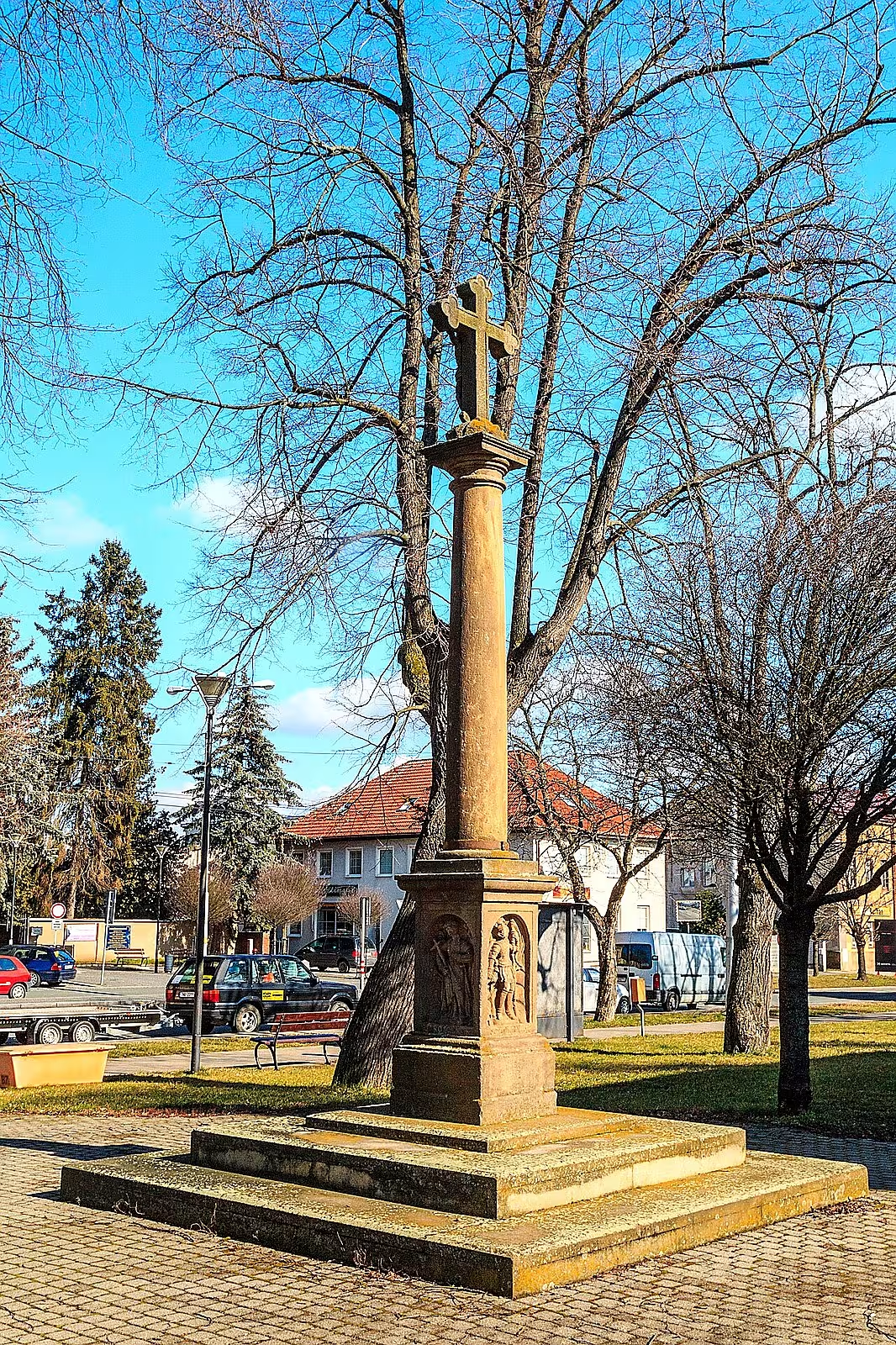
God's torment in Kukříly represents a baroque sandstone pillar with crucifix, which stands on Denis Square in Hradec Králové. This building was founded on November 23, 1705 and has been registered as a cultural monument since 2022.
The monument was built by the royal hradec town man Jan Víto Mluha. Originally, the sculpture stood in front of his traveling pub in Málovka before the foundation of the village Kukleny. At the time of the creation of the building in the Czech Republic, Baroque art flourished and absolutism in Europe culminated.
The monument is made from sandstone. It consists of a decorated prism plinth, on whose four sides are embossed figures of saints: St. John Nepomuk, St. Rosalie, St. Anna and St. Florian. There is also Latin inscription on the plinth: "CURATOR IOANNES WITUS BLAHA CIUIS RAE = GRAECENSIS A. DNI. 1705: DIE 23 NOUE." A tall pillar, ending with a small crucifixion, gets on the decorated base.
The fate of the monument has been complicated over the centuries. In 1894, Mr. Pražák made a repair. According to the period chronicler, this work was dishonest and without proper effort. Due to the poor implementation, only 25 were paid by the municipal council instead of 37 gold ones.
In the period after 1948, the object faced the danger of elimination, which occurred in 1959 and 1962. The Communist regime did not like the fact that in the middle of the square of the Soviet army (it was named in 1957) there was a church monument. In the end, however, the column was not removed and remained in place until now.
Today the monument is located in a modified public space on Denis Square. During the reconstruction of the square in 2004- 2005, the building was equipped with night lighting.
This Baroque column is an authentic witness to the history of the local part of Hradec Králové. It is a suitable destination for visitors who want to see a significant historical monument.
Then and now
Drag the slider to compare how the landmark may have looked when it was built with the view today.
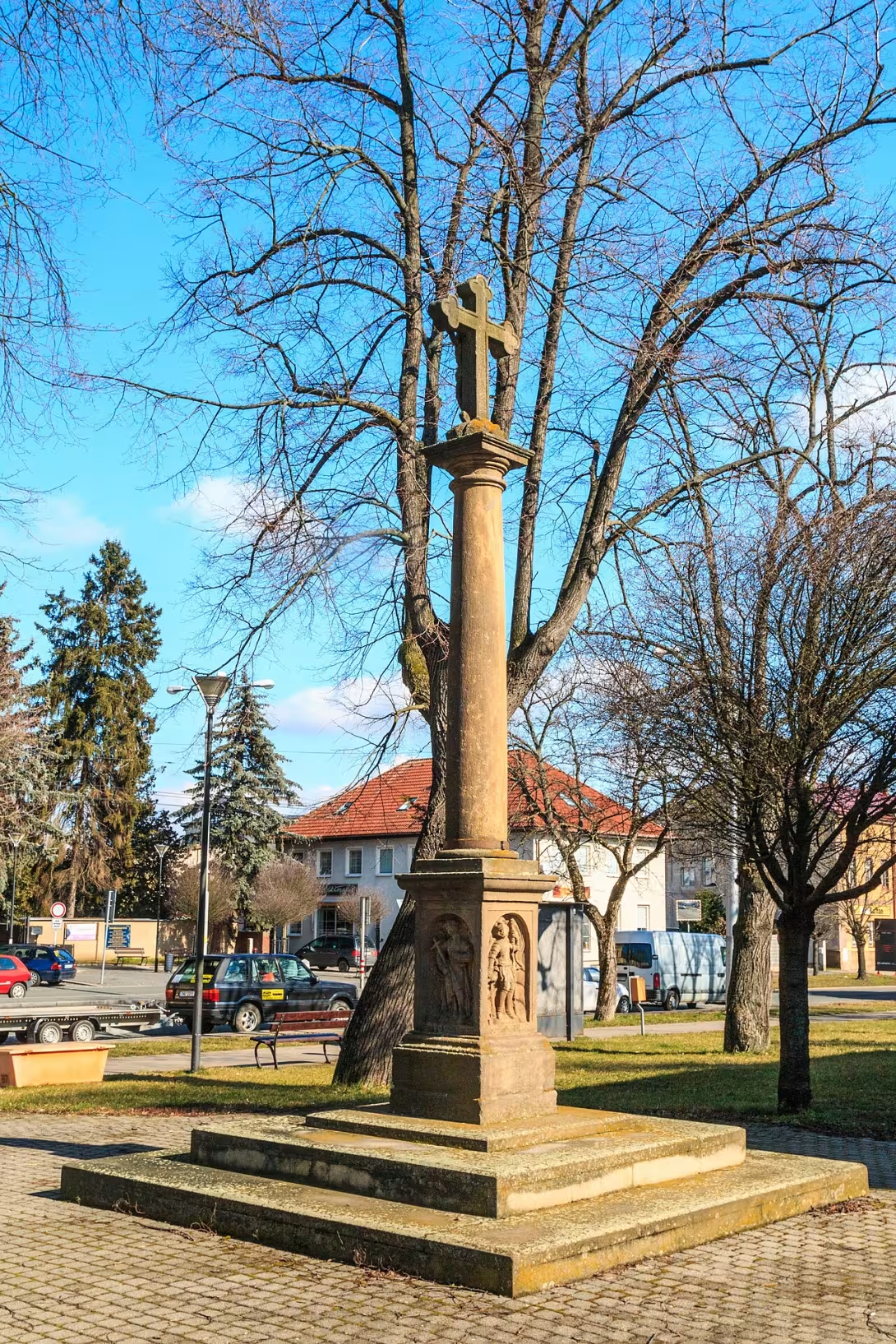

The historical appearance on the left is an AI-generated visualisation and serves as inspiration only.
Historical milestones
- 1705
- Building a column on November 23 with a load of Jan Vít Bláha.
- 1894
- The repair of the column, which was judged by the period chronicler as dishonest and praiseworthy.
- 2022
- Entry of the object into the list of cultural monuments.
Architectural development
The monument is made of sandstone and is decorated with a plinth with Latin inscription and relief on which the high column with crucifixion is mounted. The building was equipped with night lighting in the reconstruction of the square in 2004- 2005.
Historical events
In 1894 a poor repair of the column was carried out by Mr Pražák. In 1959 and 1962, it threatened to remove the monument for ideological reasons of the regime.
Points of interest
- It was created on November 23, 1705 and has been registered as a cultural monument since 2022. - The memorial was built by Jan Víto Mlouha and originally stood in front of his pub before the foundation of the village Kukleny. - The decorated plinth contains embossed figures of St. John Nepomuk, St. Rosalie, St. Anne and St. Florian. - In 1894, Mr Pražák made an unfair correction for which the council paid him less money than he requested. - In 1959 and 1962 there was a threat of the removal of the monument because the communist regime did not like the church building in the square.
Guide
Show guide text
This text was created by artificial intelligence and has not been editorially reviewed. It may contain inaccuracies.
Welcome to Kukříy, in this quiet and pleasant part of Hradec Králové. Stop for a second and take a deep breath. You are standing in Denis Square and before you stands a silent witness to history who has been here for hundreds of years. Take a look at this sandstone column, which ends with crucifix at the top. It's a place where in a sense time has stopped and where you can feel a deep connection with the people who lived in these parts long before us. Feel its simplicity and dignity, with which it stands out into the space around it. This monument, which we call the people's torment of God, is not just an ordinary stone pillar, but a symbol of faith, hope and memory for one particular person.
Let us now come together to see how this monument originated and in what context it was built. Let us move deep into the past in our minds, namely the beginning of the eighteenth century. It was the autumn day, exactly the twenty-third of November in the year of tyre seven hundred and five, when this column was completed and dedicated. It was built by the cost of own funds of Jan Vít Bláha, which was at that time a respected townsman from the royal hradec city. At that time, it was not just a simple stone structure, but an expression of deep inner faith and gratitude. Jan Vít Bláha wanted to leave a trail in the landscape and create a place for contemplation, prayer and stopping for all passers-by who were travelling here at that time. At that time, such columns had a very important meaning, serving as landmarks, but above all as a reminder of the divine presence in the everyday life of ordinary people.
Now pay attention to the actual design of the column and what you see right in front of you. Notice the material from which the entire object is made. It is sandstone, a stone that is very typical in our regions, and which has its specific, delicate texture and characteristic colour. Look down now, at the bottom of the monument. Here is a prism plinth which serves as a solid and stable base for the whole column. It is on this plinth that you will find the most interesting details that deserve your full attention. There are embossed figures of saints who in the folk tradition held very important places and people sought protection.
Try to walk slowly around the column and notice individual characters. You will see St. John Nepomuk, who is one of the most revered saints in our countries. Next to him is depicted St. Rosalie, St. Anna and St. Florian. Each of these saints had his own symbolism and people called on them for various reasons. Saint Florian, for example, was asked to protect against the devastating fires that were at that time the biggest nightmare for people living in wooden buildings. Saint Anne and Saint Rosalie were family values and protection from diseases. These carved figures add depth to the column and tell us stories of people's hopes and fears from the early eighteenth century. It is fascinating to think how many generations of people have looked at these same sandstone faces with a request for help or a silent thank you.
Who was Jan Vít Bláha and why did he put this monument here? He was a man who had his roots, his height and his ambition in Hradec Králové. One very interesting fact is connected to this place, which will help you better understand the history of this site. This monument wasn't originally in exactly the neighborhood we know today. Originally, the column was located in front of the pub which Jan Vít Bláha operated. So imagine the scene at that time: a noisy pub, people coming to a cup of beer, society, laughter, and right in front of them this quiet, pious column ending with a crucifix. It was such a contrast between earthly pleasures and the spiritual dimension of life. But what is even more fascinating is the fact that this monument stood here before Kukleny was founded. He was therefore one of the first fixed points in this landscape, around which the whole municipality later began to develop. So the column was here first and watched as houses and streets gradually emerged from fields and bows.
But history is not always about rising and beauty, but also about mistakes and human error. Let us now look at one particular chapter from the history of this column, which shows us that there was also a strict quality control in the past. In the year one thousand eight hundred ninety-four the memorial was repaired. It may seem to you now that he is in good condition, but the chronicler who wrote these events down carefully was not at all satisfied with this repair. In his minutes, he called this correction unfairly and praisily undone. It is fascinating to think that even over a century ago, there were people who noticed the quality of the craft and were not afraid to openly criticise the wrong job. This little shard of chronicle shows us that the monument was very important to the locals and they wanted it to be maintained in the best possible form, so as not to lose its dignity.
The valuation of this column came at much later times, which confirms its lasting value. Since the year two thousand twenty-two, this building has been officially registered as a cultural monument. This means that the state has recognised its historical and artistic value and ensured that it is protected for future generations. It is a recognition that even such a modest sandstone column can be a key piece of the history of the entire region and an important element of the identity of the municipality Kukleny.
Now that you know the whole story of this crucifix, I suggest you stay with him for a while and just observe quietly. Try to imagine all the people who have walked by him in the last 300 years. How many prayers have been said here, how many travelers have found a short rest and how many views have fallen on these sandstone figures of saints. This column is a real bridge between us, the people of today, and the past that has long since vanished, but still lives in this stone.
When you are ready, continue exploring around Denis Square and discover other hidden corners and beauty of Kuklen. I hope that this short trip to history has helped you to better perceive the beauty and importance of this place and that it has inspired you to explore further. Thank you for your attention and I wish you a pleasant continued journey full of new experiences. Goodbye.
Tips for visitors
The best time to visit is early morning or shortly before sunset, when soft light best excels the texture of sandstone columns and details of crucifix.
The location is available by car and by public transport; Check the current connection in the search engine.
We recommend taking the photographic machine with us. The best images are taken from different angles to capture the whole height of the column and detailed stone working.
In the immediate vicinity is Denis Square, which is ideal for a short walk.
Frequently asked questions
Can the monument be visited?
This is a structure in a public space that can usually be seen from outside free of charge. We have not verified that this particular one is freely accessible.
Where is the monument?
Location: Kukleny. The map on this page shows the exact spot.
Why is the monument protected?
It is listed in the Central List of Cultural Monuments of the Czech Republic as a cultural monument (register no. 1999997148).
Businesses nearby
Do you run a restaurant, accommodation, shop, museum, rental, wellness or other visitor service near this monument? Show yourself directly to the people heading to it — this is how they will see you in the app and on the web:
Events nearby


Zdroj akcí: otevřená data měst a obcí ČR (Národní katalog otevřených dat) a kalendář akcí Národního památkového ústavu.
Nearby
Denisovo náměstí v Hradci Králové.
Accommodation nearby
Themed route
Denis Square - historic square in the heart of Hradec Kralove, where you can soak up the atmosphere of urban life and prepare for a trip. Walk from the square to the monument leads by picturesque landscape and lasts approximately 2 km.
Sloup s krucifixem - memorable stone column with religious relief, which stands in the village Kukleny. It is a unique spiritual symbol of the region and an excellent motive for photography.
Tanks near the column - open space around the column where local festivals and meetings take place. It offers quiet seating and views of the surrounding countryside.
Tower - a smaller stone tower adjacent to the pillar, from which is a view of the surrounding field and forests. Climbing the tower provides a perspective on the historical layout of the village.
Park - a small green area at the entrance to the area of the column, ideal for relaxing after walking. In the park you will find benches and trees that complement the atmosphere of calm and contemplation.
Seasonal recommendations
Spring: In the spring season Sloup s krucifixem is surrounded by lively colors of blooming nature. Trees and bushes are coming back to life, offering a beautiful green landscape around the monument. Sun rays illuminate the monument in fine light, which is the perfect time for taking photos with natural background. It is recommended to visit in the morning or in the evening when the temperature is lighter and fewer people are going for walks. A good idea is to wear bright clothes with a helmet or scarf to protect them from sunlight.
Summer: In the summer period Sloup s krucifixem in Kukřije is lit with long days and warm evenings. The atmosphere is full of life when people gather for walks or picnics in the surrounding park. It is advisable to visit the monument in the early afternoon or evening to avoid the greatest heat of the day and tight crowds. Batch clothing with long sleeves and hat is recommended for protection from sunlight while the guide could be useful.
Autumn: In the autumn period Sloup s krucifixem in Kujříky takes a different character. Tree leaves are transformed into golden and red shades, which gives the landscape a romantic atmosphere. Short days and colder weather contribute to a sense of peace and quiet around the monument. The best look at the monument during the afternoon, when the sun is still strong enough for photography. It is recommended to wear a warm shirt and shoes with thick heels to allow comfortable walking even in cold weather.
Winter: The winter period Sloup s krucifixem in Kukřije shows in a completely different light. Less illuminated and often covered with snow or skyscrapers, the monument takes a melancholy character. Cold weather can be suitable for a quiet walk in a quiet environment without large crowds. The best time to visit is this afternoon, when the sun is still visible long enough. It is recommended to wear warm clothes with leather gloves and shoes suitable for cold conditions in order to enjoy the sight of the memory in peace.
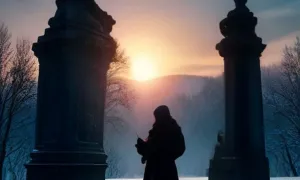
Visualizations and artistic views


The visualisations are generated by artificial intelligence and serve as inspiration.
Photos from the area
Real photos taken near the monument


Zdroj a licence jsou uvedeny u každého snímku.
Tips from visitors
No tips yet. Be the first!
Log in and add your tip.
Sources and literature
Photos: Petr1888 / CC BY-SA 4.0 — Wikimedia Commons. The author and licence also appear when you hover over the image.
Faktickým podkladem tohoto textu byl článek na Wikipedii, jehož autory jsou přispěvatelé Wikipedie. Článek je dostupný pod licencí CC BY-SA 4.0.
Location on the map

Příběhy a pověsti
Legendy, pověsti a příběhy spjaté s touto památkou
Fotografie návštěvníků
Zatím žádné fotografie. Buďte první, kdo přidá fotografii z návštěvy!
Log in a přidejte svou fotografii nebo hodnoťte.
Za ověřenou návštěvu v aplikaci získáte víc bodů — poznáme podle GPS, že jste na místě.
Reviews and comments