






socha Panna Marie Immaculaty Statue
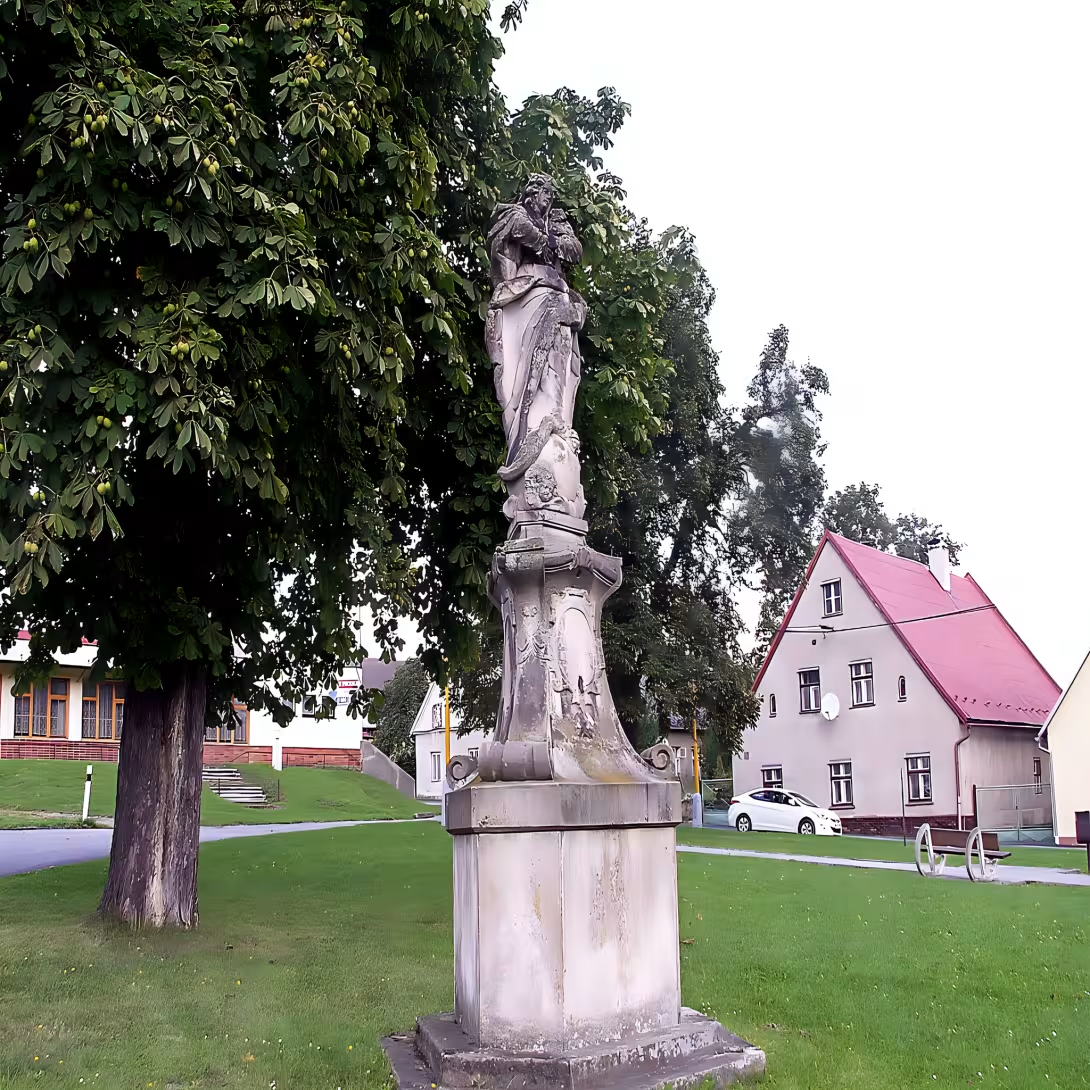
The Baroque sandstone statue of the Virgin Mary Immaculata from 1739 stands on the square in the village Janov in the district of Bruntál. It represents not only a dominant local environment, but also a significant religious symbol of the region. The work was donated by Jan Thal and thanks to its historical and artistic importance it is included in the central list of cultural monuments of the Czech Republic.
The chronogram confirms the year 1739, which corresponds to the period of Baroque flowering in Czech countries. The context then formed the intensive construction of religious and public monuments, to which local nobles slept by supporting crafts and building statues and chapel. While the enlightenment was developing in Europe, in Russia the government of Catherine I started.
Stylistically, the work is typical of the Baroque 18th century. It stands on a two-stage stone platform in the shape of a triangle, which narrows concave in the upper half and is lined with volute strips exceeding the profiled crown ledge. The base is decorated with oval cartouche with leaf decoration and threaded or tassels motifs in which inscriptions are placed. In the lower part of the front cartouche there is a metal curtain and underneath is a relief of two cross-keys. The Virgin Mary is shown in a slight contrast with her hands clenched on her chest, dressed in deep folds of dress and coat. On the ledge with the shell, there is a snake wrapped around the globe, with winged angels at its heels.
Five lines of chronogram carved by capital allow precise dating of the work. The symbol of the two cross-keys on the pedestal refers to the craft activity and underlines the importance of the local production at the time.
Today, the statue of the Virgin Mary Immaculata presents not only the cultural heritage of the village Janov, but also a attraction for visitors. The location of the square and the historical value makes this place an interesting destination for interested people in local history. The village lies in the picturesque valley of Bruntal, surrounded by forests and hills, which deepens the overall impression of the visit.
This monument resembles a rich history and artistic legacy of the region. Its cultural value and importance to the local community make it not only a monument but also an inspiration to worship traditions. For lovers of baroque art and history, this place represents a valuable destination for the journey.
Historical milestones
- 1739
- Creation and donation of Baroque sandstone statue of the Virgin Mary Immaculata
- 18th Century
- The period of Baroque flourishing and intensive construction of religious monuments
- Present
- Writing the statue into the Central List of Cultural Monuments of the Czech Republic
Architectural development
The statue is carved from a baroque sandstone and placed on a triangular shaped support which narrows in the upper half and is lined with volute strips. The decoration of the pedestal includes oval cartouche with leaf decoration and inscriptions which bear a chronogram dating back to 1739. The statue is in mild contrast, with hands clenched on the chest and dressed in deep folds of the dress and coat. Style and materials correspond to the typical baroque artistic expression of the 18th century.
Points of interest
- Baroque sandstone statue of the Virgin Mary Immaculata from 1739 stands on the square in the village Janov in the district of Bruntál.
- The work is donated by Jan Thal and is included in the Central List of Cultural Monuments of the Czech Republic due to its historical and artistic importance.
- The chronogram on the work confirms the year 1739, which corresponds to the period of Baroque flowering in Czech countries.
- The symbol of the two cross-keys on the pedestal refers to craftsmanship and underlines the importance of local production at the time.
- The statue represents the cultural heritage of the village Janov and is a attraction for visitors, which makes it an interesting destination for interested people in local history.
Guide
Show guide text
This text was created by artificial intelligence and has not been editorially reviewed. It may contain inaccuracies.
Welcome to Janov. Right now, standing in the middle of this square, your eyes are probably attracted to the majestic figure who rules the whole space around you. You are standing right in front of the statue of the Virgin Mary Immaculata, a baroque piece of art that has not been seen for two centuries only by the looks of passers-by, but also by prayers and silent reflection. Please feel the atmosphere of calm and historical weight this place radiates. This statue is not just a piece of stone, it is a living symbol of the entire region, a religious pillar that has shaped the identity of this place for centuries. Look at her as a witness to the time that lasts here while the world around her is constantly changing.
In order to understand why this statue is so special, we need to go back deep into the past together, to an era where the Baroque was in full bloom. Imagine 1739. It was a period of time when religious faith manifested itself through monumental structures and works of art, which were meant to excite and elevate man. At that time intensive construction of religious monuments took place throughout the region and Janov was no exception. It was this year that this sandstone statue was made and donated to the local community. But it wasn't just a gift from an unknown benefactor. This entire effort was led by a specific personality, local nobleman Jan Thal. His decision to donate this work was a manifestation not only of deep faith, but also of a social position and an attempt to leave a lasting mark in the history of this region. By financing this work, Jan Thal ensured that the Virgin Mary Immaculata would remain the dominant square for many generations.
Now pay attention to the work itself and try to look closer at it as if you would like to uncover its secrets. Notice the material from which the statue is carved. It's sandstone, material that's typical of this area, but also very sensitive to the touch of time. Yet he retains his beauty and strength. The statue does not seem to be floating in space, but it is firmly anchored in its place. Look down at the base on which the Virgin Mary stands. It is a two-stage stone floor that gives the whole character appropriate height and dignity. If you come any closer, you'll see that this subsoil is not a simple stone block. It is richly decorated, which is typical of the Baroque style, which loved curves and richness of detail. Notice the elegant volute tapes that are due to the stone and provide the whole basis of dynamics and movement. Now stop by one of the most important details. On the relief under the statue you can see the cross of the gavel. This symbol is fascinating and makes us think about the connection between religious art and local history or crafts, which undoubtedly prospered in this region at the time of the creation of the statue.
When you look at these details, can you ask yourself, how are we sure this year, 1739, is the right one? Here comes the fascinating element that carries within it a touch of history and science. There's a chronogram on the piece itself. This is a special way of writing data using letters that represent Roman numerals in some context. This chronogram bears the 1739 confirmation, which corresponds exactly to historical records of the creation and donation of the statue by Jan Thal. It's like a secret code that, through centuries, gives us a clear answer to the question of when exactly this work of art began its journey into the world. This detail gives the whole place authenticity and confirms that we are facing a real historical artifact, not just decoration.
Thanks to its exceptional artistic processing and the deep historical significance of the statue, this monument was not forgotten even in modern times. Its value was so high that it was officially included in the Central List of Cultural Monuments of the Czech Republic. This means that it is not only a local treasure, but part of a national heritage to be protected and preserved for future generations. It is proof that what Jan Thal and the then craftsmen created nearly 300 years ago is still the same weight and meaning as it was at the time of its creation.
Looking at the statue, you can feel the baroque wealth mingling with humility and spiritual sense. Although we do not know the names of the particular architects who designed this project, their manuscript is visible in every bend of sandstone material and in every carved line. The whole work is a celebration of the baroque blossom when art became a bridge between people and God.
I hope that this brief view of the past has enriched you and that you are now looking at this statue with a new understanding. This Virgin Mary Immaculata will still be here, ready to tell her story to anyone who stops and gives her a moment of attention. But I will now sound you for further examination. Janov has many other secrets and traces of history waiting for you. Continue to walk, feel the atmosphere of this place and let yourself drift by the beauty of the surrounding region. Thank you for the journey through time and I wish you a pleasant continuation of discovery.
Tips for visitors
For the best visual experience and photography we recommend a visit in late afternoon. The sunlight in this time highlights the baroque details and texture of sandstone material, creating ideal conditions for scanning the monument.
You can reach the monument by car or public transport; Please check the current traffic connections in the Internet search engine. Parking is usually possible in the village Janov near the square where the statue is located.
When visiting, we recommend taking water and comfortable shoes. If you decide to take a longer walk around, prepare for the terrain near the nature reserve Janov Valley.
As part of one trip you can visit other interesting places in the surroundings, such as the ruins of the castle Kravařa or the church of St. Lawrence in Bruntal. These places are available at a short distance from the statue.
For families with children is an ideal walk near the Opava River, which offers a pleasant natural environment. The whole area around the statue is suitable for light outdoor activities.
Businesses nearby
Do you run a restaurant, accommodation, shop, museum, rental, wellness or other visitor service near this monument? Show yourself directly to the people heading to it — this is how they will see you in the app and on the web:
Nearby
The village of Janov is located in the picturesque valley of Bruntal, surrounded by forests and hills, and within 5 km is the ruins of the castle Kravar and the church of St. Lawrence in Bruntal. The nature reserves of the Janov Valley and the Opava River are also nearby, which form the region's characteristic landscape.
Accommodation nearby
Themed route
Our Lady Immaculata (statue) - statue, historical center Janova. This impressive statue is the heart of the village and the starting point of the trip; offers not only a spiritual dimension but also a beautiful view of the surrounding valley.
Castle Kravar (ruins) - archaeological place, ruins of medieval castle. The panoramic view of the Bruntal Valley and the Opava River is spread from the top of the ruins, which underlines the historical context of the region.
St. Lawrence Church in Bruntal (church) - sacral building, Baroque church. The interior is enchanted by rich decoration and calm atmosphere, while serving as an important landmark on the route.
Janov Valley (nature reservation) - protected natural area, reservation. Walking the paths of the reservation reveals a variety of flora and fauna, and provides unique contact with the untouched nature of the valley.
Opava River (river) - water flow, natural scenery. A peaceful walk along the river bank offers the possibility of relaxing and observing local water fauna, thus concluding a trip in harmony with the countryside.
Seasonal recommendations
The statue stands out in spring accompanied by awakening vegetation and the first colours of flowers. The atmosphere is fresh and light soft, which underlines the purity of the stone. We recommend to dress more layers of clothing because the weather is usually unstable, and visit the site rather than the morning before any spring showers begin.
The summer season brings bright sun and rich green nature, which creates a strong contrast with white sculpture. There are more visitors in the main season, so it is best to come early in the morning to enjoy the peace. Don't forget light summer clothes and plenty of fluids to freshen up.
Autumn covers the surroundings with golden leaves and morning fog gives the place a mysterious and melancholy touch. The lighting is softer and warmer at this time, which is ideal for capturing the details of the sculpture. It's practical to wear a waterproof jacket and schedule a late afternoon visit.
In winter, the Virgin Mary Immaculata is majestic, especially if the statue is covered with a layer of snow and does not freeze. There is peace and quiet, which encourages thought. For low temperatures and a shorter day, choose warm thermo-lysses and fixed shoes with anti-slip soles to move safely on the frozen surface.
Visualizations and artistic views

The visualisations are generated by artificial intelligence and serve as inspiration.
Photos from the area
Real photos taken near the monument


Zdroj a licence jsou uvedeny u každého snímku.
Tips from visitors
No tips yet. Be the first!
Log in and add your tip.
Sources and literature
Fotografie: BíláVrána / CC BY-SA 4.0, rozlišení zvýšeno umělou inteligencí — Wikimedia Commons. The author and licence also appear when you hover over the image.
Faktickým podkladem tohoto textu byl článek na Wikipedii, jehož autory jsou přispěvatelé Wikipedie. Článek je dostupný pod licencí CC BY-SA 4.0.
Location on the map
More monuments – Janov
Show all in the municipality
Příběhy a pověsti
Legendy, pověsti a příběhy spjaté s touto památkou

Fotografie návštěvníků
Zatím žádné fotografie. Buďte první, kdo přidá fotografii z návštěvy!
Přihlaste se a přidejte svou fotografii nebo hodnoťte.
Za ověřenou návštěvu v aplikaci získáte víc bodů — poznáme podle GPS, že jste na místě.
Reviews and comments