






Janov čp. 116 House
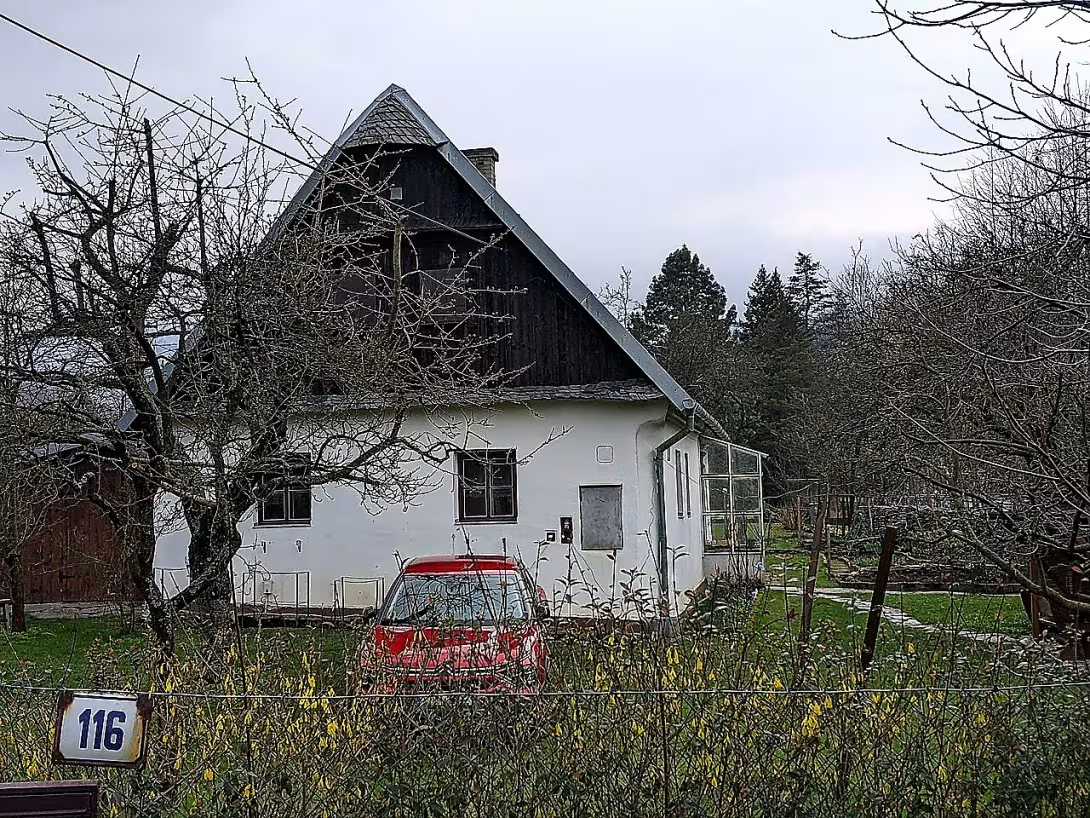
House No. 116 in Janov is an outstanding example of 18th-century brick folk architecture from the Jeseník region. Situated within the cadastral area of Janov u Krnova, this single-story stone building belongs to the municipality of Janov in the Bruntál District. Its importance stems not only from its architectural style but also from its designation as a cultural monument by the Ministry of Culture of the Czech Republic on December 30, 2002.
The origins of House No. 116 date back to the Baroque period, reflecting broader cultural and architectural trends across Europe during the 18th century when Bohemia was part of the Habsburg Monarchy. This era witnessed a surge in artistic expression and architectural innovation, with the Jeseník region contributing its distinctive brick folk style.
Architecturally, House No. 116 features a three-part layout with a two-wing arrangement, including wooden floors and truss ceiling coverings in some rooms. The building has an oblong ground plan topped by a gabled roof covered with wavy tiles. Its eastern facade includes two axes with vertical boarding capped by slate, while the western side is simpler, with one axis. A notable feature is the main entrance on the northern four-axis facade and a shed with a gable roof attached to the southern facade.
Throughout its history, House No. 116 has preserved its structural integrity and architectural significance, leading to its recognition as a cultural monument in 2002. This designation highlights its importance not only as a historical structure but also as a testament to the region's architectural heritage.
Today, House No. 116 remains accessible for visitors interested in exploring the rich history and architecture of the Jeseník region. Its preservation offers insights into the past, showcasing cultural and architectural influences from the Baroque period. Visitors are invited to appreciate its historical significance and connect with a piece of Czech heritage.
House No. 116 is more than just a building; it serves as a window into the past, reflecting the artistic and cultural currents of its time. Its designation as a cultural monument ensures that future generations can continue to learn from and be inspired by this remarkable example of Jeseník brick folk architecture.
Historical milestones
- 18th century
- Construction of House No. 116 in Baroque style.
- 2002
- Designated as a cultural monument by the Czech Ministry of Culture.
Architectural development
The building has a three-part layout with a two-wing arrangement and wooden floors. Some rooms feature truss ceiling coverings, indicative of its architectural style from the baroque period.
Historical events
- 2002
- The house was designated as a cultural monument by the Ministry of Culture of the Czech Republic.
Points of interest
- House No. 116 in Janov is an outstanding example of 18th-century brick folk architecture from the Jeseník region. - The building was designated as a cultural monument by the Ministry of Culture of the Czech Republic on December 30, 2002. - Architecturally, it features a three-part layout with a two-wing arrangement and wooden floors and truss ceiling coverings in some rooms. - It has an oblong ground plan topped by a gabled roof covered with wavy tiles, with notable facades including vertical boarding capped by slate on the eastern side. - House No.
Guide
Show guide text
This text was created by artificial intelligence and has not been editorially reviewed. It may contain inaccuracies.
Welcome to Janov. As you stand here in this quiet corner of the region, take a moment to simply breathe and take in your surroundings. You are standing directly in front of a piece of living history: Janov čp. 116. It may appear to be a modest structure at first glance, but as you look closer, you will realize that you are witnessing a remarkable survivor of a bygone era, a building that has watched the world change around it for centuries.
Take a moment to observe the silhouette of the house against the sky. What you see before you is a quintessential example of the unique architectural heritage that defines the Jeseník region. This is not a grand palace or a soaring cathedral, but rather a profound expression of what we call brick folk architecture. It is a structure that speaks of the hands that built it, the materials of the earth, and the practical wisdom of the 18th century.
To understand why this house is so significant, we must travel back in time to the 1700s. During this period, the Baroque style was sweeping across Europe, influencing everything from the grandest churches to the smallest village dwellings. While the high Baroque was characterized by opulence and dramatic curves, here in Janov, that influence took on a more grounded, local character. This house was constructed in the 18th century, blending the formal sensibilities of the Baroque era with the rugged, functional requirements of rural life in the Jeseník mountains. It was built to endure, using stone and brick to create a sanctuary that could withstand the shifting seasons of this landscape.
Now, I invite you to direct your attention to the physical details of the building, for it is in these textures and shapes that the true story is told. Notice first the orientation of the house. Unlike many buildings that face a street with their long side, this structure is oriented towards its gable end. This gives it a distinctive, compact presence on the landscape.
Look up at the roofline. You will see a gabled roof covered in wavy tiles. Notice how the undulating lines of those tiles catch the light, creating a rhythmic pattern that breaks up the solid mass of the building. This choice of roofing was not merely aesthetic; it was a functional necessity for shedding the rain and snow that characterize this region.
As you move your gaze toward the eastern side of the building, look closely at the gable facade. You will notice a sense of deliberate design. The facade is organized into two axes, providing a sense of balance and proportion that hints at that Baroque influence we mentioned earlier. Observe the vertical boarding that covers this section, a classic element of local folk architecture. To finish the look and provide protection against the elements, this boarding is topped with slate. The dark, smooth texture of the slate provides a beautiful, sharp contrast to the more organic feel of the wood and stone.
Now, if you shift your perspective and look toward the western side of the house, you will see a striking change. The complexity of the eastern side gives way to something much more understated. The western side is simpler, featuring only a single axis. This asymmetry is common in historic folk architecture, where different sides of a building were often designed with different functional priorities in mind. It gives the house a sense of organic growth, as if it were shaped by the specific needs of the people who lived within its walls.
As you continue to examine the structure, keep in mind its fundamental layout. The house follows a traditional three-part arrangement, a common structural logic for the time that allowed for a clear division of living and working spaces. It is a sturdy, single-story stone building, a testament to the craftsmanship of the 18th century.
You might find yourself wondering about the people who lived here. Who were they? What were their daily lives like as they walked through these doors? Unfortunately, the names of the architects and the specific individuals who inhabited Janov čp. 116 have been lost to the passage of time. They remain anonymous, part of the collective history of the Jeseník region. Yet, their presence is felt in every stone laid and every piece of slate placed. They were the masters of their craft, translating the grand ideas of the Baroque era into a language that worked for their community and their climate.
There is a certain mystery in that anonymity, isn't there? While we may not know their names, we know their legacy. We see it in the way the building has stood its ground for hundreds of years. This house is more than just a collection of stone and wood; it is a vessel of cultural memory.
The importance of this preservation was officially recognized on December 30, 2002, when the Ministry of Culture of the Czech Republic designated Janov čp. 116 as a cultural monument. This designation ensures that this outstanding example of 18th-century brick folk architecture will be protected, allowing future generations to stand exactly where you are standing now and feel the same connection to the past.
As you prepare to move on, I encourage you to take one last look at the house from a distance. Try to see it not just as a building, but as a bridge between the 18th century and the present day. Notice how it sits within the landscape of Janov, a silent witness to the centuries of history that have unfolded in this valley.
Thank you for joining me on this brief journey through time. There is so much more to discover in this area, and I hope this encounter with Janov čp. 116 has inspired you to continue your exploration. Please, take your time, enjoy the atmosphere, and continue your walk through the beautiful history of Janov. Goodbye for now.
Tips for visitors
The best time to visit House No. 116 in Janov is during the late spring or early autumn months, when the weather is mild and pleasant for exploring the outdoor areas. This period also offers beautiful natural lighting that enhances the architectural details of the building. The surrounding Jeseník region is particularly vibrant with blooming flora and fauna during these times, making it an ideal backdrop for a visit.
Parking and transportation to Janov are convenient, as there are parking spaces available in the vicinity of the house. Public transport can also be used to reach Janov; however, specific bus or tram numbers should be checked through local travel resources or online search engines. The accessibility by both car and public transport makes it easy for visitors from various locations.
When planning your visit, consider bringing comfortable walking shoes as you may want to explore the surrounding landscape of the Jeseník region. A camera is recommended to capture the unique architectural features of House No. 116, especially during golden hour when the sunlight creates a warm glow on its brick façade. Additionally, carrying a light jacket or sweater can be useful due to variable weather conditions.
For photography enthusiasts, some of the best spots to capture images include the front and side views of the house where the gabled roof is prominently visible against the landscape. The morning light provides soft shadows that highlight the textures of the brickwork, while late afternoon lighting offers a warm tone ideal for capturing the essence of the building.
Nearby attractions within a 30-minute drive include other historical sites and natural landscapes in the Jeseník region. Exploring these areas can provide additional context to the cultural and architectural heritage of Janov. For families with children, consider visiting local parks or nature trails where kids can enjoy outdoor activities while adults appreciate the scenic beauty.
Businesses nearby
Do you run a restaurant, accommodation, shop, museum, rental, wellness or other visitor service near this monument? Show yourself directly to the people heading to it — this is how they will see you in the app and on the web:
Nearby
The house is located in the cadastral area of Janov u Krnova, within the municipality of Janov in the Bruntál District. The surrounding landscape includes typical features of the Jeseník region.
Accommodation nearby
Themed route
Embark on a thematic journey through the picturesque landscape of Janov u Krnova, where you'll explore the charm and history embedded in this quaint region.
1. Janov čp. 116 (dům) *Type: Historical House* Begin your adventure at the heart of Janov with Janov čp. 116, a beautifully preserved historical house that offers a glimpse into the architectural heritage of the Jeseník region. This charming structure is perfect for those interested in local history and traditional architecture.
2. Jeseníky Landscape *Type: Natural Scenery* After exploring Janov čp. 116, take a leisurely walk through the surrounding landscape of the Jeseník Mountains. The area is renowned for its stunning natural beauty, featuring rolling hills, lush forests, and serene vistas that provide an ideal setting for hiking or simply enjoying nature's tranquility.
3. Local Trails *Type: Hiking Path* Discover the local trails that meander through the countryside of Janov u Krnova. These paths offer a peaceful escape into nature and are perfect for those who enjoy walking amidst picturesque scenery. The trails provide an opportunity to appreciate the unique flora and fauna native to this part of the Jeseník region.
4. Village Center *Type: Cultural Experience* Conclude your visit by exploring the village center of Janov. This area is a delightful representation of local culture, with quaint streets and traditional buildings that reflect the community's way of life. It's an excellent spot for experiencing regional customs and perhaps enjoying a cup of coffee at one of the local cafes.
This thematic journey through Janov u Krnova offers a blend of cultural exploration and natural beauty, making it a memorable experience for visitors to this enchanting part of the Jeseník region.
Seasonal recommendations
Spring:
Visiting Janov čp. 116 during spring offers a unique experience as the landscape begins to bloom with vibrant colors, creating a picturesque setting around this historical site. The soft light of early mornings and late afternoons enhances the natural beauty, casting gentle shadows that add depth to the architecture. This is an ideal time for photography enthusiasts seeking to capture the interplay between nature and history. Visitors should wear comfortable layers as temperatures can vary, and it's advisable to arrive early in the day to enjoy the site with fewer crowds before midday.
Summer:
In summer, Janov čp. 116 becomes a lively destination under the bright sun, which illuminates its historic features vividly. The warm weather draws larger groups of tourists, making this peak season one of bustling activity and vibrant atmosphere. To fully enjoy your visit, consider arriving early in the morning to avoid the midday crowds and the heat that can make exploration less comfortable later in the day. Light, breathable clothing is recommended, along with sun protection such as hats or sunglasses.
Autumn:
The autumn season at Janov čp. 116 is characterized by a stunning display of fall foliage, which transforms the surrounding landscape into a warm tapestry of reds, oranges, and yellows. The cooler temperatures provide a comfortable environment for exploring the site, and the softer light in the late afternoon hours adds a cozy ambiance to the historic architecture. This period often sees fewer visitors than summer, making it an excellent time for those seeking a more tranquil experience. Layered clothing is advisable to accommodate the changing weather conditions.
Winter:
Visiting Janov čp. 116 during winter offers a serene and enchanting atmosphere as snow may blanket the area, adding a magical touch to its historic charm. The shorter days mean that daylight hours are limited, so it's best to plan your visit for late morning or early afternoon when there is more natural light available. Due to the colder weather, visitors should dress warmly in layers and be prepared for potentially icy paths. This season often sees fewer tourists, providing a peaceful setting for those who appreciate quiet exploration amidst winter beauty.
Visualizations and artistic views


The visualisations are generated by artificial intelligence and serve as inspiration.
Photos from the area
Real photos taken near the monument

Zdroj a licence jsou uvedeny u každého snímku.
Tips from visitors
No tips yet. Be the first!
Log in and add your tip.
Sources and literature
Fotografie: MartinVeselka / CC BY-SA 4.0 — Wikimedia Commons. The author and licence also appear when you hover over the image.
Faktickým podkladem tohoto textu byl článek na Wikipedii, jehož autory jsou přispěvatelé Wikipedie. Článek je dostupný pod licencí CC BY-SA 4.0.
Location on the map
Příběhy a pověsti
Legendy, pověsti a příběhy spjaté s touto památkou
Fotografie návštěvníků
Zatím žádné fotografie. Buďte první, kdo přidá fotografii z návštěvy!
Přihlaste se a přidejte svou fotografii nebo hodnoťte.
Za ověřenou návštěvu v aplikaci získáte víc bodů — poznáme podle GPS, že jste na místě.
Reviews and comments