



Společný hrob a pomník obětem pochodu smrti Monument
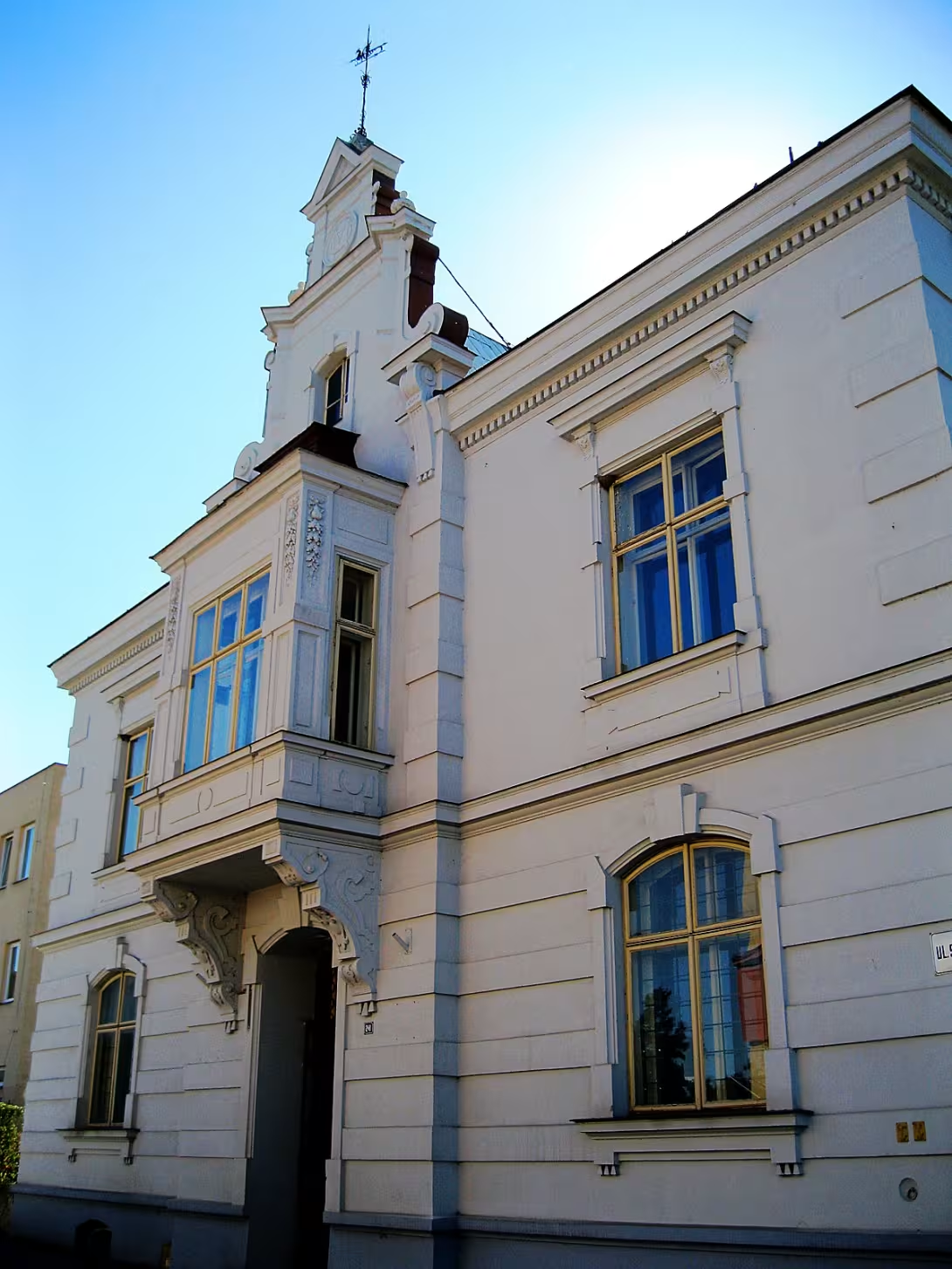
Společný hrob a pomník obětem pochodu smrti stands in the cemetery in the village of Fojtova Kraš, which falls under the municipality of Velká Kraš in the district of Jeseník. This piety object resembles the tragic events of January 1945. It is registered as a cultural monument of the Czech Republic and is also included in the central record of war graves under the code CZE-7102-07298. The site is an important reminder of the victims of the Nazi repression in Vidnavsk.
The historical context of the monument ties to the end of World War II. In January 1945, Nazi Germany launched a massive evacuation of Auschwitz and Březnik concentration camp in front of the advancing Soviet front. These death marches in harsh winter conditions have claimed the lives of thousands of prisoners across Central Europe. The transport route led the northern part of Jesenick and the territory of Vidnava. On 21 January 1945, 19 victims of this march were placed in a cemetery in Fojtov Kráš, which they brought here from all over the Vidnav region.
The monument itself was created in 1965. It consists of two columns and a plate of black polished marble. The pieté place occupies two grave places and is bounded by a curb. On the memorial there is the inscription OF THE DIFFERENCE OF DEATH and on the right in the corner there is a comment with the inscription dedicated to SPB 1965, which refers to the Union of Freedom Warriors. Later on, the grave was rearranged in the form of a cover of grave records.
The fate of the monument after its creation is indicated by the dates of further reconstruction. Apart from 1965, when the marble monument grew, the common grave went through another repair in 1999. Grave management is provided by institutions in the care of war graves and cultural monuments.
The key day for this place is January 21, 1945, when 19 transport victims from Auschwitz and Březinka were buried here in bulk. The count 1965 is linked to the erect of a monument from black polished marble and 1999 dates back to the subsequent modification of the grave site.
Today, this common grave with a monument is located in a cemetery in the village of Fojtov Kraš in close proximity to Vidnava and is freely accessible to the public. The site has a strong historical value, as it attests to the tragic effects of the end of World War II in northern Jesenick. Visiting this piety site encourages the silence and honor of human victims of war hardships.
Historical milestones
- 1945
- Burying 19 death victims in a cemetery in Fojtov Krash on 21 January.
- 1965
- The status of the black marble monument and the modification of the common grave.
- 1999
- Making further modifications to the grave site.
Architectural development
The Pieté place occupies two grave places and is bounded by a curb. The monument consists of two columns and a plate of black polished marble built in 1965. On the monument is a inscription dedicated to the victims of the death march and a reminder of the Union of Freedom Warriors. Later, the grave was also modified by covering the grave boards.
Historical events
In January 1945 the evacuation of Auschwitz and Březinka concentration camp began, including the march of death passing through the northern part of Jesenick. On 21 January 1945, 19 victims of this march taken from Vidnavska were buried in a cemetery in Fojtov Krash. In 1965, a monument of black polished marble was erected and the grave was modified. Another modification of the common grave took place in 1999.
Points of interest
- Společný hrob a pomník obětem pochodu smrti stands in the cemetery in the village of Fojtov Kraš and reminds of tragic events from January 1945. On 21 January 1945, 19 victims of the death march were brought here from all over the Vidnav region. - The monument itself was created in 1965, consisting of two columns and a plate of black polished marble and contains a inscription to the victims of the death march and a reminder of the Union of Freedom Warriors. - The grave underwent another repair in 1999 and its administration is provided by institutions in the care of war graves and cultural monuments. - The site is freely accessible to the public and attests to the tragic effects of the end of World War II in northern Jesenick.
Guide
Show guide text
This text was created by artificial intelligence and has not been editorially reviewed. It may contain inaccuracies.
Welcome to this quiet and quiet place. You're standing in front of a pit space, which is a common grave and monument to the victims of the death march. We are located in a cemetery in the village of Fojtova Kraš, which is part of the village Velká Kraš. When you look around you, you see a peaceful country burial ground, but before you is a monument to events deeply marked by human tragedy and suffering. Try to slow down for a while, take a breath, and feel the atmosphere of this memorable place that keeps the dark history of the twentieth century.
Let us return in time to the freezing days of nineteen hundred forty-five. At that time, transports from the evacuated camp known as Auschwitz and Březinka arrived on the territory of northern Jesenick. These people have gone through an unimaginable hell and a forced path we now call the march of death. On the twenty-first day of January, nineteen hundred forty-five were buried in this cemetery by nineteen victims of this cruel march that were brought here from all over the wider region of Vidnavia. Their lives were thrown out as a result of exhaustion, cold and inhuman treatment.
Now pay attention to the appearance of this drinking place itself. Look before you at the grave place and the monument. The monument that stands here today was built in nineteen hundred and sixty-five. Check out his main building element, which is a monument made of black polished marble. This dark and shiny stone complements with dignity the modified common grave in which the aforementioned victims rest. Note that the memorial consists of two columns. These vertical stone elements stick to the sky and symbolize the interrupted human lives and memories that must not be extinguished. The site has undergone several modifications over the decades. In addition to the year nineteen hundred and sixty-five, the tomb site was substantially modified in nineteen-ninety-nine to ensure its dignified form for future generations. The names of architects and specific historical figures associated with building this monument have not been preserved until today, but this does not take away the depth and importance of this silent testimony.
The stories associated with this place are not about the great heroes of textbooks, but about the ordinary human beings that are found in the wheels of a terrifying machine. The people of the surrounding villages then witnessed the passages of the poor people, and many had to endure the fear and despair of that time. Taking the victims to Fojta Krash shows that death did not choose and that the tragedy of World War II affected even the most remote corners of our country. Each of the nineteen bodies, stored here in January in nineteen hundred forty-five, had its own destiny, family and name, which in many cases was lost in the chaos of war, but here in the cemetery they found at least their last peace and proper burial.
The interesting thing that will certainly attract your attention here is the composition of the monument itself from two columns and the use of black polished marble. In the context of rural cemeteries, this is a very clean, yet significant solution that contrasts with the surrounding greenery and traditional tombs. Moreover, the fact that the victims have been brought here from all over the region shows that Fojt's Kraš and Velká Kraš have become the center of the piety storage of human remains for the whole region in the darkest days at the end of the war.
Thank you for devoting your time to this memorable place and hearing its story. I believe that a visit to the common grave and memorial to the victims of the death march in the Fojtov Krash left a deep mark on you and made you think about the value of peace and freedom. When you leave, try to look back and remember those whose lives ended so far from home. I wish you a peaceful journey to discover the history of this region and goodbye.
Tips for visitors
The best time to visit this drinking place is during the morning hours or on a quiet evening, where there is a silence suitable for commemorating the victims of the death march of January of a thousand nine hundred forty-five.
Take the appropriate and quiet clothes to the cemetery corresponding to the pietetic nature of the place, in colder months of the year warm shoes and possibly candle or flower to honor the memory of the victims.
To photograph the grave and the monument, choose the natural daylight that best stands out on a slightly cloudy day, with the best angles for the images being obtained when standing on the main cemetery path near the monument.
In the wider area within 30 minutes of the journey there is a cemetery in the village of Fojtova Kraš and nearby Vidnava, where you can visit the surrounding historical places of the region.
Tips for families with children include, in particular, the need to educate younger visitors in advance about calm behaviour and respectful access to this grave and monument reminiscent of the tragic events of war.
Frequently asked questions
Can the monument be visited?
This is a structure in a public space that can usually be seen from outside free of charge. We have not verified that this particular one is freely accessible.
Where is the monument?
Location: Velká Kraš. The map on this page shows the exact spot.
Why is the monument protected?
It is listed in the Central List of Cultural Monuments of the Czech Republic as a cultural monument (register no. 1000135800).
Businesses nearby
Do you run a restaurant, accommodation, shop, museum, rental, wellness or other visitor service near this monument? Show yourself directly to the people heading to it — this is how they will see you in the app and on the web:
Nearby
Památka se nachází na hřbitově v osadě Fojtova Kraš, která je součástí obce Velká Kraš v okrese Jeseník v těsné blízkosti Vidnavy.
Accommodation nearby
Themed route
The cemetery in the village of Fojtov Kraš Place related to history This cemetery is located close to Vidnava and is the starting point of the entire route. It offers a peaceful environment to reflect on the region's agitated history.
Společný hrob a pomník obětem pochodu smrti Main destination, monument This monument is located right in the cemetery in the village of Fojtova Kraš, which is part of the village Velká Kraš in the district of Jeseník. It is worth visiting as a tribute to the victims of the tragic events of the end of World War II.
The cemetery area in Fojtov Krash Memory space This immediate resort surrounding the main monument allows visitors to explore the sacred places of final rest. It provides space for quiet in the village Velká Kraš.
Seasonal recommendations
Spring brings to this piety place the awakening nature, when the surrounding trees begin to grow and the grass turns green. The sun's rays penetrate through the still slightly squeaky crowns and create a fine shadow game on the stone monument, underlining a quiet and memorable atmosphere. There are few visitors here during this period, so you will enjoy the honor of the victims of the death march in complete peace. We recommend to wear fixed shoes because the field road is soggy and muddy on the tidal and spring rains. The best time to visit is in the morning, when the morning fog slowly retreats and the landscape opens to the spring sun.
During the summer, the space around the monument is completely immersed in lush green high grasses and fully foliage bushes, which sometimes hide views of the wider surroundings. The sun shines very hard for most of the day, creating sharp contrasts on stone walls and forcing the search for shade under nearby trees. Since this is the main tourist season, sometimes the curious will stop here on their cycling trips, but there are certainly no great crowds. Put on light, airy clothes and don't forget the headgear and the supply of drinking water, because it is quite hot in the afternoon. The best time for arrival is early morning, when the air is still pleasantly cold and the warm sunlight is still irradiating the entire area.
Autumn covers the Great Krasz into colorful colours of decaying leaves, which creates a rugged carpet under the feet and gives the whole area a melancholy mood. The lighting is often dampened because of the often cloudy sky and the morning fog, which gives the entire memorial to the victims a very raw and authentic character. People only come here on a festive basis these days, usually at a time of public holidays associated with our modern history, when people wear quiet flowers to the monument. For this season, a waterproof jacket, warmer sweater and tight shoes are suitable to protect you from moisture. The most suitable hours for visiting are around noon, when daylight will become stronger for a while and disperse autumn cold.
Winter turns this historic place into a quiet, snowy landscape, where the white snow cover symbolically amplifies the piety and serious character of the monument. The lighting is very short and muted, while the low sun throws long shadows at the snow and soon in the afternoon quickly passes into darkness. Tourists practically don't come here in the winter months, so silence only interferes with the snowfall under their feet. The warm winter clothes, high snow shoes and gloves are essential, because staying in the open area in the frosty wind quickly cools the body. The best time to visit is around noon when you can see best and temperatures reach their daily maximum.
Visualizations and artistic views

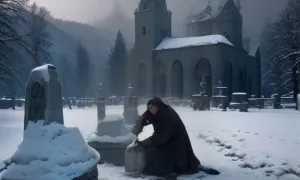
The visualisations are generated by artificial intelligence and serve as inspiration.
Photos from the area
Real photos taken near the monument


Zdroj a licence jsou uvedeny u každého snímku.
Tips from visitors
No tips yet. Be the first!
Log in and add your tip.
Sources and literature
Faktickým podkladem tohoto textu byl článek na Wikipedii, jehož autory jsou přispěvatelé Wikipedie. Článek je dostupný pod licencí CC BY-SA 4.0.
Location on the map
Příběhy a pověsti
Legendy, pověsti a příběhy spjaté s touto památkou
Fotografie návštěvníků
Zatím žádné fotografie. Buďte první, kdo přidá fotografii z návštěvy!
Log in a přidejte svou fotografii nebo hodnoťte.
Za ověřenou návštěvu v aplikaci získáte víc bodů — poznáme podle GPS, že jste na místě.
Reviews and comments