



Štramberk Castle ruin
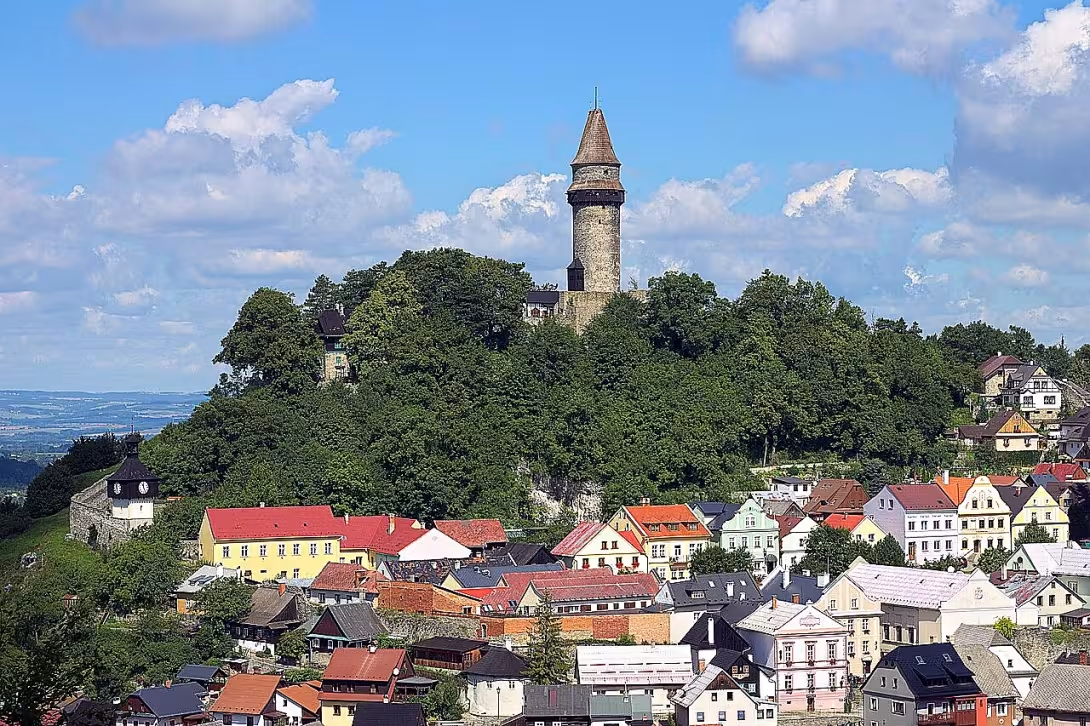
Štramberk is the ruins of the castle above the same-name town in the district of Nová Jicin, which attracts its historical value and architectural remains. The castle probably originated in the first third of the 14th century and is connected with several important personalities and events that affected his fate. Today the site is protected as a cultural monument of the Czech Republic and offers a view of the past.
The history of Štramberk dates back to the first third of the 14th century, when it was founded by Benešovci. This castle complex has become an important residence for various estates and families over the years. In 1434 Vilém Puklice z Pozořic became the master of the castle, known for its robbery raids on eastern Moravia and Silesia. After it he went to the hands of the Hustopečí flags (1481-1523), who sold it to Žerotín, under which the palace was renaissance. In the 17th century the castle belonged to Jesuits who maintained it until 1773.
Originally, the Štramberk was proud of the typical elements of the bergfrit castle. The castle core had a rectangular plan with dimensions of 30 × 15 metres, which was defined by a 1.5 meter thick wall. In the northeast part there is a tower called Truba and on the opposite side there is a tower palace with a passage into the courtyard. Jan Jindřich, a margrave, built a new palace in the original foothold and fortified a new foothold, which included a prism tower protecting the gate to the city. Even though none of these palaces were preserved, their tracks are now visible.
An interesting aspect of Štramberk's history is its fate after 1783, when a partial collapse of the castle occurred. The remaining masonry was subsequently dismantled on construction material. In the first quarter of the 20th century, new buildings, such as Jaronek's shelters and Hrstk's cottages, appeared in the complex today as a restaurant. These modifications were made under the direction of architect Kamil Hilbert.
Today's state of Štramberk is a ruin with several preserved elements of the original castle that attest to its rich history. The area is open to the public and offers the opportunity to explore the remains of ancient buildings and to grasp the past. Visiting Štramberk is valuable not only for historians, but also for anyone interested in Czech cultural heritage.
Štramberk is an important element of Czech history and architecture. Its ruins have witnessed many changes in the region for centuries. By exploring this site, visitors will not only seize part of the past, but will also appreciate the efforts to protect and restore it. Štramberk is therefore an important destination for every traveler who wants to learn more about the history of the Czech Republic.
Historical milestones
- 1434
- Vilém Puklice z Pozořic became master of the castle.
- 1481
- The castle was won by the Hustopeči flags.
- 1624
- The castle belonged to the Jesuits.
- 1783
- Partial collapse of the castle and subsequent disassembly of the masonry.
- 1899
- Opening of modifications of the premises under the direction of architect Kamil Hilbert.
Architectural development
The original castle was of the bergfrit type with the tower Truba and the palace. In the Renaissance time, the palace was rebuilt. In the late nineteenth century, new buildings for tourist service were built into the premises.
Historical events
In 1434 Vilém Puklice z Pozořic became master of the castle. In 1783 there was a partial collapse of the castle. After 1899, modifications under the direction of architect Kamil Hilbert were initiated on the premises.
Owners
Benešovci, Margrave Jan Jindřich, Vilém Puklice z Pozořic (since 1434), Hustopečí (1481-1523), Žerotín, Jesuit (1624- 1773).
Points of interest
- Štramberk is the ruins of the castle above the same city and attracts its historical value. - The castle was probably built in the first third of the 14th century and was connected with several important personalities and events. - In 1434 Vilém Puklice z Pozořic became the master of the castle, famous for its robbery raids on East Moravia and Silesia. - After 1783 there was a partial collapse of the castle and the remaining masonry was dismantled on construction material. - Today's state of Štramberk is a ruin with several preserved elements of the original castle which are accessible to the public.
Guide
Show guide text
This text was created by artificial intelligence and has not been editorially reviewed. It may contain inaccuracies.
Welcome to the place where time stopped and where the ruins of stone touch the sky. You are standing in front of the castle Štramberk, a monumental monument that has watched over this city and its inhabitants for centuries. Before you go any further, stop for a moment and feel the atmosphere of this place. Take a look around you at these stone remains that stand above the city. Even if you see the ruins today, these walls still have the nobility and strength that this castle once radiated. Feel the cold weight of curiosity that carries every crack in this old image. This ruin is not just a pile of stones, it's an open book whose pages are carved into rock and stone.
Let us now return to the past together to understand how everything began. This castle was not built by accident. Its beginnings date back to the first third of the fourteenth century, when there was a need for solid support and a strategic point for controlling the surrounding area. His founders were Benešovci, a family that at that time built the foundations of the future order in the region. Imagine that era where every stone was laid knowing that it was creating something lasting that would protect power interests and monitor the movement of people in the valley below. The castle was built in a strategic place that gave its importance not only to military but also to political ones.
Now pay attention to how the castle changed over the centuries. History is not linear, it is a confluence of events that have constantly transformed this castle. At some point the castle passed through Renaissance reconstruction. This means that his original, sharp medieval face has been decorated and adapted according to the fashion at the time, which emphasized greater comfort and aesthetics. Even though today we see a ruin in particular, in some details of the structure you can still feel the touch of this era. Later, in the seventeenth century, the castle became the property of Jesuits. This brought a completely different energy to the premises. A place that was primarily a military fortress became a place associated with spiritual life and religious activity. This transformation from the wall into a monastery atmosphere is one of the most interesting aspects of the history of this place.
However, in order to fully understand the nature of this place, we need to look at the people who left their mark. Every stone here can witness their decision. In 1434, the castle became the property of a man whose name at that time must have caused considerable unrest around. Vilém Puklice z Pozořic became master of the castle and his name is connected in chronicles with troubled times. He was known for his robbery raids, which gives this ruin a dark, mysterious flavor. You can imagine how characters who didn't spit the rules moved here at night, but rather created them according to their own interests. The castle was not only a seat, but also a base for those who lived on the edge of the law. Later, in 1481, the castle was won by the flags of Hustopečí, which again changed the dynamics of power in this region.
But now I must take you to one of the most dramatic chapters of this story. You may now be told why the castle looks like this today. Why do you see ruins instead of a majestic mansion? The answer is in 1783. There was a partial collapse of the castle this year. But that wasn't the worst part. What followed is a story about how history can turn into mere material. After this collapse, the castle was gradually dismantled. The people of the time did not see in it the historical heritage that we have today, but saw in it the source of a useful building wall. Stone by stone was carried away to build houses and buildings nearby. This loss was devastating for the castle, but it also made it part of the architecture of the whole city.
Yet this site was not completely lost. At the end of the nineteenth century, it began to think about how to preserve this place. In 1899 important modifications started under the leadership of an important architect, Kamil Hilbert. It is thanks to his work and efforts to preserve this monument that we can now move in this protected space. Hilbert wasn't trying to rebuild the castle, but he was working with what was left to create a romantic and dignified ruin that teaches us to honor the past. Thanks to him, this complex is today as you see it - a harmonious combination of nature and historical ruins.
The interesting thing that can amaze you when you walk is the constant transformation that the castle has experienced. From a solid medieval bastion, to a Renaissance mansion, to a religious center of Jesuits, to a source of building material and finally to a protected monument. It's a fascinating cycle of extinction and rediscovery. Every era here has left its invisible mark, which you can perceive in the silence of this place.
But now I will no longer take you in my thoughts and invite you to further explore. Walk all over the premises, perceive the structure of the remaining walls and let yourself be carried away by imagination. Look at the surrounding landscape, which the castle keeps so majestically vigilant. Every step can lead you to a new perspective on this historic ruin. Thank you for spending this moment with this monument and wish you a pleasant journey on your next discovery of the beauty of Štramberka.
Tips for visitors
The best time to visit the ruins of castle Štramberk is in the spring or autumn season when the weather is pleasant and less humane. This time of year also offers a beautiful opportunity for photography with long shadows and warm light.
For a more comfortable journey we recommend the use of public transport, which ensures the availability of connections to the area around the castle. Current information about traffic connections can be found in the online search engine.
When visiting the ruins, it is advisable to bring with you shoes suitable for walking on uneven terrain, a protective umbrella and plenty of drinking water. Also remember the camera or mobile phone to capture beautiful views.
For photography there are ideal places with a closer view of the ruins and surrounding landscape. The best light offers morning or evening when the sun is lower above the horizon. The panoramic views from the higher parts of the castle design are also interesting.
In the vicinity of Štramberk you can visit the historic town with its medieval centre, which offers interesting architecture and views of the ruins of the castle. It is suitable for families with children to visit local forest trails where natural beauty can be recognized and perhaps meet wild animals.
Frequently asked questions
Can the monument be visited?
This is a ruin. Such sites are often freely accessible, but some can only be visited with a guide or are closed for safety reasons. We have not verified the current situation – take care and respect any restrictions.
Where is the monument?
Location: Štramberk, Moravskoslezský kraj. The map on this page shows the exact spot.
Why is the monument protected?
It is listed in the Central List of Cultural Monuments of the Czech Republic as a cultural monument (register no. 1000122536).
Businesses nearby
Do you run a restaurant, accommodation, shop, museum, rental, wellness or other visitor service near this monument? Show yourself directly to the people heading to it — this is how they will see you in the app and on the web:
Nearby
Město Štramberk
Accommodation nearby
Themed route
1. City Štramberk (Type: Historical Town). A walk through this city will lead you to the memory itself. 2. Štramberk (ruin) (Type: Historical monument). The main destination of the trip, which is the dominant in the area. 3. Štramberk (ruins) (Type: Landscape). A tour at the ruins site will allow you to take a closer look at its parts.
Seasonal recommendations
Spring: In the spring period Štramberk offers an unforgettable view, when the ruins are lit by sunlight and nature comes to life around it. Flowers are beginning to bloom, turning the surrounding area into a living palette of colors. This time of year is ideal for long walks and knowledge of the historical site without excessive crowd pressure. We recommend visiting early in the morning or late in the afternoon when temperatures are maintained mild. Put on a suitable combination of sun and frost - short gloves and scarf are a good choice.
Summer: The Štramberk summer offers the best conditions for visiting when the atmosphere is warm and welcoming. Sunshine joins every angle of ruin and surrounding forests turn into a living green oasis. This also means higher attendance, so it is advisable to come to the castle early morning or late afternoon to avoid larger crowds. Don't forget the sun protection and enough drinking power.
Autumn: In autumn Štramberk offers a unique atmosphere where the ruins are lit with yellow and red leaf colors. This time of year is ideal for a peaceful visit without excessive crowd pressure. The wet autumn days can be colder, so we recommend wearing a warm jacket and blankets. Short-term tremors or rain are common this season, so it is good to prepare for changing weather.
Winter: Winter visit Štramberk offers an extraordinary view of the snow-covered ruins, creating a magical atmosphere. The visit is lowest during this period and the lock is often opened only for a shorter time. It is important to prepare for cold conditions - wear warm clothes, including fur hats and blanket jackets. There are recommendations for visiting during daily hours to make the most of sunlight.
Visualizations and artistic views


The visualisations are generated by artificial intelligence and serve as inspiration.
Photos from the area
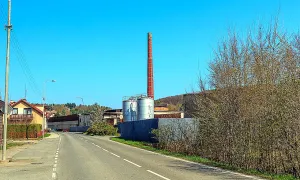
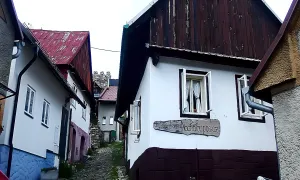
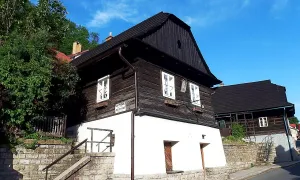
Real photos taken near the monument


Zdroj a licence jsou uvedeny u každého snímku.
Tips from visitors
No tips yet. Be the first!
Log in and add your tip.
Sources and literature
Photos: Hendric Stattmann / CC BY-SA 4.0 — Wikimedia Commons. The author and licence also appear when you hover over the image.
Faktickým podkladem tohoto textu byl článek na Wikipedii, jehož autory jsou přispěvatelé Wikipedie. Článek je dostupný pod licencí CC BY-SA 4.0.
Location on the map
More monuments – Štramberk
Show all in the municipality
Příběhy a pověsti
Legendy, pověsti a příběhy spjaté s touto památkou
Fotografie návštěvníků
Zatím žádné fotografie. Buďte první, kdo přidá fotografii z návštěvy!
Log in a přidejte svou fotografii nebo hodnoťte.
Za ověřenou návštěvu v aplikaci získáte víc bodů — poznáme podle GPS, že jste na místě.
Reviews and comments