



Švédská zeď Wall
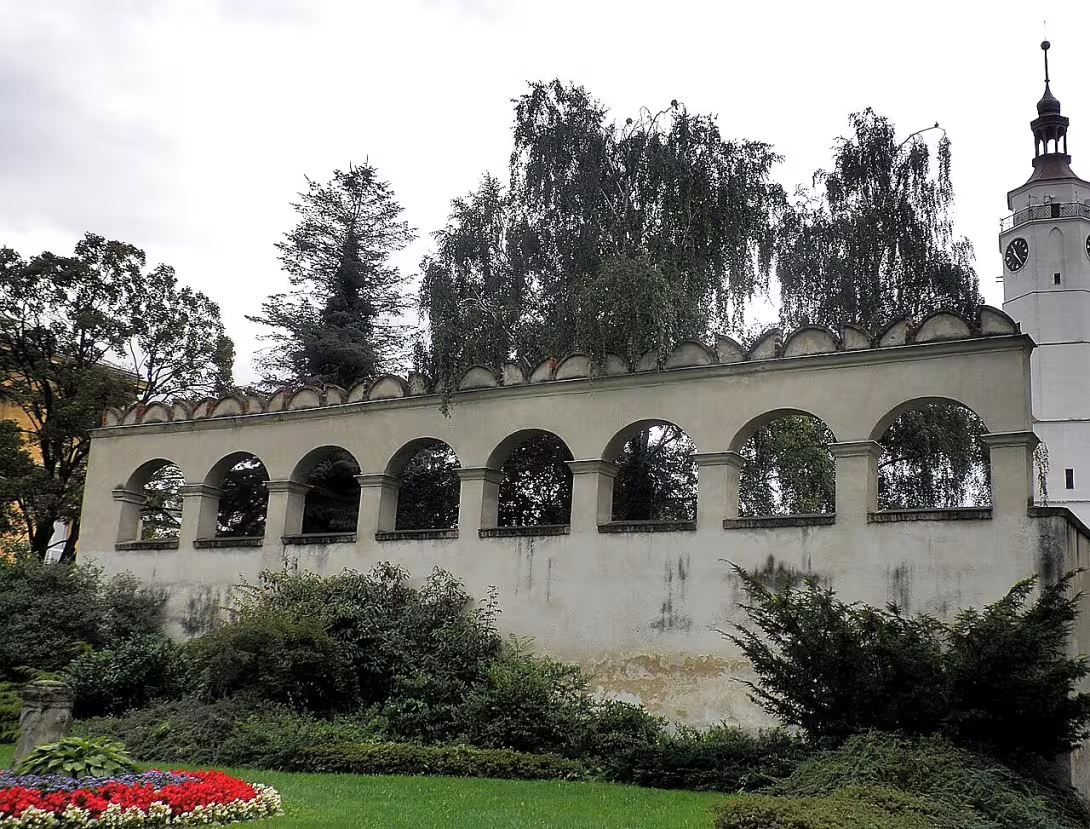
Švédská zeď in Krnov in the Moravian-Silesian Region is a valuable remnant of the original city fortification and a protected cultural monument. This Renaissance building was established in the first half of the sixteenth century and originally served as an arcade corridor connecting the castle with the nearby St. Martin church. Today this historical monument acts as a freely accessible proof of Renaissance construction in Silesia.
This object is a remnant of an older town's fortification system, which was added to the crown of the wall. During the construction period in the first half of the sixteenth century, the Czech countries were under the rule of the Habsburg dynasty after Ferdinand I. took the throne. In Europe, deep social and religious changes were taking place in connection with the onset of the Renaissance and the spread of the Reformation. The work took place between 1523 and 1543 as part of the extensive modernisation of the defence system initiated by the Margrave Jiří z Hohenzollernu.
The monument features significant elements of Renaissance architecture. Its most important preserved part is the covered corridor supplemented by the lunette battlements. These building elements come directly from the period of government of the said margrave and represent a demonstration of the then championship built on older walls.
The major milestone in the modern history of the building became May 3, 1958, when Švédská zeď was officially registered on the state list of cultural monuments. In the immediate vicinity there is the historical heart of the city, Krnov castle and St. Martin's Church.
Currently, this site is open to the public year round. Visitors can see here with their own eyes a tangible document of construction development and fortification history of Silesia. The tour of this place offers a direct view of the past of Krnov fortification and is worth stopping every time you visit the city.
Historical milestones
- 1523
- Opening of the reconstruction of the fortifications and construction of the wall for Margrave Jiří of Hohenzollern.
- 1543
- Completion of construction work on city fortification.
- 1958
- The building was registered as a cultural monument on 3 May.
Architectural development
The construction was added to the crown of the older wall wall. It is characterized by elements of Renaissance architecture, in particular preserved arcade corridor and lunette battlements, which come from the period of the reign of Margrave George of Hohenzollern.
Historical events
The wall was built as part of the reconstruction of the fortifications between 1523 and 1543. On 3 May 1958, the building was listed on the list of cultural monuments.
Points of interest
- The building was built in the first half of the sixteenth century and originally served as an arcade corridor connecting the castle to St. Martin's Church. - The object is a remnant of an older town's fortification system, attached to the crown of the wall. - The work took place between 1523 and 1543 as part of the modernisation of the defence system initiated by the Margrave Jiří z Hohenzollernu. - The most important preserved part is the covered corridor supplemented by the lunette battlements. - On the third May 1958, Švédská zeď was entered on the state list of cultural monuments.
Guide
Show guide text
This text was created by artificial intelligence and has not been editorially reviewed. It may contain inaccuracies.
Welcome to Krnov and allow me to guide you through this interesting place. You are standing right before the so-called Swedish gets, which is a very valuable remnant of the original urban fortification and a protected cultural monument. Raise your eyes now and look at this ancient structure. Feel the atmosphere of a place where centuries of history are bound with the peaceful pace of today's city.
Let's go back in time to a period of hundreds of years ago to understand how this monument was created and what its original purpose was. It's the first half of the 16th century, the year fifteen hundred twenty-three. At this time, there was a large and very important reconstruction of the city's defence system, behind which was a major monarch, Margrave Jiří z Hohenzollernu. The work to improve and expand the city walls lasted a long time and was completed in fifteen hundred forty-three. This whole system of fortifications was designed to protect the people from the dangers that threatened all sides at the time.
Now pay attention to the architecture of the building itself, which is right in front of you. Look at the details that have been preserved until today. This building represents an interesting remnant of the Renaissance arcade corridor. Note that this corridor is supplemented by a specific lunette cimburi, which provides the whole construction of an unmistakable character. This whole building was built directly on the crown of the older wall wall, making it an integral part of the ancient city's defence system.
When we think about how people used this part of town at the time, we find out very interesting things. Originally, this construction was not only for military purposes and defence, but also had a completely practical connection function. It was designed and used as an indoor link between the Krnov castle and the nearby church of St. Martin. Imagine the rulers here and the noble people walking down this arcade corridor, protected from the whims of weather, hurrying to church or returning to their mansion.
When we look at the fates of this monument in a more modern time, we see how much the locals value their history. On May 3rd, nineteen hundred fifty-eight, this building was officially listed as a protected cultural heritage. This recognised its great historical and building value for the whole city and for future generations.
In conclusion, I would like to thank you for your attention and invite you to explore the beauty of Krnova. I hope this stop has been interesting for you and that you will take many nice experiences from the city. I wish you a pleasant rest of the day and a happy journey on your next wandering history. You can also explore the surrounding streets and other sights waiting for you in this picturesque city. Goodbye.
Tips for visitors
The best time to visit is early morning or late afternoon, when fine light best excels at Renaissance details of the wall. We recommend you take comfortable shoes suitable for walking through the historic city. For photographers are the most interesting lunette cimburía and arcade corridor, especially during the golden hour. In short walks in the surroundings visit the historical core of the city Krnova, Krnov castle and St. Martin's Church. For families with children, the wall is a great place to familiarize with the history of urban fortifications in an additional atmosphere.
Frequently asked questions
Can the monument be visited?
We have not verified whether this monument is accessible. Please ask the owner or operator, or the local municipal office.
Where is the monument?
Location: Krnov, Moravskoslezský kraj. The map on this page shows the exact spot.
Why is the monument protected?
It is listed in the Central List of Cultural Monuments of the Czech Republic as a cultural monument (register no. 1000135312).
Businesses nearby
Do you run a restaurant, accommodation, shop, museum, rental, wellness or other visitor service near this monument? Show yourself directly to the people heading to it — this is how they will see you in the app and on the web:
Nearby
V okolí se nachází historické jádro města Krnova, krnovský zámek a kostel svatého Martina v Moravskoslezském kraji.
Accommodation nearby
Themed route
This cruise tour will take you to the historic heart of North Moravia, where you will experience significant monuments associated with the history of the city.
1. Historical core of the city Krnova - Type: City Monument Zone - Why is it worth a visit: This area represents an old part of the city with many sightseeing houses and a peaceful atmosphere for walking. It is close to other stops on the route.
2. St. Martin's Church - Type: Sacral construction - Why is it worth a visit: It is an important historical sanctuary in the region that attracts lovers of ancient architecture and spiritual art. Her visit will enrich your overview of local history.
3. Krnov Castle - Type: nobility residence - Why is it worth a visit: This historic building resembles former masters and the development of the manor in this area. It offers a view of the development of buildings in the Moravian-Silesian Region.
4.Švédská zeď - Type: Historical walls - Why is it worth a visit: The main objective of the whole journey represents the remains of the city's defence system from the past centuries. Reminds of the agitated events of military encounters in the region.
Seasonal recommendations
Spring brings freshness and the first hint of green around the walls. Nature is awakening, the trees are growing and the light is soft and pleasant in this period. For visiting it is best to choose the morning hours when the air is the cleanest. We recommend you take layered clothes because even when the sun is shining, near the old walls can still be cold.
In the summer months, the walls are garnished with thick and rich greenery. The sun shines the strongest and the days are very long, creating a cheerful atmosphere. Because of larger groups of people and high temperatures, it is best to arrive first thing in the morning to avoid the greatest heat and crowds. Don't forget the headgear and plenty of water.
Autumn turns the surroundings into a sea of golden and brown colors. The morning fog surrounding the stone walls gives the place a mysterious and melancholy mood. It is advisable to carry a waterproof jacket and tight shoes, because the road can be slippery due to wet leaves. The ideal time for a walk is in the afternoon when the light is the most golden.
Winter covers Krnov walls with silence and often snow. The atmosphere is steep, cold and very calm. Due to the short days, you need to come earlier so you don't miss the light before nightfall. It is necessary to dress very warm and resistant to freezing. In this period, you will meet the least people here, which you will appreciate in the actual observation of history.
Visualizations and artistic views


The visualisations are generated by artificial intelligence and serve as inspiration.
Photos from the area
Real photos taken near the monument


Zdroj a licence jsou uvedeny u každého snímku.
Tips from visitors
No tips yet. Be the first!
Log in and add your tip.
Sources and literature
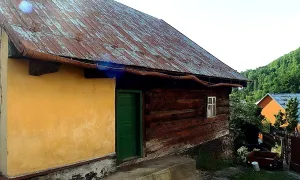
Photos: Qasinka / CC0 — Wikimedia Commons. The author and licence also appear when you hover over the image.
Faktickým podkladem tohoto textu byl článek na Wikipedii, jehož autory jsou přispěvatelé Wikipedie. Článek je dostupný pod licencí CC BY-SA 4.0.
Location on the map

Příběhy a pověsti
Legendy, pověsti a příběhy spjaté s touto památkou
Fotografie návštěvníků
Zatím žádné fotografie. Buďte první, kdo přidá fotografii z návštěvy!
Log in a přidejte svou fotografii nebo hodnoťte.
Za ověřenou návštěvu v aplikaci získáte víc bodů — poznáme podle GPS, že jste na místě.
Reviews and comments