



Synagoga v Kosově Hoře Synagogue
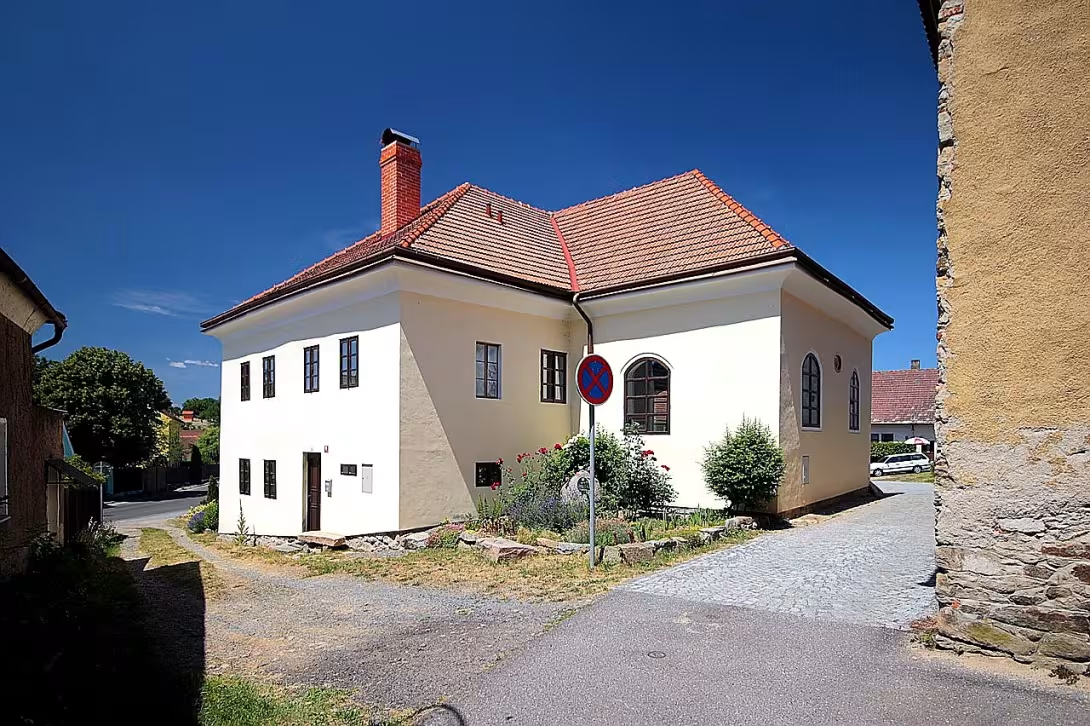
Synagoga v Kosově Hoře is a Baroque cultural monument from 1740. Located in the former Jewish district of the village in the district of Příbram. The building is an important witness to the local Jewish community and was made available to the public in 2011 after extensive reconstruction.
The current brick building from 1740 replaced the older wooden synagogue that burned down. Its creation falls into the period of flowering of Baroque architecture and stabilisation of religious communities in Czech countries.
The Baroque building is approximately 100 metres northwest of the village. Part of the complex is a storey house that served as the rabbi's residence.
The fate of the monument was variable in time. Religious services were held here until the 1920s. After World War II, the construction lost its original purpose and served as a chemical fertiliser warehouse. In the 1980s, the building was so decrepit that it was officially demolished. This threat was stopped by manželé Ehlovi, who bought it into private ownership and gradually reconstructed it.
The creation of a civil society association in 2007 contributed to the completion of the repairs. The whole process culminated in 2011 when the synagogue was opened to visitors.
Currently, the building serves as a space for cultural events. The interior hosts an exhibition resembling the history of the synagogue and the Jewish community operating in Kosovo.
The monument represents a valuable fragment of the Jewish heritage, which, thanks to a private initiative, was saved from extinction. Its visit offers insight into the history of the local community and Baroque architecture.
Then and now
Drag the slider to compare how the landmark may have looked when it was built with the view today.
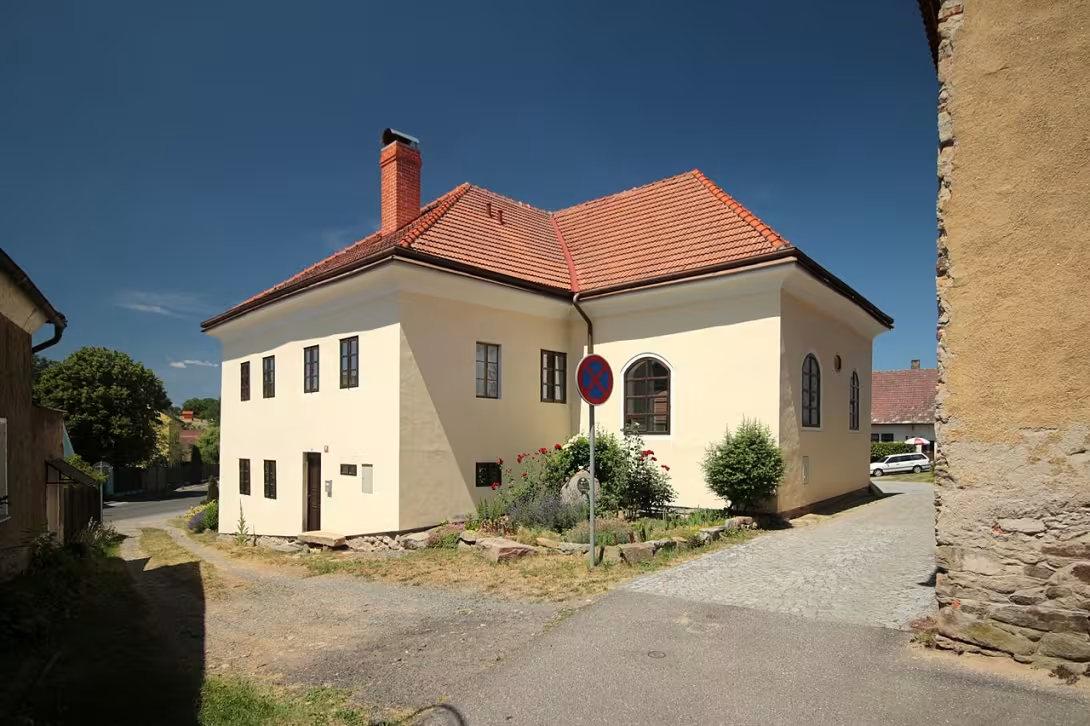

The historical appearance on the left is an AI-generated visualisation and serves as inspiration only.
Historical milestones
- 1740
- Building baroque wall synagogue
- Around 1920
- Termination of worship in synagogue
- po 1945
- Change of use of the building for chemical fertiliser storage
- Around 1980
- Decommissioning and demolition decisions
- 2007
- Establishment of a civil society association to complete repairs
- 2011
- Completion of reconstruction and public opening
Architectural development
The original wooden synagogue was built in 1740 by a Baroque brick building. After the decaying period, the building passed through private reconstruction.
Historical events
1740: Status of the present Baroque synagogue. 20th years of the 20th century: The last service. 2011: Accessing a reconstructed building to the public.
Owners
Married to Ehl (private owners after reconstruction).
Points of interest
- The building from 1740 replaced the older wooden synagogue that burned down. - Part of the complex is a storey house that served as Rabbi's residence. After World War II, the building served as a chemical fertilizer warehouse. - In the 1980s it was designed to be demolished by manželé Ehlovi. - After extensive reconstruction, the synagogue was opened to the public in 2011.
Guide
Show guide text
This text was created by artificial intelligence and has not been editorially reviewed. It may contain inaccuracies.
Welcome to Kosovo Mountain. Stop for a moment, take a breath and feel the silence of this place. Right now, you're standing in front of a building that's far more than just an ordinary building made of stone and mortar. In front of you is the baroque synagogue, a silent witness to history that once throated in these streets with life, faith and hope. When you look at her, you may perceive her calm and dignity, but this building carries the story of dramatic twists, deep oblivion and the subsequent miracle of rebirth.
Let's go back in time together to make it clear what you're seeing. Imagine this place almost three years ago. At that time there was another synagogue, wooden, fragile, which served the local Jewish community as a spiritual centre. Unfortunately, wood is prone to fire, and one of these tragedies came here. The fire destroyed the original structure, but the community didn't give up. They decided to build something permanent, something that would withstand time and elements. So in 1740, this walled Baroque synagogue was created, which you see before you. It is a building that was meant to express the stability and endurance of the Jewish presence in Kosovo.
Now pay attention to the architecture itself. Look at the facade and see the Baroque character of the building. The Baroque is a style of decoration and emotion, and even though this synagogue is sober as part of its purpose, its overall silhouette and proportion talk about the time it was built. Note that the synagogue does not stand in isolation. If you look around, you'll see it's connected to the building. That's not a coincidence. This house served as a residence for a rabbi, a spiritual leader of the community. This closeness between the rabbi's house and the prayer hall created an intimate center of the former Jewish district, where religious life intertwined with the daily worries of the people.
But if we go further in time, we will find that the history of this place is not only about construction, but also about slow escape. The last services were held here around 1920. The Jewish community in Kosovo was gradually disappearing, people were leaving or forced to leave, and with them the spiritual energy that had been filling this building for centuries disappeared. But the darkest chapter came after 1945. Imagine the contrast. For centuries, a place dedicated to prayer, the study of sacred texts and the search for inner peace was suddenly transformed into a chemical fertilizer warehouse. The walls that heard prayers now surrounded the chemical bags. It's a sad picture of how easily the value of places that are so precious to us today can be forgotten and degraded.
Now let's think about what followed. Decades of neglect left deep marks on the building. By 1980, the synagogue was in such a state of decay, it seemed its journey was over. Authorities have decided on her demolition. Imagine the moment when it is already in the signed decision that this historical monument will simply disappear from the map and leave a blank space. But it was at the most critical moment that someone appeared who refused to throw another blow into history.
Here they enter the story manželé Ehlovi. It was people who saw something more than a bunch of old stones in this decrepit building. Thanks to the fact that the synagogue was privately owned, the demolition was stopped. Mr. and Mrs. Ehl have become unofficial guardians of this place. Their courage and their belief that this building deserved to survive saved the synagogue from complete erasure. It was a long and difficult time when the building was not in ruins, but still waiting for its real rescue.
The break came in 2007, when a civil society association was established, which set out to complete the repairs. This was no longer just the efforts of several individuals, but a joint project of people who cared about the memory of the local Jewish community. The reconstruction was complex and challenging, but in 2011 it was finally completed. The synagogue was ceremoniously opened to the public and again became part of the life space of Kosovo Mountain.
Now stop and look at the building again. It's fascinating to realize that if it weren't for a few specific people and their persistence, you'd probably be standing here today in front of an empty set or a modern new building. This synagogue is now a symbol that history is not only about what happened, but also about what we are able to preserve for future generations.
At present, the synagogue no longer serves as a warehouse or as a place of regular service, but it plays a new, very important role. It serves as an exhibition space where you can learn more about the Jewish community that once lived here, worked and made up the history of this region. It's a place of meeting, reflection and education.
Before we say good-bye and you enter, feel the atmosphere of this place. There is a strange tension between baroque elegance, the sadness of oblivion and the joy of a new beginning. It is a reminder that even from the greatest decay can be built something beautiful if there is enough human will.
I now invite you to cross the threshold of this building and explore its inner spaces. Let yourself be shown by exposure and try to imagine the faces of people here centuries ago looking for escape and answers to their questions. Look at the details, feel the silence in the hall, and think about what kind of clue we leave in history.
Thank you for accompanying me on this short journey through time. Enjoy your stay in Kosovo Mountain and be inspired by the story of this irresistible Baroque synagogue. I bid you farewell and wish you a pleasant exploration of this special place.
Tips for visitors
For the best experience we recommend a visit during bright days when sunlight best highlights the Baroque details of the building. A quieter period offers a better opportunity to perceive the history of the former Jewish quarter without much excitement.
Within the village Kosova Hora, follow local transport signs.
We recommend to bring comfortable shoes suitable for walking. For photo lovers are the best places near the synagogue itself, where you can use natural light to capture architecture.
If you are travelling with your family, we recommend you choose a slow pace so that the children can take a quiet look at the surroundings. As part of the village Kosova Hora you can explore the local environment together.
Frequently asked questions
Can the monument be visited?
Religious buildings are usually open mainly during services; at other times a visit is normally arranged with the parish or the operator. We have not verified specific times.
Where is the monument?
Location: Kosova Hora, Středočeský kraj. The map on this page shows the exact spot.
Why is the monument protected?
It is listed in the Central List of Cultural Monuments of the Czech Republic as a cultural monument (register no. 1000145423).
Businesses nearby
Do you run a restaurant, accommodation, shop, museum, rental, wellness or other visitor service near this monument? Show yourself directly to the people heading to it — this is how they will see you in the app and on the web:
Nearby
Návsi obce Kosova Hora.
Accommodation nearby
Themed route
1. Synagoga v Kosově Hoře (Interior) - A tour of historical details and architecture inside the building. 2. Synagoga v Kosově Hoře (The immediate resort) - A tour of the building details at the building. 3. Municipality of Kosova Hora (Local area) - Walk around the village and observe the local development.
Seasonal recommendations
Spring: In the spring season, the synagogue in Kosa Hora receives unique lighting, when the sunlight penetrates through the windows and revives the interior. Nature is awakening from the frost, the trees are beginning to frown, creating a lively atmosphere for visitors. During this period it is recommended to visit the memory early in the morning or in the shade of the afternoon to avoid possible school trips. A good day for visiting is also the end of May and the beginning of June, when temperatures are pleasant and the openness of space allows full experience. We recommend wearing shoes suitable for walking on endless paths, as the surrounding nature offers beautiful trips.
Summer: Summer in Kose Mountain is a time full of life and activities. Synagogue becomes a popular destination for tourists looking for a cultural experience combined with summer pleasures. The sunny days can be very warm, so it is advisable to visit the memory quickly in the morning or in the shade of the afternoon. A good time to visit is early spring season or late autumn when temperatures are mild and fewer people are on the road. Humidity can be a special problem, so it is recommended to wear light but protective clothing and a sufficient level of sun cream.
Autumn: In the autumn period Kosová Mountain gains a quiet atmosphere with softer light, which creates an intimate mood. Tree leaves are turned into colour shades and the overall picture is very attractive for photography. Visit the monument at the end of October or early November, when temperatures are becoming pleasant and the crowds can be more limited. In this season it is advisable to wear layered clothes because temperatures can change quickly from morning to evening. Nature around offers a beautiful background for a visit and it is a great time to relax in a quiet atmosphere.
Winter: The winter season brings Kose Mountain a mild frozen atmosphere where snow covers the surrounding landscape and the trees get rid of the leaves. The synagogue this season offers a unique mood with a cool light penetrating through its windows. Visit the memory in the early winter season when the temperature is less extreme and the openness of the space allows a full visit. At this time, it is important to wear warm clothes, including hat and gloves, to be able to safely explore the memory and its surroundings. Moreover, it is advisable to prepare for shorter open hours, which can usually be limited in winter months.
Visualizations and artistic views


The visualisations are generated by artificial intelligence and serve as inspiration.
Photos from the area
Real photos taken near the monument


Zdroj a licence jsou uvedeny u každého snímku.
Tips from visitors
No tips yet. Be the first!
Log in and add your tip.
Sources and literature
Photos: VitVit / CC BY-SA 4.0 — Wikimedia Commons. The author and licence also appear when you hover over the image.
Faktickým podkladem tohoto textu byl článek na Wikipedii, jehož autory jsou přispěvatelé Wikipedie. Článek je dostupný pod licencí CC BY-SA 4.0.
Location on the map




Příběhy a pověsti
Legendy, pověsti a příběhy spjaté s touto památkou
Fotografie návštěvníků
Zatím žádné fotografie. Buďte první, kdo přidá fotografii z návštěvy!
Log in a přidejte svou fotografii nebo hodnoťte.
Za ověřenou návštěvu v aplikaci získáte víc bodů — poznáme podle GPS, že jste na místě.
Reviews and comments