



synagoga ve Veselí nad Moravou Synagogue
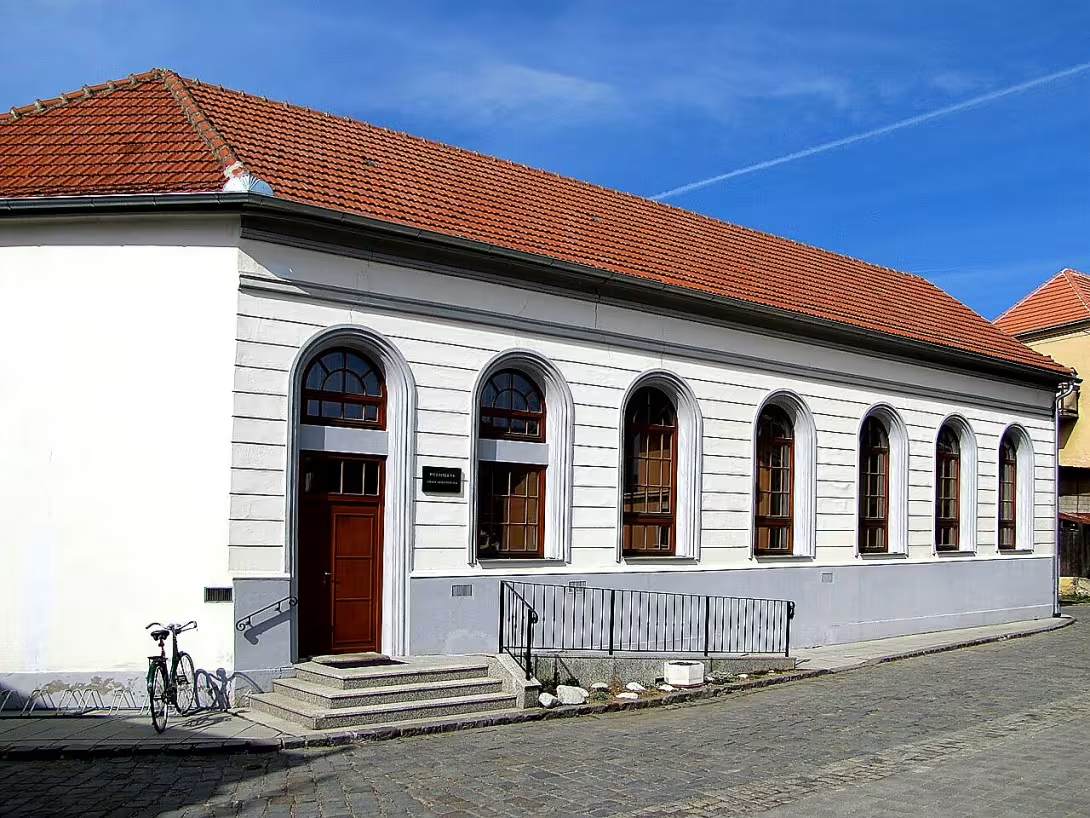
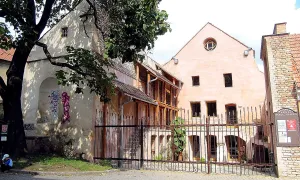
The synagogue in Veselí nad Moravou is a classic building in Rybník Street, built around 1840. Today it serves as a prayer room of the Church of Adventists on the seventh day and is registered as a cultural monument of the Czech Republic.
The building was created at the site of an older prayer house. At the time of construction, the Czech countries were in the period of national renewal and industrial revolution within the Austrian Empire. At the time, Europe went through an era of political stability before the revolutionary year 1848.
The construction bears signs of a classical style. In the 1990s the building underwent a major reconstruction of the interior and exterior, which was necessary for the needs of the new church congregation.
The separate Jewish community in Veselí nad Moravou died after 1890. After World War II, the building was used as a warehouse, which was typical of the synagogue and led to its temporary depreciation. From 1991 to 1993, the building underwent sensitive reconstruction and modifications for the needs of the Church of Adventists on the seventh day, for which it serves religious purposes today.
The key moment in the history of the building is its successful conversion from the sacral space of the Jewish village to the prayer house of another church organization. This transformation has enabled the preservation of the building, which is today protected as a cultural monument.
The building is located in the historical part of the city near the river Moravia and Bata Canal. Visiting this place offers insight into the history of religious life in the region and is an example of the functional use of historical architecture at present.
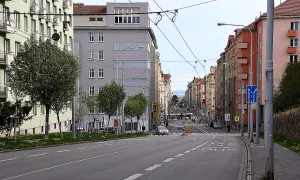
Then and now
Drag the slider to compare how the landmark may have looked when it was built with the view today.
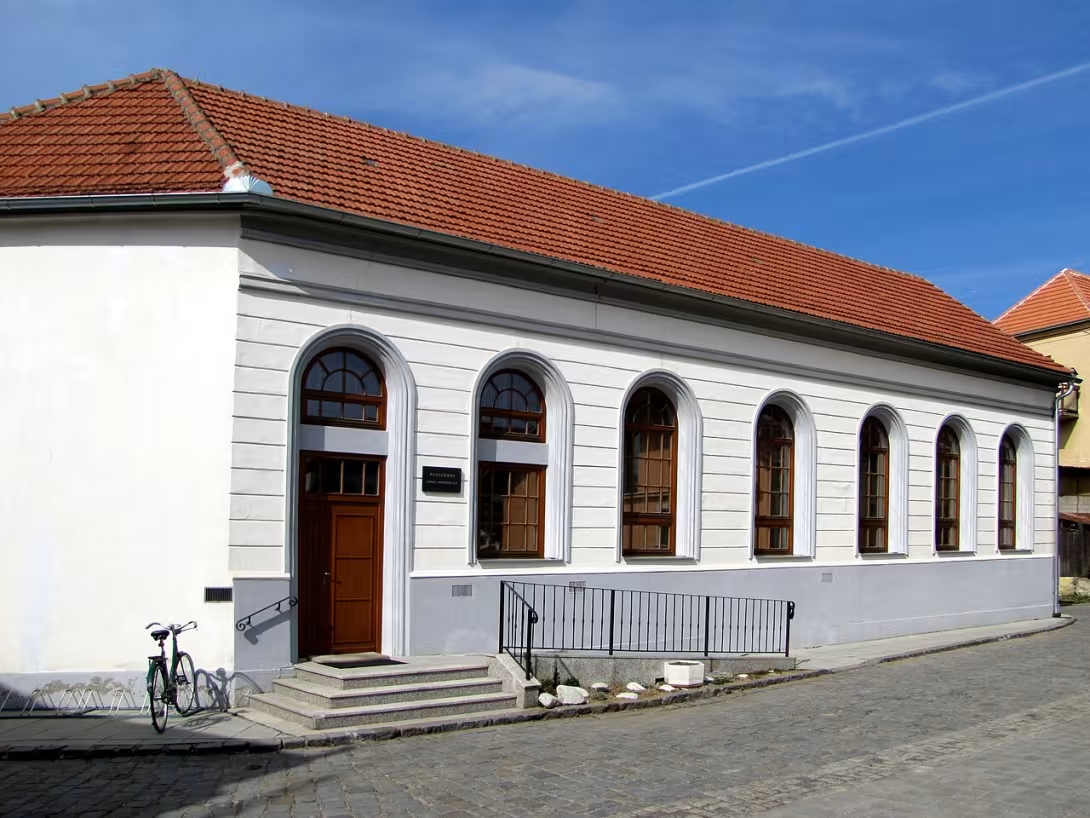
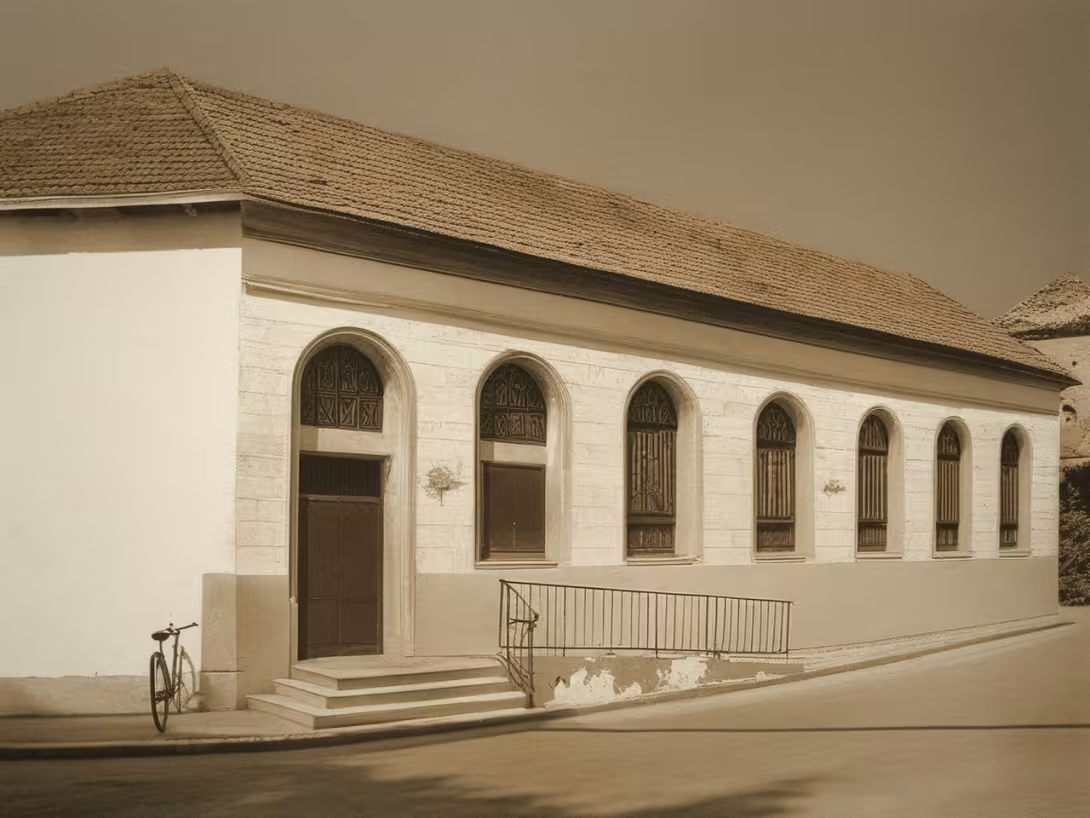
The historical appearance on the left is an AI-generated visualisation and serves as inspiration only.
Historical milestones
- 1840
- Construction of the synagogue on the site of an older prayer house.
- 1890
- The demise of a separate Jewish community in Veselí nad Moravou.
- 1991-1993
- Rebuilding the building to the Church of Adventists on the seventh day.
Architectural development
The construction was built around 1840 on the site of the older prayer house. In the 1990s it underwent a major reconstruction of the interior and exterior for the needs of a new church congregation.
Historical events
The disappearance of the local Jewish community after 1890. The conversion of the building to the Church of Adventists' Church on the seventh day in the years 1991- 1993.
Points of interest
- This Classicist building in Rybneček Street was built around 1840 on the site of an older prayer house. - After World War II, the building served as a warehouse, which led to its temporary depreciation. - From 1991 to 1993 the building was renovated for the needs of the Church of Adventists on the seventh day, which still serves today. A separate Jewish community in this town died after 1890. - The building is registered as a cultural monument of the Czech Republic and is located near the river Moravia and Bata Canal.
Guide
Show guide text
This text was created by artificial intelligence and has not been editorially reviewed. It may contain inaccuracies.
Welcome to Veselí nad Moravou. You have just stopped in the street of Rybneček, and before your eyes there is a building that has been harnessed and noble stories for generations. You are standing in front of a place that is not just a wall and a roof, but a living witness to the transformation this city has experienced. Feel now the atmosphere of peace that exists here, and try to imagine how many different human destinies have met in this space over the centuries. This object you are now observing was once the heart of the spiritual life of the local Jewish community. Although his function has changed today, his presence here still resembles the rich and multi-dimensional past of this region.
The view of this building can immediately give you deep reflection on how time spills from one form to another in human cities. Now let's go deeper into the past to understand why this object is standing right here. The whole history of this place begins much sooner than it might seem. This building was built around 1840. But it was not built in an empty place. In front of it stood an older prayer house, which served local people to pray and meet them. The new construction from the mid-nineteenth century was to be an expression of the stability and growth of the then community. It was a time when cities grew and religious buildings played a crucial role in strengthening social life. This synagogue was a symbol of the existence and identity of the people who lived here, worked, and formed part of a cheerful society.
Now pay attention to the architecture of the object in front of you. Notice his general appearance. The construction is carried out in a classical style, which is apparent from its balance and some degree of simplicity, which has inside order. Classicism seeks harmony and peace, which is perfectly suited for the purpose for which the building was originally intended. Although time is relentlessly moving forward, this style gives the building a sense of endurance. Looking at her facade, you can see the effort for geometric purity and symmetry that is so typical of this period. Although the details may seem modest at first sight, it is this moderate elegance that defines the character of the entire object. It's a building that doesn't try to scream, but rather exudes dignity with its presence.
But if we look further into history, we will find a sadder chapter. The history of this place is not only a story of ascension, but a gradual disappearance. In 1890 there was a major break when a separate Jewish community died in Veselí nad Moravou. This meant that a place that was once filled with people, their voices and their rituals began to gradually lose its original meaning. The building stayed, but the people who gave her the soul moved gradually or their numbers fell. This era of silence and gradual forgetting was very difficult for the object.
And this is where we get to one of the most important and fascinating parts of this story. How did the building cope with the upheaval of world history? After World War II, the fate of this place turned into a very unusual direction. Instead of serving as a place of spiritual peace, it was reduced to a simple warehouse. Imagine the contrast between the original purpose of the construction and its reality at a time when it was only used to store the goods. This period led to a temporary deterioration of the object. He lost his original nobility, his inner space was transformed for practical but unbeautiful purposes, and his historical value was set for years for age. It was a time when this monument seemed to perhaps never return its original shine.
However, history often has a way of bringing things back to life. The time has come for recovery and hope. From 1991 to 1993 this building underwent a very sensitive and thorough reconstruction. It wasn't just a simple hit on the building, it was a real reconstruction that was meant to save the object and give it a new meaning. Thanks to this reconstruction, the building has become an important point again on the city map. Today it no longer serves as a warehouse, but as a prayer room of the Church of Adventists on the seventh day. This transformation is fascinating - a building that was built for one faith, went through a period of total extinction and finally found a new home within another faith. It is proof that even though the function of the site is changing, its essence as meeting points and search for a higher meaning remains.
An interesting thing for you is how this object is perceived today. It is not just a building but a protected cultural monument of the Czech Republic. This means that every stone and every line you see here are protected so that this story can be told to other people in the future. There is a mystery here - how did this object even survive in such difficult times? How did he survive the storage period and how did he regain his dignity? Maybe it's the invisible power of places that carry such deep history.
Now that you've been through the main points of the history of this place, I suggest you continue your walk along the Pond Nut. Take a look around, see the details of the surrounding houses and try to find clues of the past in every corner of this town that you have just as well imagined. This monument is just one of many points that make up a unique Veselí nad Moravou mosaic. Thank you for joining us on this short journey through time. We wish you a beautiful rest of the day and many other interesting discoveries on your next journey.
Tips for visitors
The best time to visit is during the sunny morning, when the light highlights the historical architecture of the building in Rybček Street. Due to the nature of the monument we recommend planning a visit during the period when the building is made available to the public, which you should check in advance on the official website.
Transportation to the city is possible by car and public transport. For precise route planning, use internet connection search engines to offer up-to-date traffic options to Veselí nad Moravou.
For photography we recommend to capture the exterior of the building from Rybček street, where the historical character of the building stands out. It is convenient to take a wide-angle lens camera with you to accommodate the whole architecture, and don't forget the comfortable shoes for walking around.
In the immediate vicinity of the monument is located the historical center of the city, which encourages you to walk. You can also head for the river Moravia or the Bata Canal, which offer a pleasant environment for relaxing and observing water levels.
The location is suitable for families with children due to the proximity of the river and the canal where the boat traffic can be observed. The walk through the historic centre is easy and offers plenty of room for children to move in a safe environment outside the main road moves.
Frequently asked questions
Can the monument be visited?
Religious buildings are usually open mainly during services; at other times a visit is normally arranged with the parish or the operator. We have not verified specific times.
Where is the monument?
Location: Veselí nad Moravou, Jihomoravský kraj. The map on this page shows the exact spot.
Why is the monument protected?
It is listed in the Central List of Cultural Monuments of the Czech Republic as a cultural monument (register no. 1000119184).
Businesses nearby
Do you run a restaurant, accommodation, shop, museum, rental, wellness or other visitor service near this monument? Show yourself directly to the people heading to it — this is how they will see you in the app and on the web:
Events nearby
Zdroj akcí: otevřená data měst a obcí ČR (Národní katalog otevřených dat) a kalendář akcí Národního památkového ústavu.
Nearby
V blízkosti se nachází historické centrum města Veselí nad Moravou a řeka Morava s Baťovým kanálem.
Accommodation nearby
Seasonal recommendations
Spring: In the merry town of Veselí nad Moravou, the synagogue brings you spring light, which blissfully blends with ancient walls. This period is known for flowering greenery and warm sunlight that bring a lively atmosphere. Visit it in the early spring months, when opening is longer than later in the year and the crowds are still mild. We recommend taking light clothes with us, but also a protective coat for a cooler morning.
Summer: In summer the synagogue in Veselý nad Moravou offers a special atmosphere. The sunny days bring bright and warm light, which joins the interior of the monument. In the main summer season the visit can be very popular, so it is advisable to come early morning or late afternoon to avoid the crowd. Early arrival also guarantees better photos without many people in the background. Don't forget to wear your goggles and enough drinking water.
Autumn: In the autumn period Veselí nad Moravou becomes quieter, allowing you to explore the synagogue more easily. The shade leaves and grey sky bring unique lighting, which gives a monument to melancholy beauty. Visit it in the early autumn period, when the crowds are less ranked and opening is still long enough to see the memory. We recommend wearing warmer clothes because autumn cold gradually increases.
Winter: Winter visit of the synagogue in Veselí nad Moravou offers a completely different view. Cold days and shorter sun rays add darkness that emphasizes the historical elements of the building. In winter months the opening is usually short, so try to visit it in time and avoid the discomfort of the cold. It is important to wear warm clothes, both for the outdoors and perhaps in the inner spaces, if necessary. The visit will be quieter and less humane, which allows a peaceful view of the memory.
Visualizations and artistic views


The visualisations are generated by artificial intelligence and serve as inspiration.
Photos from the area
Real photos taken near the monument

Zdroj a licence jsou uvedeny u každého snímku.
Tips from visitors
No tips yet. Be the first!
Log in and add your tip.
Sources and literature
Photos: Radek Linner / CC BY-SA 3.0 — Wikimedia Commons. The author and licence also appear when you hover over the image.
Faktickým podkladem tohoto textu byl článek na Wikipedii, jehož autory jsou přispěvatelé Wikipedie. Článek je dostupný pod licencí CC BY-SA 4.0.
Location on the map
More monuments – Veselí nad Moravou
Show all in the municipality



Příběhy a pověsti
Legendy, pověsti a příběhy spjaté s touto památkou
Fotografie návštěvníků
Zatím žádné fotografie. Buďte první, kdo přidá fotografii z návštěvy!
Log in a přidejte svou fotografii nebo hodnoťte.
Za ověřenou návštěvu v aplikaci získáte víc bodů — poznáme podle GPS, že jste na místě.
Reviews and comments