



Zámeček Pohansko Hunting lodge
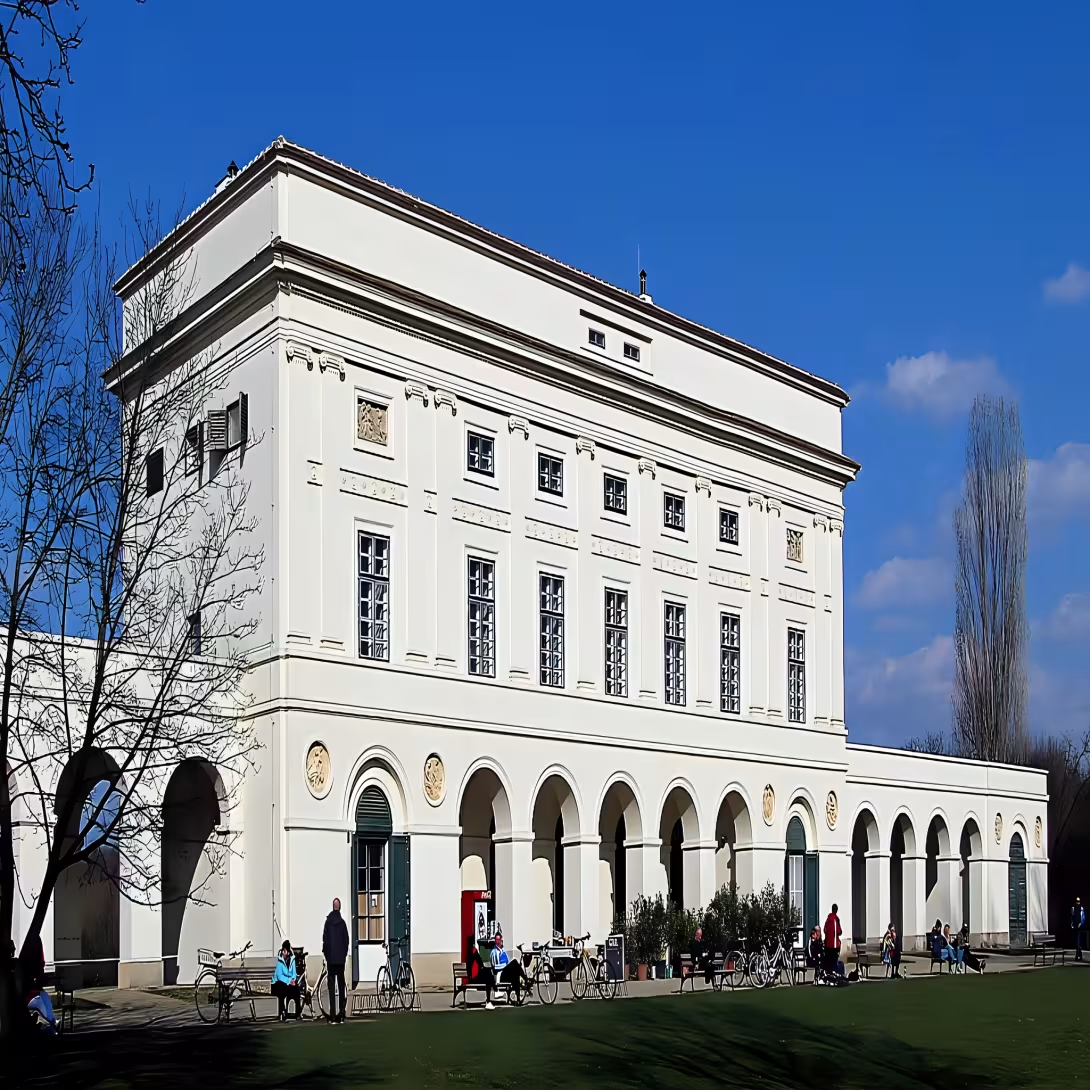
Zámeček Pohansko is an Empire hunting castle from 1810-1812. It is located in the Lednico-Valtice complex in the village Břeclav in the South Moravian Region. The building is protected as a cultural monument and represents an important example of classical architecture in the region.
The construction was built in 1811-1812 by Prince Jan I. z Lichtenštejna. It was created at the time of the Napoleon wars and the European blossom of classicism. It was part of a wider plan to create a unique cultural landscape of Lednico-valtice complex. The design was prepared by architects Josef Hardtmuth and Josef Kornhäusel.
The castle is a monumental classical building with a rectangular plan. It is composed of a central storey building, which is supplemented by symmetrical ground tracks on the sides. Pillar arcades lead all the way across. The northeast facade of the first floor is characterized by a loggia with twelve Ionian columns. The facade is decorated with rectangular reliefs with hunting scenes and circular medallions, whose author was probably Vienna sculptor Josef Klieber.
The castle was originally owned by Prince Jan I. z Lichtenštejna, today it is the property of the city of Břeclavi. Since 1998, there has been an archaeological exhibition of the Museum of March. The exhibition presents the findings from Slavic castle Pohansko, which lies northeast of the castle. In September 2023, the exposure was modernised and enriched with multimedia elements.
The object is located on the shore of the lake formed from the blind arm of Dyje. In the immediate vicinity there is a Museum of Light Fortification with objects pattern 37, trenches and border roadblocks. The natural trail of Pohansko also passes the monument.
The castle is open to the public during the season from April to October, when refreshments also work. The road from the centre of Břeclavi to the building consists of a green tourist mark of approximately 5 kilometres long, or asphalt paths for cyclists and hikers are available.
The combination of Empire architecture and the proximity of significant archaeological findings makes Pohanska a unique place. The visit offers insight into the classical art and ancient history of Slavic settlement in the region.
Then and now
Drag the slider to compare how the landmark may have looked when it was built with the view today.
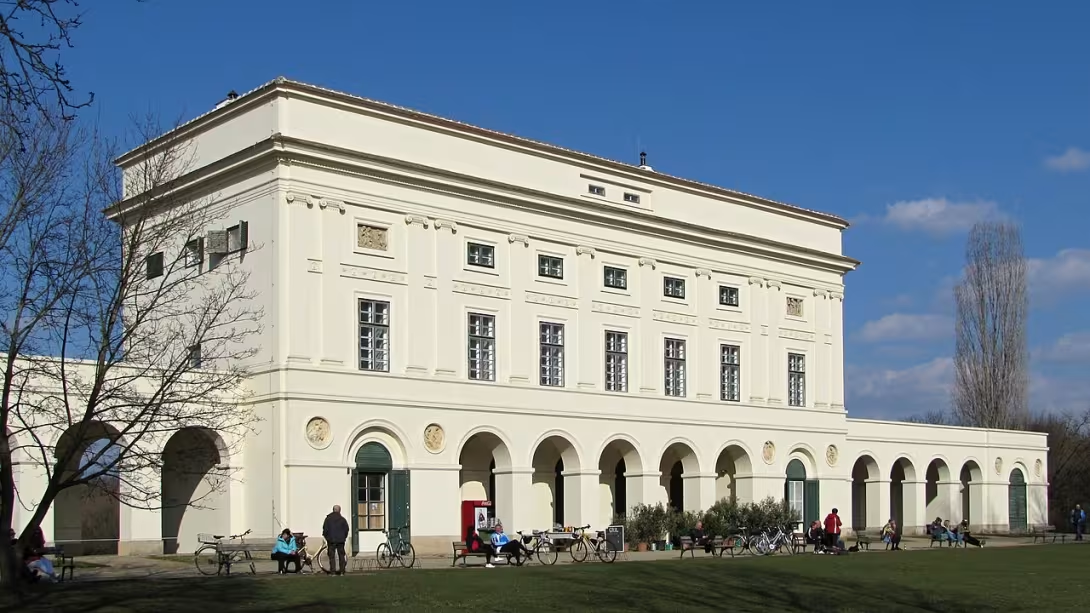

The historical appearance on the left is an AI-generated visualisation and serves as inspiration only.
Historical milestones
- 1811
- the construction of the castle by Prince Jan I. from Liechtenstein
- 1998
- opening of archaeological exposition in the castle premises
- 2023
- exhibition innovation and addition of multimedia exposure
Architectural development
It is a monumental classical building with a ground floor divided by the arcture. The northeast front of the first floor is decorated with lodjie with twelve Ionian columns. The facade is supplemented with circular medallions and rectangular reliefs with hunting scenes.
Historical events
1811-1812: castle construction, 1998: location of archaeological exhibition of the museum of march, 2023: innovation of exhibition of multimedia exhibition
Owners
Prince Jan I. z Lichtenštejna, currently city Břeclav
Points of interest
- It's an empirical hunting castle from 1810-1812, which was built by Prince Jan I. z Lichtenštejna. - The building has a rectangular plan and its facade is decorated with relief with hunting scenes and circular medallions. - Since 1998 there has been an archaeological exhibition presenting the findings from the Slavic castle Pohansko. - The castle lies on the shore of the lake, which came from the blind shoulder of the river Dyje. - In the vicinity there is a Museum of Light Fortification with objects pattern 37, trenches and border roadblocks.
Guide
This guide is narrated by a synthetic voice generated by artificial intelligence.
Show guide text
This text was created by artificial intelligence and has not been editorially reviewed. It may contain inaccuracies.
Welcome to South Moravia near the city of Břeclav. Right now, you're standing in front of one of the most charming places in the entire Lednice-Valtice complex. The castle of Pohansko stands before you. At first you may be interested in his calm elegance and harmony with which he fits into the surrounding countryside. It's a building that doesn't seem overwhelming, but rather noble and balanced. Stop for a moment, take a breath, and just keep your eyes on the atmosphere of this place until we go deeper into its history together.
If you look at this structure, you might feel that it was standing here from the beginning, but its history in this form begins at the beginning of the nineteenth century. Exactly in the year of tyre eight hundred one was given the start of construction, which was ordered by Prince John the first of Liechtenstein. Why build such a beautiful object here? The answer is simple and very specific. This castle was not a gedacht as the main family home where the prince would spend every day of his life, but as a hunting lodge. At that time the hunter was a symbol of status, place of rest and social gatherings in nature. So imagine how carriages passed through here more than two styles ago, what hunting horns sounded like, and how the nobles gathered in these areas to celebrate successful hunting in the surrounding forests and lye.
Now, look closely at the architecture of the building itself with me. Notice its shape. The castle has a rectangular plan which gives it stability and clarity. The dominant is the central storey building, from which symmetrical ground lines extend to the sides. This symmetry is crucial for the style in which the castle was built, which is the so-called empirical style, responsible for a wider stream of classicism. Everything is balanced here, nothing is unnecessarily ordered.
Now look closer to the facade, the facade of the building. If you focus on the details, you'll see fine ornaments that tell the story of the location. Notice the reliefs, which are plastic ornaments scratched or slid into the surface of the wall. These reliefs represent the hunting scenes that lead us directly to the original function of the building. In addition to them, you will find circular medallions, which complement the overall aesthetic impression and give the building a touch of ancient nobility. The whole project was a work of talented architects named Josef Hardtmuth and Josef Kornhäusel who were able to combine the practical function of a hunting house with a high art standard.
When we think about the people who were connected to this place, we have to go back to that Prince John, the first of Liechtenstein. It was a man with a vision who wanted to create a unique landscape in this region where nature intertwined with human architecture. Other personalities, such as Josef Klieber, worked with him. Imagine the discussions between them when they planned to deploy buildings and roads in this area. Every stone and every line has been carefully thought out to express power, but also respect for the surrounding environment.
Now let's get to something that might be a surprise to you. Although you see a beautiful empirical castle in front of you, the secrets of this place go much deeper until no princes from Liechtenstein have ever been here before. It means that there is a history beneath the ground and around the building that is much older than the house itself. That is why, since the year one thousand nine hundred ninety-eight, there has been an archaeological exhibition.
Try to imagine that beneath your feet were the remains of Slavic Castle. It is this fort, which is called Pohansko, that is the main reason why this place is so special. Archaeologists have found valuable findings here that tell us about the people who lived here centuries ago, their craft, their faith and their everyday life. It's fascinating that in one place there are such different periods. On the surface we see the elegance of the nineteenth century, while within us lies a journey into the deep past of our ancestors.
If you are interested in a modern approach to history, you will appreciate that this exposure is not static. In the year two thousand twenty-three, the exhibition had undergone a major renewal. It was supplemented by multimedia elements, which means that history is not just about silent objects behind glass, but about an interactive experience. Thanks to these innovations, you can understand more deeply what the castle looked like and what important roles it played in the region.
You are therefore standing in front of a building which is protected as a cultural monument and which carries two faces. One face is the external, representative, hunting and aristocratic. The second face is the inner, scientific and mysterious one that follows us through the world of archeology. It's a place where the luxury of princes meets the stillness of early Slavic settlements.
Now that you know the basic story of this house, I suggest you move on slowly. Look around, see the symmetry of the facade and try to imagine the people who walked here two years ago. And if you have the chance, enter and be guided by the world of archaeological finds. Discover for yourself the secrets of Slavic Castle and look at the modern way in which history is presented here.
Thank you for your attention. I wish you a pleasant rest of the visit in this wonderful area and hope that the castle Pohansko has enchanted you with its atmosphere and stories. Enjoy your time and explore everything this place offers. Goodbye.
Tips for visitors
For the best experiences we recommend a visit in the spring or summer season, when the surrounding nature is the most lively and the lakes at the shore of Dyje offer a pleasant environment. Autumn morning fog above water gives the place a mysterious atmosphere.
The location is available by car and by public transport; Check the current connection and parking options in the search engine or on the official site of the monument.
For photo lovers, the best moments at sunset are when light is reflected from the lake level and highlights the outline of the castle. The castle looks great from a distance within the landscape.
For families with children it is ideal to explore the surrounding natural path Pohansko or take a look at Slavic Hrad Pohansko. You can also see the objects of the Light Fortress Museum nearby.
For comfortable outdoor movement we recommend to take with you fixed shoes for nature walks and plenty of fluids, especially if you plan to stay longer by the water.
Frequently asked questions
Can the monument be visited?
Yes. We verified the opening hours or admission on the official website (22. 10. 2026); you will find them in the visitor information on this page. Please double-check with the operator before you travel.
What are the opening hours and admission?
Details verified on the official website (22. 10. 2026) are listed in the visitor information on this page. Official website: https://www.muzeumbv.cz/zamecek-pohansko/
Where is the monument?
Location: Bratislavská 206, Břeclav, Jihomoravský kraj. The map on this page shows the exact spot.
Why is the monument protected?
It is listed in the Central List of Cultural Monuments of the Czech Republic as a cultural monument (register no. 19654/7-1160).
For kids
Imagine going back 216 years to a time when a small wooden castle stood here in the pagan plain. It was like a war strategy game, but instead of coins and stones, there were real fighters.
Was it that long ago? So there's no tree from that time. But there is still his memory - the castle of Pohansko. It began as a small wooden castle, and later it grew and became a centre of power for our ancestors.
Businesses nearby
Do you run a restaurant, accommodation, shop, museum, rental, wellness or other visitor service near this monument? Show yourself directly to the people heading to it — this is how they will see you in the app and on the web:
Events nearby

Zdroj akcí: otevřená data měst a obcí ČR (Národní katalog otevřených dat) a kalendář akcí Národního památkového ústavu.
Nearby
Zámeček leží na břehu jezera tvořeného slepým ramenem Dyje. V blízkosti se nachází slovanské hradiště Pohansko, Muzeum lehkého opevnění s objekty vzor 37 a přírodní stezka Pohansko.
Accommodation nearby
Themed route
Here is the design of the thematic route:
1. Slavic castle Pohansko (historical fortification) - Walk around the ancient settlement of ancient inhabitants. 2. Natural trail of Pohansko (cruise trip) - Road through the landscape that connects the surrounding monuments. 3. Light fortification museum (technical exhibition) - A tour of concrete structures from the year one thousand nine hundred thirty-seven. 4. Zámeček Pohansko (lock) - A visit to the main building on the shore of the lake, which serves as the top of the road.
Seasonal recommendations
Spring - The first flowers are awakened around the castle, the leaves turn green and the sun's rays are soft and scattered. We recommend to come early in the morning when it is still quiet and light highlights historical stones, and dress up in a light jacket or sweater that protects against an occasional cooler breeze. At this time visitors are less numerous, so you can soak up the atmosphere of blooming nature in peace.
Summer - In the summer months, the castle is spread under the bright sun, the gardens are full of lush green, and the scent of flowers is mixed with the murmur of leaves. It is best to plan a trip for the late afternoon, when the heat calms down slightly and the crowds that gather at noon are already retreating. Dress in light clothes, remember the sun cap and plenty of fluids to make you comfortable even on hot days.
Autumn - The autumn castle is filled with golden light when leaves turn into shades of yellow, orange and red, and the colder air brings pleasant freshness. It is ideal to visit him in the evening when the sun throws warm tones on the stone wall and the crowds are already considerably smaller. We recommend wearing a warm sweater or a light jacket or scarf to protect you from a colder autumn breeze.
Winter - In winter, the castle is covered in quiet snow, which decorate the roofs and surrounding trees, and the light reflects the white area, creating a fabulous atmosphere. The most appropriate is to come during the morning when the sun still shines and the snow shines, and the crowds are almost invisible. Dress in a warm coat, hat, gloves and tight shoes so that you don't be surprised by the cold and possible steps in the snowy terrain.
Visualizations and artistic views


The visualisations are generated by artificial intelligence and serve as inspiration.
Photos from the area
Real photos taken near the monument


Zdroj a licence jsou uvedeny u každého snímku.
View from the area
This animation was generated by artificial intelligence from a real photograph of the surroundings. The motion and details are not real footage of the location.
Atmosphere of the place
This atmospheric visualisation of the place and period was generated by artificial intelligence. It is not real footage of the location.
Tips from visitors
No tips yet. Be the first!
Log in and add your tip.
Sources and literature
Photos: Radek Linner / CC BY-SA 3.0, rozlišení zvýšeno umělou inteligencí — Wikimedia Commons. The author and licence also appear when you hover over the image.
Faktickým podkladem tohoto textu byl článek na Wikipedii, jehož autory jsou přispěvatelé Wikipedie. Článek je dostupný pod licencí CC BY-SA 4.0.
Location on the map



Příběhy a pověsti
Legendy, pověsti a příběhy spjaté s touto památkou
Fotografie návštěvníků
Zatím žádné fotografie. Buďte první, kdo přidá fotografii z návštěvy!
Log in a přidejte svou fotografii nebo hodnoťte.
Za ověřenou návštěvu v aplikaci získáte víc bodů — poznáme podle GPS, že jste na místě.
Reviews and comments