



Synagoga v Břeclavi Synagogue
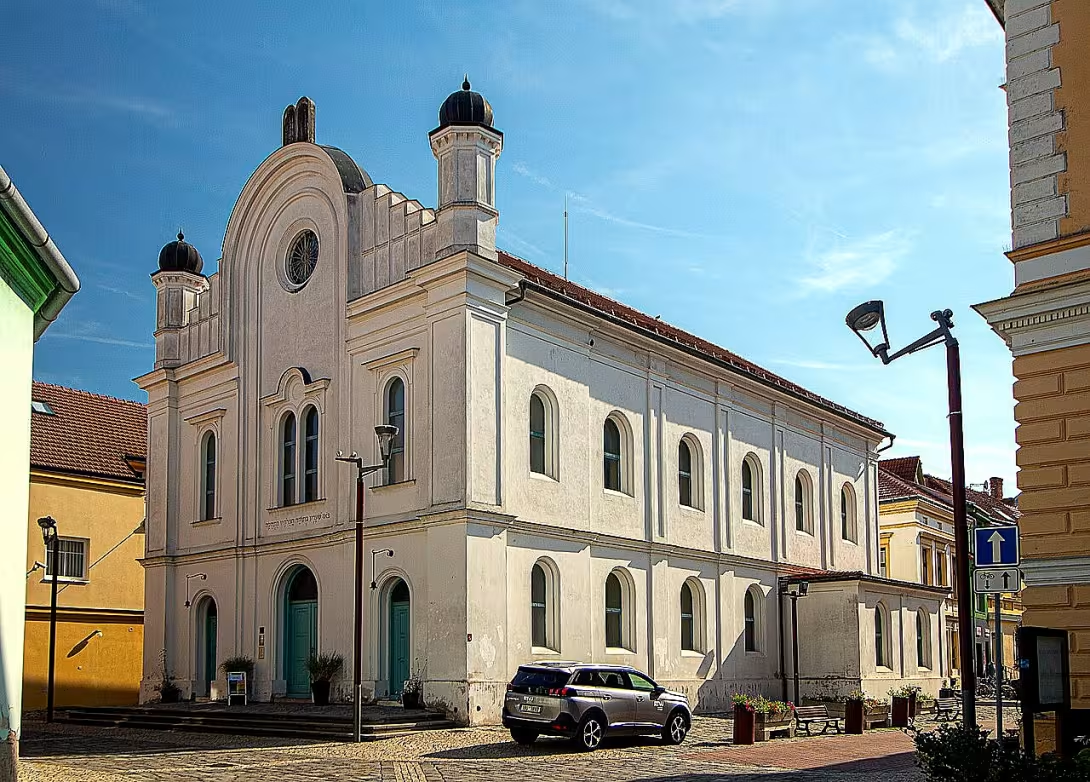
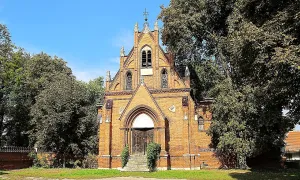
Synagoga v Břeclavi is a New Romanesque prayer house from 1868, located on U Market Street. This building is a protected cultural monument of the Czech Republic and today serves as a place for cultural and social events.
The original 1697 synagogue stood at the site of the current construction. In the second half of the 19th century it no longer met the needs of the community, so in 1868 a new building was built at the expense of Jewish mayor David Kuffner (1796-1871).
The construction is performed in New Romanesque style with Moorish elements in the interior. In 1888, the synagogue was rebuilt according to the design of Viennese architect Max Fleischer.
The building was electrified in 1930. After World War II, she lost her original function and was used as a warehouse. In 1997- 1999 a major reconstruction took place, which prepared the building for current use.
The Jews are in Břeclavi known since 1414. Their neighborhood was located south of today's Masaryk Square and originally included 72 houses, of which 24 were preserved. 718 inhabitants joined the Jewish nationality in 1921. The Kuffner family, the owners of the Marclav sugar factory, played an important role in the community.
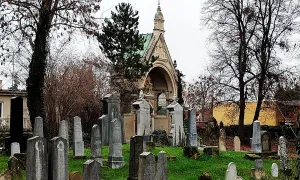
In the vicinity of the synagogue is the building of the former Jewish school, which today works as a Liechtenstein house with an exhibition on the history of the family of Liechtenstein. Another monument in the area is a 17th century Jewish cemetery with hundreds of tombstones.
Today he manages the synagogue City Museum and Gallery Břeclav. On the first floor, in the area of the former women's stand, there is a permanent exhibition Jewish Břeclav. Twelve information panels with photographs and documents resemble Jewish monuments in Břeclavi, Lednice and Weirdo.
Synagoga v Břeclavi is a valuable architectural and historical testimony about the Jewish community in the region. Visiting this building and the surrounding monuments allows a deeper understanding of the history of the city.
Then and now
Drag the slider to compare how the landmark may have looked when it was built with the view today.
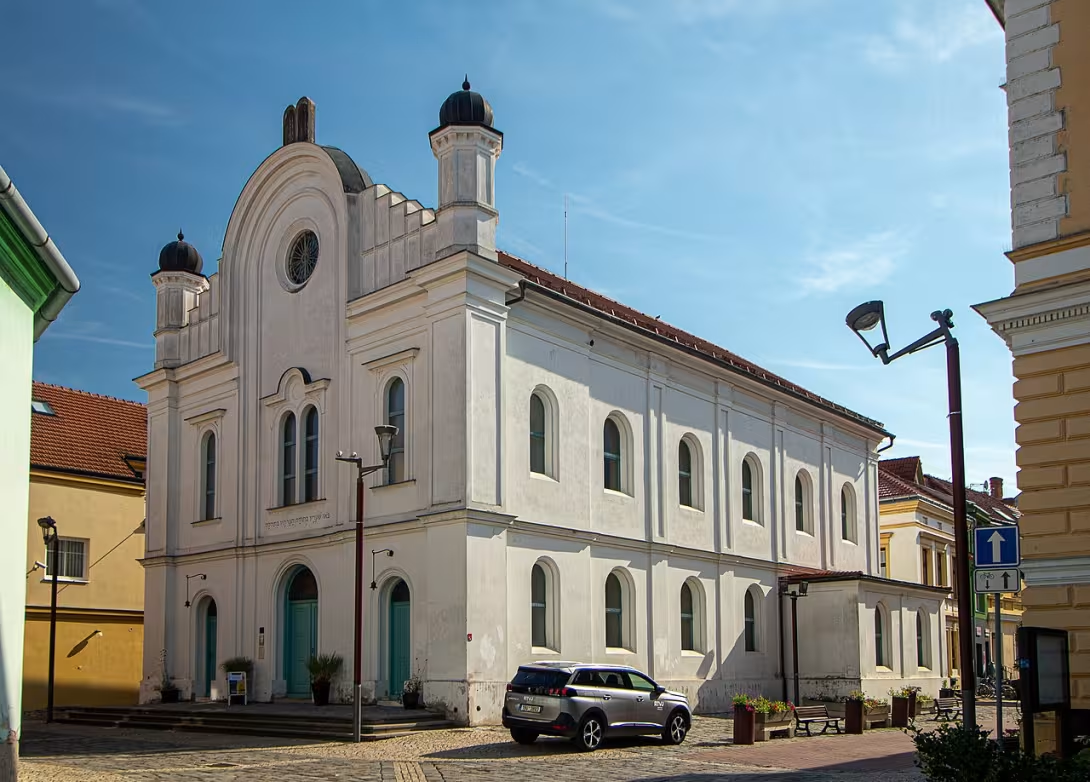

The historical appearance on the left is an AI-generated visualisation and serves as inspiration only.
Historical milestones
- 1868
- Status of the new synagogue
- 1888
- Building construction work
- 1930
- Introduction of electricity
- 1997
- Start of extensive reconstruction
Architectural development
The building was built in a new Romanesque style with Moorish elements in the interior. In 1888 construction was carried out under the guidance of architect Max Fleischer. After extensive reconstruction at the end of the 20th century, the building was prepared for cultural use.
Historical events
In 1868 a new synagogue was built at the expense of David Kuffner. In 1888 the building was reconstructed. Electricity was introduced in the building in 1930. In 1997- 1999 the building underwent extensive reconstruction.
Points of interest
- It's a New Romanesque prayer house from 1868 on Market Street. - The original 1697 synagogue stood at the site of the current construction. The building was built at the expense of Jewish mayor David Kuffner. - The construction is performed in New Romanesque style with Moorish elements in the interior. - On the first floor is a permanent exhibition Jewish Břeclav.
Guide
Show guide text
This text was created by artificial intelligence and has not been editorially reviewed. It may contain inaccuracies.
Welcome to Břeclavi. You're standing in front of a building that carries deep traces of history and the silent story of the people who lived here, believed and formed part of this city. In front of your eyes is a synagogue that immediately catches the attention of its unusual form with its presence at the Market Street. Even though you are now looking at its outer walls, feel the atmosphere of a place that has undergone many changes and that still holds the dignity of its original purpose.
Now let's go back deep into the past to understand why this building is standing right here. To understand the importance of the current building, we need to look at what was here before. Before this construction, in this same place, the Jewish community was served by an older prayer house, which dates back to 1697. But during the advancing centuries, the city and its inhabitants changed. The Jewish community in Břeclavi grew and the old prayer room was just not enough. Its capacity has been exhausted and the need for a new, more dignified and more spacious space has become necessary. So there was a decision that changed the face of this neighborhood.
In 1868, the new synagogue was completed. This year represents a turning point when the old have joined together to promote new needs. The construction was not just another building project, it was a symbol of stability and bloom. And right here, we have to name a character without which this monument would probably not have been created. It was David Kuffner, a major Jewish mayor who decided to financially respond to this construction. His vision and generosity built the synagogue at his own expense, making him not only a patron, but also an architect of his city's social expansion.
Now pay attention to the very appearance of the building that now surrounds you. If you look at its overall structure, you immediately realize that this is not a normal construction of the time. The synagogue was designed by an architect named Max Fleischer. He chose the New Romanesque style for its implementation, which gives the building a sense of strength, stability and historical continuity. However, the most interesting thing is hidden inside. Although you are now outside, prepare yourself for what awaits you after entering the interior. Fleischer has inserted the Moorish elements into the interior, creating a fascinating contrast to New Romanesque external expression. This style, which resembles the architecture of the Eastern world, was very popular at the time for its exotic beauty and the ability to express spiritual nobility.
But the history of this building does not end with its status. If we follow the timeline, we'll see how the synagogue had to adapt to the next era and modernization. Already in 1888 the building passed an important building modification which probably helped better integrate its functions. Another big step that brought light and modern comfort was the introduction of electricity in 1930. That was a huge leap forward for the community back then.
And if you look at the current state, you will see the result of another major event. In 1997, a major reconstruction began, which was intended to save this precious object and prepare it for generations to come. This reconstruction was crucial to enable the building to live again today, albeit not as a place of religious ceremonies, but as a living cultural space.
Today the synagogue no longer serves as a prayer house, but its spiritual and historical weight remains. The building now serves as a cultural space for the City Museum and Gallery Břeclav. This means that the place where people used to pray now share their experiences by visitors to art and history. The very important point you are now facing is the first floor. There is a permanent exhibition that is dedicated to the Jewish history of the city. It is a place where you can quietly explore the fate of the people who shaped this city and understand their influence on today's Břeclavi.
But there is also one interesting thing that may interest you in your search. Think about how the importance of this place changed over the centuries. From a small prayer space from the end of the seventeenth century, to a magnificent New Romanesque building funded by the mayor, to today's gallery and museum. Every layer of this building, every year in its chronology, is like a page in a book that tells about resilience, about the need for beauty and how culture can adapt every time.
But I will no longer hold you back. I suggest you enter and be consumed by the atmosphere of this place. Take a look at the details that the architect Max Fleischer left you and pay attention to the first floor exposure. Let yourself be carried away by the stories that are told here, and feel the connection between the past and the present. I wish you a very pleasant tour and deep experiences when exploring the history of Břeclavi.
Tips for visitors
Best time to visit the synagogue in Břeclavi is an early afternoon when the sun illuminates the interior and highlights the Moorish elements. This time also means fewer visitors, which allows you to enjoy a quiet tour.
When visiting, remember your purse and sunglasses, especially if you visit the synagogue during the summer months. In the interior it is advisable to wear decent clothes as a sign of respect.
For photography are the best places inside the synagogue where lighting matches the Moorish elements. The early afternoon provides ideal lighting conditions to capture details.
In the surroundings you can visit the Jewish cemetery from the 17th century, which offers historical value and peaceful moments for walking. The Liechtenstein House is also an interesting place to visit if you are interested in architecture and history.
For families with children, the synagogue is a suitable place to discover. Children may be interested in unique interior design, which may be an excellent opportunity for interviews about history and architecture.
Frequently asked questions
Can the monument be visited?
Religious buildings are usually open mainly during services; at other times a visit is normally arranged with the parish or the operator. We have not verified specific times.
Where is the monument?
Location: Břeclav, Jihomoravský kraj. The map on this page shows the exact spot.
Why is the monument protected?
It is listed in the Central List of Cultural Monuments of the Czech Republic as a cultural monument (register no. 1000119540).
Businesses nearby
Do you run a restaurant, accommodation, shop, museum, rental, wellness or other visitor service near this monument? Show yourself directly to the people heading to it — this is how they will see you in the app and on the web:
Events nearby


Zdroj akcí: otevřená data měst a obcí ČR (Národní katalog otevřených dat) a kalendář akcí Národního památkového ústavu.
Nearby
A 17th century Jewish cemetery and a Liechtenstein house.
Accommodation nearby
Themed route
1. Liechtenstein House (historical building) - Construction reminiscent of the rich history of the city and influence of the noble family. 2. Synagoga v Břeclavi (religious monument) - The main destination of the journey, which represents the center of Jewish spiritual life and culture. 3. Jewish cemetery from the 17th century (historical cemetery) - A place of peace with the oldest tombstones that bear witness to ancient generations of people.
Seasonal recommendations
Spring brings to Břeclavi freshness and awakening nature, which surrounds its greenery with a historical center. Light is soft and pleasant in this period, making it easier to see the details of architecture in a quiet atmosphere. We recommend you take layered clothes to be ready for variable weather, and visit the place in the morning when the crowds are the smallest.
In the summer season there is a strong sun in the vicinity of the monument, which highlights its shapes, but can also be unpleasantly hot. Because of the higher number of people and temperatures, it is best to arrive first thing in the morning after opening to ensure a more peaceful tour. Dress lightly and don't forget the drinking regime so that the summer heat doesn't take you too far.
Autumn offers a magical, up to melancholy atmosphere that is perfectly complementary to the spiritual character of the synagogue. The golden colours of leaves and the lower angle of the sun create ideal conditions for contemplation. Comfortable shoes and more layered clothing are suitable for walking around the premises, and the best time to visit is afternoon hours.
Zimą near the monument is quiet and quiet, which allows deeper perception of history without disturbing influences. Due to short days and lower temperatures it is necessary to plan a visit in clear hours of the day and choose very warm clothes.
Visualizations and artistic views


The visualisations are generated by artificial intelligence and serve as inspiration.
Photos from the area
Real photos taken near the monument


Zdroj a licence jsou uvedeny u každého snímku.
Tips from visitors
No tips yet. Be the first!
Log in and add your tip.
Sources and literature
Photos: VitVit / CC BY-SA 4.0 — Wikimedia Commons. The author and licence also appear when you hover over the image.
Faktickým podkladem tohoto textu byl článek na Wikipedii, jehož autory jsou přispěvatelé Wikipedie. Článek je dostupný pod licencí CC BY-SA 4.0.
Location on the map



Příběhy a pověsti
Legendy, pověsti a příběhy spjaté s touto památkou
Fotografie návštěvníků
Zatím žádné fotografie. Buďte první, kdo přidá fotografii z návštěvy!
Log in a přidejte svou fotografii nebo hodnoťte.
Za ověřenou návštěvu v aplikaci získáte víc bodů — poznáme podle GPS, že jste na místě.
Reviews and comments