






Hradiště Pohansko Hillfort
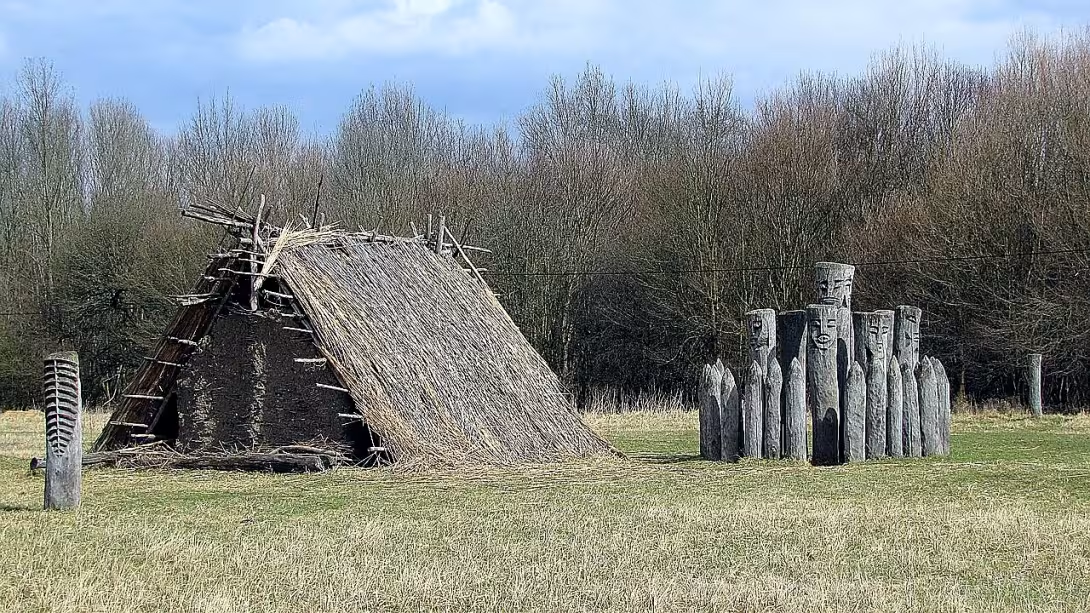
Pohansko u Břeclavi is a large-scale Great Moravian castle from the 9th century. It is spread over an area of up to 55 hectares on the outflow between the Dyje River shoulders. This important archaeological site was one of the key power and craft centers of Great Moravia. Systematic research has been taking place here since 1959.
The fort was established in the 9th century and probably served as a seat of a member of the ruling family of Izmírovice and his family. Great Moravia was then a major power of the Central Europe, which faced the pressure of the Eastern French Empire and went through the process of christianisation. Some researchers identify this place called Loventingrad, derived from the old name Břeclavi.
The three-piece complex is architectural and includes a centre, south and north front. The central part of 27 hectares was protected by a wooden-clay wall with a front stone diaper of 1,950 metres long. Inside was a palisade fenced by the Grand Court with a stone church and burial ground. The other buildings consisted of smaller yards with deep ground and building on stone suspects. The fortification went through the middle of the 9th century with an external stone wall added to the wall.
Researches led by František Kalousek and later by Bořivov Dostál revealed the evidence of craft production, such as pottery, hardware, forging or pulsating. The findings are dominated by typical large Moravian jewelry such as gombs, rings and earrings, as well as glass stroking or metal boilers. A significant discovery from 2008 is the remnant of the second church, which fundamentally changed the knowledge of the importance and equipment of the site. In addition to Christian monuments, a 10th-century pagan cult building was found on the site.
On the southern edge of the complex there is an Empire hunting lodge, built in 1810-1812 according to the design of Josef Hardmuth. In 1998, an archaeological exhibition was opened. Near the castle was reconstructed in 2003 by a large Moravian semi-landmark, well and cult object. The location is also the ninth stop of Krista's Podya glyptoteka. In addition, the surrounding areas are visible renovated objects of light fortification from 1936- 1938, which are accessible to the public.
Pohansko is a unique witness to the life, administration and craft level of the great Moravian society. Visiting this place offers the opportunity to explore history through preserved findings and reconstructed buildings in the authentic environment of meadow forests.
Then and now
Drag the slider to compare how the landmark may have looked when it was built with the view today.
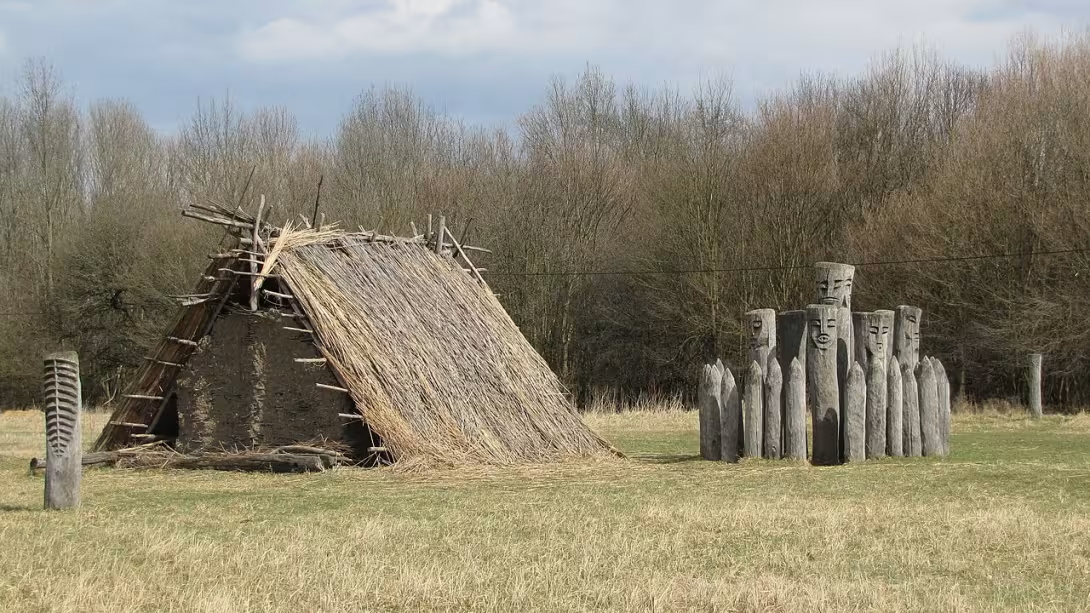
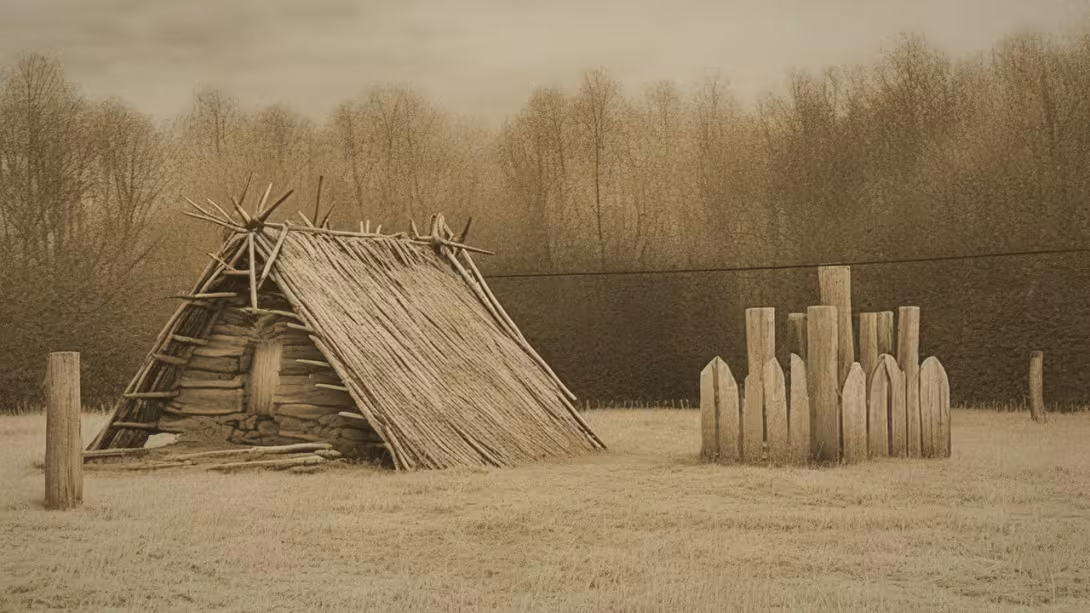
The historical appearance on the left is an AI-generated visualisation and serves as inspiration only.
Historical milestones
- 1959
- Opening of archaeological research by František Kalousek.
- 1998
- Opening an archaeological exhibition in a reconstructed castle.
- 2003
- Reconstruction of the Great Moravian half-earth, cult object and well.
- 2008
- Discover the remains of the second church and the burial ground.
Architectural development
The fort was fortified by a wooden-clay wall with a front stone diaper. Inside there were buildings on stone suspicion, deep ground and a grand courtyard with a stone church. In the 19th century an empir hunting castle was built on the southern edge of the complex.
Historical events
In 1959 systematic archaeological research began. In 2008, the second Grand Moravian church was discovered, which changed so far the knowledge of the importance of the site.
Points of interest
- The fort is situated on an area of up to 55 hectares on the outlet between the Dyje River shoulders. - The central part was protected by a wooden-clay wall with a front stone diaper of 1,950 metres long. - In 2008 a remnant of the second church was discovered, which fundamentally changed knowledge of the importance and equipment of the site. - On the southern edge of the complex stands an empir hunting lodge from 1810-1812, designed by Josef Hardmuth. - The location is the ninth stop of Kristka's pod glyptoteca and in the surrounding area there are reconstructed objects of light fortification from 1936-1938.
Guide
Show guide text
This text was created by artificial intelligence and has not been editorially reviewed. It may contain inaccuracies.
Welcome to the place where history touches the earth and where every step you take can lead you to uncover the secrets of thousands of years ago. You are standing in front of one of the most important archaeological sites in our territory - outside the castle of Pohansko. Before we begin to discover ourselves, stop for a moment and look around you. Feel the atmosphere of this place. Do you see the vast green plain and feel the proximity of the Dyje River? It was this strategic location, this split between the shoulders of the river, that was the key to why it was here more than one thousand years ago that it decided to build the center of the power world.
Look at the surrounding landscape. This country that you are now circumventing has not always been as calm and green as you know it today. In the ninth century, this area was the heart of Great Moravia. Imagine that right here, in this vast area, which is situated on an incredible 50 hectares, the heart of that state was pounding. pagan was not just a common fortified residence. It was a major power and craft center, probably the seat of the rulers themselves from the mighty House of the Izmir. Imagine the business at the time, the sound of the hammers of craftsmen, the voices of people from all over the region, and the presence of the noble courts that once stood here.
Now pay close attention to how this place was built. Even if you see primarily natural shapes and archaeological remains today, you have to draw in your mind a huge range of the buildings at the time. The central part of the castle was the heart of the complex. There was a Grand Court, a church and a large burial ground. To protect these important places, it was surrounded by two bays. This whole system was protected by an incredible wall. Imagine a wooden-clay structure, which was supplemented with a front-stone diaper. This defensive line was incredibly long, exactly one thousand nine hundred and fifty meters. This was a real architecture of huge proportions, which had to face not only enemies, but also elements.
In your next tour of the campus, notice how people were able to align with nature at the time and use it to their advantage. The fort was built to take advantage of the natural advantages of the river Dyje, which served as a natural gate and protection. Even if you don't see the tall walls with your own eyes today, their trail is still visible in the very structure of the terrain.
But in order to learn about this place at all, we need to look at people who have tried to bring these layers of history back to light. Archaeology is a patient science that requires not only courage but, above all, immense endurance. The whole modern story of this place began in the year one thousand nine hundred fifty-nine, when it launched the first systematic archaeological research František Kalousek. Thanks to his work and the subsequent work of other experts such as Bořivoj Dostál or Josef Hardmuth, we can reconstruct this history today.
Notice how it was gradually unveiling what the earth had been hiding for a thousand years. In ninety-eight, an archaeological exhibition was opened in a reconstructed castle, which enabled visitors to better understand what was once here. A few years later, in the year two thousand and three, a reconstruction of the great Moravian semi-ground, cult building and well was carried out. These small but essential details allow us to see the lifestyle of the people at the time - from their religious ceremonies to everyday needs, such as water extraction.
And this is where we come to one of the greatest mysteries and joys of all the archaeologists who worked here. Imagine the tension they must have felt when they came across something completely unexpected in the year two thousand eight. During the survey, the remains of the second church and another burial ground were discovered. This discovery was absolutely crucial. It has completely changed our knowledge of how significant and how well equipped this place really was. Turns out that Pohansko was much more complex and extensive than we could have ever imagined. This second church suggests that the fort was more densely populated and that its religious and social importance was even deeper than they originally thought.
Now, you're going to have to cover up for a moment what might have happened here. Imagine morning prayers at the churches at the time, procession at the courtyard of the Grand Court or silent ceremonies at the burial ground. Every find, every shrapnel of vessel or piece of iron found here by archaeologists is a piece of a puzzle that we're still composing. It's not just a pile of leftovers, it's a living book that's slowly opening up.
Now I want to invite you to continue this journey. Let the atmosphere of this place drift. See the surrounding terrain, see the space that used to fill walls and buildings. If you have the opportunity, visit the archaeological exhibition to help you visualize everything we've just talked about. Every inch of this compound has a story waiting for you.
Thank you for choosing this connection with the past. We hope that this view of the great Moravian era has brought you new views and that you enjoyed the walk of Pohansko Castle. We will brigade you a pleasant further discovery and beautiful moments in this historic landscape. Goodbye.
Tips for visitors
The best time to visit is late spring or early autumn when the weather is pleasant for long walks through the meadow forest and the terrain is not too wet. In the summer months we recommend an early morning to avoid direct sun in open areas of the castle. You can easily reach the property by car or bike from Břeclavi, parking is available near the archaeological site; We recommend to verify the exact connection by public transport in the current connection search engine. Be sure to bring with you fixed shoes suitable for the field, insect repellent and plenty of liquids, as there is an increased incidence of mosquitoes in the meadow forests in the season. For photographers, the best lighting conditions offer a golden hour, when the low sun beautifully depicts the reliefs of waves and surrounding natural scenery of the river Dyje. For families with children, the location is ideal for light hiking, where children can discover the history of the Grand Moravian Court and then explore nearby objects of light fortification from 1936 to 1938.
Businesses nearby
Do you run a restaurant, accommodation, shop, museum, rental, wellness or other visitor service near this monument? Show yourself directly to the people heading to it — this is how they will see you in the app and on the web:
Events nearby
Zdroj akcí: otevřená data měst a obcí ČR (Národní katalog otevřených dat) a kalendář akcí Národního památkového ústavu.
Nearby
River Dyje, meadow forests, light fortifications from 1936-1938, city Břeclav.
Accommodation nearby
Themed route
city Břeclav, city: A suitable place to start a trip. 2. Light fortification from 1936- 1938, historical monument: It will show you the remnants of military lines from the late 1930s. 3. River Dyje, Water Flow: It offers beautiful views and a calm atmosphere at the water. 4. Hradiště Pohansko, archaeological site: The main destination of the trip, where you can discover traces of ancient settlement. služní lesy, natural body: provide a pleasant shade and the possibility of relaxing in nature.
Seasonal recommendations
Spring: For a spring visit look forward to the awakening landscape and fresh green color surrounding the archaeological terraces. Light is soft and does not shine during this period, which makes it easier to observe details in the field. I recommend wearing layered clothes because the morning cold can quickly rotate with afternoon heat. It's the perfect time for quiet walks without big groups of people.
Summer: The summer season offers the most sunny hours, but also the highest temperatures directly on the open areas of the site. Vegetation is in full bloom, which creates a rich background for the tour. Due to the strong sun and possible crowds in the high summer season, it is best to arrive early in the morning or just before sunset. Don't forget the headgear and plenty of fluids.
Autumn: Autumn brings to Pohanska a nostalgic atmosphere and fascinating color changes in the surrounding nature. The morning mist covering the surrounding field gives the memory a Tajemeni touch. High-quality, waterproof footwear is essential for comfortable terrain movement, as the soil is usually wet. This is the best time for photography thanks to golden light and fewer visitors.
Winter: In winter, the castle is rough and peaceful, especially when the landscape is covered with snow. Nature is in decline and the view of bare trees highlights the very shapes of historical structures. Due to low temperatures and wind, it is necessary to choose a very warm and wind-resistant jacket. Watch out for a short day, the light quickly disappears, so plan to visit around noon hours.
Visualizations and artistic views


The visualisations are generated by artificial intelligence and serve as inspiration.
Photos from the area
Real photos taken near the monument

Zdroj a licence jsou uvedeny u každého snímku.
Tips from visitors
No tips yet. Be the first!
Log in and add your tip.
Sources and literature
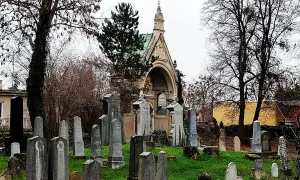
Fotografie: Radek Linner / CC BY-SA 3.0 — Wikimedia Commons. The author and licence also appear when you hover over the image.
Faktickým podkladem tohoto textu byl článek na Wikipedii, jehož autory jsou přispěvatelé Wikipedie. Článek je dostupný pod licencí CC BY-SA 4.0.
Location on the map
More monuments – Břeclav
Show all in the municipality

Příběhy a pověsti
Legendy, pověsti a příběhy spjaté s touto památkou
Fotografie návštěvníků
Zatím žádné fotografie. Buďte první, kdo přidá fotografii z návštěvy!
Přihlaste se a přidejte svou fotografii nebo hodnoťte.
Za ověřenou návštěvu v aplikaci získáte víc bodů — poznáme podle GPS, že jste na místě.
Reviews and comments