





Tvrz Čelákovice Fortress
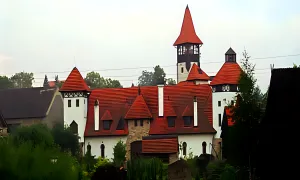
The fortress in Čelákovice in Prague-East district is one of the most preserved buildings of its kind in Central Bohemia. This Gothic-Renaissance object is situated on the edge of the Elbe shoulder near the Church of the Assumption of the Virgin Mary. Since 1949, it serves as a seat of the Municipal Museum and is protected as a cultural monument of the Czech Republic.
The fort was built around 1300 in the place of the former Slavic chateau. Its creation falls within the period of the senior government of the last Přemyslíkovs and the accession of Luxembourg. In the Czech lands, in the blossom of Gothic culture, the noble mansions began to transform from wooden yards into stone forts.
The building consists of two adjacent buildings of a rectangular plan. The original Gothic part represents today's southern wing, which was reduced by one floor due to poor technical condition in 1730. At the end of the 15th century, the complex was expanded to include a northern storey tract and in the 16th century an economic building with a wall and gates was added. After insensitive modifications in the 19th century when windows were opened and expanded, reconstruction took place between 1973 and 1982. This monument was returned to the Renaissance form including a typical letter sgraffiti on the main building.
In the 14th century, the first known owners were nobilitated Prague patricians, namely Rokycanští z Okoře and Knights of Cy. After 1420 the fortress was acquired by Beneš z Vartenberka, who transferred her to his sister married to Alš Škopka from Dubé. In 1421, the building was burned down by Hussite troops. In the next decades, Bohuněk z Klinštejna, gentlemen from Michalovice and Tovacovský from Cimburk, were replaced among the holders. Since 1483, the Object was owned by Krajířová from Krajk until 1547, when Arnešt z Krajk was punished for participating in the state rebellion of confiscation property. Čelákovice then became a royal chamber town.
In the second half of the 16th century the imperial official Jan Habartický z Habartic bought the fort, which extended it and rebuilt it. The work was completed in 1578 and the name Hradištko or Hradek started to be used for the complex. During the Thirty Years' War, the memory was destroyed several times by the passages of imperial, Saxon and Swedish troops. Since 1593, the owners quickly took turns; These included Marie Magdaléna Trčková z Lípy, Alexander Jošt Haugvic from Biškouc, Henry Jan Varlejch from Bubna and Maximilian from Valdštejn. In 1665 the complex was purchased by the Royal Chamber and attached to the Brandy estate. In the 17th and 18th centuries, buildings served for economic purposes, including as an inn.
Today the premises are used by the City Museum in Čelákovice, which focuses on the region of Central Polabi. The most important exhibits include a gold earring from the primordial settlement in Toušen, considered the oldest proof of the use of gold in our territory from the late Stone Age, and a ceramic face mask from the Bronze Age found in Ostrov-Matches.
The Celakovická fortress represents a valuable proof of the development of a noble residence from the Middle Ages to the Renaissance. The visit offers a unique insight into the history of the region and the opportunity to explore rare archaeological findings directly in authentic areas of the historical monument.
Historical milestones
- 1300
- Building a fortress in the place of the former Slavic chateau.
- 1421
- Burning out the fortress by Hussite troops.
- 1578
- Completion of Renaissance reconstruction for Jan Habartic from Habartic.
- 1949
- Opening of the City Museum in the chateau premises.
Architectural development
The original Gothic fortress consisted of today's south wing, which was reduced by a floor in 1730. At the end of the 15th century, the northern tract was added and in the 16th century the economic building with a wall was added. After insensitive modifications in the 19th century, a reconstruction was carried out in the years 1973- 1982, which returned the Renaissance appearance including letter sgraffiti.
Historical events
Burning out the fortress by Hussite troops in 1421. Confiscation of the property of the Landlords of the Landscape after the construction uprising in 1547. Connection to Brandy Manor in 1665.
Owners
Rokycanští z Okoře, Knights from Cy, Beneš z Vartenberka, Aleš Škopek z Dubé, Bohuněk z Klinštejna (1443-1456), Gentlemen from Michalovice (1456-1468), Tovací from Cimburk, Landscapes from Krajk (up to 1547), Jan Habartický z Habartic, Marie Magdaléna Trčková z Lípy, Alexander Jošt Haugvic from Bištovic, Henry Jan Varleich from Bubno, Maximilian from Valdštejn, Royal Chamber (from 1665).
Points of interest
- The fortress in Čelákovice is one of the most preserved buildings of its kind in Central Bohemia. - The building was built around 1300 at the site of the former Slavic chateau. - In 1730, the south wing of the fort was reduced by one floor due to poor technical condition. In 1421, the building was burned down by Hussite troops. - In the 17th and 18th centuries, buildings served for economic purposes, including as a inn.
Guide
Show guide text
This text was created by artificial intelligence and has not been editorially reviewed. It may contain inaccuracies.
Welcome to Čelákovice, where you stand before one of the most famous and preserved monuments of our region - the Čelákovice fortress. This historic building will already address you with its beauty when you first see it. You see yourself standing here on the edge of the Elbe shoulder, giving the complex a unique view and a sense of eternity. The fortress welcomes you with its Gothic architecture, which is also enriched by elements of the Renaissance style. Whether you look at the facade or notice the details in the surrounding environment, you feel history for every purpose.
Let's dive into the past and discover how this fortress came to be. It was built around 1300 in the place of the former Slavic chateau. This fact already indicates its strategic importance and a long history that goes back to ancient times. Over the centuries, she passed through a series of reconstructions, which gave her a rich architectural character. In 1421, it was burned by Hussite troops, one of many historical events that affected her fates.
Look up and notice the gothic elements such as slender windows and the architectural rhythm of the facade. The inner space then gives the impression of Renaissance modifications made under Jan Habartic of Habartic in 1578. Although particular architects are unknown, it is clear that the fort was an important seat for many important personalities.
Let's talk about these historical characters. The fortress was linked to families Rokycanští z Okoře, Beneš of Vartenberk or Johanka of Krajk. Each of them contributed to its fate and history, thus witnessing many important events in the region.
The interesting thing is that the south wing of the fort was reduced by one floor in 1730 due to bad technical condition. This fact shows many changes and adaptations that this monument has subjected itself to over the centuries.
Now that you've looked at her history and architecture, we invite you to dive deeper into this fascinating place. Explore the surrounding gardens or give yourself a moment to relax in the air full of history and stories.
Thank you for your visit to Celakovice Chateau. We hope this guide has reached out to you and impressed you. Whether you go back to your next discovery or get a memory of this beautiful fortress. Goodbye!
Tips for visitors
The best time to visit is during the late spring or early autumn, when the area of the fort above the Elbe shoulder is the most photogenic and the weather wishes to walk in the adjacent area.
For photography we recommend using the morning or evening light, which beautifully depicts the gothic details of the masonry and the atmosphere of the edge over the river. Ideal shots can be obtained from the Elbe bank, where the fort position stands out.
In the immediate vicinity, do not miss a visit to the Church of the Assumption of the Virgin Mary and a walk along the River Elbe, which offers a quiet environment for relaxation after a tour of the historical building.
For families with children the location is suitable thanks to the combination of history and nature; we recommend taking with you comfortable shoes to move in the field and snack you can enjoy near the river.
Frequently asked questions
Can the monument be visited?
Some buildings of this kind are open for guided tours, others serve another purpose or are privately owned. We have not verified whether and when this monument is open – please ask the operator.
What are the opening hours and admission?
We have not verified the opening hours or admission. Current information is published by the operator.
Where is the monument?
Location: Čelákovice, Středočeský kraj. The map on this page shows the exact spot.
Why is the monument protected?
It is listed in the Central List of Cultural Monuments of the Czech Republic as a cultural monument (register no. 1000144865).
Businesses nearby
Do you run a restaurant, accommodation, shop, museum, rental, wellness or other visitor service near this monument? Show yourself directly to the people heading to it — this is how they will see you in the app and on the web:
Nearby
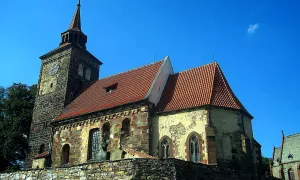
Kostel Nanebevzetí Panny Marie, řeka Labe.
Accommodation nearby
Trips and activities nearby
Guided tours, tickets and activities nearby from GetYourGuide
Affiliate link: if you buy from the partner, we may receive a commission. The price for you does not change.
Search tours and activities →Themed route
1. Church of the Assumption of the Virgin Marie, church. This building represents an important architectural point in the village. 2. Tvrz Čelákovice, fortress. The main destination of the trip, which offers a tour of ancient spaces and the knowledge of history. 3. River Labe, river. It offers a quiet environment for shore rest.
Seasonal recommendations
Spring: In the spring, the surroundings of the fortress awaken to life, and the colors are getting more intense. The sunlight is fine during this period, creating pleasant conditions for observing historical details in a new green context. We recommend wearing layered clothes because the wounds can still be cold while the afternoon will be pleasantly warm. Visit the place in the morning when the least people are here and there is peace of mind for the tour.
Summer: The summer months bring the biggest boom and a more lively atmosphere, surrounded by thick and dark green greenery. The sun shines the strongest, highlighting the structure of the walls, but it can also cause sharp shadows. In the main summer season, count on more visitors, which is why it is best to arrive immediately after opening to ensure a more peaceful passage through the premises. Don't forget the headgear and plenty of fluids for a comfortable stay outside.
Autumn: Autumn season offers the most impressive visual experience thanks to the golden and brown shades of leaves surrounding historical objects. The morning fog gives the place a mysterious and melancholy mood that is perfect for peaceful walks. It is advisable to prepare a waterproof jacket and firmer shoes because humidity and cooler air are common at this time. The best time to visit is in the afternoon when the light is softest and the color is the most distinctive.
Winter: In winter, the fortress is very quiet and still, which makes it possible to perceive its shapes without disturbing colors of surrounding nature. If snow comes, the scene looks fabulous, and even though the light is low, the freezing air gives the place a boost. Due to shorter daily times and lower temperatures, we recommend choosing very warm clothes and visiting the memory in the noon hours when the most light is.
Visualizations and artistic views


The visualisations are generated by artificial intelligence and serve as inspiration.
Photos from the area
Real photos taken near the monument


Zdroj a licence jsou uvedeny u každého snímku.
Tips from visitors
No tips yet. Be the first!
Log in and add your tip.
Sources and literature
Photos: VitVit / CC BY-SA 4.0 — Wikimedia Commons. The author and licence also appear when you hover over the image.
Faktickým podkladem tohoto textu byl článek na Wikipedii, jehož autory jsou přispěvatelé Wikipedie. Článek je dostupný pod licencí CC BY-SA 4.0.
Location on the map


Příběhy a pověsti
Legendy, pověsti a příběhy spjaté s touto památkou
Fotografie návštěvníků
Zatím žádné fotografie. Buďte první, kdo přidá fotografii z návštěvy!
Log in a přidejte svou fotografii nebo hodnoťte.
Za ověřenou návštěvu v aplikaci získáte víc bodů — poznáme podle GPS, že jste na místě.
Reviews and comments