



Větrný mlýn (Kladníky) Windmill
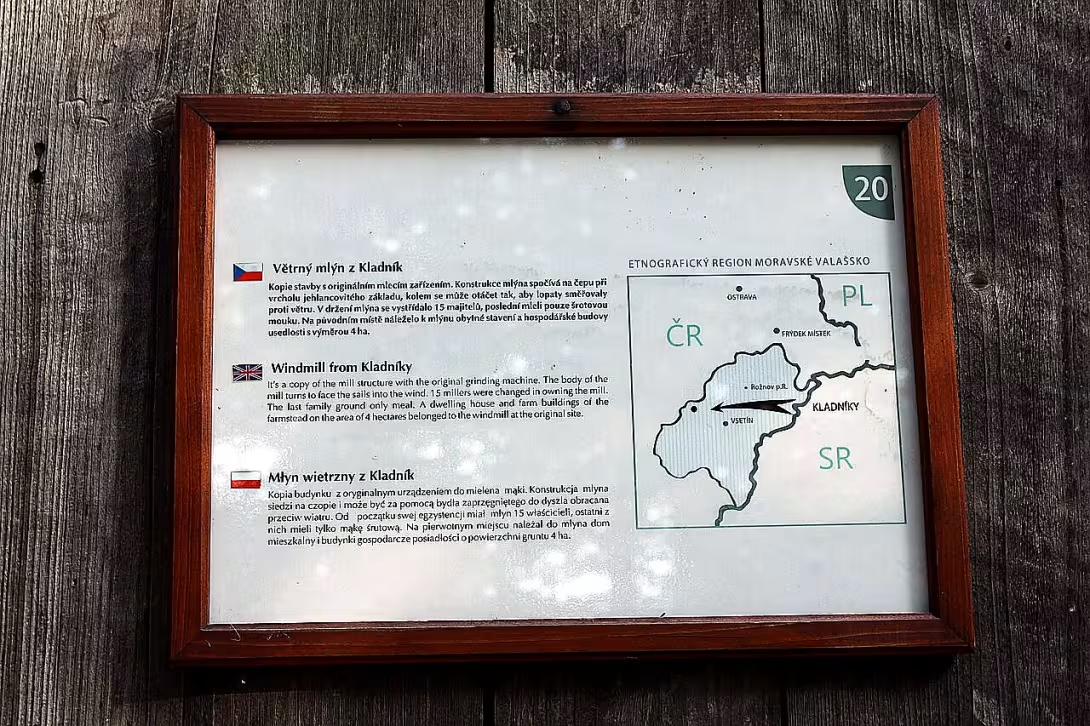
Objekt se nedochoval — na místě dnes nestojí. Následující text popisuje jeho historii, ne současnou návštěvu.
The windmill in the village of Kladník in Přerovsk was a classical wooden building of the German type built in 1829. The building, which was led for fifty years in the Central List of Cultural Monuments of the Czech Republic, disappeared in 2008 after the collapse due to the storm.
The mill was left alone at an altitude of 340 meters to build František Skopal from Skěchleb. Historical sources suggest that the construction was created during the period of national renewal and the early phase of the industrial revolution, which gradually transformed traditional agricultural production. The uniqueness of the building was that older parts from other mills were probably used in its construction. This is evidenced by different years on individual elements such as 1812 beams, 1813 banners and 1828 cakes.
Architecturally, it was a wooden prism structure with a floor plan of 5.7 times 5.7 meters and a height of 10 meters. The construction of the mill of the German type, i.e. column or ram type, was equipped with four wings of the wind wheel. This technical disposition enabled the efficient use of wind energy for milling purposes in the agricultural landscape.
The operation of the mill was completed in 1941 when the building was sealed under the order of the Protectorate offices. In 1955 the building was damaged by a storm. Although the mill was registered among cultural monuments in 1958, its physical condition gradually deteriorated. In 1983, the Ministry of Culture decided to transfer the building to the scandals in Rožnov pod Radhošt'át, but this did not happen. After 1990, the mill was returned to the descendants of the original owners as part of the restitution, but the village's efforts to save it were unsuccessful. On the property there was only a roofed circuit coat, which finally collapsed after the Kyrill storm in 2008, after which the building was removed from the list of monuments.
The fate of the Kladnik mill represents a memento of the demise of technical monuments, which were not able to protect against the decay and natural influences in time. Although there is no construction at the site of the original construction today, the location around Kladník remains a reminder of the history of milling and the transformation of the rural landscape in the nineteenth and twentieth centuries.
Then and now
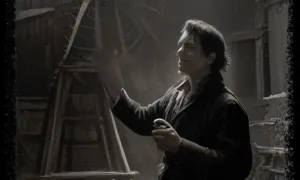
Drag the slider to compare how the landmark may have looked when it was built with the view today.
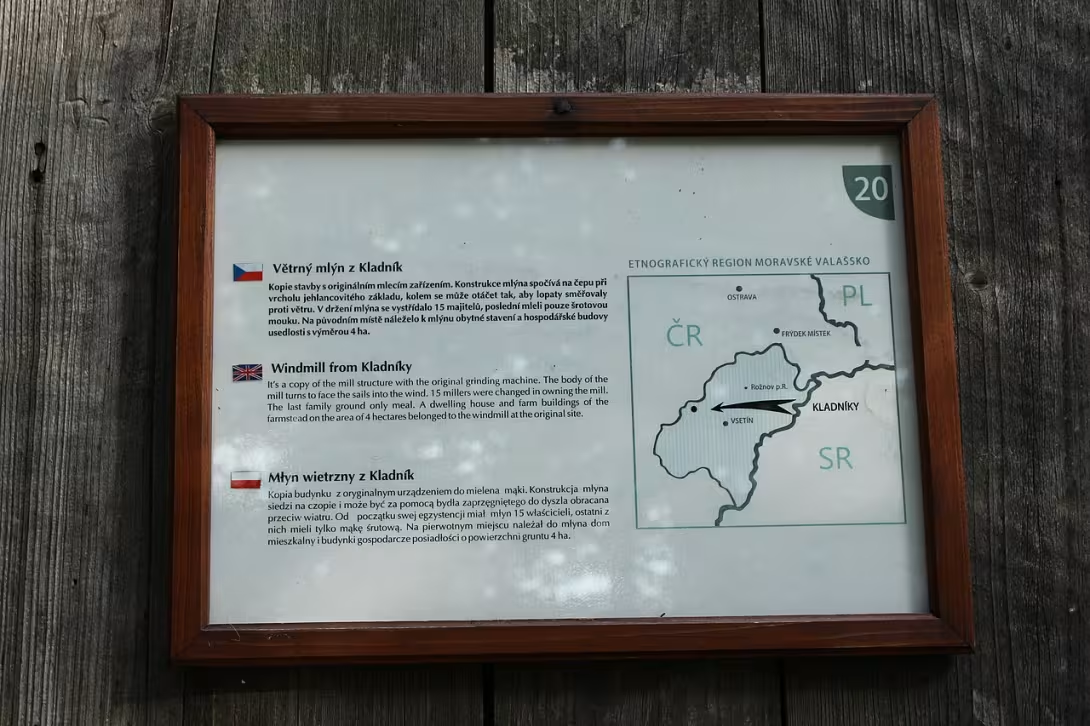
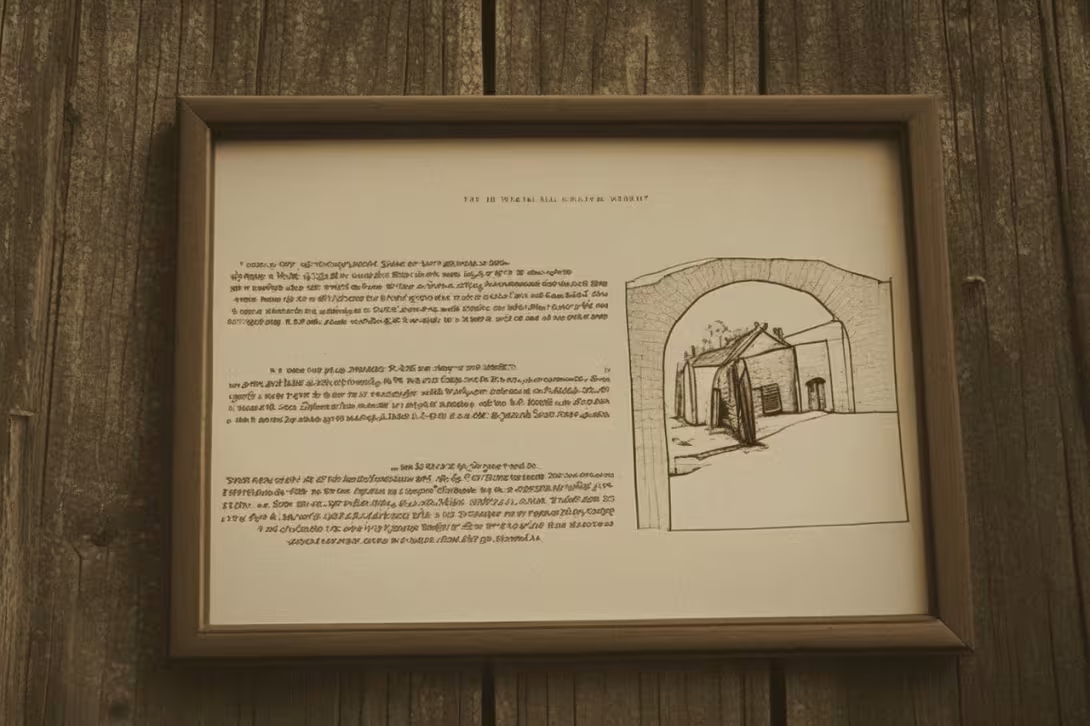
The historical appearance on the left is an AI-generated visualisation and serves as inspiration only.
Historical milestones
- 1829
- Construction of the mill by František Skopal.
- 1958
- Registration to the Central List of Cultural Monuments of the Czech Republic.
- 1983
- Decision of the Ministry of Culture on the transfer of the mill to the Skanzen in Rožnov pod Radhošt.
- 2008
- The demise of the mill after the Kyrill storm and the removal from the list of monuments.
Architectural development
The mill was a wooden construction of the German type, the individual parts of which came from different periods, as evidenced by the years 1812, 1813 and 1828 on preserved elements. The building was French and stood alone. After 1990, the property was left with only a roofed circuit coat, which was in emergency condition until its demise.
Historical events
1829: Construction of the mill. 1941: Seal the mill with protectorate offices. 1955: Damage to the windstorm mill. 2008: The demise of the building after the Kyrill storm.
Owners
František Skopal, after 1990 the descendants of the original owners.
Points of interest
- The construction was a classical wooden construction of the German type, which was built in 1829. - The uniqueness of the object consisted of the likely use of older parts from other mills, as evidenced by different years on beams, corrugated and flour. - The operation of the mill was completed in 1941 when the building was sealed by order of the authorities. - In 1983, the Ministry of Culture decided to transfer the building to the scandals in Rožnov pod Radhošt'át, but this did not happen. - The building was destroyed in 2008 after the crash due to the storm, after which it was removed from the list of cultural monuments.
Guide
Show guide text
This text was created by artificial intelligence and has not been editorially reviewed. It may contain inaccuracies.
Welcome to Kladník village. You are standing right in a place that has its own quiet history, which you will not hear in the rumour of grinding the grain anymore, but which you can perceive in every wind breeze that is shining here at these altitudes. Even though your eyes do not see the massive wooden structure that has dominated the surrounding landscape for many decades, try to present in spirit the tall, prismatic structure that once stood in the sky. Feel this space, feel the atmosphere of this place, which lies at an altitude of 300 feet. It was here, on this hill, that the wind was the greatest ally and the greatest adversary of the people who tried to use the forces of nature for their livelihood.
Let's go back in time together and try to reconstruct what was once here. This whole story you're living today began to be written in the year one-eighty-nine centuries of the nineteenth. That's when a man named František Skopal from Skelechlib decided. This man was not just an ordinary builder, he was a man with a vision who wanted to create a functioning and durable machine for grinding. In the year one-eighty-nine, the mill was finally created here and became a part of the local community. František Skopal didn't just build a building here, he created a heart surrounded by a field that, thanks to the movement of wings and wind power, gave people the basis for their survival.
Now pay attention to what this mill might look like if time stopped. Imagine a wooden structure in front of you, built according to the German pillar type. This is a very specific way of building, where the whole structure stands on a massive wooden column that allows the whole mill to rotate so that its wings can always face the wind. This structure had exactly five whole seven-tenth of a meter on each side, the shape of a regular square. This whole wooden structure was ten meters high. Imagine the height that stood high above the ground and that had to be very firm to carry the weight of all moving parts. Notice in the images of the four big wings, which in the rhythm of the wind revolved and changed the appearance of the whole area. It was a classicist wooden structure that seemed very dignified and firm.
If you could now look into the details through the fog of time, you would find something incredible. This mill was not only built from completely new materials. František Skopal was very handy and probably used older parts from other already extinct objects. And that's where one of the great mysteries of this place lies. This inconsistency was evident when looking at the individual parts of the construction. In various places, such as wooden beams, banners or cakes, different years were engraved. Think of it as a giant wooden puzzle, where each part carries a trail of its own history. These different years on the wood tell us that the mill in Kladník was essentially a new life for older pieces of wood that had previously served other people in other places. It was like connecting the past with the present in one single, functional whole.
This mill has served the people here for a long time and its journey has been full of work and changes. It operated until the year one-eighty-four when its operation was officially terminated. Although he no longer went to use the grain to grind, its value was still high. In one-eighty-five eight the mill was recognized by its historical significance and entered in the central list of cultural monuments of our country. People respected it and wanted to preserve it for future generations. However, this protection was not final. In one-eighty-three, the Ministry of Culture decided on something very important for its survival. The mill was not left here, in this village, but it was transferred to a skanzen in Rožnov under Radhošt. There he was protected as a rare piece of folk architecture so that he could be examined by people from all over the country and that his history would not be forgotten.
But it was a life of unexpected twists. Even where history seems safe, nature can come and change everything. In the year two thousand eight came a devastating storm known as Kyrill. This storm was so powerful and devastating that it destroyed the mill that was so carefully protected. After this event, the mill was removed from the list of monuments. All that remains is the memory and this place where you stand now.
Even though you can't see the tall walls here today, nor can you see the wings, the windmill in Kladník still lives in our imagination and in the history of this place. It's a reminder of how people were able to work with the wind and how they were able to make new things out of the old ones. Feel this space as a place where nature meets human finesse. Keep walking now and look around you, because even though the mill is no longer physically standing here, its story is still part of this landscape. Thank you for stopping by and paying attention to this memory.
Businesses nearby
Do you run a restaurant, accommodation, shop, museum, rental, wellness or other visitor service near this monument? Show yourself directly to the people heading to it — this is how they will see you in the app and on the web:
Nearby
Obec Kladníky, okres Přerov, okolní zemědělská krajina.
Visualizations and artistic views


The visualisations are generated by artificial intelligence and serve as inspiration.
Tips from visitors
No tips yet. Be the first!
Log in and add your tip.
Sources and literature
Faktickým podkladem tohoto textu byl článek na Wikipedii, jehož autory jsou přispěvatelé Wikipedie. Článek je dostupný pod licencí CC BY-SA 4.0.
Location on the map
Příběhy a pověsti
Legendy, pověsti a příběhy spjaté s touto památkou
Fotografie návštěvníků
Zatím žádné fotografie. Buďte první, kdo přidá fotografii z návštěvy!
Log in a přidejte svou fotografii nebo hodnoťte.
Za ověřenou návštěvu v aplikaci získáte víc bodů — poznáme podle GPS, že jste na místě.
Reviews and comments