

Větrný mlýn (Vrátno) Windmill
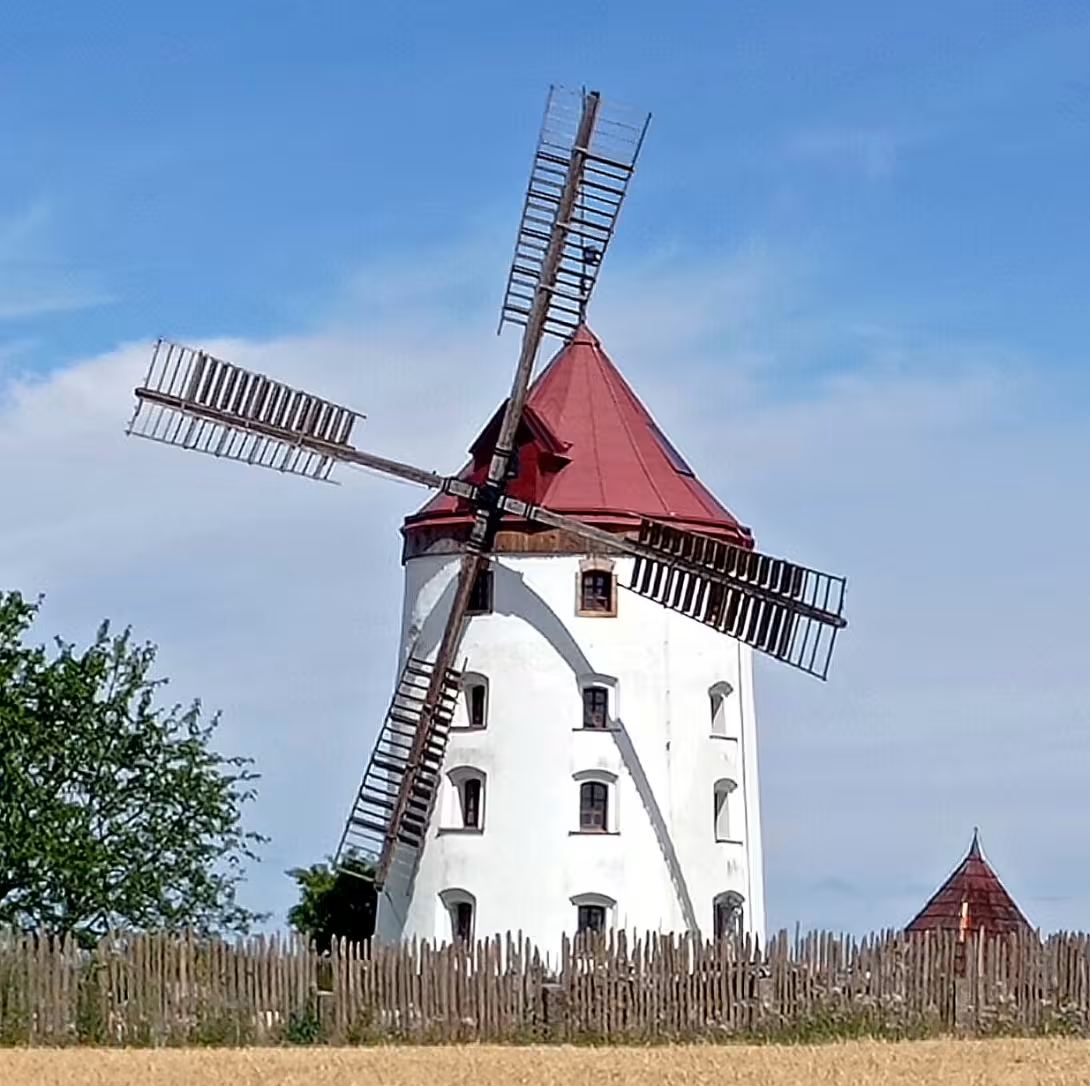
The windmill in Vrána is a historical object of the Dutch type from 1870. It is located in the village Vrátno in the district of Mladá BOLESlav in the Central Bohemian Region. This monument is listed in the Central list of real cultural monuments of the Czech Republic. Currently, it serves as a private recreational object and is a valuable technical unique.
The construction was built in 1870 by the landowner Václav Mareček. The construction master Medonos ze Mšena took care of the realization. The formation of the mill falls into the second half of the 19th century. In the Czech Republic it was a period of industrial expansion and development of agricultural technologies, when there was modernisation of the countryside and construction of specialized buildings. Eight years later, in 1878, another building was built in the neighbourhood of the mill with the steps to crush waste. These steps were driven by a transmission shaft directly from the mill. Landlord Mareček bought animal bones from nearby butchers that he had crushed. He then used the acquired bone meal to fertilize his fields. In the first years the Václav Mareček mill operated alone with the help of one local woman, later rented it to various tenants. The operation was completed and the construction was abandoned in 1923.
The building stands alone in the fields on a mild surface about 1.5 km northeast of Vrátna, near the railway line from Mladá Byslav to Mšena. Originally a two-storey building on a circular plan is built from a quarry sandstone. The ground-floor plinth consists of regularly worked blocks. Inside and around the windows are brick linings, on the outer casing there are seven irregularly decomposed window axes. In the period of demise, only a bare wall remained from the mill in 1934 and in 1973 the masonry reached the first floor. The mill was renovated at the end of the 20th and early 21st century. It was equipped with an unoriginal, very high roof with small windscreens and a reduced imitation of a wind wheel. The partially renovated mill was purchased in 2015 by the entrepreneur Aleš Křemen, the manufacturer of propellers from Odolena Water. The new owner removed the non-original roof, raised the masonry by about one meter and built a new roof. He used his professional skills to manufacture the necessary mechanical equipment, built a wall and mounted a metal head on it for large tilting lamellar squats that were located in 2017.
During the years the landowner Václav Mareček, subsequently different tenants, and since 2015 the entrepreneur Aleš Křemen, were owners and owners of the monument. Key events include the year 1870 as the date of origin of the mill, the year 1878 as the year of construction of the neighbouring building with climb, the year 1923 as the end of operation and the year 2017, when the fitting of a metal head with large tilting armour blades took place.
Today this technical monument serves as a recreational object. Local communication leads to the mill from the intersection of road number 259 between the municipalities Vrátno and Kluky. The visit to this place offers a view of the successful restoration of the historical building, which thanks to the professional approach of the current owner regained its original form including the functional wind wheel.
Then and now
Drag the slider to compare how the landmark may have looked when it was built with the view today.
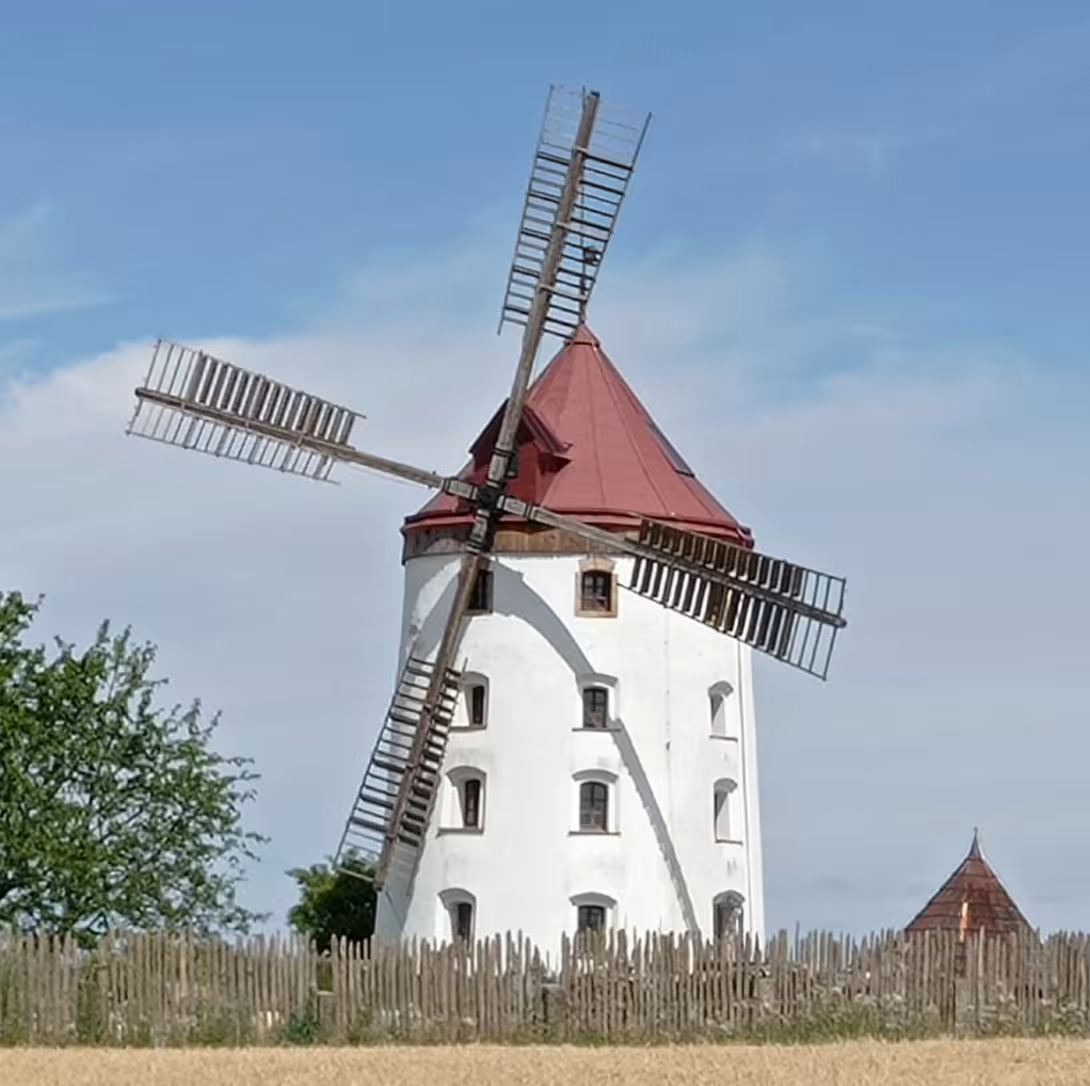
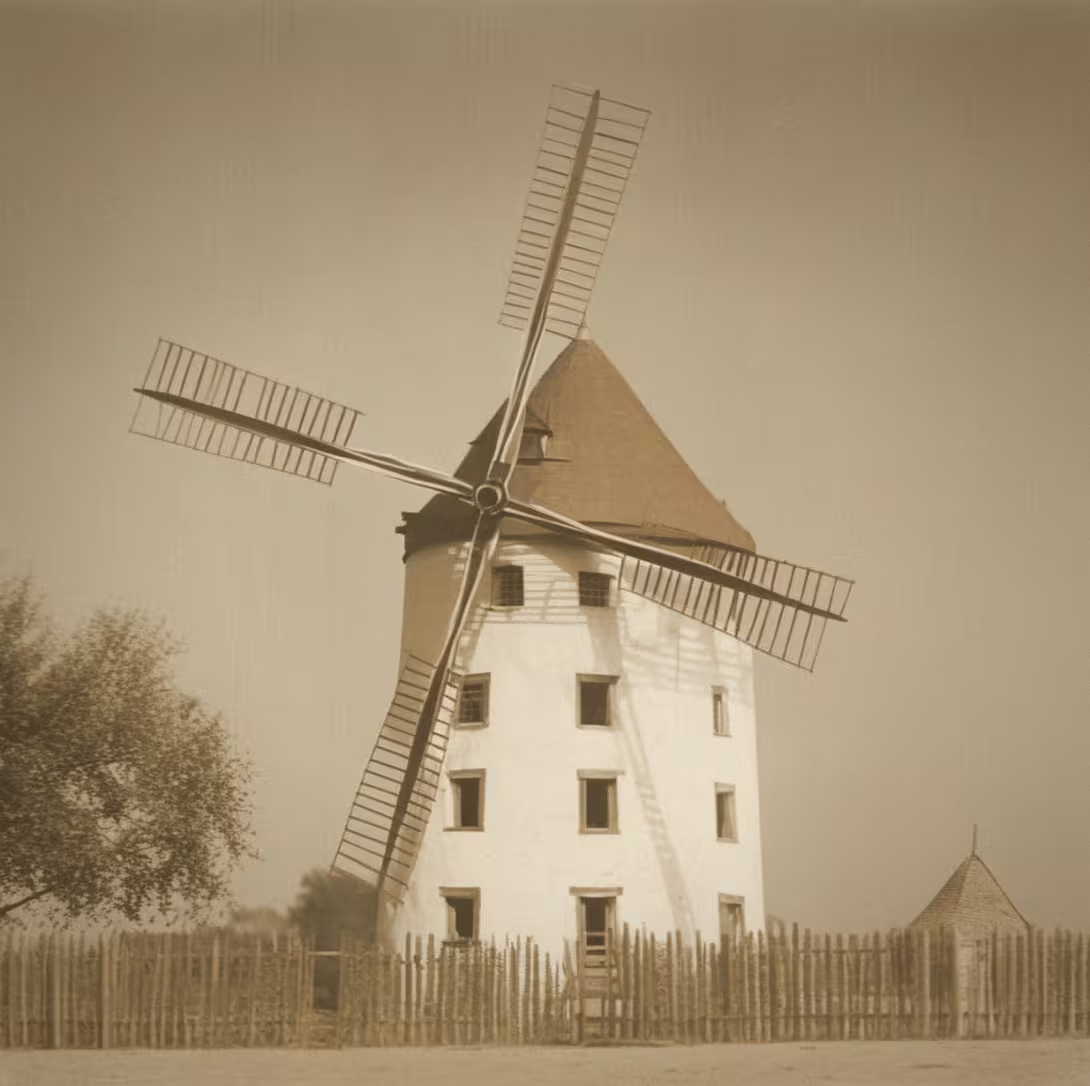
The historical appearance on the left is an AI-generated visualisation and serves as inspiration only.
Historical milestones
- 1870
- the creation of a mill built by building master Medonosse
- 1878
- building a neighbouring building with steps to crush waste
- 1923
- closure and abandonment of the mill
- 2017
- installation of a metal head with large tilting armour blades
Architectural development
Construction on a circular plan made of quarry sandstone with a plinth of sandstone blocks. During the time of demise, only part of the masonry was left, later incorrectly reconstructed with a non-original high roof. The last reconstruction removed non-original elements, increased masonry and restored the original form of wind wheel.
Historical events
1870 construction of the mill, 1923 closure and abandonment of the construction, 2017 installation of new lamen pearls.
Owners
Václav Mareček (1870), various tenants, Aleš Křemen (from 2015)
Points of interest
- It is a historic Dutch-type mill built by the landowner Václav Mareček in 1870. - In 1878 there was a building next to the steps to crush bones for fertilising fields, driven directly from the mill. - The building is built from a quarry sandstone on a circular plan, and in 1934 there was only a bare wall. - Currently, the object serves as a private recreational space and a valuable technical unique. - In 2017, a metal head was installed on the mill with large tilting slats.
Guide
This guide is narrated by a synthetic voice generated by artificial intelligence.
Show guide text
This text was created by artificial intelligence and has not been editorially reviewed. It may contain inaccuracies.
Welcome to the Door. You are standing in front of one of the most distinctive symbols of this landscape, which is this massive windmill. When you look at it now, you see a structure in front of you that dominates the surrounding space with its silhouette and tells the story of human work, technology and endurance. It's a place where the power of the wind connects to the craft art of the past century. Feel this atmosphere of peace and stability that the mill radiates, and let yourself forget today's rush for a moment.
Now let's go deeper in time. This mill, which you see today in such a well-maintained state, was created in the year one thousand eight hundred seventy. At that time it was a modern construction of the Dutch type, which was a method of construction which enabled efficient use of air flow. The whole project was carried out by the landowner Václav Mareček, who had a vision to create a place where grain would turn into flour for local residents. He invited an experienced construction master Medonos from Mzán, who put his know- how and craftsresistance into the construction. At that time the mill was the heart of the local economy and a necessary point for every farmer in the area.
Now pay attention to the architecture itself and the details that you can observe right in front of you. Note that the building is built on a circular plan, which is typical of this kind of mill. If you look closer at the walls, you'll see they're lifted from the quarry sandstone. This material gives the construction its characteristic appearance and feel of indestructible. Now look high up to the top of the building. You'll see a metal head that carries a large tilting squid. These elements are essential for wind capture and their current condition is the result of a thorough reconstruction of two thousand seventeen. It's fascinating to think how this heavy structure had to rotate to always face the wind at the right angle.
When we talk about the history of this place, we can't forget the personalities that were associated with it. In addition to the founder of Václav Mareček and the builder of Medonos, other people have moved here over the years, for example Aleš Křemen. Each of them brought their experience into operation. But the mill wasn't just about flour. Let's think about what happened in the vicinity of the main building. In the year one thousand eight hundred seventy eight, a secondary building was built, which had a very specific purpose. There were steps that were used to crush bones. It may surprise you today, but at the time it was a crucial way to get good fertilization for the fields. Most interesting, however, this mill was driven directly from the main mill, which shows a clever connection of technical equipment within one complex.
Now I want to take you to the part of the story that's a little bit sadder, but at the same time, there's a lot of mystery and the power of recovery. The mill was not always in the condition you see it today. In the year one thousand nine hundred twenty-three, its normal operation ended. The mill was abandoned and abandoned to fate. Imagine how the mill wheels gradually quieted, how the buildings were penetrated by svedids and how the building began to decompose. It reached such a point that in the year one thousand nine hundred thirty-four of the building was basically a bare wall. It was a time of extinction when this technical brilliance seemed to disappear from the map forever.
That's where the most interesting part starts. How did it happen that this beautiful building came back from a pile of stones and remains of the wall? This is due to the newer reconstruction that brought the mill back to life. Today it is no longer used for grinding grain, but it has become a recreational object and a valuable technical monument. It is listed in the Central List of Real-Estate Cultural Monuments of the Czech Republic, which is a recognition of its historical and architectural value. It is proof that, with care and will, the process of complete extinction can be reversed.
If we were looking for one of the main things that you should be interested in, it's the combination of functions. Imagine the contrast: on the one hand, the fine milling of grain on flour and on the other hand the rough work of crushing bones for fertilising fields. It all took place within one technological unit, powered only by the force of nature. It's a fascinating example of how people in the deviant century were able to maximize the use of available energy sources.
The view of this mill is the view of the cycle of life. Since the dawn of a thousand eight hundred seventy, over the height of its glory, through the deep fall and decay to today's rebirth. You're standing in front of a construction that survived its original purpose and survived the period when it was almost erased from the ground.
Now let's invite you to take a closer look at the mill from different angles. Take a walk around its circular walls, perceive the texture of sandstone stones and look again at the lamellar squid at the top. Try to imagine the sound of spinning wheels and the smell of freshly ground grain that once mixed with dust from crushed bones. Feel the silence that exists here today, and think about how many generations of people have worked here and how many stories these walls keep.
Thank you for spending a moment with us at this unique mill in Vrány. We hope that you are interested in this short trip to history and that you are leaving with a new look at this beautiful technical monument. We wish you a pleasant continuation in discovering the beauty of our landscape. Goodbye.
Tips for visitors
The best time to visit is late afternoon or morning hours when the sun hits the white wall of the mill at an angle, which will highlight the details of the construction of the Dutch type. Thanks to the position on a mild surface in the fields there is a beautiful view of the surrounding landscape.
We recommend to travel by car or use public transport to the place; Check the specific connections and stops near the railway line in the current search engines. Since the mill is standing alone, we recommend shoes suitable for field terrain.
The best places for photo lovers are the surrounding fields that frame the building, and views from a low angle that highlight the height of the mill. The best light for images is shortly before sunset.
Families and children can connect their way to the mill with a walk in the surrounding nature and the landscape around the railway line leading towards Mšeny or Mladá Byslav.
In the nearby area, within a short movement, you can see the surrounding field and the mild surface on which the monument stands.
Frequently asked questions
Can the monument be visited?
This is a technical monument. Some are open as exhibitions, others are out of use or on private land. We have not verified whether this one is accessible. According to the heritage register restoration is under way, so access may be restricted.
What are the opening hours and admission?
We have not verified the opening hours or admission. Current information is published by the operator.
Where is the monument?
Location: Vrátno. The map on this page shows the exact spot.
Why is the monument protected?
It is listed in the Central List of Cultural Monuments of the Czech Republic as a cultural monument (register no. 1000153880).
Businesses nearby
Do you run a restaurant, accommodation, shop, museum, rental, wellness or other visitor service near this monument? Show yourself directly to the people heading to it — this is how they will see you in the app and on the web:
Nearby
🏰 Historic sites (87)
- Muzeum železniční historie Sudoměř u Mladé Boleslavi 3.0 km web
- Lobeč 3.1 km
- Muzeum Eduarda Štorcha 3.1 km web
- Stránka 4.1 km
- Svatý Václav 4.2 km
- sv. Jan Nepomucký 4.2 km
- Zámek Skalsko 4.7 km
- Frant. Palacký 5.2 km
- Jan Krouský 5.3 km
- Zkamenělý zámek 7.3 km
- bývalý sv. Jan Nepomucký 7.5 km
- sv. Ludmila 7.7 km
- Pomník Zahájí 8.2 km
- Místo přepadení partyzánů 24.4.1945 8.5 km
- MUDr. Rostislav Jezvina, zakladatel osady 8.7 km
- Kokořín 9.0 km web
- Niměřice 9.1 km
- Máchův pomník 9.2 km
- Pomník Na stráž 9.5 km
- sv. Jan Nepomucký 9.5 km
🍽️ Restaurants and dining (116)
- Hospudka v Sokolovne 3.0 km
- Pivovar Lobeč 3.2 km
- Restaurace U Jesetera 3.9 km
- Restaurace Stadion 4.0 km
- hospůdka U nás 4.1 km
- U Pokliček 4.9 km
- Zlatý lev 5.0 km +420 315 693 118; +420 775 176 218; +420 732 678 699 web
- Cukrárna u Živných a Měštáků 5.1 km
- Baťovna 5.1 km
- U Koruny 5.2 km
- Hospůdka Romanov 5.2 km +420 773 959 060
- Obecník 5.3 km
- Coffee Racer 5.8 km
- V Ráji 6.6 km
- Na konci sil 7.2 km +420 608 044 200 web
- Los kaffos de la Houskos 7.7 km
- Hostinec U Zvoničky 7.8 km +420 606 216 014
- Restaurace U Vítů 8.3 km
- Šantán U Houbaře 8.4 km
- Pod Houskou 8.5 km
🏨 Accommodation (64)
- Srub Bílá skála 3.1 km
- Autokemp Mšeno 4.1 km
- Ubytovna SK Mšeno 4.1 km +420315693214
- Rekreační středisko Sever 5.5 km +420 603 152 356 web
- Krásná vyhlídka 6.6 km
- Soví hrad 7.1 km
- U Vodoucha 7.2 km
- Ztracený svět 7.2 km
- Beer camp 7.2 km
- Partyzánka 2 7.3 km
- Boudecká 1 7.6 km
- Dakota 8.0 km
- Autokemp Kokořín 8.3 km Kokořinský důl 60 +420608869906 web
- Touha 8.3 km
- Kokořín 8.7 km web
- Osada Bílé skály 8.7 km
- Penzion Malba 8.7 km Kokořínský Důl 38 +420 603 461 723 web
- Borůvkáč 8.7 km
- Sodomka 8.8 km
- Milča 8.9 km Kokořínský Důl 54 +420 603 461 723 web
🚲 Rentals and sport (14)
- turistická jízdárna Laka 6.9 km
- Bývalé koupaliště Kokořín 8.8 km
- Sportovní hala 9.4 km
- Skatepark 9.4 km
- Sportcentrum 10.1 km
- Koupaliště Lhotka 13.4 km
- závodiště a výstaviště psů 14.1 km
- Fotbalová akademie 14.3 km web
- Střelnice 14.4 km
- Jízdní kola Petr Hlaváč 14.6 km 17. listopadu 1333 +420 603 873 576 web
- Sokolovna 14.8 km
- Sport Český Ráj 14.8 km Nerudova 616/30 +420 777 838 626 web
- Yacht Club Doksy 15.0 km
- Koupaliště Kosmonosy 15.1 km
🥾 Hiking and nature (144)
- skalní byty 3.7 km
- Hlovecká studánka 4.2 km
- Komošín 4.7 km
- Čepička 5.1 km
- Rozhledna na Vrátenské hoře 5.2 km
- Vrátenská hora 5.4 km
- Hradiště 5.4 km
- Rozhledna Hradišť 5.4 km
- Muchomůrka 5.7 km
- Rovina 6.0 km
- Skalní Bludiště 6.2 km
- Končiny 6.2 km
- Obří hlava a Žába 6.4 km
- Špičák 6.6 km
- Štědrá 6.7 km
- Uhelný vrch 6.7 km
- Lípový kopec 6.8 km
- Kovářův kopeček 6.9 km
- Druclík 7.0 km
- Zouvák 7.1 km
Accommodation nearby
Themed route
Travel route:
1. Railway line from Mladá Byslav to Mšena - Transport route. An ideal start for those arriving in the area by train. 2. Větrný mlýn (Vrátno) - Mill. The main destination of the trip, which stands alone on a mild surface in the fields. 3. Municipality Vrátno - Municipality. The place where the monument is located and where the surrounding area of the village can be visited.
Seasonal recommendations
In spring the surroundings of the mill awaken to life and the landscape around Vrátna green. The light is fine and suitable for observing the details of the construction. We recommend shoes suitable for wet terrain and visit in the morning when the air is the cleanest.
In the summer months, the area is dominated by bright sun and rich colors surrounding nature. The atmosphere is warm, which encourages walking in the morning or late afternoon to avoid the greatest heat. It is advisable to choose light clothes and hat on your head.
Autumn brings golden shades and a specific fog to the landscape that gives the monument a mysterious look. Lighting is soft and nostalgic in this period. For comfortable terrain movement it is best to choose waterproof shoes and layered clothes adapted to cooler wind.
Zimą the surroundings of the mill can drown in white snow, which creates a sharp contrast with the material of the construction. The atmosphere is calm and quiet. Due to the frost and possible slippery roads it is necessary to have warm winter clothes and boots with fixed soles. It's best to visit the time of the longest daylight.
Visualizations and artistic views


The visualisations are generated by artificial intelligence and serve as inspiration.
Photos from the area
Real photos taken near the monument


Zdroj a licence jsou uvedeny u každého snímku.
Tips from visitors
No tips yet. Be the first!
Log in and add your tip.
Sources and literature
Photos: Czeva / CC BY-SA 4.0 — Wikimedia Commons. The author and licence also appear when you hover over the image.
Faktickým podkladem tohoto textu byl článek na Wikipedii, jehož autory jsou přispěvatelé Wikipedie. Článek je dostupný pod licencí CC BY-SA 4.0.
Location on the map
Příběhy a pověsti
Legendy, pověsti a příběhy spjaté s touto památkou

Fotografie návštěvníků
Přidat fotografiiZatím žádné fotografie. Buďte první, kdo přidá fotografii z návštěvy!
Máte k místu vzpomínku nebo zajímavý příběh?
Log in a přidejte svou fotografii nebo hodnoťte.
Za ověřenou návštěvu v aplikaci získáte víc bodů — poznáme podle GPS, že jste na místě.
Reviews and comments