






Vikštejn Castle ruin
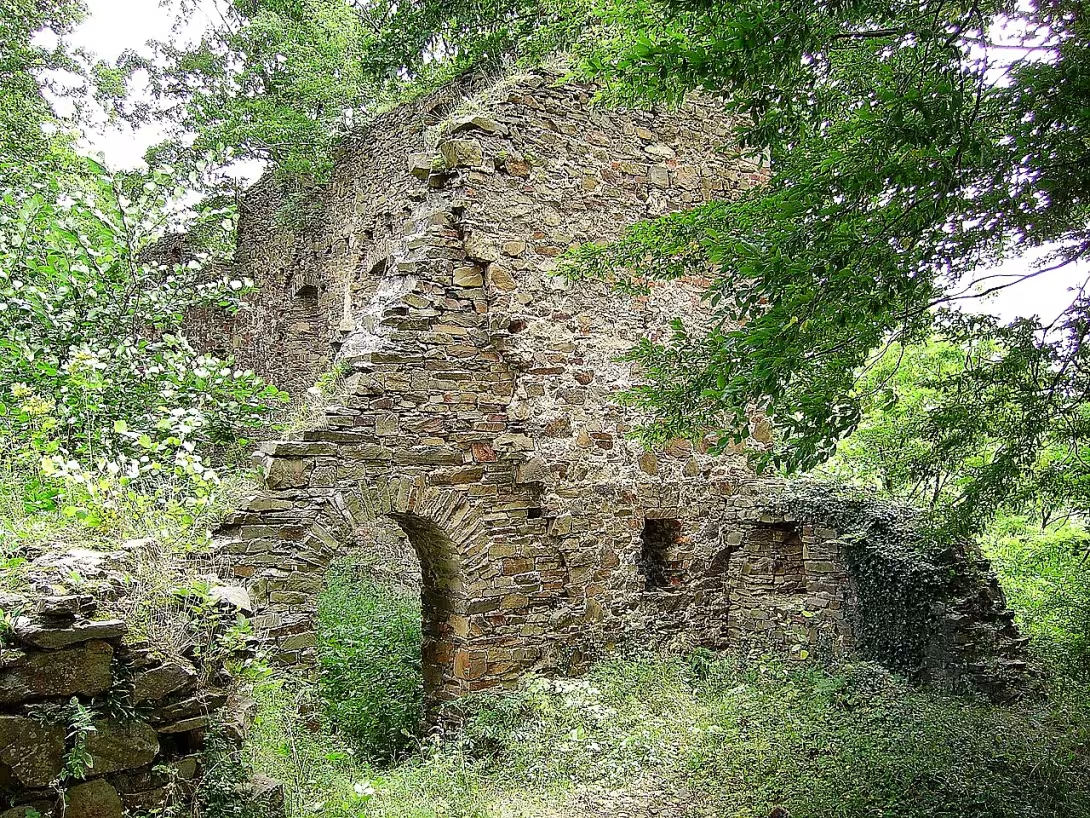
Vikštejn is a ruin of medieval castle near the village Radkov in Opava district. It stands on a high rock edge over the river Moravice. The castle was founded in the second half of the 13th century and served as a strategic point in the Moravian-Silesian region. Since 1964, it has been protected as a cultural monument.
The castle was founded by Vítek z Kravař in the second half of the 13th century, namely the year of origin is listed as 1250. The first written mention of the construction dates back to 1377. It was created in the period of the High Middle Ages, when castle construction flourished in the Czech countries and the power of local noble families was strengthened.
The concrete building style is silent, but it is known that the castle has undergone several modifications. Around 1530 they had it reconstructed by the Planknar of Kynbrilk and another partial repair took place in the second half of the 17th century.
Since the end of the 14th century the castle belonged to the princes of Opava. In 1447 he went into possession of the flags of Moravice and later Bírková from Násila acquired it. Subsequently he became the property of the Planknar of Kynbrilk. From the end of the 16th century until 1708 it was owned by Oderský of Liděřov. The last owners were Reichs, who acquired the castle in 1708, but during this period they served only economic purposes.
The history of the ruins is marked by several devastating events. In 1474 the castle was conquered and defeated by Matyas Korvina. During the Thirty Years' War, he was damaged by Danes and Swedes, and in 1648 he was blown up by the Imperial Army. The interesting thing is that there was a famous Minnesota Walther von der Vogelweide. After the castle was built in Upper VikštejnA in the village of Dubova, the castle was finally abandoned after 1776.
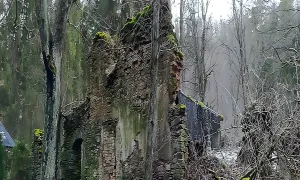
Today, Vikštejn is located as a ruin near the local part of Vítkova Podzraj. The monument represents an important historical testimony of the region. Visiting this place allows you to see closely the traces of medieval architecture and dramatic destinies of local families.
Then and now
Drag the slider to compare how the landmark may have looked when it was built with the view today.
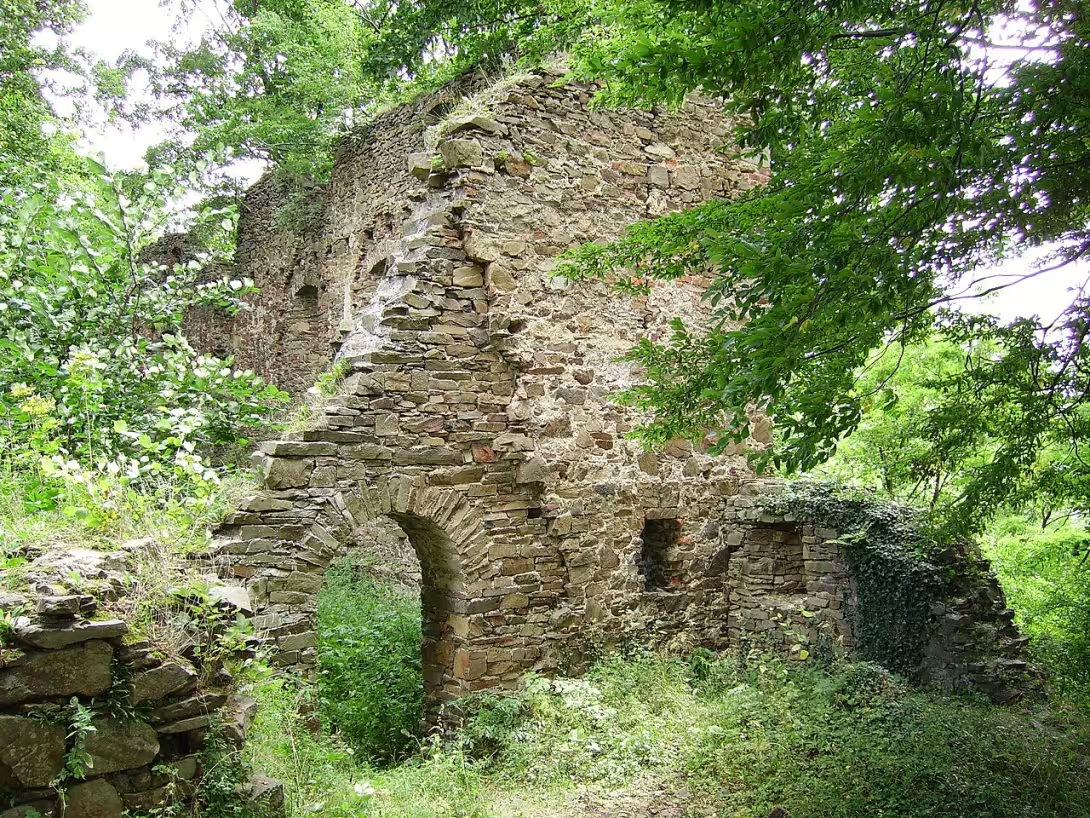
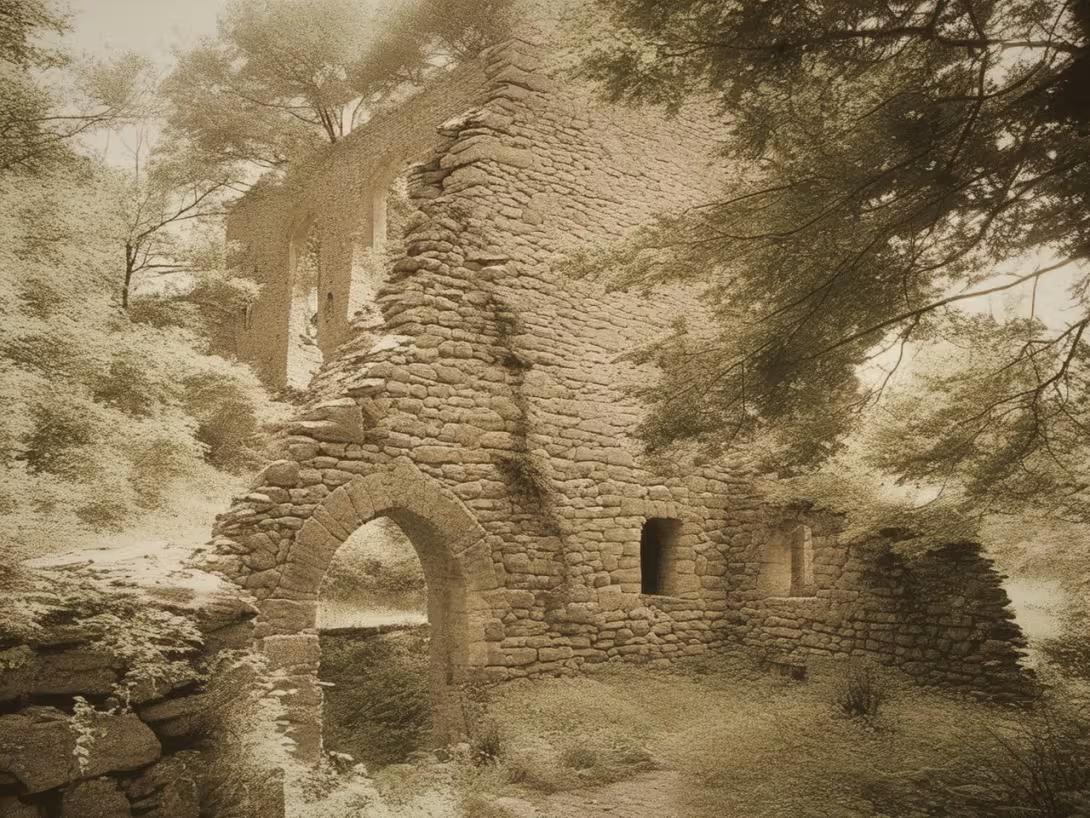
The historical appearance on the left is an AI-generated visualisation and serves as inspiration only.
Historical milestones
- 1377
- first written mention of the castle
- 1474
- conquest and destruction of the castle by Matthias Korvina
- 1648
- blowing up the castle by imperial army
- 1776
- definitely leaving the castle after building the castle in Upper Vikštejn
Architectural development
The castle was founded in the 13th century. Around 1530, the reconstruction of Planknar from Kynštejík took place in the second half of the 17th century.
Historical events
1474: castle conquered and conquered by Matthias Korvina; 1648: castle blown up by imperial army.
Owners
Vítek z Kravař (founder), secondary princes (from the end of the 14th century), flags from Moravice (1447), Bírková from Násila, Planknar from Kynbrilk (around 1530), Oderský from Liděřov (end of the 16th century - 1708), Reich (from 1708).
Points of interest
- The castle was founded by Vítek z Kravař and its origin is listed as 1250. - In 1474 the castle was conquered and defeated by Matyas Korvina. In 1648, the Imperial Army blew him up. - The famous minnesenger Walther von der Vogelweide worked here. - After the castle was built in Upper Vikštejn, the castle was finally abandoned after 1776.
Guide
Show guide text
This text was created by artificial intelligence and has not been editorially reviewed. It may contain inaccuracies.
Welcome to the ruins of Castle Vikštejn. Stop for a moment, take a breath and feel the atmosphere of this place. You are standing right now on a high rock edge, which is dramatically held over the valley of the river Moravice near the village Radkov. Look around you. What you see today as the silent remnants of stone walls was once a powerful castle that controlled the surrounding countryside and served as an inaccessible fortress. Imagine how the views of the deep forest and the silver ribbon of the river, which continues to flow below you at the same rate as when the castle was built hundreds of years ago, came out of this place.
Let us now move in time deep into the past, to the second half of the 13th century. It is at this time, probably around 1250, where the first stones Vítek z Kravař were laid. At that time the castle was not only a home of nobility, but a strategic point above all. Vitek chose this place with the precision of a military planner. The rock field provided natural protection and an excellent overview of the surrounding area, making Vikštejn a key element in the system of defence and territorial control. The castle has thus served over the centuries as a residence for various noble families who sought security and prestige. The first written mention of the castle from 1377 confirms that Vikštejn was already a recognised and important centre in the region.
Now pay attention to the ruins that surround you. Notice how the castle naturally blends with the terrain. Even though we see only fragments today, see how powerful the walls had to be, which were leaning on the hard stone of the edge. Look at the facade of the remaining structures and see the texture of the old stone, which survived storms, wars and oblivion. Do not look here for empty halls or windows, but rather perceive the overall available castle, which was dictated by this very firm rock mat. It is fascinating to think how much work it cost to transport material up to this peak and what discipline was needed to build such a building in the Middle Ages.
The history of Vikštejn, however, is not only a story of construction, but mainly a story of dramatic clashes and falls. If you look at the broken walls, realize that every crack can tell its own story. One of the most intervention moments was 1474. At this time the castle got into the sights of Matthias Korvin. This ambitious ruler of the castle conquered and defeated, thereby placing the first deep blow on Vikštejn. Imagine the noise of battle, the screams of soldiers and the dust of falling stones, which at that time had to fill the entire valley of Moravice. The castle may have tried to recover, but fate gave him another blow.
Let's move in time to the mid-seventeenth century, 1648. Europe was exhausted at the time by a 30-year war that left a burnt ground behind. It was this year that the Imperial Army invaded the castle. This time, however, was not just about conquest, but about total destruction. The soldiers blew up the castle. The explosion must have been deafening and destroyed a large part of the walls and inner space. What you see today is in many ways the result of this brutal end. The castle was no longer an imperceptible fortress and became a silent witness to the demise of an era.
Interestingly, the castle was not abandoned immediately. For some time, people lived here and the castle worked, even in ruins. The final end came in 1776. At that time, the nobles' preferences changed. It was no longer about being safe behind thick walls on the rock top, but about comfort, representativeness and luxury. This is why the castle was built in Upper Vikštejn. Once the new, modern mansion was finished, the old castle on the island was definitely abandoned. Nature began to take its way back, the trees penetrated between the stones and silence replaced the hustle and bustle of the castle yard.
In addition to military conflicts, one very unusual and poetic personality is associated with this place. You may have heard of it in connection with European literature. The famous minnesenger Walther von der Vogelweide worked here. Imagine the contrast between the tough military walls of Vikštejn and the fineness of the love songs that this famous poet and singer created. It is fascinating to think that in these spaces, which later exploded and collapsed, there was music and poetry that had become timeless. This link between the gross force of the castle and the fragility of the art gives Vikštejn a special, mystical depth.
Notice the surroundings now. Castle Vikštejn is not just a pile of stones, it is a cultural monument which has been officially protected since 1964. Thanks to this, we can stand here today and admire the brilliant combination of architecture and nature. It's where time stopped. If you look down on the river Moravice, try to imagine what the castle looked like at the time of its greatest glory, when it was a symbol of the power of the House of Kravař and later other nobles.
This ruin raises questions about the permeability of all human beings. The buildings that were meant to last forever and to be invincible eventually succumbed to time, gunpowder and simple lifestyle change. Yet Vikštejn still speaks in us. They talk about the courage of the founders, the cruelty of the time of war, and the beauty of art that survived even the fall of the walls.
Now I invite you to look around at a slow pace. Go through the surrounding space, see the wind, which often brings echoes to the past in this valley, and be inspired by the silence that rules here today. Take a look at the details of the stone, the way the castle rests on the rock, and try to complete the missing parts of the walls in mind. Every step you take after this rocky edge is a step in the layers of history that formed the face of the Moravian-Silesian region.
Thank you for accompanying me on this short journey through time. I hope you have felt the spirit of this place and that the stories of Vitka of Kravař, Matthiah Korvin and the poetic Walther von der Vogelweide have intrigued you. Enjoy the rest of your visit, explore every corner of these fascinating ruins and let yourself be captivated by the beauty of Radkova and surrounding nature. I wish you a pleasant rest of the day and an inspirational walk. Goodbye.
Tips for visitors
The best time to visit Vikštejna is in the spring or autumn season when vegetation is in full strength and temperature is pleasant. This time of the year also offers ideal lighting conditions for shooting ruins with beautiful colors of nature.
Parking can be found near the village Radkov, where you can move directly towards the rock island. For those travelling by public transport, it is advisable to find out the current connections by bus or tram up to Vítkova Podzrady, from which Vikštejn is easily accessible on foot.
When visiting, it is recommended to bring with you shoes suitable for walking on uneven terrain and in case of colder weather clothes that protect from rain. Also remember the umbrella, goggles and plenty of drinking water.
For photography is the best place under the castle where you can capture a panoramic view down the river Moravice. The best light for photography offers a period before and after noon when the light is softer and less powerful.
In the vicinity of Vikštejna there is a Vítkovo Podvraj, which can be visited in 30 minutes by foot. This part of the village offers a historic atmosphere with old houses and beautiful views of the surrounding countryside.
Businesses nearby
Do you run a restaurant, accommodation, shop, museum, rental, wellness or other visitor service near this monument? Show yourself directly to the people heading to it — this is how they will see you in the app and on the web:
Events nearby
Zdroj akcí: otevřená data měst a obcí ČR (Národní katalog otevřených dat) a kalendář akcí Národního památkového ústavu.
Nearby
The castle is situated on a rock island over the river Moravicí near the local part of Vítkova Podrár.
Accommodation nearby
Themed route
1. Radkov, municipality - Initial trip point. This village serves as a starting point for the trip to historical monuments. 2. Moravice, river - Natural interest. The course of the river offers views of the surrounding rock edge. 3. Vítkov Podvraj, local section - Locality near the target. This part is located close to the historic island. 4. Vikštejn, ruin - Main destination. This ruin on the rocky edge represents the most important point of the route.
Seasonal recommendations
Spring: In the spring, the ruin wakes up along with the surrounding vegetation. Young leaves gradually begin to cover stone walls, creating a fresh and contrasting appearance. Light is soft and does not shine in this period, which is ideal for nature lovers. We recommend wearing layered clothes because morning temperatures can still be cold. It's the best time for a quiet observation of detail without large groups of people.
Summer: Summer months bring to Vikštejna intense sun and full bloom surrounding. The atmosphere is lively, but high temperatures in the open areas of the ruins can be tiring. To avoid the biggest crowds and unpleasant heat, we recommend visiting in the early morning. Remember enough drinking water, headgear and light, breathable clothes.
Autumn: Autumn visit offers the most impressive visual experience thanks to the golden and red shades of leaves. Foggy mornings give ruins a mysterious and slightly melancholy atmosphere. Due to the higher humidity and shorter days, it is necessary to have fixed, waterproof shoes and windbreaker. The best light for shooting is in the afternoon when the sun shines low above the horizon.
Winter: In winter, the ruin is very raw and majestic, especially if the landscape is covered with snow. Without leaves, all stone structures and shapes of castle masonry are better seen. Due to low temperatures and shorter daily times it is necessary to come early and choose very warm clothes as well as quality shoes in case of slippery paths. It's a period of the most calm and minimal excitement of visitors.
Visualizations and artistic views


The visualisations are generated by artificial intelligence and serve as inspiration.
Tips from visitors
No tips yet. Be the first!
Log in and add your tip.
Sources and literature
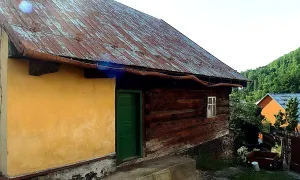
Photos: Tedmek / Public domain — Wikimedia Commons. The author and licence also appear when you hover over the image.
Faktickým podkladem tohoto textu byl článek na Wikipedii, jehož autory jsou přispěvatelé Wikipedie. Článek je dostupný pod licencí CC BY-SA 4.0.
Location on the map
Příběhy a pověsti
Legendy, pověsti a příběhy spjaté s touto památkou
Fotografie návštěvníků
Zatím žádné fotografie. Buďte první, kdo přidá fotografii z návštěvy!
Log in a přidejte svou fotografii nebo hodnoťte.
Za ověřenou návštěvu v aplikaci získáte víc bodů — poznáme podle GPS, že jste na místě.
Reviews and comments