






Vila čp. 893 s bránou, schodištěm a ohradní zdí Villa
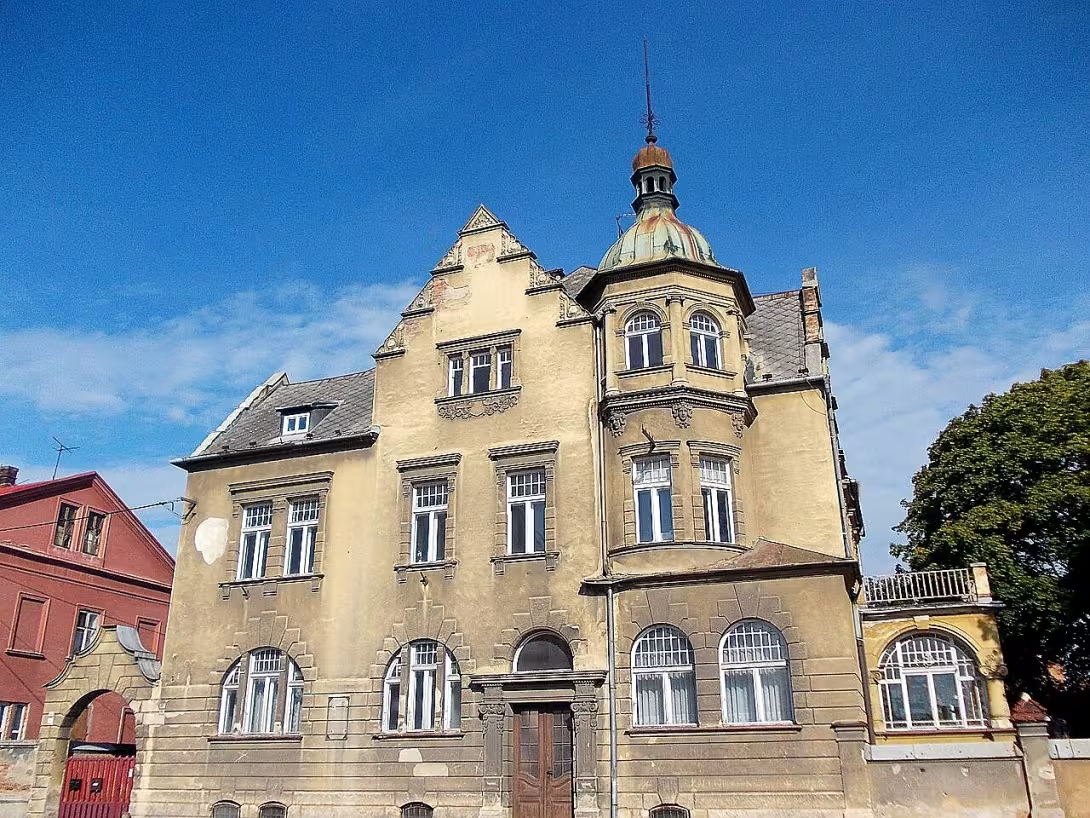
Bellakova Vila is an outstanding example of early 20th-century Neorenaissance architecture located in Krnov at Revoluční ulice (893/46). Built for the Bellak family, who owned a textile manufacturing business, this villa was designed by Wenzel Bürger from Saxony and completed in 1903. Its historical significance is highlighted by its architectural style and the tumultuous events it witnessed during World War II when it was confiscated by the Nazis.
The villa's origins are linked to Bohemia's industrial growth during the Austro-Hungarian Empire, a period marked by significant architectural development. The Bellak family commissioned Wenzel Bürger to design this Neorenaissance structure, reflecting both traditional and modern influences of the time. This blend is evident in its asymmetrical facades and cylindrical tower, characteristic of the era's architectural experimentation.
Architecturally, Bellakova Vila features a unique combination of elements. The building stands on a roughly square plan with three above-ground floors and a basement. Its facade is intentionally asymmetrical, dominated by a cylindrical tower that transitions into a polygonal shape on one side. The entrance is an oblong structure with a semicircular transom, flanked by pilasters topped with volute capitals. Window designs vary widely, including rectangular, semi-circular, and multi-part configurations, adding to the villa's eclectic aesthetic. Notably, a three-part window in a stepped gable is adorned with a shield embossed in stucco, showcasing attention to decorative detail.
Ownership of Bellakova Vila has seen dramatic shifts over the years. Originally built for the Bellak family, it was confiscated by the Nazis during World War II as the family fled abroad. Following the war, the property was nationalized and later lost its protected status in 1987. As of 2024, the villa is on sale, marking another potential change in its storied history.
Throughout its existence, Bellakova Vila has been a silent witness to significant historical events. Constructed in 1903, it served as a cultural monument until 1987 when its protected status was revoked. During World War II, the villa's confiscation by the Nazis marked a dark chapter in its history, reflecting broader geopolitical upheavals of the time.
Today, Bellakova Vila remains an architectural gem within Krnov, a town celebrated for its historical architecture and cultural heritage. While it no longer holds protected status, its unique design and historical significance make it a worthwhile visit for those interested in early 20th-century architecture and history. The villa's blend of Neorenaissance and Art Nouveau elements offers a tangible connection to the past, inviting visitors to explore its storied walls and appreciate its enduring legacy.
Then and now
Drag the slider to compare how the landmark may have looked when it was built with the view today.
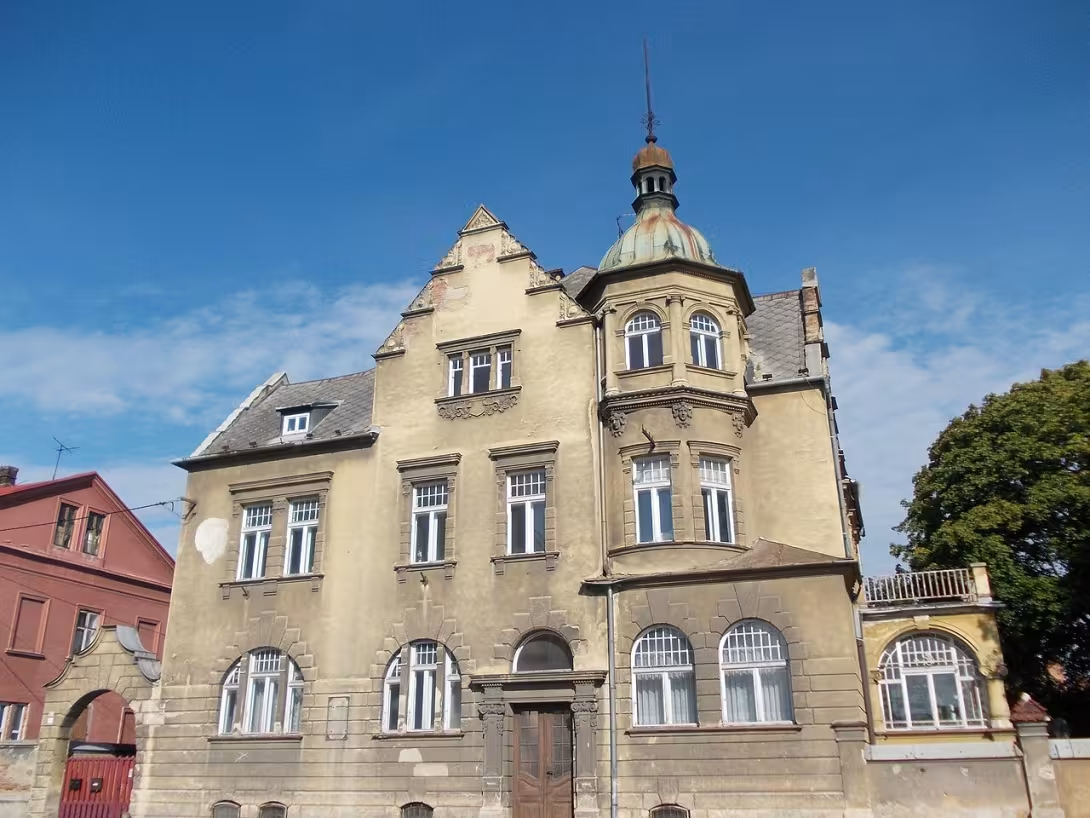

The historical appearance on the left is an AI-generated visualisation and serves as inspiration only.
Historical milestones
- 1903
- Construction of Bellakova vila completed.
- 1987
- Cultural monument protection status revoked.
Architectural development
The villa was initially designed in a neorenaissance style with asymmetrical facades, featuring a cylindrical tower. In the 1920s, its interiors were updated to reflect art nouveau influences. The structure includes varied window designs and decorative elements such as an embossed shield on the parapet.
Historical events
1903: Construction completed for the Bellak family.
1939-1945: Confiscated by Nazis during World War II.
Post-WWII: Nationalized and later lost protected status in 1987.
Owners
The villa was originally built for the Bellak family, who owned it until their flight during World War II when their property was confiscated by the Nazis. After the war, the villa was nationalized and later lost its protected status in 1987. As of 2024, the villa is on sale.
Points of interest
- The villa's design by Wenzel Bürger incorporates a unique blend of Neorenaissance and Art Nouveau elements, showcasing the architectural experimentation prevalent during the Austro-Hungarian Empire.
- During World War II, Bellakova Vila was confiscated by the Nazis as part of their broader efforts to seize property from Jewish families, marking a dark chapter in its history that reflects the tumultuous geopolitical climate of the time.
- The villa's asymmetrical facade and cylindrical tower are distinctive features that set it apart from other Neorenaissance structures, highlighting Bürger's innovative approach to blending traditional and modern architectural influences.
- Despite losing its protected status in 1987, Bellakova Vila remains a cultural monument within Krnov, offering insights into early 20th-century architecture and the historical events it has witnessed over the years.
- The villa features a three-part window adorned with a shield embossed in stucco, exemplifying the attention to decorative detail that characterizes its eclectic aesthetic.
Guide
This guide is narrated by a synthetic voice generated by artificial intelligence.
Show guide text
This text was created by artificial intelligence and has not been editorially reviewed. It may contain inaccuracies.
Bellakova Villa in Krnov is a neo-Renaissance building from the early twentieth century. It stands on Revolution Street and bears the address number eight hundred and ninety-three.
The Bellak family owned a woolen textile manufacturing company in Krnov. They had the villa built in nineteen oh three. The design in the style of North German neo-Renaissance was created by architect Wenzel Bürger from Saská Kamenice. In the nineteen twenties, the interior of the house was given a new appearance in Art Deco style.
At the beginning of the Second World War, the family fled abroad. The Nazis confiscated their property including the villa, and after the war the house was nationalized. From nineteen fifty-eight the villa was protected as a cultural monument, but in nineteen eighty-seven the monument protection ended.
The villa stands independently on an approximately square floor plan. It has three above-ground floors, an attic, and a basement. The facades are deliberately asymmetrical. In the street facade, a tower dominates on the right side, which is cylindrical at the bottom and transitions to a polygon higher up. The rectangular entrance with a semicircular fanlight is offset to the right and is flanked by pilasters with capitals in the shape of volutes. The windows are very varied. Some are rectangular, others rounded at the top into a semicircle, some are divided into multiple sections, and they also differ in width. A three-part window in a stepped gable is decorated below the parapet with stucco ornamentation featuring a coat of arms.
From the right side facade, a glazed veranda extends at ground level. Here too different window shapes alternate, and the facade is crowned with a stepped gable. The same gable motif is repeated on the left side of the house. There, in addition, a tower-like projection rises up, in which a spiral staircase is hidden. The rear facade toward the garden is enlivened by two risalits, that is, slightly projecting parts of the facade. The left one has once again a stepped gable, the right one a wooden oriel. The house is covered with a hipped roof.
Inside, some original elements have been preserved, for example wooden structures, wooden paneling, and stained glass.
Frequently asked questions
Can the monument be visited?
This is a residential or farm building, not a museum with opening hours. Please view it from public space and respect the owners' privacy. We have no information about access to the interior.
Where is the monument?
Location: Pod Bezručovým vrchem, Moravskoslezský kraj. The map on this page shows the exact spot.
Why is the monument protected?
It is listed in the Central List of Cultural Monuments of the Czech Republic as a cultural monument (register no. 1000146689).
Businesses nearby
Do you run a restaurant, accommodation, shop, museum, rental, wellness or other visitor service near this monument? Show yourself directly to the people heading to it — this is how they will see you in the app and on the web:
Nearby
The villa is situated in Krnov, a town known for its historical architecture and cultural heritage. The surrounding area includes other notable buildings from the early 20th century.
Accommodation nearby
Themed route
Thematic Walking Tour in Krnov
1. Vila čp. 893 s bránou, schodištěm a ohradní zdí (Villa) Begin your journey at the stunning Vila čp. 893, renowned for its exquisite early 20th-century architecture. This villa is a prime example of Krnov's rich cultural heritage and historical significance. Explore the intricately designed entrance gate, grand staircase, and surrounding walls that encapsulate the elegance of the era.
2. Historické budovy v okolí (Historical Buildings) A short walk from the villa will lead you to other notable early 20th-century buildings in Krnov. These structures reflect the town's architectural evolution and offer a glimpse into its past. Each building tells a unique story through its design, contributing to the area's historical tapestry.
3. Centrum města Krnov (City Center) Continue your exploration towards the heart of Krnov. The city center is adorned with architectural gems from the same period as Vila čp. 893. Stroll through the streets to appreciate the harmonious blend of historical and modern elements, providing a vibrant backdrop for cultural activities and local life.
This tour offers an immersive experience into Krnov's architectural heritage, highlighting its most significant early 20th-century landmarks within the town itself.
Seasonal recommendations
Spring: Visiting Vila čp. 893 during spring offers a vibrant display of blooming flowers and lush greenery surrounding the historic site, creating an enchanting atmosphere perfect for photography enthusiasts. The mild weather allows visitors to comfortably explore the villa's grounds at a leisurely pace. It’s advisable to wear layers as temperatures can vary throughout the day, and early mornings are ideal to avoid larger crowds that gather later in the afternoon.
Summer: Summer is the peak season for visiting Vila čp. 893, when the sun-drenched landscape enhances the beauty of its historic architecture. The long daylight hours provide ample time for exploration, though it's wise to arrive early to beat the heat and the influx of tourists. Comfortable walking shoes and light clothing are recommended, along with carrying water and sunscreen to stay hydrated and protected from UV rays.
Autumn: Autumn transforms Vila čp. 893 into a picturesque scene with its warm hues of reds, oranges, and yellows. The cooler temperatures make for an ideal time to stroll through the grounds without the discomfort of summer heat. This season often sees fewer visitors, allowing for a more intimate experience of the villa's history and architecture. Layered clothing is recommended as mornings can be chilly but warm up later in the day.
Winter: Winter offers a serene and quiet visit to Vila čp. 893, with shorter days providing a unique charm under softer lighting conditions. The landscape may appear stark, yet there’s a certain beauty in its simplicity. Visitors should dress warmly in layers and consider bringing gloves and hats for comfort during the colder months.
Visualizations and artistic views


The visualisations are generated by artificial intelligence and serve as inspiration.
Photos from the area
Real photos taken near the monument


Zdroj a licence jsou uvedeny u každého snímku.
Tips from visitors
No tips yet. Be the first!
Log in and add your tip.
Sources and literature
Photos: Echinacea / CC BY-SA 4.0 — Wikimedia Commons. The author and licence also appear when you hover over the image.
Faktickým podkladem tohoto textu byl článek na Wikipedii, jehož autory jsou přispěvatelé Wikipedie. Článek je dostupný pod licencí CC BY-SA 4.0.
Location on the map
Příběhy a pověsti
Legendy, pověsti a příběhy spjaté s touto památkou
Fotografie návštěvníků
Zatím žádné fotografie. Buďte první, kdo přidá fotografii z návštěvy!
Log in a přidejte svou fotografii nebo hodnoťte.
Za ověřenou návštěvu v aplikaci získáte víc bodů — poznáme podle GPS, že jste na místě.
Reviews and comments