






Vila Theodora Flemmicha Villa
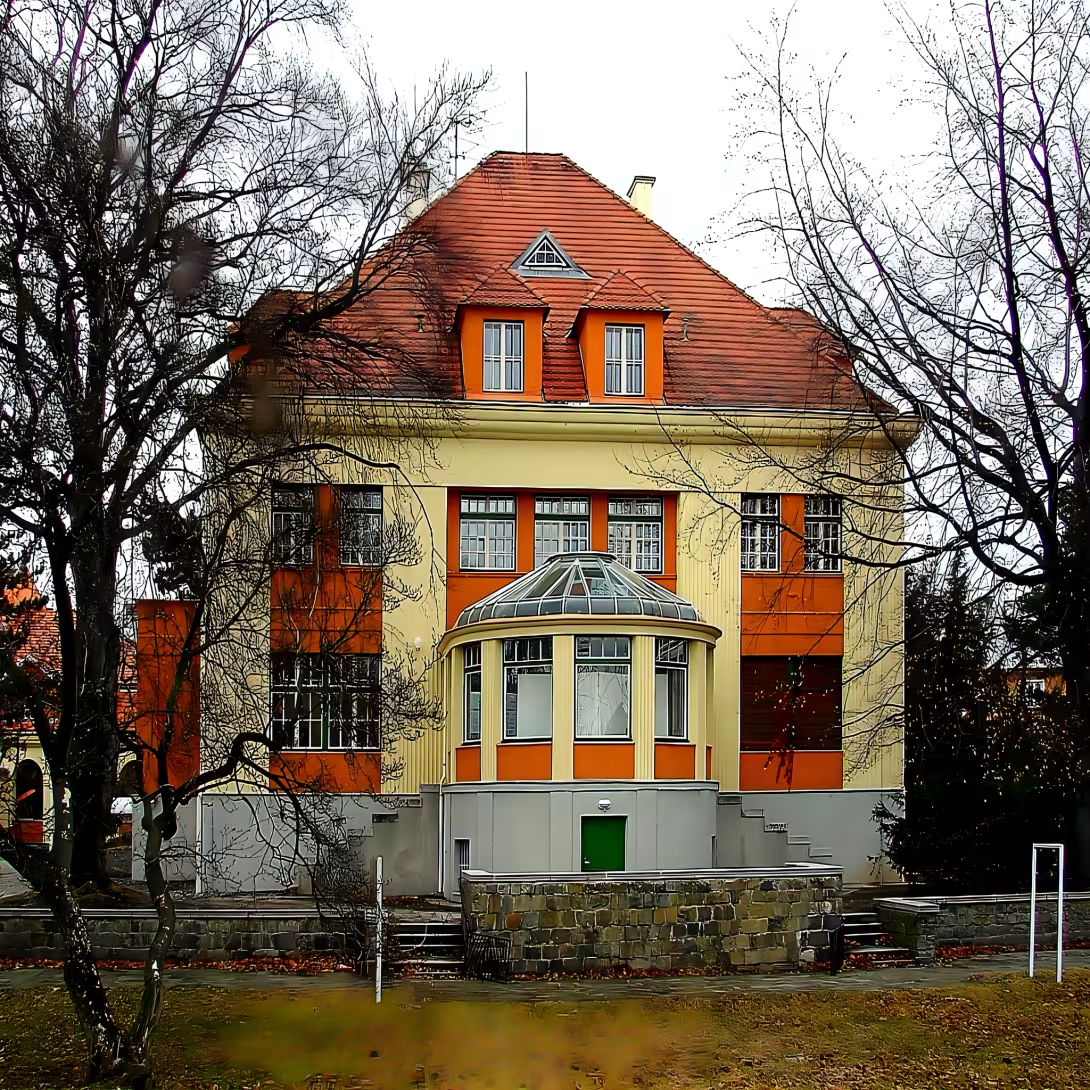
Villa Theodora Flemmich is a neoclassical residence in Krnov, Bruntál district, constructed between 1914 and 1917. It stands out for its architectural ties to the Wiener Werkstätte and serves as the Městské muzeum Krnov today.
The villa was built for Theodor Flemmich, director and co-owner of the Franze Kurze textile factory. Although the Flemmich family had lived in Krnov since the Thirty Years' War, they began their business ventures in the mid-19th century, with Theodor's parents as master weavers.
Architect Otto Puscher, a graduate of the Vienna School of Applied Arts and student of Josef Hoffmann, designed the project. His work reflects Hoffmann’s influence, merging architecture with industrial design. The villa features a nearly square floor plan and symmetrical facades, with a main gable and pilasters reminiscent of an aristocratic seat. It has a hipped roof and is styled as an English house, surrounded by a garden with a greenhouse and garage.
The interior centers on two halls connected by a staircase. A main axis runs from the entrance through a salon to a winter garden, while a transverse axis links the hall to living quarters. Ground-floor social rooms were linked by wide glass doors for representation and comfort. Although original interiors are known only from photographs, they included carved paneling, mosaics, colorful wallpapers, and stucco ceiling decorations. A specific hunting room was furnished in a rustic style, with elements produced by Wiener Werkstätte designers.
Theodor Flemmich lived there until his death. The villa's co-ownership by his factory delayed the legal transfer to his wife and three daughters for years. In 1945, it was nationalized and divided into apartments. From 1951 to 2003, it housed an Infant Institute.
In 2003, Krnov City acquired the property and established the Městské muzeum Krnov within its walls. The museum hosts exhibitions, lectures, educational programs, and Czech-Polish cultural events to promote cross-border tourism. The villa has been a protected heritage monument since 1958.
This villa exemplifies early 20th-century neoclassical design and the Vienna Secession's influence. It offers insights into the industrial history and artistic tastes of its time. Visitors can explore the site and the city museum’s collections.
Historical milestones
- 1914
- Construction of the villa began.
- 1917
- Completion of the construction and interior furnishing.
- 1945
- The villa was nationalized and divided into apartments.
- 1958
- The building was officially designated as a heritage-protected monument.
- 2003
- The City of Krnov took ownership and established the City Museum in the villa.
Architectural development
The villa was built in a neoclassical style between 1914 and 1917 with a hipped roof and a main gable with pilasters. The interior was richly equipped by designers from the Wiener Werkstätte, featuring carved paneling, mosaics, and stucco ceilings. The overall concept follows the 'English house' model, surrounded by a garden with utility buildings such as a garage and greenhouse.
Historical events
In 1945, the villa was nationalized and divided into apartments. Between 1951 and 2003, it housed an Infant Institute. Since 2003, it has been owned by the City of Krnov and used as a museum.
Owners
Theodor Flemmich (until 1926), his wife and three daughters, the state (nationalized in 1945), and the City of Krnov (since 2003).
Points of interest
- Villa Theodora Flemmich is a neoclassical residence in Krnov, built between 1914 and 1917. - It was designed by architect Otto Puscher, reflecting the influence of Josef Hoffmann from the Vienna School of Applied Arts. - The villa features architectural ties to the Wiener Werkstätte and serves as the Městské muzeum Krnov today. - Originally built for Theodor Flemmich, director and co-owner of the Franze Kurze textile factory, it has been a protected heritage monument since 1958. - After being nationalized in 1945 and later divided into apartments, the villa was acquired by Krnov City in 2
Guide
Show guide text
This text was created by artificial intelligence and has not been editorially reviewed. It may contain inaccuracies.
Welcome. Please, take a moment to settle in and look around. You are standing here, at Pod Bezručovým vrchem, before one of the most refined architectural gems of Krnov: the Vila Theodora Flemmicha. As you look at the building before you, try to let the noise of the modern world fade away for a moment. Imagine yourself stepping back over a century, to a time when this residence was not a museum, but a private sanctuary of elegance, wealth, and artistic ambition. The first thing that likely strikes you is the sense of balance and poise the building exudes. It does not shout for attention with excessive ornamentation, but rather commands it through a disciplined, sophisticated presence.
To understand why this villa exists, we have to look back to the early twentieth century, a period of immense transition and industrial growth. The story of this house begins in 1914, a year that changed the course of global history, yet here in Krnov, it marked the beginning of a very personal project. The villa was commissioned by Theodor Flemmich, a man of significant influence and means. As a director and co-owner of a local textile factory, Flemmich represented the industrial elite of the era. In those days, the textile industry was the heartbeat of the region, and the success of these enterprises allowed the city's leading figures to bring the most cutting-edge European trends home to Krnov. For Theodor Flemmich, this villa was to be more than just a place to live; it was a statement of status, a reflection of his taste, and a testament to the prosperity brought by the looms and factories of the city.
Now, I invite you to look closely at the structure of the building. As you observe the facade, notice the striking symmetry. The architects of this period believed that beauty was found in proportion and order. If you look at the overall shape, you will see that the villa follows a nearly square floor plan, a choice that gives the building a feeling of stability and completeness. This is a hallmark of the neoclassical style, which sought to revive the timeless principles of classical antiquity while adapting them to the needs of a modern, twentieth-century lifestyle.
But there is something more subtle and exciting happening here than just a return to the classics. The man responsible for this design was the architect Otto Puscher. To truly appreciate Puscher's work, we have to look toward Vienna. Puscher was a student of the legendary Josef Hoffmann, one of the most influential figures of the Vienna School of Applied Arts. Because of this connection, the Vila Theodora Flemmicha is not just a neoclassical house; it is a physical manifestation of the influence of the Wiener Werkstätte, or the Vienna Workshops.
The Wiener Werkstätte was a revolutionary movement that aimed to bridge the gap between fine art and everyday craft. They believed that everything in a home, from the architecture of the walls to the design of the silverware, should be a cohesive work of art. While you stand here, try to imagine how that philosophy translated into the interior. When the construction was finally completed in 1917, the interior furnishing was designed to complement the exterior's geometric precision. The goal was a total work of art, where the architecture and the objects within it spoke the same language of clean lines and refined elegance.
As we reflect on the beauty of the building, it is important to remember that the life of a house is often as turbulent as the history of the city it inhabits. For nearly three decades, the villa served as a private residence, a place of luxury and quietude. However, the end of the Second World War in 1945 brought a drastic change. In the wake of the political upheavals of that time, the villa was nationalized. The grand, unified vision of Theodor Flemmich and Otto Puscher was fractured when the building was divided into separate apartments. For years, the sprawling rooms that were once designed for high-society gatherings and artistic contemplation were repurposed for the practical, everyday needs of multiple families. This period of nationalization often saw the loss of original furnishings and a decline in the building's singular character, as the state prioritized utility over aesthetic preservation.
Despite these changes, the architectural integrity of the villa remained evident. Those who recognized its unique value fought to ensure it would not be lost to time. This effort culminated in 1958, when the building was officially designated as a heritage-protected monument. This legal protection was a turning point, ensuring that the villa would be preserved for future generations and that its connection to the Wiener Werkstätte and the legacy of Otto Puscher would be honored.
The final chapter of the villa's transformation began in 2003. The City of Krnov took ownership of the property, recognizing that such a significant piece of local history belonged to the public. The building underwent a careful transition, evolving from a residential space back into a cohesive whole, and it eventually became the home of the City Museum. Today, the villa serves a dual purpose: it is both a container for the city's history and a historical artifact in its own right.
One of the most fascinating aspects of this place is the intersection of industry and art. It is easy to think of factory owners as purely pragmatic businessmen, but Theodor Flemmich's choice of architect tells a different story. By hiring a student of Josef Hoffmann, Flemmich was aligning himself with the avant-garde of European design. He wasn't just building a house; he was importing a specific Viennese intellectualism to Krnov. The villa stands as a reminder that the industrial wealth of the textile mills didn't just build warehouses and chimneys—it funded the pursuit of beauty and the implementation of high art in the local landscape.
As you prepare to move forward, I encourage you to take one last look at the facade. Think about the journey this building has taken: from the optimistic start of construction in 1914, through the austerity of the mid-century, to its current life as a guardian of the city's memory. The symmetry you see before you is more than just an architectural choice; it is a symbol of a lost era of elegance and a testament to the enduring power of great design.
You are now invited to explore further. Whether you step inside to discover the treasures of the City Museum or continue your walk through the neighborhood, carry with you the image of this neoclassical sanctuary. Let the harmony of the Vila Theodora Flemmicha inspire you to look for the hidden artistic details in the world around you. Thank you for listening, and enjoy the rest of your discovery of Krnov.
Tips for visitors
The ideal time to visit Vila Theodora Flemmicha is during spring or early autumn, when the weather is mild and the greenery of Krnov is at its most vibrant. These seasons provide the most comfortable conditions for exploring the neoclassical architecture and the area around Pod Bezručovým vrchem, avoiding the crowds and extreme temperatures of midsummer or deep winter.
The villa is located in Krnov, a city with excellent road connections. Visitors traveling by car will find standard urban parking in the city center, though parking directly at the villa may be limited; we recommend checking local regulations upon arrival. For those using public transport, Krnov is well-served by train and bus. As schedules can change, please verify current connections via a reliable transit planner before your trip.
We recommend wearing comfortable walking shoes suitable for historic, potentially uneven streets, and bringing a camera or notebook to capture the architectural details. As the villa reflects the artistic influence of Otto Puscher—a student of Josef Hoffmann—a basic familiarity with early 20th-century architectural styles will further enhance your appreciation of its design. Please note that there are no on-site amenities such as cafes or shops, so it is advisable to bring water and snacks if you plan to spend several hours exploring.
For photographers, the exterior of this neoclassical residence offers the most striking visuals. The soft light of early morning or late afternoon is ideal for highlighting the structural lines and facade details without harsh shadows. We suggest focusing on the interplay between the building’s classical features and its natural setting near Pod Bezručovým vrchem. Please be mindful of other visitors and respect private property boundaries while capturing these scenes.
Beyond the villa, we encourage you to explore the historic city center and cultural landmarks of Krnov. For families with children, a brief visit focused on the exterior and immediate surroundings is recommended, as the interior may be a private residence or have restricted access. Please ensure children are supervised near Pod Bezručovým vrchem; you can keep them engaged by pointing out architectural features like the columns and windows.
Businesses nearby
Do you run a restaurant, accommodation, shop, museum, rental, wellness or other visitor service near this monument? Show yourself directly to the people heading to it — this is how they will see you in the app and on the web:
Accommodation nearby
Themed route
Thematic Tour Itinerary: Pod Bezručovým vrchem
1. Vila Theodora Flemmicha (Villa) Begin your journey at the enchanting Vila Theodora Flemmicha, a stunning example of architectural beauty nestled in the village of Pod Bezručovým vrchem. This villa is renowned for its historical significance and exquisite design, making it an essential visit for those interested in cultural heritage.
2. Pod Bezručovým vrchem Village Center (Village) After exploring the villa, take a leisurely stroll through the charming village center of Pod Bezručovým vrchem. Immerse yourself in the local atmosphere and discover quaint shops and cafes that offer a taste of regional life. This area provides an authentic experience of rural Czech culture.
3. Local Park (Park) Nearby, visit a serene local park where you can relax amidst nature's tranquility. The park is perfect for a peaceful walk or picnic, offering scenic views and a chance to unwind after your cultural explorations. It’s an ideal spot to reflect on the beauty of Pod Bezručovým vrchem.
4. Historical Church (Church) Continue your tour by visiting the historical church in the vicinity. This architectural gem is not only a place of worship but also a testament to the region's rich history and artistic heritage. Its intricate designs and peaceful ambiance make it worth exploring.
5. Vila Theodora Flemmicha Gardens (Garden) Conclude your tour by returning to Vila Theodora Flemmicha, this time focusing on its beautifully landscaped gardens. These gardens are a delightful complement to the villa itself, showcasing meticulous gardening and offering picturesque views that encapsulate the essence of Pod Bezručovým vrchem.
This itinerary provides a well-rounded experience of cultural, historical, and natural attractions within Pod Bezručovým vrchem.
Seasonal recommendations
Spring: Visiting Vila Theodora Flemmicha during the spring offers a unique experience as nature comes to life around Pod Bezručovým vrchem. The blooming flowers create a vibrant tapestry of colors, and gentle sunlight filters through budding trees, casting a warm glow on the villa's historic architecture. This is an ideal time for photography enthusiasts who wish to capture the picturesque landscape in its full glory. Visitors should consider wearing comfortable layers as temperatures can vary throughout the day. While crowds are generally manageable, arriving early in the morning ensures a more serene experience before larger groups arrive.
Summer: The summer season at Vila Theodora Flemmicha is characterized by long daylight hours and warm weather, making it perfect for leisurely strolls around the villa's grounds. The lush greenery and vibrant blooms provide a refreshing backdrop to explore the historic site. It’s advisable to visit during off-peak times, such as weekdays or early mornings, to avoid crowds. Comfortable walking shoes and light clothing are recommended due to the heat, along with sunscreen and a hat for sun protection.
Autumn: Autumn brings a magical transformation to Vila Theodora Flemmicha, with the landscape awash in shades of orange, red, and gold as leaves change color around Pod Bezručovým vrchem. This season offers a tranquil atmosphere, ideal for those seeking peace and quiet while enjoying the natural beauty. Temperatures are cooler, making it comfortable to explore without the summer heat. Visitors should dress in layers to accommodate varying temperatures throughout the day. The reduced number of tourists compared to other seasons makes this an excellent time for a more intimate experience.
Winter: During winter, Vila Theodora Flemmicha is enveloped in a serene and quiet atmosphere as snow may blanket the surrounding landscape, offering a picturesque setting that contrasts with its usual lush greenery. Shorter daylight hours mean visitors should plan to arrive early to make the most of their visit. It's essential to wear warm clothing, including coats, hats, gloves, and sturdy boots, to stay comfortable in the cold weather. The villa may have reduced opening hours during this season, so checking ahead is advisable for planning your trip effectively.
Visualizations and artistic views


The visualisations are generated by artificial intelligence and serve as inspiration.
Photos from the area
Real photos taken near the monument


Zdroj a licence jsou uvedeny u každého snímku.
Tips from visitors
No tips yet. Be the first!
Log in and add your tip.
Sources and literature
Fotografie: H Pepa / CC BY-SA 3.0, rozlišení zvýšeno umělou inteligencí — Wikimedia Commons. The author and licence also appear when you hover over the image.
Faktickým podkladem tohoto textu byl článek na Wikipedii, jehož autory jsou přispěvatelé Wikipedie. Článek je dostupný pod licencí CC BY-SA 4.0.
Location on the map
Příběhy a pověsti
Legendy, pověsti a příběhy spjaté s touto památkou
Fotografie návštěvníků
Zatím žádné fotografie. Buďte první, kdo přidá fotografii z návštěvy!
Přihlaste se a přidejte svou fotografii nebo hodnoťte.
Za ověřenou návštěvu v aplikaci získáte víc bodů — poznáme podle GPS, že jste na místě.
Reviews and comments