



Zámeček Dolní Tošanovice Castle
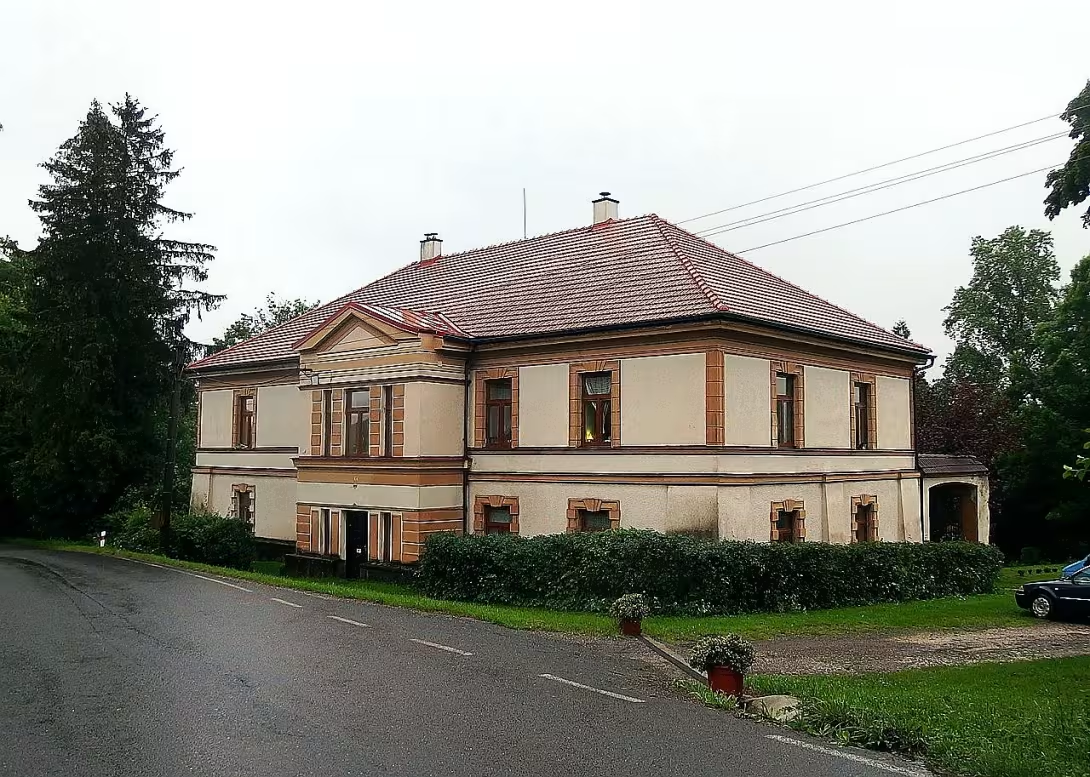
The castle is located in the northeast part of the village Dolní Tošanovice in the district of Frýdek-Místek and is protected as a cultural monument of the Czech Republic since 2006 together with its two-year tiled stove. The historical roots of the building date back to 1445, when there was a small fortress. This was replaced by an empirical castle built at the turn of the 18th and 19th centuries by a builder named Mattencloity.
In the interwar period the castle gained a new dimension when in 1933 the last owner, doctor MUDr. Vítěslav Chlumský, had it modified to a luxury villa. After World War II, its purpose changed: the object served the state farm Český Těšín as a hostel for its employees. With the advent of democratic changes after 1990, the castle was resected by the Chlumsky family, which thus returned to its ownership. In 2015 he was hit by a severe fire test which damaged a large part of the roof.
The area consists of a main building, supplemented by economic buildings and chapel situated in the letter U. The building itself is a storey walled building on a rectangular plan covered by a valb roof with skylights. The north front stands out with an axis-permeating risalite, which is vertically членen by three window axes and ended with a triangular shield. The lower parts are decorated with rustics, the higher parts lack Russian decoration. There are stucco fields between the windows on the ground floor, there is a bossmanship on the floor. The south facade, divided by four window axes, is coated with a porticus made up of two pairs of ring columns, on which is a balcony with a forged railing from voluously rolled iron stripes. All the windows are oblong with stucco-shaped shambles ended with a jewel.
The interior of the castle reflects its extra-cost development. The rooms on the ground floor are encapsulated with Prussian placky, while the ceilings prevail on the floor. The main attractions are a two-stroke tile stove with fine decoration: the bottom is decorated with diamonds, the upper part boasts plant decoration over the profiled ledge and vegetative elements on the pillars. The wooden staircase leading to the floor, situated opposite the main entrance, complements the passage through the interior. The chapel shows historical paintings and preserved the original wooden altar, although the farm building and the chapel were severely damaged by the fire.
The visit to the castle is an opportunity to observe how Czech construction responds to European artistic trends: from Empire elegance to Art Nouveau details to the restoration of traditional property. This is an unusual witness to the story of the distinctive owners and transformations their home has been through for centuries.
Then and now
Drag the slider to compare how the landmark may have looked when it was built with the view today.
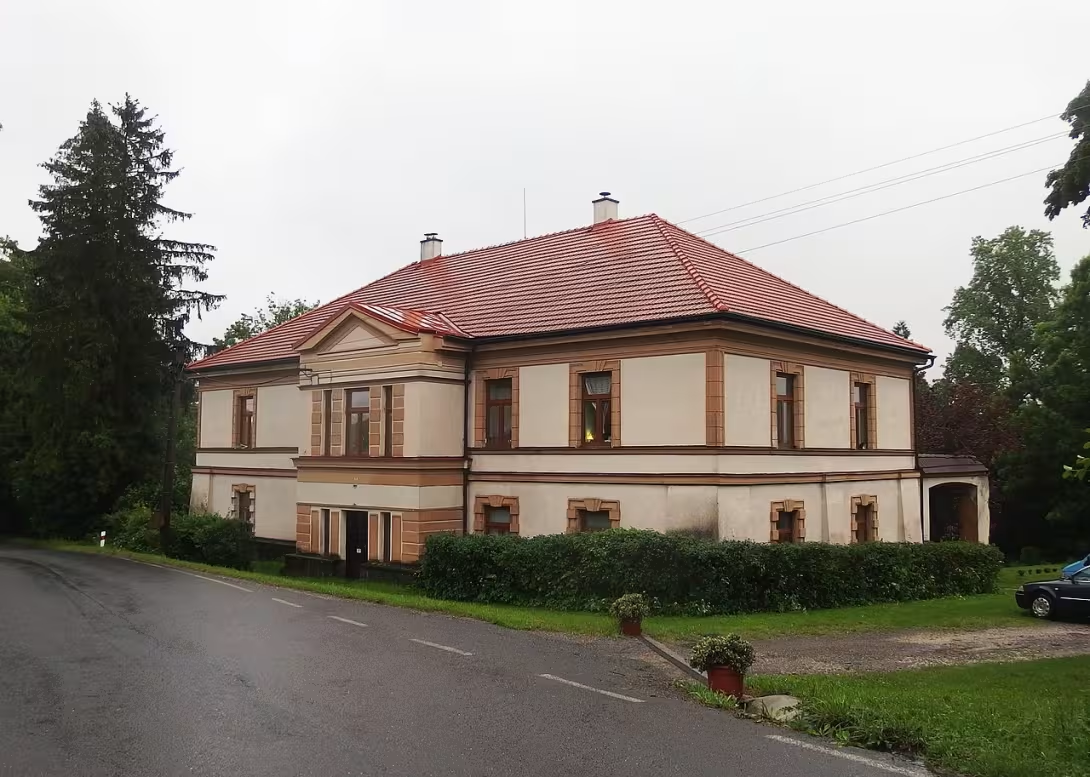
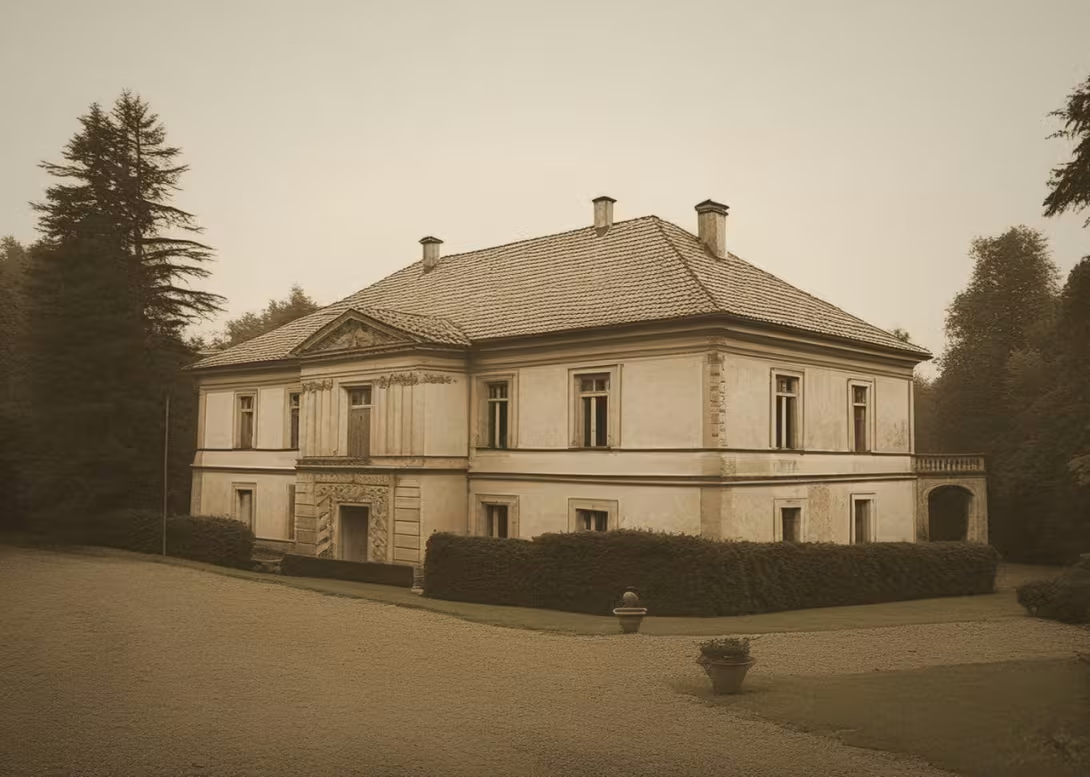
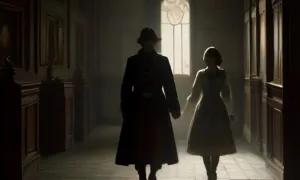
The historical appearance on the left is an AI-generated visualisation and serves as inspiration only.
Historical milestones
- 2006
- The castle and tiled stove were declared by cultural monuments of the Czech Republic.
Architectural development
The castle is a storey walled building with a wall roof and risalite, which is vertically and horizontally divided. Interiors include Prussian tortillas on the ground floor and flat-ceiling rooms on the floor. The two-story tile stove decorated with diamonds is another key architectural element.
Historical events
- 1445
- Mention a small fort at the castle site.
- 1933
- Adjusting the castle at the luxury villa MUDr. Winner Chlumsky.
- 2015
- A fire that destroyed a significant part of the roof.
Points of interest
- The castle has been protected as a cultural monument of the Czech Republic since 2006, along with its two-year tiled stoves.
- The historical roots of the building date back to 1445, when there was a small fortress. The Empire Castle was built at the turn of the 18th and 19th centuries.
- In 1933 the castle was modified on a luxury villa by doctor MUDr.
- After World War II, the building served as a hostel for employees of the state farm Český Těšín.
- In 2015 the castle suffered a heavy test in the form of a fire which damaged a significant part of the roof.
Guide
This guide is narrated by a synthetic voice generated by artificial intelligence.
Show guide text
This text was created by artificial intelligence and has not been editorially reviewed. It may contain inaccuracies.
The small château in Dolních Tošanovicích is located in the northeastern part of the municipality in the Frýdek-Místek district. In 2006, together with its tile stoves, it was declared a cultural monument of the Czech Republic.
On its site stood a small fortified house, which is mentioned as early as 1445. The current Empire-style château was built at the turn of the 18th and 19th centuries by the Mattencloite family. Its last owner was physician Vítěslav Chlumský, who had the building converted into a luxury villa in 1933. After the Second World War, the State Farm Český Těšín housed its employees there. After 1990, the building returned to the Chlumský family through restitution. In 2015, a fire destroyed a significant part of the roof.
The complex consists of the château building itself and farm buildings with a chapel, arranged in the shape of the letter U. The farm building and chapel are considerably damaged, though the chapel has retained its wall paintings and wooden altar.
The château is a two-storey masonry building on a rectangular floor plan with a hipped roof and dormers. The northern façade has a projecting central section, called a risalit, with three window axes, topped with a triangular gable. Horizontal bands of profiled string courses and a cornice divide the façade. Rustication adorns the corners on the ground floor. Between the ground floor windows are stucco fields, and on the upper floor between windows there is bosage. The rectangular windows on the ground floor have stucco-profiled surrounds finished with archivolts.
The southern façade has four window axes. A portico with two pairs of ringed columns projects from the centre. It supports a balcony with metal railings made of volute-scrolled iron rods.
Inside, the rooms on the ground floor are vaulted with Prussian vaults, while the upper floor has flat ceilings. A wooden staircase leads to the upper floor opposite the main entrance. The most valuable element of the interior is the two-storey tile stove. Above the base it is decorated with diamonding, and above the profiled cornice there is plant decoration. The upper storey consists of two pillars whose bases and capitals are also adorned with plant motifs.
Tips for visitors
The best time to visit the castle Dolní Tošanovice is in the spring or autumn season when the regions around the castle are the most beautiful and less demanding temperatures. These seasons also offer ideal lighting conditions for photography, when the sun is lower in the sky and shading helps highlight architectural details of the castle.
When planning a visit to the castle, wear a suitable suit, because the conditions can be cold except in the outdoor areas. Also remember the protective sunglasses if you plan to photograph on bright days, and the appropriate shoes for walking on possibly uneven terrain.
For families with children, the castle is an interesting place to explore historical buildings. Although there are no specially designed activities for children, the ability to walk around the castle and imagine life in the past can be fascinating. Visit the surrounding villages like Dolní Tošanovice where you can look at traditional Czech architecture and maybe find some small park or playground for children.
In the vicinity of the castle it is advisable to visit historical monuments in Lower Tošanovice, which offer another view of regional architecture and culture. These rooms are ideal for those who like history and want to learn more about the past of this area.
Frequently asked questions
Can the monument be visited?
Some buildings of this kind are open for guided tours, others serve another purpose or are privately owned. We have not verified whether and when this monument is open – please ask the operator.
What are the opening hours and admission?
We have not verified the opening hours or admission. Current information is published by the operator.
Where is the monument?
Location: č.p. 1, Dolní Tošanovice, Moravskoslezský kraj. The map on this page shows the exact spot.
Why is the monument protected?
It is listed in the Central List of Cultural Monuments of the Czech Republic as a cultural monument (register no. 101706).
For kids
Imagine going back to a time when the land was full of knights and queens. The town Dolní Tošanovice was a small village where people lived in harmony with nature. And it was here, in the middle of this idyllic environment, that the castle was today a cultural monument of the Czech Republic.
How did it look here? Who lived here? What happened here? The castle was the seat of local nobles who were waking up their hunting grounds. It was people who loved nature and managed to concentrate with it. Imagine being one of them - knight or queen - and waking up your hunting castle.
Businesses nearby
Do you run a restaurant, accommodation, shop, museum, rental, wellness or other visitor service near this monument? Show yourself directly to the people heading to it — this is how they will see you in the app and on the web:
Nearby
Ambient landscape
Accommodation nearby
Themed route
Thematic cruise route: Zámeček Dolní Tošanovice and surroundings
Total length of route: 12 km
1.Zámeček Dolní Tošanovice Type: lock Why is it worth a visit: This 17th century Baroque castle is an important cultural monument and offers wonderful views of the surrounding countryside. 2. Křivoclate les Type: nature reserve Why is worth a visit: This forest is home to many species of plants and animals, including protected species. Enjoy beautiful views of the valley and river Ohře. 3. Šumna Type: village Why it is worth a visit: This village is famous for its historical architecture and traditional folk traditions. Visit the local museum and enjoy local specialties. 4. Roztok pond Type: pond Why is worth a visit: This pond is hatchery of many species of fish and offers beautiful views of the surrounding countryside. Enjoy the relaxing atmosphere and observe the local fauna.
The route begins at Castle Dolní Tošanovice, continues through Křivoklátský forest to the village Šumná, where you will visit the local museum. Then we go to the Melt Pond where we can relax and observe the local fauna. The route ends back at Castle Dolní Tošanovice.
Seasonal recommendations
Spring
Specific are flowers and green shoots around the castle, which create a cozy atmosphere. The lighting is mild, therefore it is an ideal time to walk around gardens and surroundings. Local traditions lie in the spring markets of flowers and fruit. The festival of May takes place in April, when people gather in the square and celebrate the beginning of spring.
Practical advice: We recommend visiting the castle after 10:00 a.m. to avoid the ladies. Don't forget to wear comfortable clothes for walking around the gardens. The best time is from April to May, when the weather is mild and nature is in full force.
Summer
The summer nights are special, which allow you to see with the castle and its surroundings in the shade. Lighting is more intense than at other times, therefore it is ideal for a night walk. Local traditions lie in the summer fruit and vegetable markets. The holiday of St. Lawrence takes place in July, when people gather in the square and celebrate the summer solstice.
Practical advice: We recommend visiting the castle after 19:00 hours to avoid the ladies. Don't forget to wear comfortable clothes for the night walk. The best time is from June to August, when the weather is warm and nature is in full power.
Autumn
Specific are yellow and orange tree leaves that create a cozy atmosphere. The lighting is mild, therefore it is an ideal time to walk around gardens and surroundings. Local traditions lie in autumn fruit and vegetable markets. St. Martin's Day is held in November, when people gather in the square and celebrate the beginning of winter.
Practical advice: We recommend visiting the castle after 10:00 a.m. to avoid the ladies. Don't forget to wear comfortable clothes for walking around the gardens. The best time is from September to November, when the weather is mild and nature is in full force.
Winter
Specific are white snow cover trees that create a cozy atmosphere. Lighting is more intense than at other times, therefore it is ideal for a night walk. Local traditions lie in the winter fruit and vegetable markets. The feast of St. Nicholas is held in December, when people gather in the square and celebrate the Christmas season.
Practical advice: We recommend visiting the castle after 19:00 hours to avoid the ladies. Don't forget to wear comfortable clothes for the night walk. The best time is December to January, when the weather is cold and nature is in full power.
Visualizations and artistic views


The visualisations are generated by artificial intelligence and serve as inspiration.
Tips from visitors
No tips yet. Be the first!
Log in and add your tip.
Sources and literature
Photos: Palickap / CC BY-SA 4.0 — Wikimedia Commons. The author and licence also appear when you hover over the image.
Faktickým podkladem tohoto textu byl článek na Wikipedii, jehož autory jsou přispěvatelé Wikipedie. Článek je dostupný pod licencí CC BY-SA 4.0.
Location on the map
More monuments – Dolní Tošanovice
Show all in the municipality

Příběhy a pověsti
Legendy, pověsti a příběhy spjaté s touto památkou
Fotografie návštěvníků
Zatím žádné fotografie. Buďte první, kdo přidá fotografii z návštěvy!
Log in a přidejte svou fotografii nebo hodnoťte.
Za ověřenou návštěvu v aplikaci získáte víc bodů — poznáme podle GPS, že jste na místě.
Reviews and comments