



Zámek Chudobín Chateau
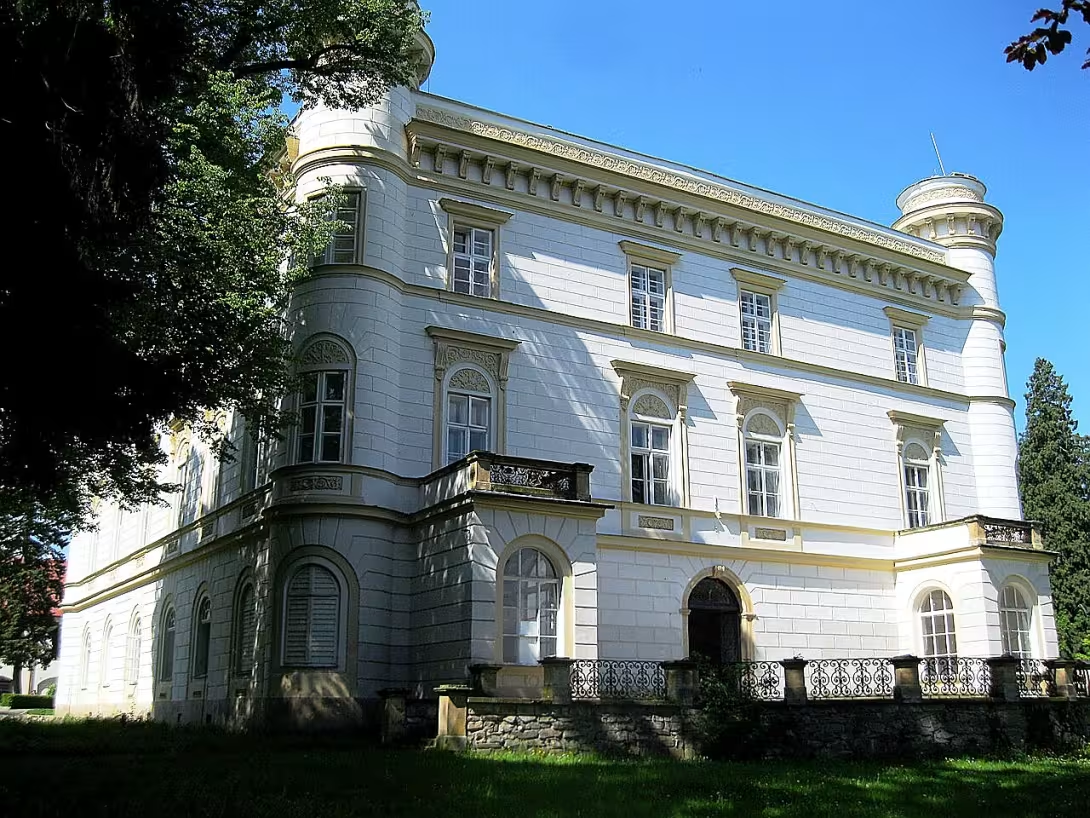
The Zámek Chudobín stands in the Olomouc district where the fort once stood. The first written mention of this claim dates back to 1448, when it is already described as desolate. The castle was built only during the 16th century. In 1571, a three-wing Renaissance castle was built here, which was probably built by Jáchym Zoubek from Zodín. At this point, the foundation of the building was laid, which changed over time according to the expectations and needs of its owners.
At the beginning of the eighteenth century, the castle underwent an important Baroque reconstruction. Between 1712 and 1714, under the reign of Rudolf Krištof Witten, it was extended by the fourth wing and perfect.лен by building arcades. More than a century later, in 1847, the last major construction work came. According to the design by Anton Arche and Antonín Tersch, the owner of the estate at the time, the castle was raised by the floor and the original corner bay was stretched to the ground floor, thus creating corner towers. In this way the castle gained a classical form with elements of the neo-Renaissance, which characterizes it today.
In the vicinity of the main building there is a two-wing building economic building. The original Renaissance building was rebuilt in the seventeenth century by Vavřinec Jan Rudawski, a Polish nobleman and writer whose coat of arms from 1665 remained preserved on the facade.
The owners of the mansion changed over the centuries. It was first owned by Zoubková from Zdětín (1481-1590), then Hájovský (1590- 1604), Bokouvková from Bokouvka (1604- 1622), Vavřinec Jan Rudawski (1661- 1671) and later the masters from Witten and Andlern. At the beginning of the nineteenth century, it went into the hands of the township Tersch family. The complex is complemented by a castle park and the whole building is protected as a cultural monument of the Czech Republic.
After 1945, the castle served various purposes, including the seat of the agricultural school. A valuable mobiliary and rare Persian carpets were gradually sold. In 1980, Sigma transformed it into a recreation centre and hotel. It was privatised by Sidia, which closed it in 2004. It was bought by Tech Idea in 2007. The castle is not open to the public today.
Then and now
Drag the slider to compare how the landmark may have looked when it was built with the view today.
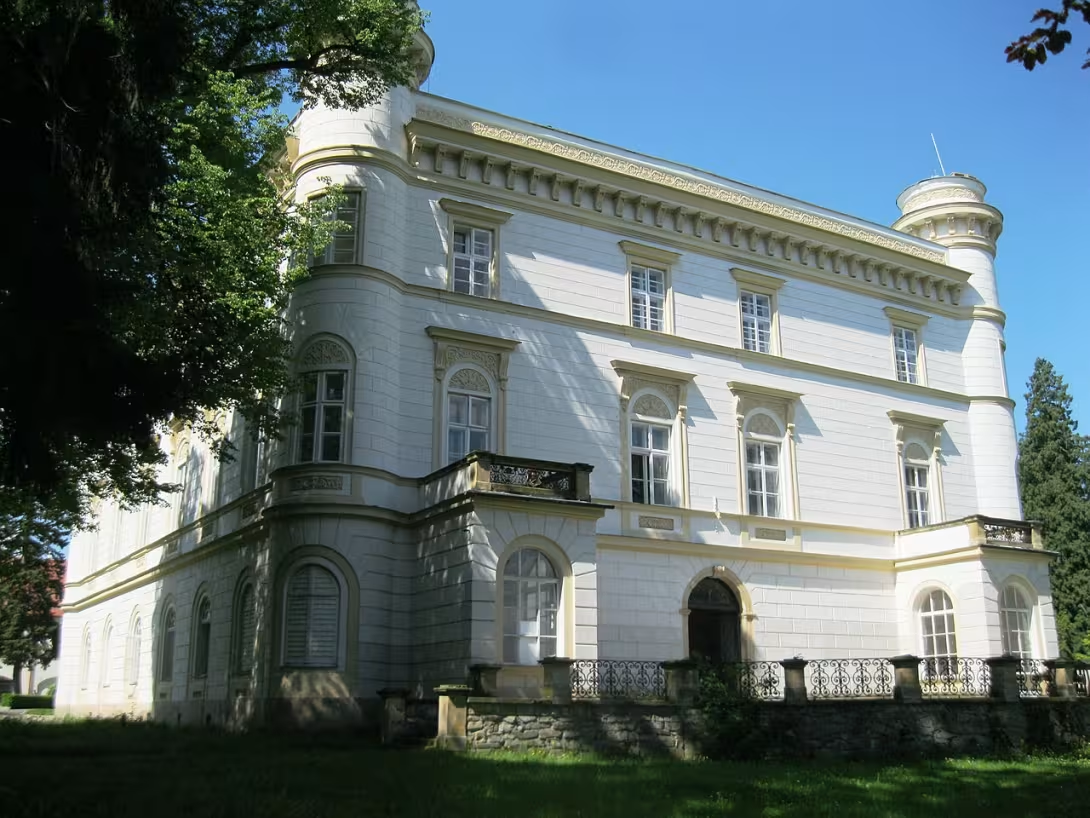

The historical appearance on the left is an AI-generated visualisation and serves as inspiration only.
Historical milestones
- 1571
- The creation of a three-wing Renaissance castle.
- 1712
- Baroque reconstruction under the leadership of Rudolf Krištof Witten.
Architectural development
Zámek Chudobín has undergone several construction phases. After the Renaissance beginning in 1571 it was rebuilt into a Baroque style between 1712 and 1714 when Rudolf Krištof Witten added the fourth wing and arcades. In 1847, under the leadership of Antonín Arche, the castle was further modified into a classical style with neo-Renaissance elements, which included an increase in the next floor and the reconstruction of corner arches.
Historical events
- 1448
- First written mention of the fort as desolate.
- 1571
- The creation of a three-wing Renaissance castle.
- 1712
- Baroque reconstruction under the leadership of Rudolf Krištof Witten.
Points of interest
- Zámek Chudobín stands in place of the former fortress, the first written mention of it dates back to 1448.
- The three-wing Renaissance chateau was built in 1571 by Jáchym Zoubek from Zedno.
- From 1712 to 1714 the castle underwent a Baroque reconstruction under Rudolf Krištof of Witten, when it was extended by the fourth wing and created by the arcades.
- In 1847 there was a classical adjustment according to the design of Anton Arche for Antonín Tersch, which increased the lock by the floor and added corner towers.
- The two-wing building of the economic building was a Renaissance building, the coat of arms of which is preserved on the facade.
Guide
This guide is narrated by a synthetic voice generated by artificial intelligence.
Show guide text
This text was created by artificial intelligence and has not been editorially reviewed. It may contain inaccuracies.
The castle in Chudobín in the Olomouc region was built on the site of an earlier fortress. It acquired its present appearance gradually over several centuries and is complemented by a castle park. It is protected as a cultural monument.
The first written mention of the fortress dates from 1448. At that time it was already referred to as abandoned. In 1571, a three-winged Renaissance castle was built on its site. It was probably built by Jáchym Zoubek ze Zdětína. The Zoubek family held this seat from 1481 until 1590.
Another major change came in the years 1712 to 1714, when the castle was owned by Rudolf Krištof z Wittenu. During the Baroque reconstruction, he had a fourth wing added and arcades built. The last structural modifications took place in 1847 according to a design by Anton Arche. At that time, the castle and estate belonged to Antonín Tersch. The building was raised by another storey. The original corner bay windows were extended down to the ground floor, creating corner towers. The castle thus acquired a Classicist appearance with Neo-Renaissance elements.
Next to the castle stands a two-winged, multi-storey farm building. It was originally a Renaissance structure. In the 17th century, it was reconstructed by Vavřinec Jan Rudawski. His coat of arms with the date 1665 on the façade bears witness to this. Rudawski was a Polish nobleman and writer who owned Chudobín from 1661 to 1671.
The owners changed hands frequently over the centuries. After the Zoubeks came the Hájovskis, and after them the Bokůveks z Bokůvky. Later the seat belonged to Rudawski, the lords z Wittenu and z Andlern. At the beginning of the 19th century, it was acquired by the merchant family of Terschs.
After 1945, the castle served various purposes, including as the seat of an agricultural school. The original furnishings, including a valuable collection of Persian carpets, were sold off at auctions. In 1980, the castle was reconstructed by the national enterprise Sigma, and a recreational centre and hotel were created. During privatization, the company Sidia acquired the site, and closed it in 2004. In 2007, the hotel was purchased by the company Tech idea. The castle is not open to the public.
Tips for visitors
The best time to visit the castle Chudobín is in spring and autumn months when the regions around the castle are the most beautiful. The sunny days offer ideal conditions for exploring the complex with its historical architectural elements.
When visiting, bring sun protection, shoes suitable for walking on the lawn and in case of cold weather warm clothes. Don't forget the water or drink.
For photography it is best to wait for a sunny afternoon light, which highlights baroque and classical elements of the castle. The most beautiful views can be captured from the northeast side of the complex.
In the vicinity of Chudobína it is possible to visit the historical church of St. Jilje, located nearby. For families with children it is convenient to walk around the garden park around the castle where children can play and discover nature.
Frequently asked questions
Can the monument be visited?
Some buildings of this kind are open for guided tours, others serve another purpose or are privately owned. We have not verified whether and when this monument is open – please ask the operator.
What are the opening hours and admission?
We have not verified the opening hours or admission. Current information is published by the operator.
Where is the monument?
Location: 1, Chudobín, Litovel, Olomoucký kraj. The map on this page shows the exact spot.
Why is the monument protected?
It is listed in the Central List of Cultural Monuments of the Czech Republic as a cultural monument (register no. 15046/8-1806).
For kids
Imagine going back to the past, when Zámek Chudobín was young and full of life. It was like in a game where you're a hero who's supposed to discover secrets.
If you go back there, you'll see that the castle was at the site of the former fort. The fortress was originally the seat of a local noblemen who had vast possessions and many slaves. The slaves helped maintain the fort and surrounding fields.
Businesses nearby
Do you run a restaurant, accommodation, shop, museum, rental, wellness or other visitor service near this monument? Show yourself directly to the people heading to it — this is how they will see you in the app and on the web:
Nearby
XZ district
Accommodation nearby
Trips and activities nearby
Guided tours, tickets and activities nearby from GetYourGuide
Affiliate link: if you buy from the partner, we may receive a commission. The price for you does not change.
Search tours and activities →Themed route
Come from the village Chudobín and go south to Chudobín pond , which is a popular place for fishermen and tourists. After passing through the pond you can reach the village Žerotín, where you can visit the Church of St. Jacob the Elder, which is interesting with its Baroque architecture and rich decoration.
Continue to the village of Hlavenec, where Hlavenec is located, which is a former fortress and is today located in the museum.
Continue to the village of Huzova and visit St. Martin's Church, which is another interesting monument in the surroundings.
Seasonal recommendations
Spring:
Spring is the time when Zámek Chudobín comes to life. Green nature and flowers in gardens create a pleasant atmosphere. The lighting is specific, which allows the interior to be searched without limitation.
Summer:
Summer is the main season for visitors to Castle Chudobín. The doses are the biggest, therefore it is recommended to come early. Specific is the heat and sun that creates a pleasant environment for the tour. Practical advice: bring sun cover and water to avoid sunbathing and exhaustion.
Autumn:
Autumn is a time when nature changes colors and Zámek Chudobín becomes even more attractive. Specific is lighting that creates a pleasant atmosphere.
Winter:
Winter is the time when Zámek Chudobín is closed. The lighting is specific, which allows the interior to be searched without limitation. Practical advice: Visit the castle at a pre-arranged time to avoid closing time, and remember to bring warm clothes to avoid cold.
Visualizations and artistic views


The visualisations are generated by artificial intelligence and serve as inspiration.
Photos from the area
Real photos taken near the monument


Zdroj a licence jsou uvedeny u každého snímku.
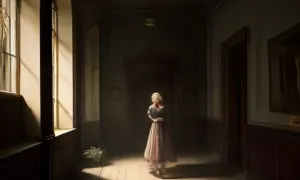
Atmosphere of the place
This atmospheric visualisation of the place and period was generated by artificial intelligence. It is not real footage of the location.
Tips from visitors
No tips yet. Be the first!
Log in and add your tip.
Sources and literature
Photos: Lehotsky / CC BY-SA 3.0 — Wikimedia Commons. The author and licence also appear when you hover over the image.
Faktickým podkladem tohoto textu byl článek na Wikipedii, jehož autory jsou přispěvatelé Wikipedie. Článek je dostupný pod licencí CC BY-SA 4.0.
Location on the map
Příběhy a pověsti
Legendy, pověsti a příběhy spjaté s touto památkou
Fotografie návštěvníků
Zatím žádné fotografie. Buďte první, kdo přidá fotografii z návštěvy!
Log in a přidejte svou fotografii nebo hodnoťte.
Za ověřenou návštěvu v aplikaci získáte víc bodů — poznáme podle GPS, že jste na místě.
Reviews and comments