



zámek Lemberk Chateau
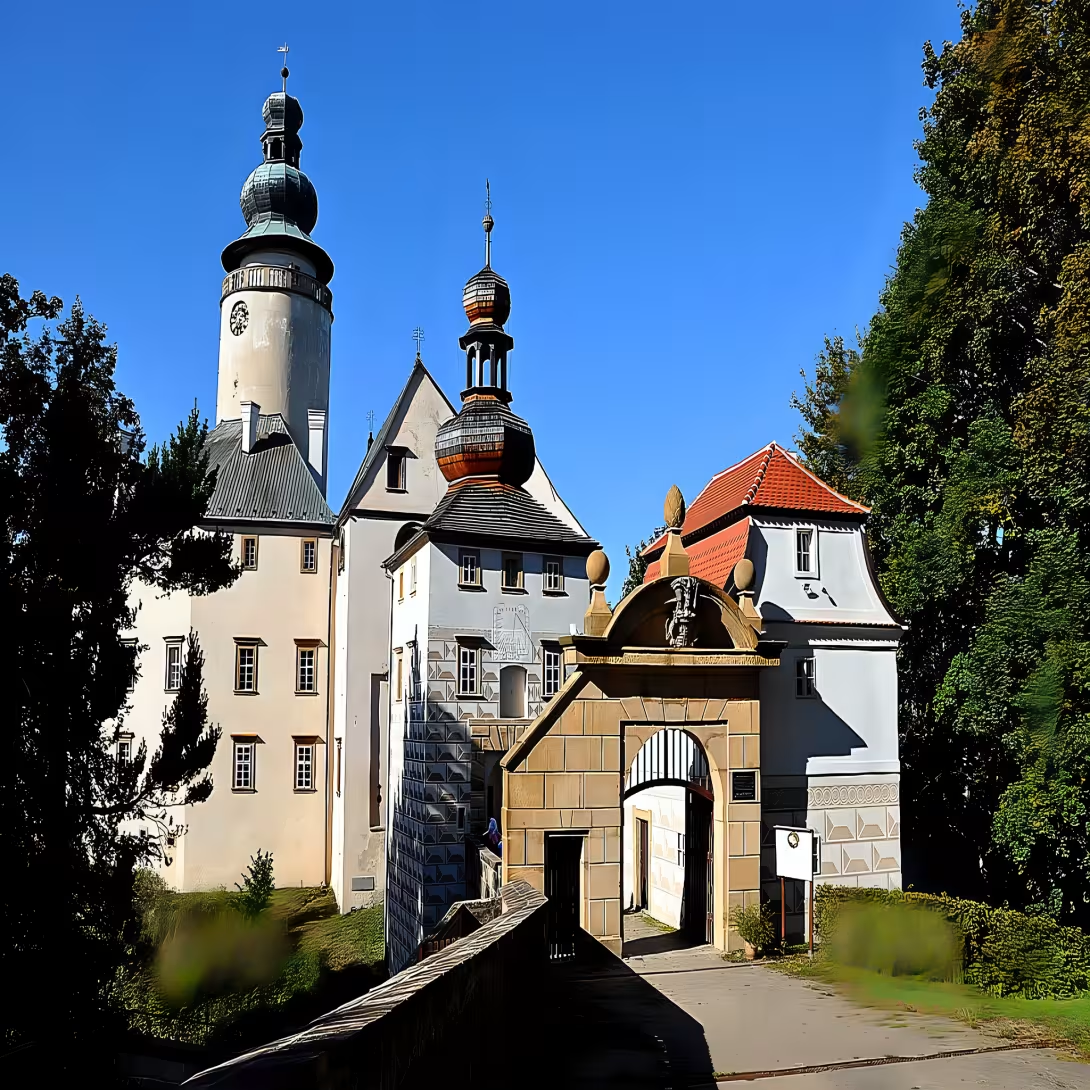
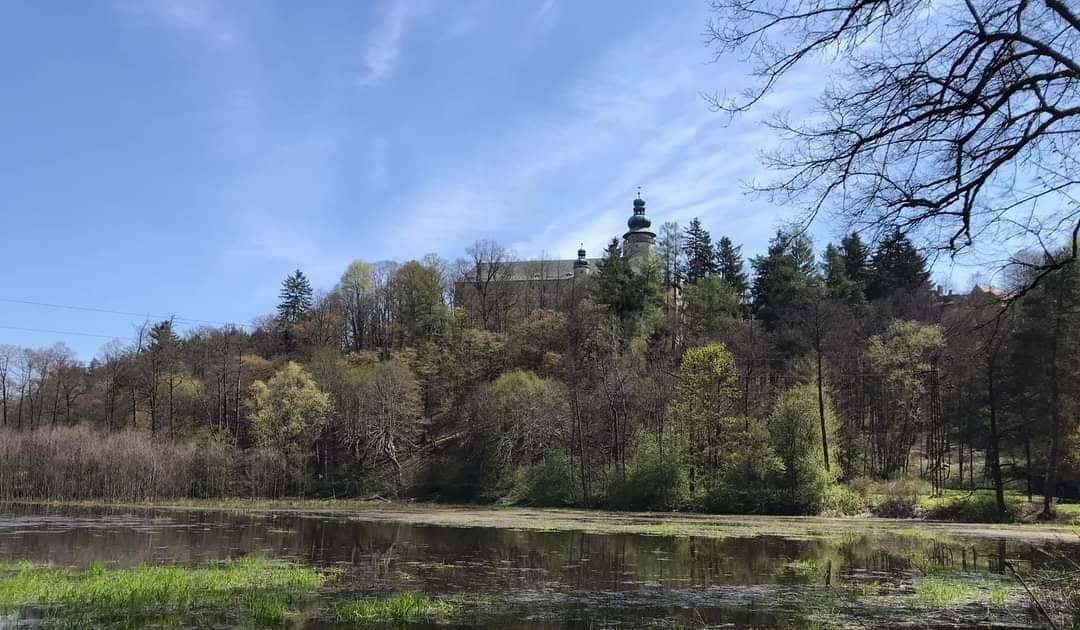
Lemberk Chateau is located three kilometres from Jablonny in Podzedědí, in the cadastral territory of Lvová, and belongs to the oldest noble buildings in Bohemia. The chateau was founded here in the first period of the 13th century by Havel z Lemberka, a member of the Markvartice family, to whom the sovereign gave it for his service. Havel became the founder of the House of Lemberg, founded several settlements here and built a chateau called Löwenberg around 1240 - according to a lion who also decorated his coat of arms. The name was brushed up over time and a younger chateau evolved from the medieval fortress.
The first documentary evidence of the existence of the chateau dates back to 1241 and 1244, a confirmation from 1249 when Havel z Lemberka uses the name of the chateau in his home. In the following centuries the chateau required purchase and ownership was the object of rich families. In 1430 it was acquired by the Berk family from Dubé, later various owners - Elsnics until 1510, lords from Donín and others. In 1518 Wilhelm bought the estate from Ilburk; At that time, the estate was described as desolate and four of the six villages were desolate. Gradually, the chateau was revived and its owners improved the economy.
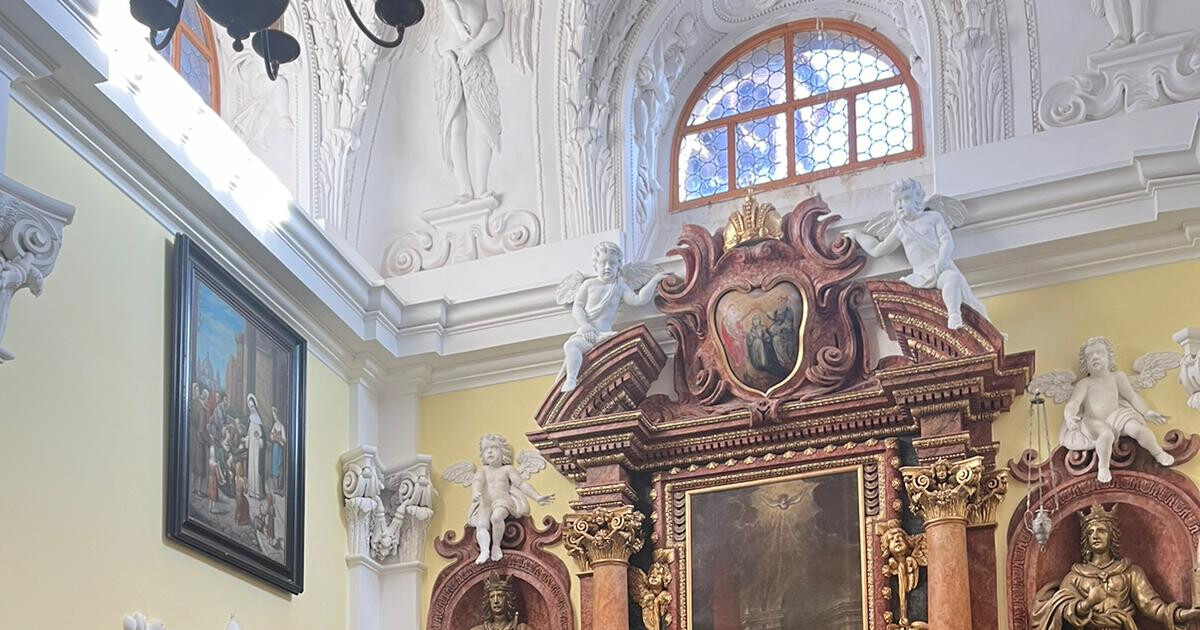
After 1550 the chateau was radically rebuilt into a Renaissance chateau, with the original Gothic masonry being largely demolished. The reconstruction was initiated by Jindřich Berk from Dubé and a Baroque residence was created from the medieval fortress. A chateau wing was built in the Renaissance style, which the lords of Donín increased to the second floor in the early 17th century. Among other things, a richly decorated cassette ceiling in the hall called the Hall of Fables became a decoration. In 1634, the chateau was owned by an influential family of Bredas, which adapted it according to Italian and Dutch patterns and gradually expanded - the chapel of the Holy Spirit, the chivalry and other wings were added. Since 1726 it was owned by Clam-Gallas, a family created by the merger of the names of Count Philip Joseph from Gallas and his nephew Kristian Philip from Clam. This род kept the chateau until 1930 when his daughter Gabriel, married to Prince Adolf of Auersperg, inherited it after the death of his last male member Franz Clam-Gallas. In 1945, it was expropriated by the State on the basis of the Beneš Decrees.
The original chateau was best preserved by a cylindrical tower with a diameter of 8,5 metres, the only distinctive remnant of the bergfrit type. The tower has a polygonal external outline at the bottom, while the interior with a rhombus plan interferes above the round part. The basement of the tower remains inaccessible and lies 2.4 metres below the courtyard level; In the Baroque, the tower was encapsulated by a segment vault and the entrance to the outskirts was created directly from the courtyard.
Today, zámek Lemberk, together with the nearby Bredovsky summer chateau, has been protected as a national cultural monument since 2002. The National Monument Institute has the administration and is open to the public in visiting hours from April to October. The chateau is a testament to eight centuries of Czech history and represents the path of architecture from medieval defense to Renaissance hospitality.
Then and now
Drag the slider to compare how the landmark may have looked when it was built with the view today.
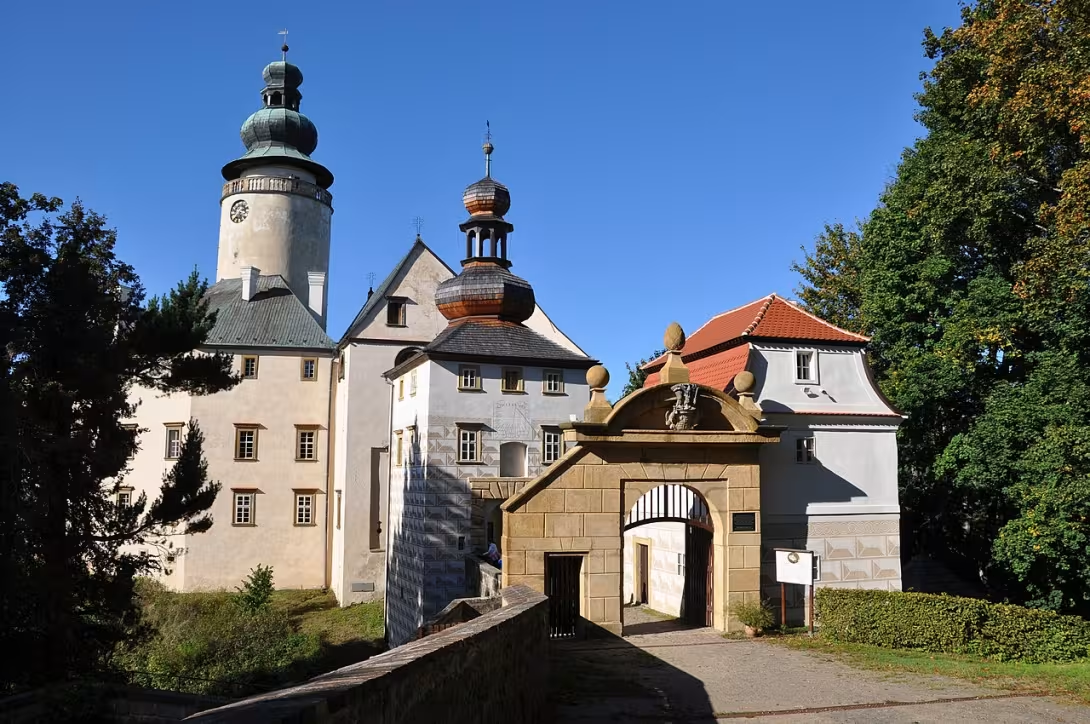
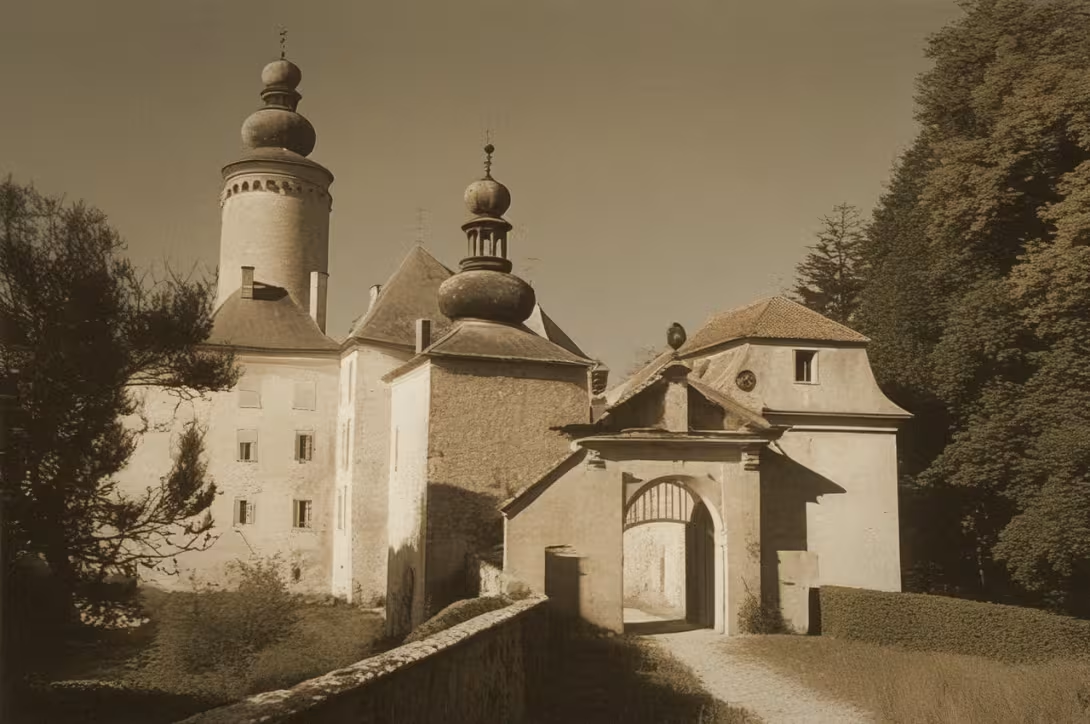
The historical appearance on the left is an AI-generated visualisation and serves as inspiration only.
Historical milestones
- 1240
- Havel z Lemberka will build a chateau called Löwenberg
- 1241
- First documentary evidence of the existence of the chateau
- 1244
- Further documentary evidence of the existence of the chateau
- 1249
- Havel z Lemberka uses the name of the chateau in its home
- 1430
- The House of Berks from Dubé Chateau gets
- 1518
- The estate will buy Wilhelm from Ilburk
- 1550
- The chateau is radically converted into a Renaissance chateau
- 1634
- By marrying Jan Rudolf from Breda with Kateřina from Donín, the chateau is owned by the Breda family
- 1726
- Clam- Gallas Chateau get
- 1930
- Franz Clam-Gallas dies and his daughter Gabrielle inherits the chateau
- 1945
- State outlaws the chateau based on Beneš's decrees
Architectural development
Originally it was a Bergfrit chateau, but during Renaissance reconstructions initiated by Henry Berkou of Dubé, most of the Gothic masonry died, and the only significant remnant of the chateau is a round bergfrit.
Historical events
- 1240
- Establishment of the chateau
- 1408
- Owning Gottfried Haugvica from Lemberg
- 1518
- The purchase of Wilhelm from Ilburk
Owners
Havel z Lemberka
Gottfried Haugvic of Lemberg
Ales from Žemberk
Berks of Dubé
Elsnicis
Wilhelm of Ilburk
Currants
Henry Berka of Dubé
The lords of Donín
The Breda family
Count Philip Josef from Gallas
Christian Philip of Clam
Clam-Gallas family
Princess Gabriela of Auersperg
Points of interest
- Lemberk Chateau is one of the oldest noble buildings in Bohemia. - The chateau was founded here by Havel z Lemberka in the first third of the 13th century. - The first documentary evidence of the existence of the chateau dates back to 1241 and 1244. The chateau was radically converted into a Renaissance chateau after 1550. - In 1634, by marrying Jan Rudolf from Breda and Kateřina from Donín, the chateau became the property of the Breda family. - Since 1726 it was owned by Clam-Gallas, a family created by the merger of the names of Count Philip Joseph of Gallas and his nephew Kristian Philip of Clam.
Guide
This guide is narrated by a synthetic voice generated by artificial intelligence.
Show guide text
This text was created by artificial intelligence and has not been editorially reviewed. It may contain inaccuracies.
Lemberk is among the oldest aristocratic castles in Bohemia. It lies three kilometers from Jablonné v Podještědí, in the cadastral territory of Lvová. Since 2002 it has been a national cultural monument together with the nearby Bredovský letohrádek.
In the first third of the thirteenth century, Havel z Lemberka from the Markvartici family acquired this region as a reward for his service to the ruler. He founded several settlements and around 1240 also built a castle, which he gave the then modern name Löwenberg. He had a lion in his coat of arms as well. The inhabitants gradually Czechified the name over time. Zdislava z Lemberka stayed at the castle. Pope Pius the Tenth beatified her in 1907 and John Paul the Second declared her a saint in 1995.
The first written record of the castle dates from 1249, when Havel used its name in his surname. In 1427 the castle was occupied by Hussites under the leadership of Aleš ze Žemberka. Three years later the lords Berkové z Dubé took over the estates, and in subsequent decades the owners changed frequently. When Vilém z Ilburka bought the estates in 1518, it was described as impoverished and four of the six villages were completely deserted. They were restored only by the next owner Kurzbach z Trachenberka.
After him, Jindřich Berka z Dubé acquired the estates and after 1550 a reconstruction of the castle into a Renaissance mansion began. The Gothic stonework almost disappeared in the process. Only the round tower on the southern side remained intact, the so-called bergfrit, with a diameter of eight and a half meters. Its basement lies two point four meters below the courtyard level.
The lords z Donína increased the Renaissance wing by a second floor at the beginning of the seventeenth century. Here there also arose a hall with a wooden, richly decorated coffered ceiling, called the Hall of Fables. In 1634 the mansion passed through the marriage of Kateřina z Donína with baron Jan Rudolf z Bredy to the Bredy family. They adapted the mansion according to Italian and Dutch models and gradually a chapel of Pentecost, a knights' hall and another wing were added.
In 1726 count Filip Josef z Gallasu purchased Lemberk. Because he had no sons, he bequeathed the property to his nephew Kristián Filip z Clamu, and thus the Clam-Gallas family was founded. That family held the mansion until 1930, when its last male member Franz Clam-Gallas died. Lemberk was then inherited by his daughter Gabriela, married to prince Adolf z Auerspergu. In 1945 the state confiscated the mansion on the basis of the Beneš decrees.
Tips for visitors
The best time to visit Lemberk Chateau is from April to October when the weather is mild and you can see the exterior of the monument without difficulty. In winter, you can visit only the inner spaces.
Frequently asked questions
Can the monument be visited?
Yes. We verified the opening hours or admission on the official website (5. 8. 2026); you will find them in the visitor information on this page. Please double-check with the operator before you travel.
What are the opening hours and admission?
Details verified on the official website (5. 8. 2026) are listed in the visitor information on this page. Official website: https://www.zamek-lemberk.cz
Where is the monument?
Location: Lvová č.p. 1, Jablonné v Podještědí, Liberecký kraj. The map on this page shows the exact spot.
Why is the monument protected?
It is listed in the Central List of Cultural Monuments of the Czech Republic as a national cultural monument (register no. 263).
For kids
Businesses nearby
Do you run a restaurant, accommodation, shop, museum, rental, wellness or other visitor service near this monument? Show yourself directly to the people heading to it — this is how they will see you in the app and on the web:
Natáčelo se zde
- Tajemství staré bambitky (2011) film
Zdroj: Wikidata (vlastnost „místo natáčení“) · Všechna filmová místa
Events nearby
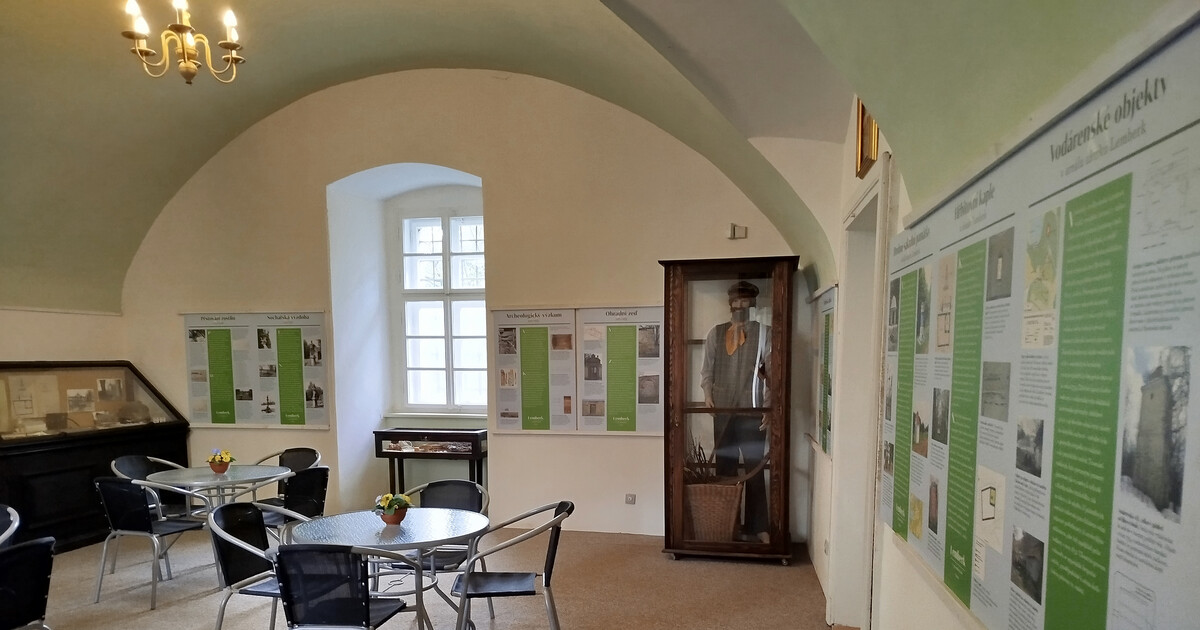



Zdroj akcí: otevřená data měst a obcí ČR (Národní katalog otevřených dat) a kalendář akcí Národního památkového ústavu.
Nearby
Virgin brook
Accommodation nearby
Trips and activities nearby
Guided tours, tickets and activities nearby from GetYourGuide
Affiliate link: if you buy from the partner, we may receive a commission. The price for you does not change.
Search tours and activities →Themed route
Chateau Lemberk Type: Castle Why is it worth a visit: This historic building in the village Lvová offers a view to the past of the region and serves as a cultural center. It is the main point of your journey where you can see the interior and learn more about the history of this place.
Virgin Flood Type: Natural body (water flow) Why is it worth a visit: This stream flows through nearby territory and forms a quiet, natural environment ideal for a short walk. Its presence provides a specific character around the chateau and allows relaxation in nature without the need for long movements.
Virgin Flood Type: Natural body (water flow) Why it is worth a visit: We return to this water stream again to highlight its importance for the local ecosystem and the aesthetics of the landscape. A walk along its shores offers a peaceful atmosphere and the possibility to observe local fauna and flora in the immediate vicinity of the main monument.
Chateau Lemberk Type: Castle Why is it worth a visit: The final stop at the chateau allows you to summarize experiences from the whole trip and possibly buy souvenirs or enjoy a last look at this architectural dominance. It's the perfect place to relax and reflect on the seen.
This route is designed to be as short as possible and to focus exclusively on specified locations. You start with the main target, which is the cultural heart of the area. Then you can take a short walk to the Virgin River, which is located in the immediate vicinity. Due to the limited number of points available in the assignment, the route returns to the stream for a deeper experience of nature and eventually ends again at the chateau. The whole trip is suitable for families and individuals looking for a quiet atmosphere and historical context without the need to visit more remote locations. The distance between points is minimal, which allows a flexible pace and the possibility of spending more time on individual elements.
Seasonal recommendations
Lemberk Chateau, Lvová, Liberecký kraj - excellent condition
Spring: The specific lighting that creates an amazing atmosphere in the chateau. The woods around the chateau are full of flowers and leaves, nature awakens from hibernation. The atmosphere is full of optimism and hope. Practical advice: The best time to visit the chateau is in late morning or late afternoon to avoid crowds. For a visit it is advisable to dress comfortable clothes to walk the woods.
Summer: Nature is specific, which blooms around the chateau and the leaves spread. The atmosphere is full of relaxation and warmth. Practical advice: The best time to visit the chateau is in the morning or in the afternoon to avoid crowds. It is advisable to wear light clothes to visit the woods.
Autumn: The specific lighting that creates an amazing atmosphere in the chateau. The woods around the chateau are full of yellow and red leaves, nature is going to winter. The atmosphere is full of melancholy and respect. Practical advice: The best time to visit the chateau is in late morning or late afternoon to avoid crowds. For a visit it is advisable to dress comfortable clothes to walk the woods.
Winter: The specific lighting that creates an amazing atmosphere in the chateau. The woods around the chateau are full of snow and nature is going to spring. The atmosphere is full of peace and respect. Practical advice: The best time to visit the chateau is in late morning or late afternoon to avoid crowds. It is advisable to wear warm clothes to visit the woods.
Visualizations and artistic views


The visualisations are generated by artificial intelligence and serve as inspiration.
Photos from the area
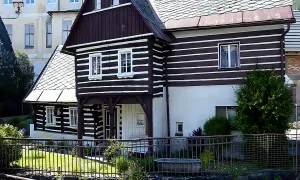
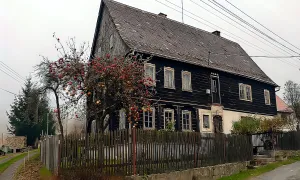
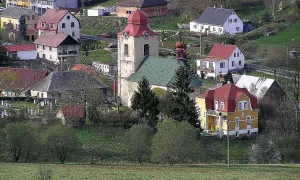
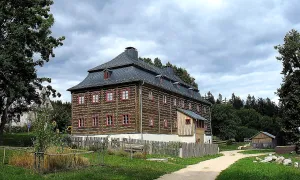
Real photos taken near the monument


Zdroj a licence jsou uvedeny u každého snímku.
Atmosphere of the place
This atmospheric visualisation of the place and period was generated by artificial intelligence. It is not real footage of the location.
Tips from visitors
No tips yet. Be the first!
Log in and add your tip.
Sources and literature
Photos: R.D. - Rolf-Dresden / CC BY-SA 4.0, rozlišení zvýšeno umělou inteligencí — Wikimedia Commons. The author and licence also appear when you hover over the image.
Faktickým podkladem tohoto textu byl článek na Wikipedii, jehož autory jsou přispěvatelé Wikipedie. Článek je dostupný pod licencí CC BY-SA 4.0.
Location on the map

Příběhy a pověsti
Legendy, pověsti a příběhy spjaté s touto památkou

Fotografie návštěvníků
Zatím žádné fotografie. Buďte první, kdo přidá fotografii z návštěvy!
Log in a přidejte svou fotografii nebo hodnoťte.
Za ověřenou návštěvu v aplikaci získáte víc bodů — poznáme podle GPS, že jste na místě.
Reviews and comments