



Adamov Church
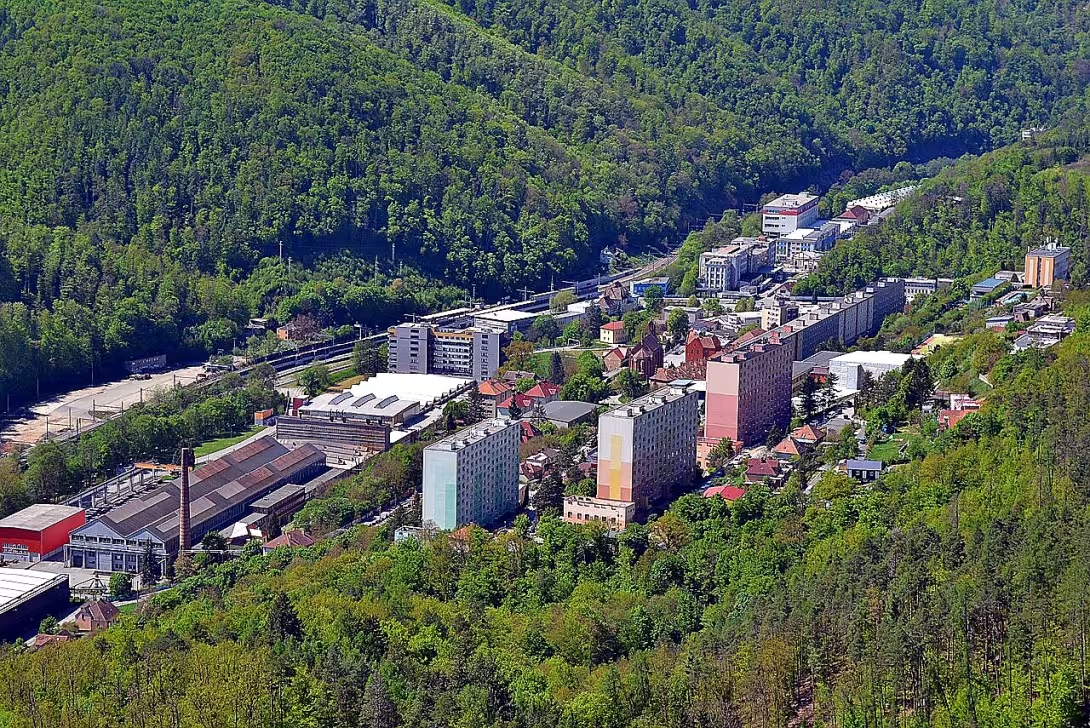
Adamov is home to the Church of Saint Barbara, a notable historical monument in this South Moravian town known for its industrial past. Located in the valley of the Svitava River within the Drahany Highlands, Adamov has transformed from an iron mining and processing center into a town with rich architectural heritage. The Church of Saint Barbara stands out due to its neo-Gothic architecture and the presence of the valuable late Gothic Světelský Altar.
The origins of Adamov trace back to 1506 as Hamry, a hamlet featuring several hammer mills. By 1597, it was under the ownership of the Liechtenstein family, marking its early regional significance. The town's name evolved from Hamry to Adamov by 1679 and became official in 1732. This period coincided with broader industrial developments across Europe, including in Adamov, where local ironworks transitioned into machinery production at the turn of the 19th century.
Architecturally, the Church of Saint Barbara was constructed between 1855 and 1857, reflecting the neo-Gothic style prevalent during that era. The church houses the Světelský Altar, a late Gothic masterpiece created between 1516 and 1525 for the Zwettl Abbey. This altarpiece is renowned for its intricate carvings of 59 figures depicting the Assumption of the Virgin Mary, showcasing exceptional craftsmanship from the early 16th century.
Throughout its history, Adamov has experienced significant transformations, particularly in its industrial sector. The local ironworks played a crucial role in Moravian iron production and later evolved into an engineering company producing agricultural machinery and arms during World War I and the 1930s. Post-World War II, the focus shifted to secret arms manufacturing alongside printing machines and metering technology under the Adamovské strojírny company.
Today, the Church of Saint Barbara remains a testament to Adamov's historical and architectural legacy. Despite its industrial past, which has left behind panel blocks and brownfields, the town offers picturesque landscapes rich with forests and proximity to Brno. The church, along with other mid-19th century structures like the school building, parish house, and cemetery, provides insight into a period of significant development influenced by the Austro-Hungarian Empire's industrialization.
Visiting Adamov today allows one to explore its unique blend of historical architecture and natural beauty. The Church of Saint Barbara, with its remarkable Světelský Altar, stands as a compelling reason for tourists to delve into the town's past while appreciating its present-day charm. This monument not only reflects the artistic achievements of its time but also serves as a cultural bridge connecting Adamov’s industrial heritage with its current identity.
Historical milestones
- 1506
- Establishment of Hamry with several hammer mills.
- 1597
- Taken into ownership by the Liechtenstein family.
- 1679
- Name of the settlement changed to Adamov.
- 1732
- Adamov became the official name of the settlement.
- 1516
- Beginning of production of the Světelský Altar for Zwettl Abbey.
- 1525
- Completion of the Světelský Altar, a late Gothic art piece.
- 1855
- Start of construction of St. Barbara's Church in neo-Gothic style.
- 1857
- Completion of St. Barbara's Church construction.
Architectural development
The Church of Saint Barbara and associated buildings were constructed in the mid-19th century. The town's industrial heritage includes a transition from ironworks to machinery production.
Historical events
The ironworks in Křtinské údolí supplied a significant portion of Moravian iron production and transformed into a machinery factory at the turn of the 19th and 20th centuries, producing the first automobile with an internal combustion engine in Austria-Hungary.
After World War II, the company known as Adamovské strojírny focused on secret arms manufacturing, along with printing machines and metering technology.
Points of interest
- The Church of Saint Barbara's neo-Gothic architecture is an intriguing blend of 19th-century design with a late Gothic masterpiece, the Světelský Altar, inside. This juxtaposition reflects Adamov’s transition from medieval to modern industrial eras.
- Originally named Hamry in 1506, the town was known for its hammer mills before evolving into a significant iron processing center under the Liechtenstein family by 1597. The name change to Adamov in 1679 marked a new chapter in its development and identity.
- The Světelský Altar, crafted between 1516 and 1525, was originally intended for Zwettl Abbey but found its home in Adamov's Church of Saint Barbara. This altarpiece is notable for its detailed depiction of the Assumption of the Virgin Mary with 59 figures.
- During World War I and the 1930s, Adamov’s industrial focus shifted to producing agricultural machinery and arms, reflecting broader European trends towards militarization and mechanization during these periods.
- Post-World War II, Adamov became known for its secret arms manufacturing operations under the Adamovské strojírny company. This clandestine production highlighted the town's strategic importance in Czechoslovakia’s industrial landscape during a tense geopolitical era.
Guide
This guide is narrated by a synthetic voice generated by artificial intelligence.
Show guide text
This text was created by artificial intelligence and has not been editorially reviewed. It may contain inaccuracies.
Adamov, in German Adamsthal, is a small town in the Blansko district, roughly twelve kilometers north of Brno. It lies in a deep wooded valley at the confluence of the Svitava and Křtinský potok rivers. The bottom of the valley here is at an altitude of about two hundred and thirty meters above sea level, but the houses climb up the slopes to over three hundred meters, and the highest points of the cadastre exceed four hundred meters. To the northeast of the town, the protected landscape area Moravský kras begins.
Approximately four thousand six hundred people live here. With an area of less than four square kilometers, Adamov is the second smallest town in the Czech Republic.
Among the most significant monuments of the town is the Church of Saint Barbara. It houses the Světelský altar and, together with the rectory, the school building, and the cemetery, dates from the mid-nineteenth century. The church, rectory, school, and cemetery were thus built in one phase and to this day form a cohesive whole. In the Adamov cadastre, there is also the Stará huť, a reminder of the local iron-working past.
The region around Adamov is known for the mining of iron ore and its processing, first in the Křtinský valley and later directly at the site of today's town. The local iron-working enterprise supplied a significant part of Moravian iron production. At the turn of the nineteenth and twentieth centuries, it transformed into a mechanical engineering plant. The first automobile with an internal combustion engine in Austria-Hungary was built here.
After the Second World War, the enterprise was called Adamovské strojírny. Secret arms production predominated in it, but printing machines and pumping and measuring equipment were also manufactured here. After nineteen eighty-nine, arms production ended. Pumping and measuring equipment was transferred to a subsidiary company, which manufactures it to this day. The parent company ceased to exist in two thousand and nine.
Adamov has a reputation as an exceptionally ugly town. The credit for this goes to the disparate development, in which prefabricated panel houses and abandoned industrial areas dominate. Some of the town's representatives admitted this. However, gradually it is being repaired and renewed here. Living in Adamov is also attractive because of excellent accessibility to Brno, mainly by train, and because of the surrounding area full of forests.
Tips for visitors
The best time to visit the Church of Saint Barbara in Adamov is during late spring or early autumn. During these months, the weather is generally pleasant, allowing visitors to comfortably explore both the church and the surrounding Moravský kras landscape. The natural beauty of the area is particularly striking with the lush greenery of spring or the warm hues of autumn leaves. Additionally, visiting outside peak summer months helps avoid larger crowds, providing a more serene experience.
It's advisable to check current schedules online or at local information centers before your visit. The church itself can be accessed on foot from these transportation hubs.
When visiting the Church of Saint Barbara, it’s recommended to bring comfortable walking shoes as you may wish to explore the surrounding area of Moravský kras. Additionally, consider bringing a camera for capturing the stunning natural scenery and architectural details of the church. Sunscreen and a hat are also advisable if you plan on spending time outdoors during sunny days.
For photography enthusiasts, the best spots around Adamov include viewpoints within the Moravský kras landscape that offer panoramic views of the valleys and forests. Early morning or late afternoon light is ideal for capturing dramatic shadows and vibrant colors in your photos. The church itself provides excellent opportunities to photograph its unique architectural features.
In addition to the Church of Saint Barbara, families with children can enjoy exploring the nearby protected landscape of Moravský kras. This area offers a variety of natural attractions within a 30-minute drive from Adamov, such as caves and forest trails that are perfect for family hikes. These spots provide both educational opportunities about local geology and ecology, as well as fun outdoor activities.
Frequently asked questions
Can the monument be visited?
Religious buildings are usually open mainly during services; at other times a visit is normally arranged with the parish or the operator. We have not verified specific times.
Where is the monument?
Location: Adamov, Jihomoravský kraj. The map on this page shows the exact spot.
Businesses nearby
Do you run a restaurant, accommodation, shop, museum, rental, wellness or other visitor service near this monument? Show yourself directly to the people heading to it — this is how they will see you in the app and on the web:
Events nearby


Zdroj akcí: otevřená data měst a obcí ČR (Národní katalog otevřených dat) a kalendář akcí Národního památkového ústavu.
Nearby
The area around Adamov includes the protected landscape of Moravský kras, featuring deep forested valleys and diverse natural features within a 5 km radius.
Accommodation nearby
Trips and activities nearby
Guided tours, tickets and activities nearby from GetYourGuide
Affiliate link: if you buy from the partner, we may receive a commission. The price for you does not change.
Search tours and activities →Themed route
Thematic Vltour: Adamov and the Surrounding Moravský kras
1. Adamov Church - Type: Historical Monument - Why Visit: The Adamov Church is a significant historical site that offers insights into the region's architectural heritage. Its serene ambiance makes it an ideal starting point for exploring the cultural richness of Adamov.
2. Moravský kras Protected Landscape Area - Type: Natural Reserve - Why Visit: Located within a 5 km radius, Moravský kras is renowned for its deep forested valleys and diverse natural features. This area provides an excellent opportunity to immerse yourself in the stunning landscapes of karst topography, featuring caves and unique geological formations.
3. Valleys of Moravský kras - Type: Natural Feature - Why Visit: The valleys within Moravský kras are a must-see for nature enthusiasts. They offer picturesque hiking trails through lush forests, allowing visitors to experience the area's natural beauty and tranquility.
4. Caves of Moravský kras - Type: Geological Feature - Why Visit: The caves in this region are fascinating geological wonders that attract spelunkers and curious travelers alike. Exploring these subterranean landscapes reveals intricate formations and a glimpse into the area's ancient history.
This thematic tour combines cultural exploration with natural beauty, providing a well-rounded experience of Adamov and its enchanting surroundings.
Seasonal recommendations
Spring: Visiting Adamov (Church) during spring offers a refreshing experience as the surrounding landscape bursts into vibrant colors with blooming wildflowers and budding trees. The soft, natural light enhances the architectural details of the church, creating a serene atmosphere ideal for contemplation. As nature awakens, visitors can enjoy the tranquil ambiance without the bustle typical in other seasons. It's advisable to wear comfortable walking shoes and layers that can be adjusted with the fluctuating temperatures. Arriving early in the day allows you to appreciate the site before any potential crowds gather.
Summer: Summer is a perfect time for exploring Adamov Church, as the long daylight hours provide ample opportunity to explore both the church and its picturesque surroundings. The lush greenery and warm sunlight create an inviting atmosphere, making it ideal for photography enthusiasts. While this season attracts more visitors due to favorable weather conditions, arriving early can help avoid larger crowds. Dressing in light, breathable clothing is recommended, along with bringing sun protection such as hats or sunglasses.
Autumn: Autumn transforms the area around Adamov Church into a tapestry of warm hues, offering a visually stunning backdrop for your visit. The cooler temperatures and shorter days create a cozy atmosphere, perfect for enjoying the church's historical charm without the summer crowds. This season is ideal for those who appreciate nature’s changing colors. It's advisable to wear layers that can be adjusted as temperatures drop throughout the day. Visiting in late morning or early afternoon ensures you make the most of the daylight hours.
Winter: Winter brings a unique, serene beauty to Adamov Church, with snow-covered landscapes and crisp air enhancing its historical allure. Wearing warm clothing is essential to ensure comfort while exploring the site in colder conditions. Early morning visits are recommended to avoid any potential frosty weather challenges and to enjoy a peaceful atmosphere before the day warms up slightly.
Visualizations and artistic views


The visualisations are generated by artificial intelligence and serve as inspiration.
Photos from the area
Real photos taken near the monument


Zdroj a licence jsou uvedeny u každého snímku.
Tips from visitors
No tips yet. Be the first!
Log in and add your tip.
Sources and literature
Photos: Roman Mifek / CC BY-SA 4.0 — Wikimedia Commons. The author and licence also appear when you hover over the image.
Faktickým podkladem tohoto textu byl článek na Wikipedii, jehož autory jsou přispěvatelé Wikipedie. Článek je dostupný pod licencí CC BY-SA 4.0.
Location on the map



Příběhy a pověsti
Legendy, pověsti a příběhy spjaté s touto památkou
Fotografie návštěvníků
Zatím žádné fotografie. Buďte první, kdo přidá fotografii z návštěvy!
Log in a přidejte svou fotografii nebo hodnoťte.
Za ověřenou návštěvu v aplikaci získáte víc bodů — poznáme podle GPS, že jste na místě.
Reviews and comments