



Anglikánský kostel Church
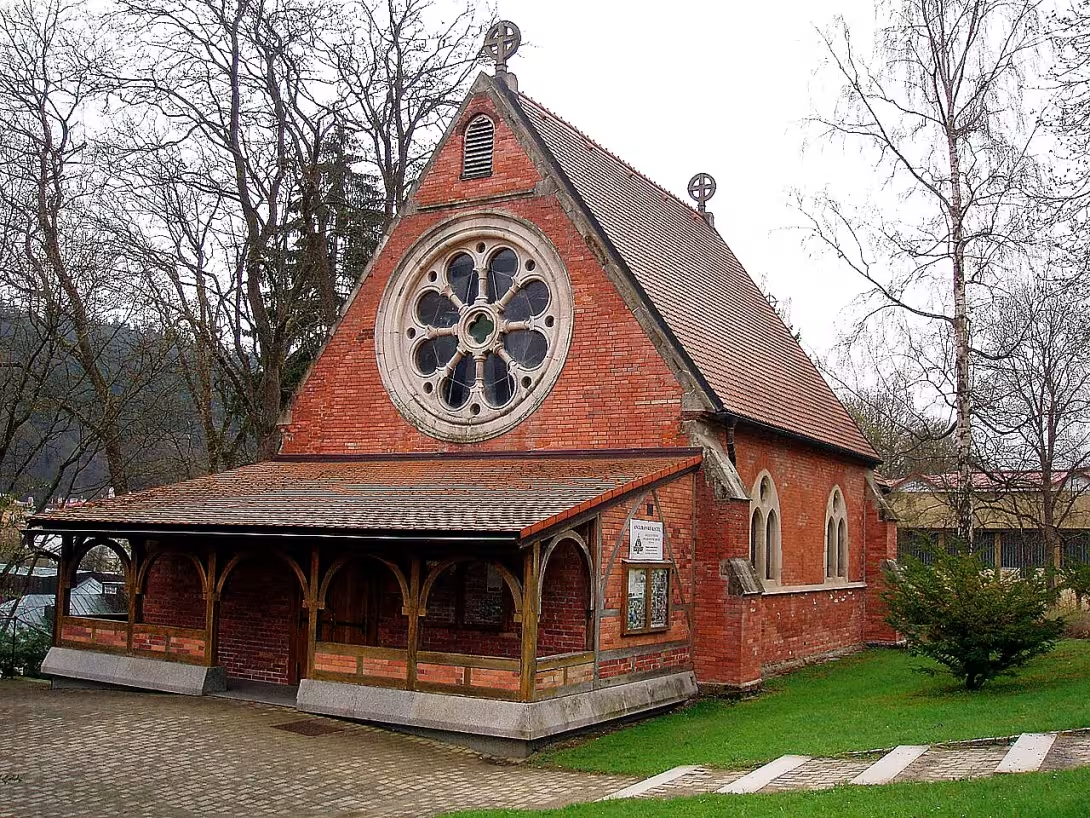
The Anglican Church in Mariánské Lázne is a significant historical monument located in the spa town of Mariánské Lázne, Karlovarský kraj region, Czech Republic. Constructed in 1879 and dedicated to Jesus Christ, this Romanesque-Neo-Gothic structure reflects late 19th-century English rural sacred architecture. Its historical importance is highlighted by visits from King Edward VII between 1897 and 1909.
The church was built as a memorial to John Scott of Rondono, funded by his widow Ann Scott of Rondono. The local tepelský klášter supported the project by providing land at no cost. Architect William Burghese designed it, with Friedrich Zickler overseeing construction. This reflects the cultural and architectural influences in Bohemia during the late 19th century when it was part of the Austro-Hungarian Empire.
Architecturally, the church exemplifies Romanesque-Neo-Gothic style, characterized by red hollow bricks. It features a prominent half-circular apse separated from the nave by an arch made of stone segments. Latticed windows and a steep gabled roof covered in tiles are typical elements of this period. Originally adorned with colorful mosaics depicting scenes from Jesus Christ's life, only the brick pulpit and a marble plaque remain today.
Ownership and administration have changed over time. Initially owned by August Herzig, who also served as its administrator, it later came under the ownership of the London-based Society for Promoting Christian Knowledge (S.P.G.) after World War I. Following Dr. Herzig's death, his son JUDr. August Herzig took on administrative responsibilities. In 1973, unresolved property issues led to closure and neglect until its restoration in the early 1990s. Today, the city of Mariánské Lázne owns it, now serving as a concert and exhibition hall.
Throughout its history, key events have contributed to its fame. King Edward VII's visits between 1897 and 1909 enhanced its reputation. After World War I, renovations included reinstallation of a bronze bell. However, post-World War II neglect led to looting until restoration in the early 1990s.
Today, visitors can appreciate both its historical significance and architectural beauty. Its transformation into a concert and exhibition hall allows for diverse cultural experiences within its historic walls. The church's rich history and unique style make it a worthwhile destination for those exploring Mariánské Lázne's cultural heritage.
The Anglican Church stands as a testament to historical and architectural evolution, offering visitors an opportunity to connect with the past while enjoying contemporary cultural events. Its preservation and adaptive reuse underscore its enduring value, inviting all who visit to explore its storied walls and appreciate its significance within European history.
Then and now
Drag the slider to compare how the landmark may have looked when it was built with the view today.
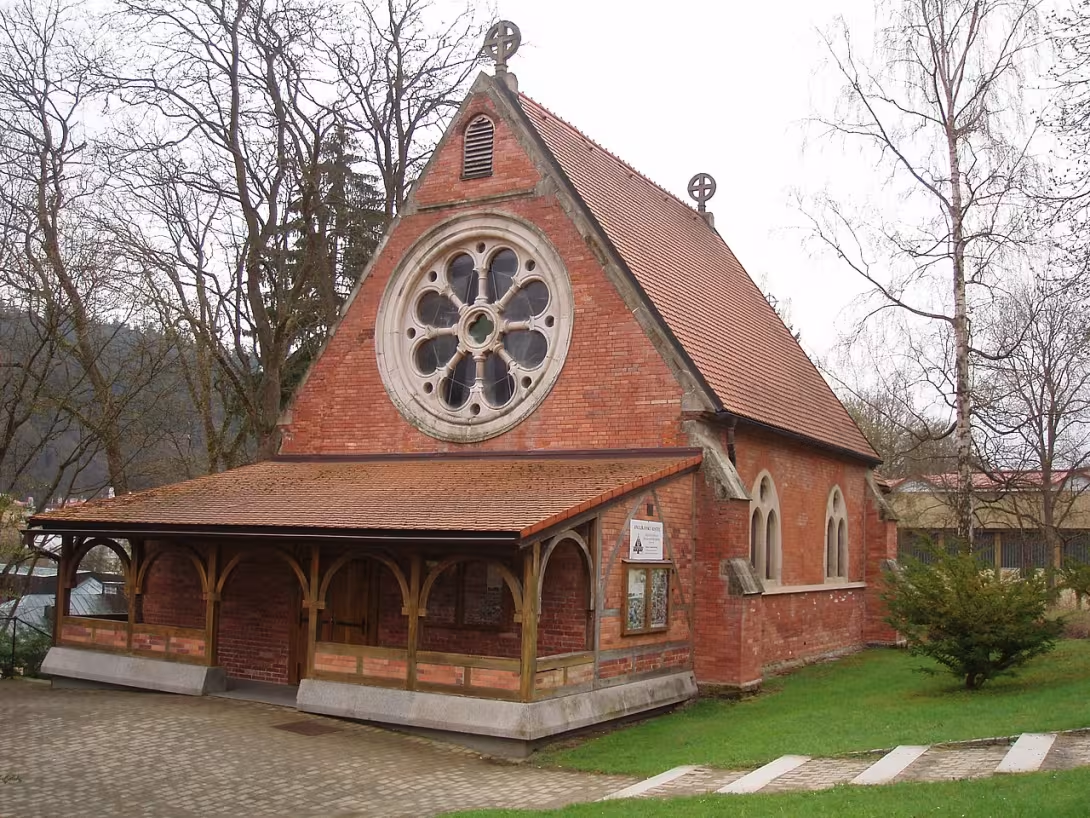

The historical appearance on the left is an AI-generated visualisation and serves as inspiration only.
Historical milestones
- 1879
- The Anglican church was built as a memorial to John Scott of Rondono.
- 1897
- First visit by King Edward VII of England.
- 1909
- Last visit by King Edward VII of England.
- 1918
- After World War I, ownership passed to the Society for Promoting Christian Knowledge (S.P.G.) in London.
- 1973
- The church was closed due to unresolved property issues.
- 1990
- Restoration of the church began in the early 90s.
Architectural development
The Anglican Church was constructed using red hollow bricks in a Romanesque-Neo-Gothic style, with its nave separated from the apse by an arch. The church features latticed windows and a steep gabled roof covered with tiles. Originally adorned with colorful mosaics depicting scenes from Jesus Christ's life, only the brick pulpit and a marble plaque remain from its original fittings.
Historical events
1879: Church consecrated to Jesus Christ.
1897–1909: Visits by King Edward VII, enhancing its fame.
Post-World War I: Renovation and reinstallation of the bronze bell.
1973: Closure due to unresolved property issues.
Owners
August Herzig (original owner)
S.P.G. (Londýnská Společnost pro šíření anglikánské víry v cizině) post-World War I
Město Mariánské Lázně (current owner since 1993)
Points of interest
- The church was built as a memorial to John Scott of Rondono, an unusual dedication for a building in the Czech Republic, reflecting personal ties and international influences during its construction.
- Architect William Burghese designed the church, highlighting the cross-cultural architectural collaborations between British architects and Bohemian builders at the time.
- The church's original colorful mosaics depicting scenes from Jesus Christ’s life have mostly disappeared, leaving only the brick pulpit and a marble plaque as remnants of its once vibrant interior.
- Ownership transitioned to the London-based Society for Promoting Christian Knowledge (S.P.G.) after World War I, illustrating how international religious organizations played roles in local heritage preservation.
- The church's transformation into a concert and exhibition hall represents an innovative approach to preserving historical sites by adapting them for modern cultural use.
Guide
This guide is narrated by a synthetic voice generated by artificial intelligence.
Show guide text
This text was created by artificial intelligence and has not been editorially reviewed. It may contain inaccuracies.
The Anglican Church in Mariánské Lázně stands on a slope beneath what is today Ruská ulice. It is a protected monument, a structure you would more likely expect to find in the English countryside than in a Bohemian spa town.
The church came into being thanks to a donation of twelve thousand gold pieces from Mrs Ann Scott of Rondono, who wished in this way to honor the memory of her deceased husband John Scott of Rondono. The land was provided free of charge by the Teplá monastery. The plans were drawn up by architect William Burges and the construction was overseen by builder Friedrich Zickler. In 1879 the church was consecrated to Jesus Christ. The then mayor August Herzig was registered as the owner and also served as its custodian. The church gained renown through the stays of the English King Edward the Seventh between 1897 and 1909.
After the First World War, the bronze bell that had been removed was returned to the tower and the interior underwent renovation. The official owner was the London Society for the Propagation of the Anglican Faith Abroad. After Doctor Herzig's death, the management was taken over by his son, also named August Herzig.
After the Second World War, the property situation remained unclear for a long time and nobody looked after the church. In 1973 it was closed. Thieves then gradually plundered it and the looting continued until the nineteen nineties.
The building in Romanesque neo-Gothic style is a typical example of English rural ecclesiastical architecture. Burges also designed a similar church in the town of Fleet in Hampshire. That church was largely destroyed by fire in 2015.
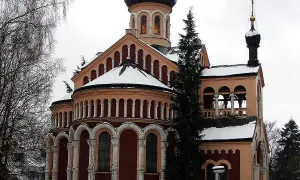
The single-nave church is built of unplastered red bricks, fired at high temperature. The presbytery with a semicircular apse is separated from the nave by a striking arch made of stone blocks. The windows have pointed arches combined with simple rosettes, and there is a large eight-part rose window in the façade. The stone portal of the entrance is covered by a wooden canopy. The steep gabled roof is covered with tiles and has round crosses at both of its ends. The nave is vaulted with a wooden vault in the form of a pointed arch.
The original colored windows depicted scenes from the life of Jesus Christ and bore the names of the donors. From the original furnishings, only a brick semicircular pulpit and a marble memorial plaque from 1911 have survived, which commemorates the frequent visits of King Edward the Seventh.
In 1993 and 1994 the church underwent a complete renovation both outside and inside. Today it belongs to the town of Mariánské Lázně and serves as a concert and exhibition hall.
Tips for visitors
The best time to visit the Anglican Church in Mariánské Lázne is during late spring or early autumn when the weather is pleasant, and the spa town offers a vibrant atmosphere with fewer crowds compared to peak summer months. This period allows visitors to enjoy the surrounding landscapes and thermal springs comfortably. Additionally, visiting on weekdays can provide a more serene experience as opposed to weekends which might be busier.
Public transport is also a viable option; buses and other forms of public transit serve the area well, making it accessible without the need for personal vehicles.
When visiting the Anglican Church, consider bringing comfortable walking shoes as you may want to explore the surrounding areas on foot. A camera is recommended to capture the architectural beauty of the church and its picturesque surroundings. Additionally, carrying a light jacket or sweater can be beneficial due to variable weather conditions in the region.
For photography enthusiasts, the best spots for capturing the Anglican Church are from the front where you can appreciate its Romanesque-Neo-Gothic style against the backdrop of the town’s landscape. Early morning or late afternoon provides the most flattering light, casting long shadows and highlighting the church's red brickwork. Exploring different angles around the slope beneath Russian Street also offers unique perspectives.
Nearby attractions within a 30-minute drive include other historical sites in Mariánské Lázne such as the spa gardens and various thermal springs that are popular for relaxation and wellness activities. These spots provide an excellent opportunity to experience the town's rich history and natural beauty, making it ideal for visitors interested in both cultural and leisure pursuits.
For families with children, visiting the Anglican Church can be a delightful experience when combined with exploring the nearby spa gardens which offer open spaces perfect for kids to play. Additionally, Mariánské Lázne has several family-friendly cafes and restaurants where you can enjoy local cuisine after your visit.
Frequently asked questions
Can the monument be visited?
Religious buildings are usually open mainly during services; at other times a visit is normally arranged with the parish or the operator. We have not verified specific times.
Where is the monument?
Location: Ruská 98/5, Mariánské Lázně, Karlovarský kraj. The map on this page shows the exact spot.
Why is the monument protected?
It is listed in the Central List of Cultural Monuments of the Czech Republic as a cultural monument (register no. 21626/4-3785).
Businesses nearby
Do you run a restaurant, accommodation, shop, museum, rental, wellness or other visitor service near this monument? Show yourself directly to the people heading to it — this is how they will see you in the app and on the web:
Events nearby

Zdroj akcí: otevřená data měst a obcí ČR (Národní katalog otevřených dat) a kalendář akcí Národního památkového ústavu.
Nearby
Located on a slope beneath today's Russian Street, the Anglican Church is surrounded by the spa town of Mariánské Lázne, known for its thermal springs and picturesque landscapes.
Accommodation nearby
Themed route
Thematic Walking Tour: The Anglican Church and Surroundings of Mariánské Lázne
1. Anglican Church (Church) Begin your journey at the Anglican Church, nestled on a slope beneath today's Russian Street. This historic church is an architectural gem, reflecting the diverse cultural influences that have shaped Mariánské Lázne over the centuries. Its unique design and serene atmosphere make it a must-visit for those interested in religious architecture and history.
2. Russian Street From the Anglican Church, take a leisurely walk down Russian Street. This charming street is lined with elegant buildings that date back to the 19th century when Mariánské Lázne was a popular spa destination among European aristocracy. The architectural beauty and historical significance of this area provide insight into the town's prosperous past.
3. Thermal Springs Continue your exploration by visiting the renowned thermal springs, a cornerstone of Mariánské Lázne’s identity as a spa town. These natural wonders have been attracting visitors for centuries seeking relaxation and healing. The picturesque landscapes surrounding the springs offer a tranquil setting perfect for reflection or a leisurely stroll.
4. Spa Town Center Conclude your tour in the heart of Mariánské Lázne’s spa town center, where you can immerse yourself in the vibrant atmosphere that has made this area famous. The blend of historic architecture and modern wellness facilities creates an inviting environment for both relaxation and exploration.
This thematic walking tour offers a glimpse into the rich cultural tapestry and natural beauty that define Mariánské Lázne, making it a memorable experience for history enthusiasts and nature lovers alike.
Seasonal recommendations
Spring: Visiting the Anglican Church in Mariánské Lázně during spring offers a unique experience as nature awakens around this historic site. The soft, natural light of longer days enhances the intricate details of the church's architecture and stained glass windows, creating an ethereal atmosphere. Springtime brings blooming flowers and lush greenery to the surrounding gardens, adding vibrant colors that contrast beautifully with the church’s classic design. Visitors should expect moderate crowds as people take advantage of the pleasant weather for outdoor activities. It is advisable to wear comfortable layers, as temperatures can vary between cool mornings and warm afternoons. Arriving early in the day allows you to enjoy a quieter visit before larger groups arrive.
Summer: The summer season at the Anglican Church in Mariánské Lázně is characterized by its vibrant atmosphere and longer daylight hours, which are ideal for exploring the church's interior and exterior details. This period often sees increased visitor numbers due to the peak tourist season, so it’s wise to plan your visit early in the morning or later in the afternoon to avoid crowds. The warm weather allows for comfortable exploration of nearby attractions as well. Dressing in light, breathable clothing is recommended, along with wearing sunscreen and a hat to protect against the sun. Don't forget to stay hydrated by carrying water with you during your visit.
Autumn: Autumn brings a stunning display of colors to Mariánské Lázně, enhancing the beauty of the Anglican Church with its warm hues reflected in the surrounding foliage. The cooler temperatures and softer light create a serene atmosphere, perfect for appreciating the church's historical architecture without the summer crowds. This season is ideal for photography enthusiasts looking to capture the picturesque setting. Visitors should dress warmly in layers to accommodate fluctuating temperatures throughout the day. Since this period can be less crowded than summer, it’s an excellent time to enjoy a more leisurely visit.
Winter: The Anglican Church in Mariánské Lázně takes on a magical quality during winter when snow blankets the landscape and festive lights illuminate the area, creating a charming holiday atmosphere. Shorter days mean that natural light is limited, but this can add to the cozy ambiance inside the church. Visitors should be prepared for colder temperatures by dressing in warm layers, including hats, gloves, and insulated footwear. Arriving early ensures you make the most of your visit before any potential closures due to weather conditions.
Visualizations and artistic views


The visualisations are generated by artificial intelligence and serve as inspiration.
Photos from the area
Real photos taken near the monument


Zdroj a licence jsou uvedeny u každého snímku.
Tips from visitors
No tips yet. Be the first!
Log in and add your tip.
Sources and literature
Photos: Wakowlk / CC BY-SA 4.0 — Wikimedia Commons. The author and licence also appear when you hover over the image.
Faktickým podkladem tohoto textu byl článek na Wikipedii, jehož autory jsou přispěvatelé Wikipedie. Článek je dostupný pod licencí CC BY-SA 4.0.
Location on the map

Příběhy a pověsti
Legendy, pověsti a příběhy spjaté s touto památkou

Fotografie návštěvníků
Zatím žádné fotografie. Buďte první, kdo přidá fotografii z návštěvy!
Log in a přidejte svou fotografii nebo hodnoťte.
Za ověřenou návštěvu v aplikaci získáte víc bodů — poznáme podle GPS, že jste na místě.
Reviews and comments