



Boží muka I Chapel
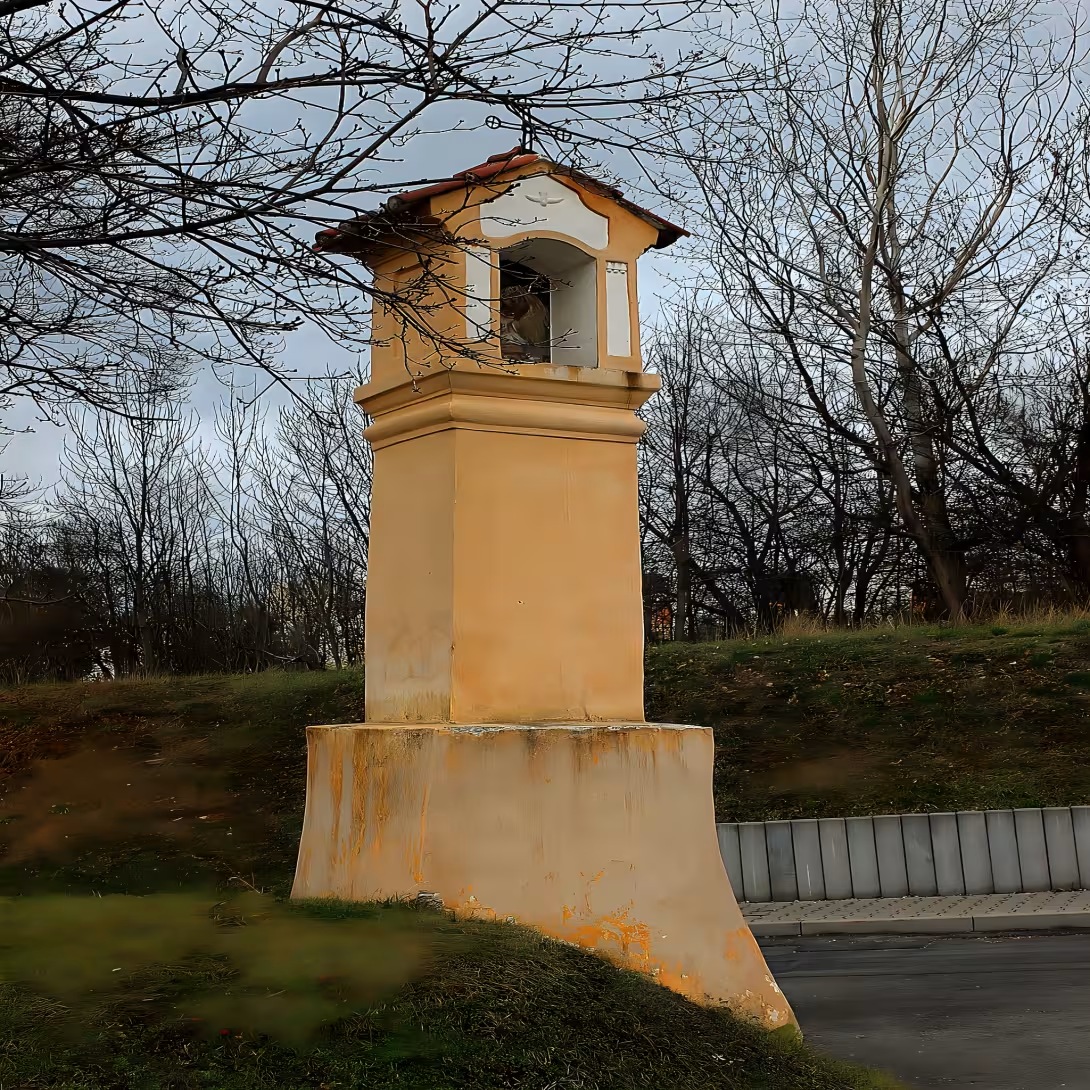
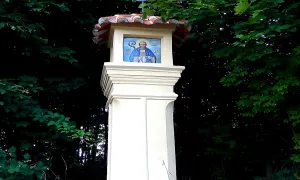
Boží muka I, located in the village Prachatice in South Bohemia, is a cultural monument of the Czech Republic and an important example of Gothic architecture. This chapel from the end of the 18th century lies on the way to the church of St. Peter and Paul, making it an important part of the local environment.
Coming from the end of the 18th century, Boží muka I represents a typical example of the Gothic era. Its walled prism construction with a distinctive workpiece base is characteristic of this period and embodies popular aesthetics at the time. This architectural style contributes to the historical appearance of the surroundings and gives visitors insight into the past.
While its ownership and governance are unclear, protection as a cultural monument ensures its preservation for future generations. This chapel has become an important place within the municipality of Prachatice and contributes to its cultural wealth.
Today Boží muka I is available for visit, which makes it an attractive destination for tourists and locals. Its historical importance and architectural features attract people interested in history and culture who wish to discover unique elements of Czech goth.
Boží muka I is not only a monument to the past, but also a living testament to the lasting impact of history on the present. Her visit offers an opportunity to explore the region's rich history and architecture and appreciate its cultural values. This chapel is therefore not only an important historical object, but also an inspiring place worth visiting.
Then and now
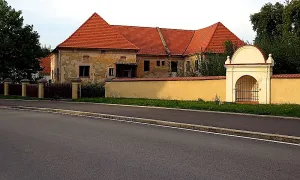
Drag the slider to compare how the landmark may have looked when it was built with the view today.
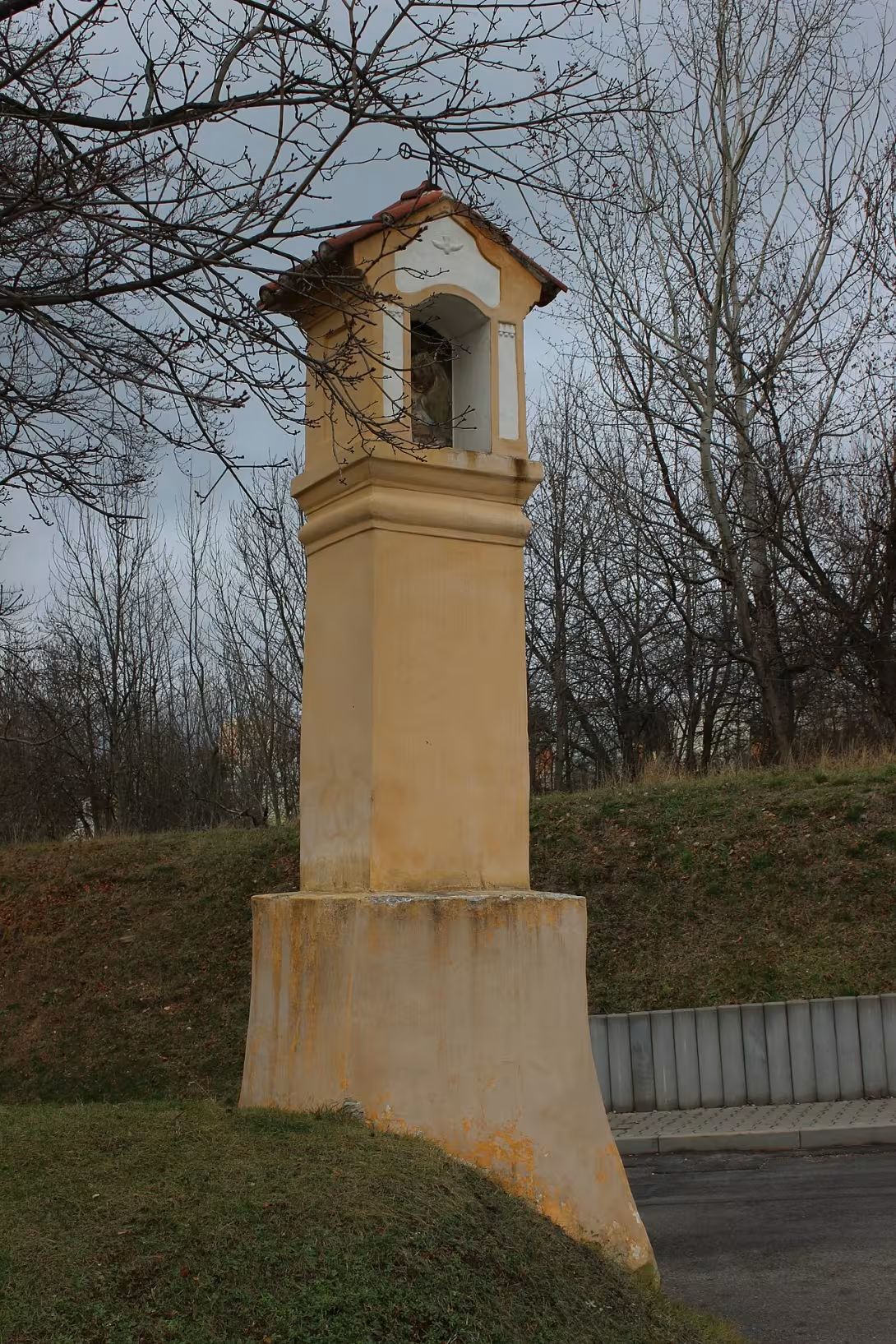
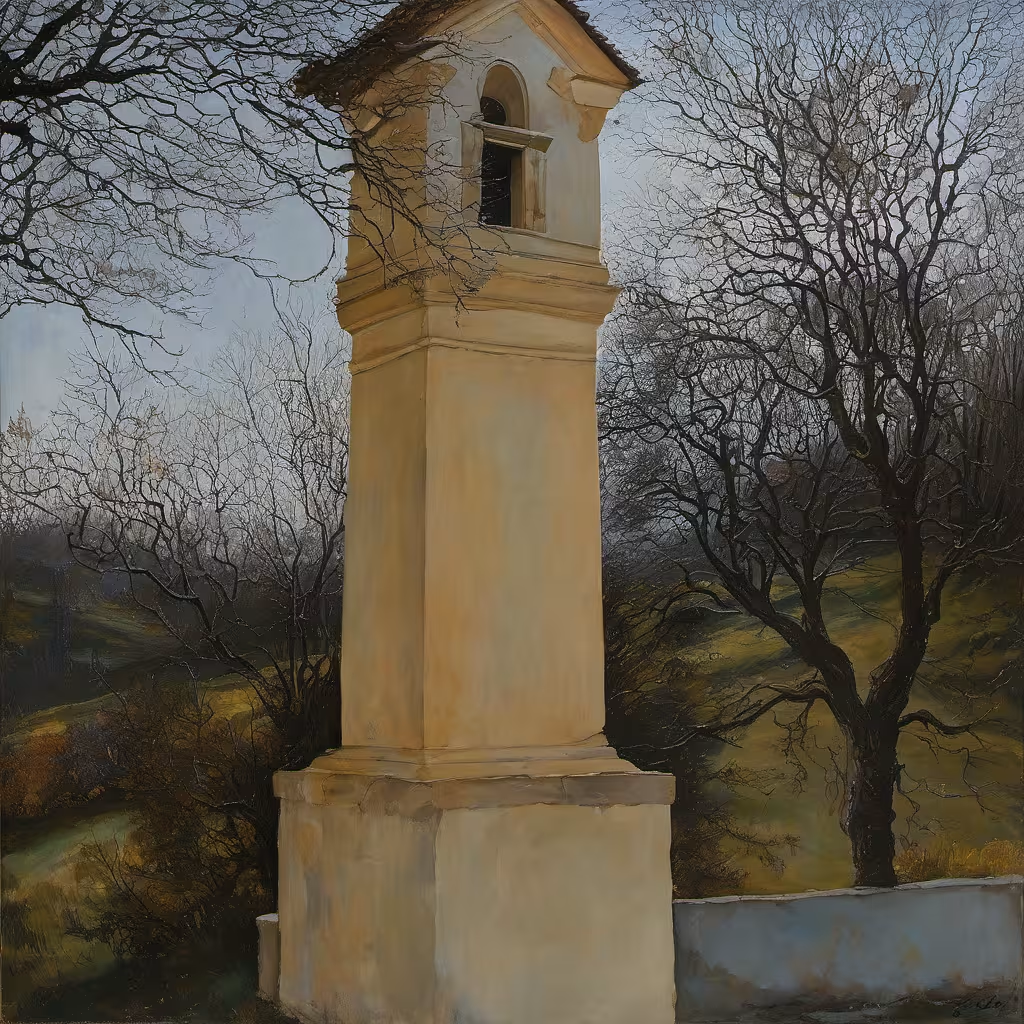
The historical appearance on the left is an AI-generated visualisation and serves as inspiration only.
Historical milestones
- end of 18th century
- God's torment dates back to the late 18th century.
Points of interest
In 1621, God's torment became the target of Protestant rebels who wanted to destroy it, but only partially succeeded.
- The first mention of God's torment dates back to 1360 and at that time they were among the most important monuments of Prague.
- Boží muka I has always been associated with a monastery of Augustinian people, which was rich and influential, but was also in conflict with King Charles IV.
Guide
This guide is narrated by a synthetic voice generated by artificial intelligence.
Show guide text
This text was created by artificial intelligence and has not been editorially reviewed. It may contain inaccuracies.
Welcome to Prachatice, the beautiful part of South Bohemia, where history is inscribed in the landscape with every stone and every piece of road. Right now, you're standing in front of one of the silent witnesses of the past, which is God's torment. Stop for a moment, take a breath and feel the space around you. In front of you is this small but important building that has been accompanied by pilgrims, travelers and locals for centuries. It is a place that, although not ahead of its size, is a great city, but with its modesty and location tells the story of faith, hope and peace. Look at her as a stop to prepare you for the next part of your journey.
This monument, which we know as God's torment, originated in the late eighteenth century. So imagine the time when the world order began to change, when one century ended and the other started, and yet some values remained unchanged. At that time, it was customary to build similar small sacral structures at crossroads, near roads or places where something extraordinary happened. God's torment was not only an ornament of the landscape, but it served as a spiritual beacon. It was a place of short prayer, a stop in fatigue or an expression of gratitude for returning home safely. It was here, in Prachatice, that this building was located with a clear purpose. If you look in the direction you're taking your steps, you'll see that you're on a path that leads you to St. Peter and Paul's Church. This journey is not only a physical transfer from one point to another, but at the time this monument was created, it was a symbolic journey to the deity, to the spiritual center of the village. So God's torment served as the first reminder that you were approaching the sacred space of the church.
Now pay attention to the very form of the construction. Since we do not know the specific plans or names of architects who designed this monument, we can be guided by our own observations. Look at the overall composition and see how the building is inserted into the surroundings. Notice its shape and how dominant, yet humbly, it stands by the road. Follow the lines that make up her body, and think about how many hands have touched these walls over the last 200 years. Feel the texture of the surface and the way the light hits it. Even if you don't find complex decorating or monumental sculptures here, in this simplicity lies the power of this place. It is an architecture that aims not to impress its size, but rather to reach out to the human heart with its purity. Look up and see how the building goes towards the sky, which was the basic principle of all similar structures in the eighteenth century.
When we think about the people who were connected to this place, we have to come up with some recognition for the unknown. We don't know the names of the builders, we don't know the names of those who may have supported this building financially, nor do we know the exact records of who stood here in a particular year and prayed. And it is in this ignorance that lies a strange spell. This monument belongs not to one famous name, but to the community. It belongs to all the thousands of people who came through here when they were happy, even those who came here with a heavy heart. Imagine a local craftsman who stopped here two years ago to relax and think briefly about his life, or a mother who begged for the health of her child. God's torment is such a silent archive of human emotions that have been gathering here for generations. Although history has not written down specific names, traces of their faith and hope are still present in this building.
Now you might wonder why this particular building was placed right here. Here we come to the part that remains a secret. In many cases, God's torment was built as a thank-you for the survival of the plague beach, as a reminder of a tragic event or as a delineation of boundaries of a certain territory. In the case of this monument in Prachatice, we do not know one particular stimulus that would be documented in the archives. And this mystery can be fascinating. Try to join the imagination game. Perhaps there once stood an old tree that was a symbol of the place, or there was a meeting of two people that changed their lives. Perhaps it was simply a desire to create a beautiful and sacred place on the way to the main temple. This emptiness in historical records gives us space to form our own relationship with the place. So God's torment is not just a dead object from the past, but a living question for which every visitor can find his own answer.
Now, if you look at this building again, consider it a bridge between the past and the present. In today's rush world, where everything runs fast and digitally, such a stop at a small monument from the late eighteenth century is a valuable gift. It's an invitation to slow down. Invitation to disconnect for a moment from everything outside and listen to the silence of South Bohemia region. Notice how calm floats around the monument and how naturally it became a part of this landscape. It is proof that even small things can be of great importance if they are created with respect for the space and the people for which they are intended.
Now that you've taken a closer look at this memory and tried to feel its atmosphere, it's time to continue your journey. God's torment accompanied you in the first step through your spiritual and historical walk. Before you still lies the path to the church of St. Peter and Paul, which is the natural culmination of this journey. I suggest you continue to see the surrounding landscape while walking and to think about how many other hidden treasures there are in Prachatice and the surrounding area. Each of them has a story, even if we don't have to know it word for word.
Thank you for spending a moment with us at this beautiful monument. We hope that this short stop point has brought you a sense of peace and a new view of the small details in our history. We wish you a pleasant continuation in discovering the beauty of South Bohemia and the joy of every next step that leads you to the further secrets of this region. Goodbye and have a safe trip.
Tips for visitors
Best Time To Visit God's Torture I is in the spring or autumn season when the weather is pleasant and the winter is not too sharp. This time of year also offers a beautiful green landscape around the chapel, which can be a very nice background for photos.
Peter and Paul's Church, where Boží muka I is located. The location is also available by public transport; Check the current connection in the search engine. We recommend using cars for more comfortable access, especially if you plan to visit with your family or travel with a towel.
When designing a visit, bring protective clothing such as shoes and jackets, especially in colder months. In summer it is advisable to have an umbrella and plenty of drinking drink. If you intend to take pictures, don't forget the quality camera and maybe a long lens for the details of the chapel.
For photo is the best time morning or evening when the sun is not too high and the light is softer. The most beautiful views of God's Torture I can be obtained from the side that goes towards the church of St. Peter and Paul, which allows interesting composition with historical background.
Around God's Torture I can visit the church of St. Peter and Paul, which is located on the same path. This church offers interesting architecture and history, making it an ideal complement for visitors to the chapel. For families with children is a short walk around the village Prachatice II where children can enjoy the natural environment.
Frequently asked questions
Can the monument be visited?
Religious buildings are usually open mainly during services; at other times a visit is normally arranged with the parish or the operator. We have not verified specific times.
Where is the monument?
Location: Prachatice II, Jihočeský kraj. The map on this page shows the exact spot.
Why is the monument protected?
It is listed in the Central List of Cultural Monuments of the Czech Republic as a cultural monument (register no. 19395/3-3506).
For kids
Imagine going back to the past, until our country was full of chateaux and claims. It was a time when people lived in villages with wooden houses and worked in fields. Now let us return to our God's torments, which are like hidden treasures between forests and hills.
There were many people who came here to pray or seek refuge from dangerous invaders. The chapel was built in a place where the old estate belonged to a rich priest. He was known for his kindness and help, but also people often liked him as a powerful man.
Businesses nearby
Do you run a restaurant, accommodation, shop, museum, rental, wellness or other visitor service near this monument? Show yourself directly to the people heading to it — this is how they will see you in the app and on the web:
Nearby
➜ Zobrazit interaktivní přehled okolí – restaurace, ubytování, půjčovny a další místa v okruhu 15 km.
Data: OpenStreetMap contributors, okruh 15 km.
🏰 Historické památky
- Prachatické muzeum (0.5 km)
- Muzeum loutek (0.6 km – Velké náměstí 43)
- Sv. Jan Nepomuk Neumann (0.6 km)
- Muzeum krajky (0.7 km – Poštovní 178)
- Otto Herberta Hajeka (0.7 km – Velké náměstí 184)
- Jan Hus (4.1 km)
- Osule - zřícenina hradu (5.8 km)
- pomník setkání armád 13. 5. 1945 (6.7 km)
🍽️ Restaurace a stravování
- Pivnice Družba (0.4 km)
- Vanesa (0.5 km)
- Černý medvěd (0.6 km)
- PIZZA - CAFÉ - GALLERY (4.5 km)
- Na sedle (4.6 km)
- Občerstvení - stánek (7.1 km)
- Saturn (7.1 km)
- Občerstvení - stánek (7.2 km)
🏨 Ubytování
- Hotel Parkán (0.6 km – Věžní 51)
- Bed&Bike Prachatice (0.6 km – Velké náměstí 40)
- Hotel Koruna (0.7 km – Velké náměstí 48)
- U Gajdošů (0.7 km – Dlouhá 27)
- Penzion Prachatice (0.7 km – Slámova 268)
- Penzion Tina (1.2 km)
- Dětský tábor (5.6 km)
- Letní tábor 5. střediska Modřany (5.6 km)
🚲 Půjčovny a sport
- Sportovně relaxační centrum (0.8 km)
- Stadion TJ Tatran (0.9 km)
- krytý bazén (14.3 km)
- Sportovní areál (14.3 km)
🥾 Turistika a příroda
- Libín (4.4 km)
- Řepešín rozcestí (7.1 km)
- Milešice (9.4 km)
- Malý Bobík (11.2 km)
- Solovec (11.8 km)
- Hrbov rozc. (11.9 km)
- Bobík (11.9 km)
- Boubín (13.7 km)
Accommodation nearby
Themed route
1. Boží muka I (chapel), sacred building, you will see here the very shape of the monument and its spiritual meaning. 2. The chapel tank, open space, offers the possibility of detailed observation of the building from different sides. 3. The immediate area, the outdoor area, this place allows quiet contemplation in a quiet environment right near the monument.
Seasonal recommendations
In spring nature wakes up around the chapel and the surrounding landscape gets a fresh green color. The light is fine in this period and very pleasant for observing the details of the construction. I recommend wearing layered clothes because the morning cold can quickly turn to heat during the day. The road to the monument is peaceful and ideal for quiet contemplation thanks to a small number of visitors.
During the summer months come the longest days and intense sunlight, which beautifully highlights the face of the historic building. The atmosphere is alive and the surrounding vegetation is in full bloom. Because of the warmth and possible groups of tourists, it is best to arrive early in the morning when the air is still fresh and the shadows are long. Don't forget light summer clothes and sun protection.
Autumn season offers fascinating color changes and often accompanied fog that gives the place a mysterious mood. The golden shades of leaves create a wonderful background for shooting the chapel. It is advisable to prepare stronger shoes for wet soil and warmer clothing. The afternoon time is ideal for capturing the warm light of the setting sun.
In winter time there is peace and quiet, which is interrupted only by the freezing air. If snow falls, the monument is very fragile and moving. It is necessary to wear very warm clothes and high-quality shoes against cold. Due to short days, plan a visit around noon to use the maximum amount of daylight.
Visualizations and artistic views


The visualisations are generated by artificial intelligence and serve as inspiration.
Photos from the area
Real photos taken near the monument


Zdroj a licence jsou uvedeny u každého snímku.
Atmosphere of the place
This atmospheric visualisation of the place and period was generated by artificial intelligence. It is not real footage of the location.
Tips from visitors
No tips yet. Be the first!
Log in and add your tip.
Sources and literature
Photos: Richenza / CC BY-SA 3.0, rozlišení zvýšeno umělou inteligencí — Wikimedia Commons. The author and licence also appear when you hover over the image.
Location on the map


Příběhy a pověsti
Legendy, pověsti a příběhy spjaté s touto památkou
Fotografie návštěvníků
Zatím žádné fotografie. Buďte první, kdo přidá fotografii z návštěvy!
Log in a přidejte svou fotografii nebo hodnoťte.
Za ověřenou návštěvu v aplikaci získáte víc bodů — poznáme podle GPS, že jste na místě.
Reviews and comments