



Boží muka II. Chapel
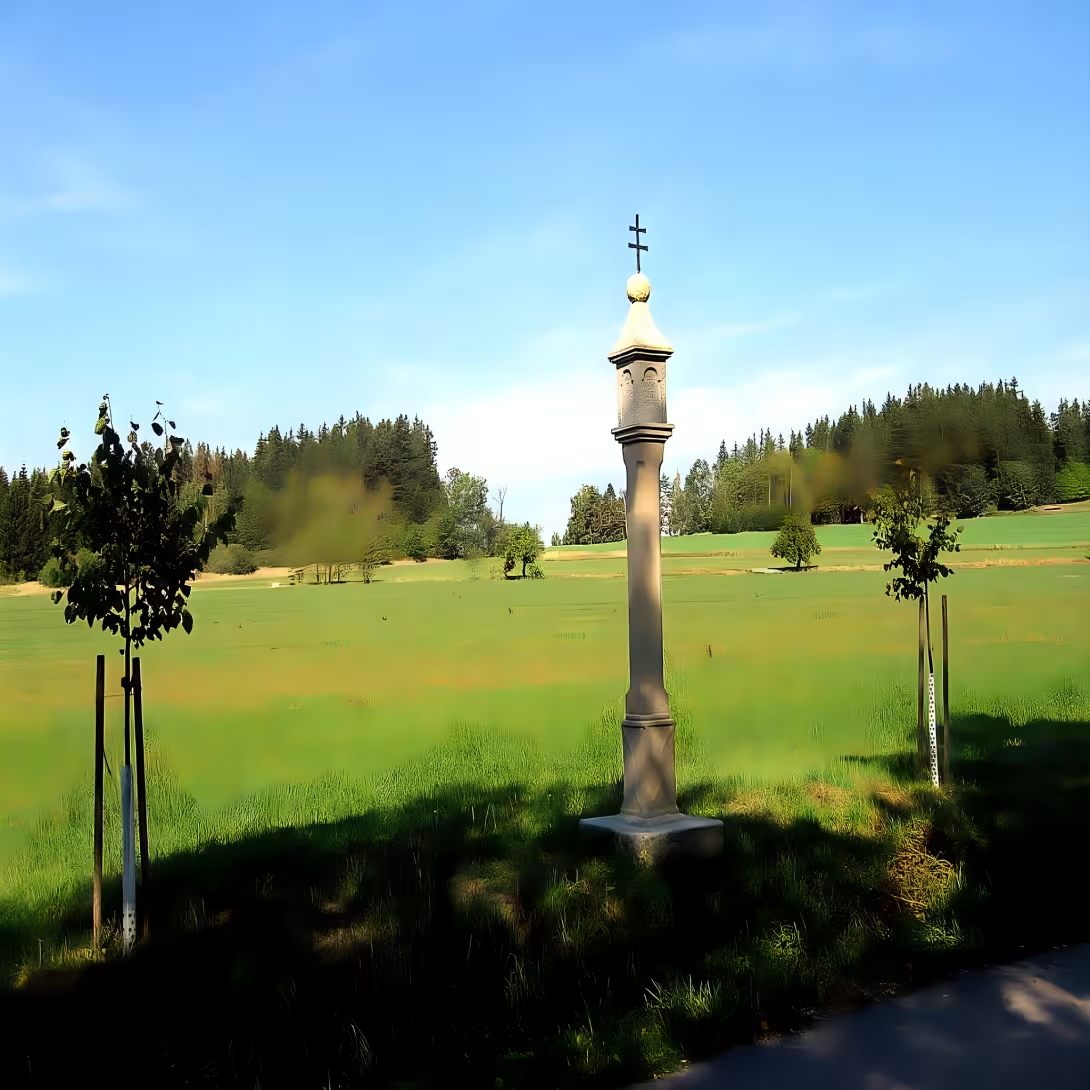
This cultural monument is a chapel located in the village Bořetín in the district of Jindřichův Hradec in the South Bohemia region. The building is officially listed in the Central List of Cultural Monuments of the Czech Republic under registration number 30507 / 3-1763. The memorial protection of this building is documented by the register.
The oldest history and precise circumstances of creation have been preserved from the available official sources only a minimum of direct reports. The official annotation of the National Monument Institute, however, indicates the specific building and historical classification of the building. On the stone prism base there is a square plan of baroque torture from the turn of the 17th and 18th centuries.
The architectural solution of the monument is based on a combination of several construction periods, with professional resources defining its inclusion in Gothic and subsequent Baroque adaptations. The base of the chapel has a stone, prism and square ground plan on which the mentioned baroque torture is located. Further details on interior decoration or building development are not specified in the monument documents.
The specific owners, administrators, or dramatic historical destinies do not contain verified databases of closer records. Due to the absence of more detailed archive sources, historical events directly related to this site have not been preserved to such an extent that it is possible to compile a comprehensive chronological overview of ownership changes.
Currently, this sacral building is registered as a state-protected cultural monument of the Czech Republic. Its location in the village Bořetín in the district of Jindřichův Hradec in the South Bohemia region at coordinates 49.18294, 15.20610 allows visitors easy orientation in the field.
The preservation of this building is reminiscent of the importance of small architecture in the South Bohemian landscape. On the way to the region it is worth visiting and personally viewing its historical and architectural elements on the site.
Then and now
Drag the slider to compare how the landmark may have looked when it was built with the view today.
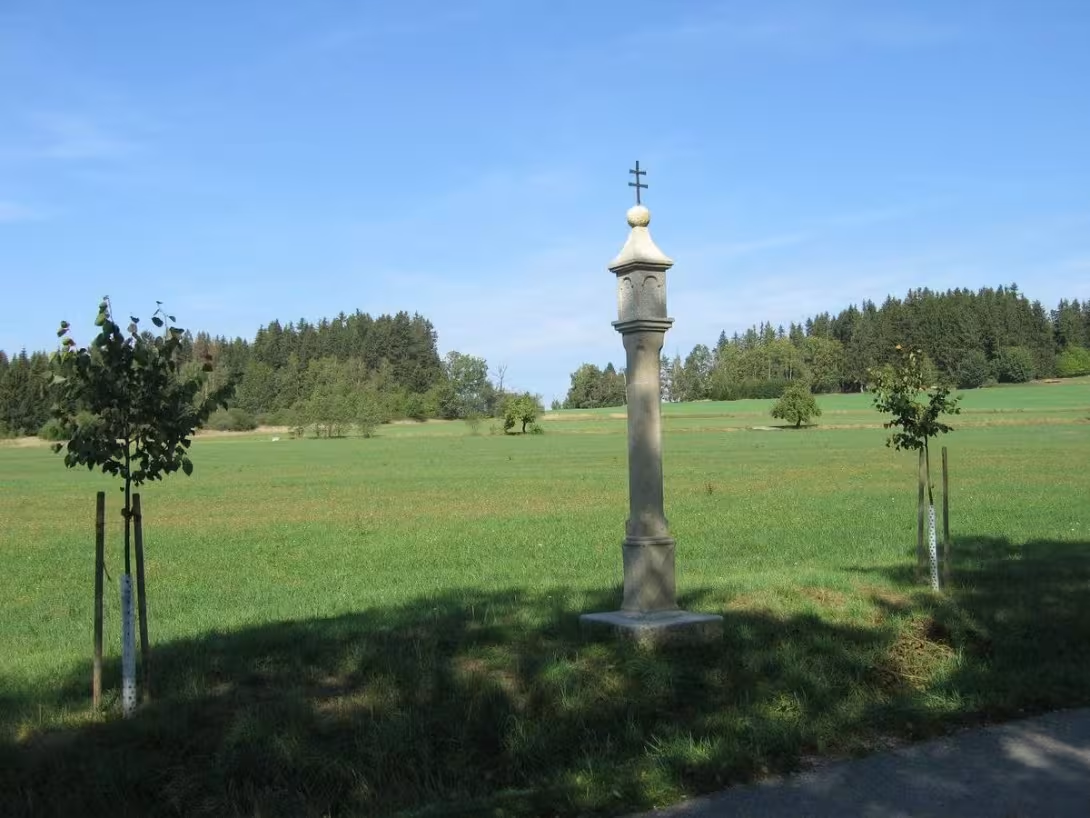
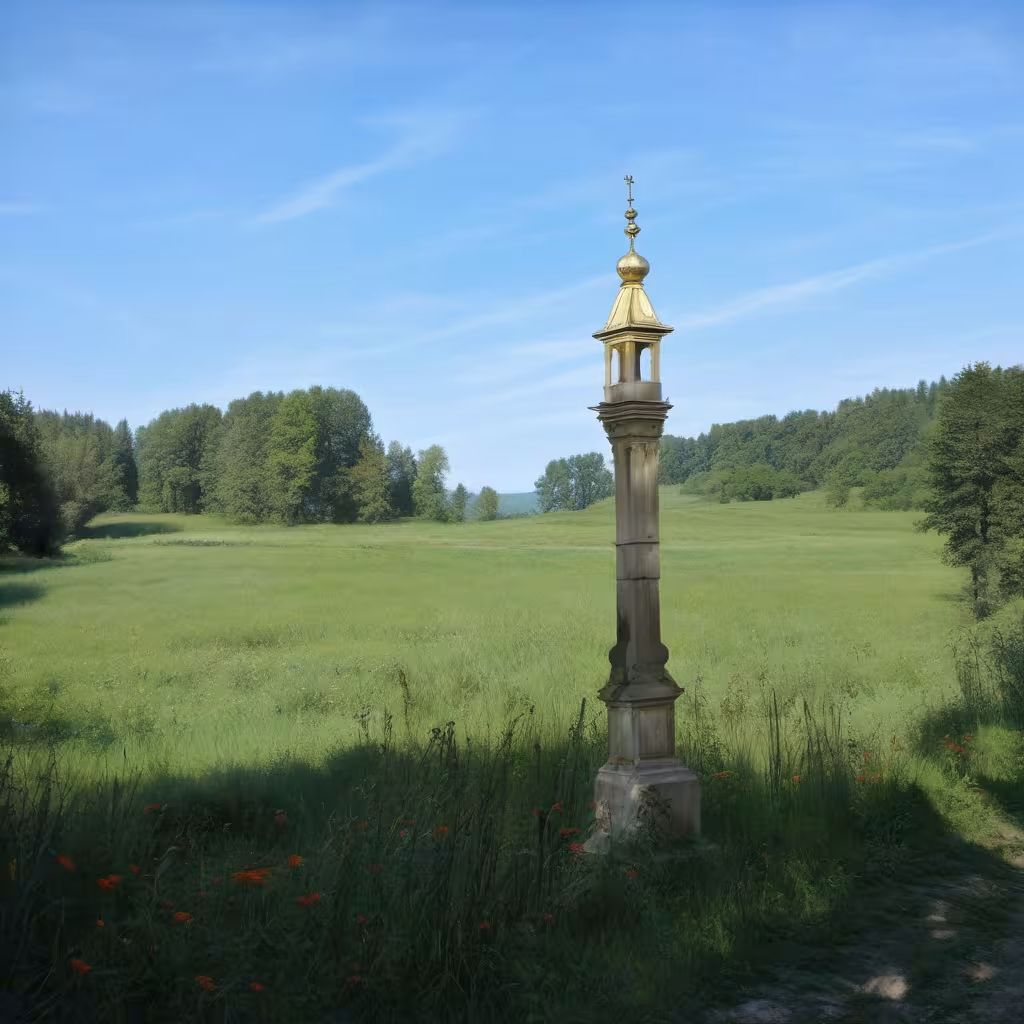
The historical appearance on the left is an AI-generated visualisation and serves as inspiration only.
Points of interest
- On the stone prism base of the square floor plan there is baroque torture from the turn of the seventeenth and eighteenth centuries. - The architectural solution of the monument is based on a combination of goth and subsequent baroque modifications.
Guide
This guide is narrated by a synthetic voice generated by artificial intelligence.
Show guide text
This text was created by artificial intelligence and has not been editorially reviewed. It may contain inaccuracies.
Welcome to the beautiful surroundings of South Bohemia. You just stopped by one of those quiet, but extremely important places that makes up the soul of our country and its landscape identity. You're standing right in front of a historical monument that people call God's torment. This chapel, as it is also called, stands out from the surrounding landscape and invites you to stop, to self-knowledge and to a moment of silence in the middle of your journey today.
You are in the village Bořetín, in the district Jindřichův Hradec. It is a region where history constantly blends with nature and where every little detail in the landscape can tell the story of the people who lived here before us. This chapel is not just an ordinary building. It is part of our rare cultural heritage, which is also confirmed by the fact that it is registered in the central list of cultural monuments of the Czech Republic under registration number 30507 / 3-1763. This entry gives us a clear signal that even such a small and seemingly modest object is of great importance to us all and deserves our respect and protection.
Now let's think together about what this object represents. What does it mean for us to see God's torment? For many, it can only be a small building on the edge of the road, but for the people who wandered here centuries ago, it was a meeting point with something higher. It was a place for prayer, for a short rest during a long and difficult journey, or for a moment of deep reflection. God's torment served as spiritual beacons in a landscape that reminded people of their connection to the heavens and their own way of life.
Now pay attention to the very form of this place. Although at first glance it may appear to be a simple object, approach it with attention. Look at the way this chapel is brought into space. Feel its presence and how its shapes interact with the outside world. Notice how its lines collide with the sky and how its position in the field is related to surrounding vegetation and paths. While we cannot speak of the particular names of the creators, we can perceive the intention with which this chapel was placed right here. Look at its overall form and try to find harmony in it, which has been there for a long time.
It's fascinating how history can be so close and so elusive. Looking at this memory, we come across one of the biggest questions we can ask ourselves. We don't know the exact time this chapel was built. We don't know the name of the architect who designed her face, nor do we know the names of the people who funded her or who met with her in the past. We don't even know any specific personalities that are directly connected to this place. And yet this chapel is still here. He is a silent, relentless witness of time who tells us a story through his own existence, not through names or records in books. This anonymity has a special beauty in it. It reminds us that history is not only about great kings and warlords, but, above all, about thousands of strangers whose faith and work have left an indelible mark in our country.
But this ignorance may not discourage us, but it may lead us to deeper perception. Perhaps the greatest value is hidden in this secret. Imagine all the generations that passed by these torments of God. Imagine all the moments of joy, sadness, fatigue, or hope that took place here. Every person who stopped here brought a piece of their own soul to this place.
Here we come to one of the greatest mysteries of this place. Why this place? Why was a road drawn that led to this point in the municipality of Bořetín? Maybe it was a place of misfortune that people wanted to bless. Perhaps it was a place of deep gratitude for the danger that had been endured. Or maybe it was just a point where people felt closer to heaven and their journey became sacred. This question remains unanswered, but it is the absence of a clear explanation that makes this place so magical. This mystery prompts you to find your own inner search.
Now that you've looked at this object and perceived its atmosphere, I suggest you allow yourself to follow this feeling for a while longer. Before you go any further, devote your last moment of silence to this very place. Feel the calm that exists here, and remember that you have become part of this long chain of human stories.
Thank you for joining this monument with the history of our region. We hope this brief moment has brought you a new perception of the surrounding countryside. Continue our journey together and discover other hidden corners and treasures that nature has prepared for you in this beautiful region. We will brighten your time and wish you a beautiful and inspiring journey further.
Tips for visitors
The best time to visit this historic building is early in the morning or at sunset, when low sunlight will highlight the ancient architecture and give the place a quiet atmosphere. Take with you enough drinking water for your journey, solid shoes suitable for outdoor movement and in case of unfavourable weather forecast also a raincoat or umbrella. To take pictures, choose a view from a slight ceiling that will highlight the height and shape of this small sacral structure, with the best light for the images in the golden hour before dark. In the wider area within 30 minutes of the journey there are other southern Bohemian villages and natural corners which encourage peaceful walks through the countryside. For families with children, this stop is suitable as a short and easy trip connected with the discovery of rural history and local traditions.
Frequently asked questions
Can the monument be visited?
Religious buildings are usually open mainly during services; at other times a visit is normally arranged with the parish or the operator. We have not verified specific times.
Where is the monument?
Location: Bořetín, Jihočeský kraj. The map on this page shows the exact spot.
Why is the monument protected?
It is listed in the Central List of Cultural Monuments of the Czech Republic as a cultural monument (register no. 30507/3-1763).
For kids
Imagine going back to the past, when the woods here were filled with ripples of woodlands and woodlands. This was the place where people once lived who fed on agriculture and hunting. They lived in small villages and in clouds of trees.
The chapel of God's tomb II, also known as the chapel of the Holy Cross, was built in 1688. It stands at the site of an old wooden chapel that was here before. The chapel is a small church built in a Baroque style. It's a place where people came to prayer and worship saints.
Businesses nearby
Do you run a restaurant, accommodation, shop, museum, rental, wellness or other visitor service near this monument? Show yourself directly to the people heading to it — this is how they will see you in the app and on the web:
Nearby
➜ Zobrazit interaktivní přehled okolí – restaurace, ubytování, půjčovny a další místa v okruhu 15 km.
Data: OpenStreetMap contributors, okruh 15 km.
🏰 Historické památky
- Na památku 28. října 1918 (5.7 km)
- Obětem 1. světové války (7.8 km)
- Vítkův hrádek (9.2 km)
- Magna Moravia Cyril a Metoděj (10.4 km)
- Žižkův kámen (11.2 km)
- Památník padlým vojínům husitským 1423-1923 (11.4 km)
- Obětem kotlářů (11.4 km)
- Jára Cimrman (11.5 km)
🍽️ Restaurace a stravování
- Jilemska Hospudka (4.9 km)
- Tango (5.8 km)
- U Šebestů (5.9 km)
- V&V (5.9 km)
- Ostrov Co Není (6.8 km)
- U Točíka (7.0 km)
- Budín - osvěžovna (7.4 km – Nádražní 590)
- Hospůdka na návsi (9.3 km)
🏨 Ubytování
- Penzion Pražák (2.2 km)
- Hotel Bartušek (5.8 km)
- Arabela - penzion u čarodějnic (7.1 km)
- Chatový tábor Malý Ratmírov (8.0 km)
- Chata Zvule (9.9 km)
- Kemp Zvůle (10.0 km)
- Kemp Zvůle (10.0 km)
- Chadimův mlýn (10.7 km)
🚲 Půjčovny a sport
- sokolovna (10.0 km)
- Sportisimo (13.9 km)
- Raw gym (14.3 km)
- Cyklo & Ski Galík (14.7 km – sídliště Vajgar 920)
- Cycle experts (14.8 km)
- VK Vajgar (14.9 km)
🥾 Turistika a příroda
- Baronova studánka (9.5 km)
- Javořice (10.6 km)
- Telčsko (10.7 km)
- Javořice (10.7 km)
- Studánka Páně (10.7 km)
- Studánka Páně (10.7 km)
- Zimní běžecké trasy - Javořice (11.0 km)
- Ve šráfu (11.1 km)
Accommodation nearby
Trips and activities nearby
Guided tours, tickets and activities nearby from GetYourGuide
Affiliate link: if you buy from the partner, we may receive a commission. The price for you does not change.
Search tours and activities →Themed route
Because the list of surrounding attractions is missing, this cruise route is designed inside the monument itself and its immediate area in the village Bořetín.
1.Boží muka II. (chapel) Type: Sacral monument Why is it worth a visit: This small building represents the main destination of the trip and a demonstration of folk construction in the South Bohemia region. It will capture its peaceful atmosphere and traditional architectural concept in the landscape.
2. The area of the chapel Type: The immediate area Why is it worth a visit: The area right around this sacral building allows the perception of rural calm. Visitors can admire the installation of the building in the surrounding green.
3. Construction area Type: Outdoor space Why is it worth a visit: This section offers a detailed view of the building elements of the monument up close. It is a suitable place for contemplation and rest in the village Bořetín.
Seasonal recommendations
Spring brings out the awakening nature, when the surrounding meadows and trees at the chapel in Bořetín begin to green and bloom the first spring flowers. The lighting is very clean at this time, the morning fog is slowly rising and the sunlight is warm, which creates a calm and quiet atmosphere for contemplation. The practical advice is to choose fixed and waterproof shoes, because the field roads can be drenched on the tidal and spring rains. You will not find crowds of tourists here at this time, so you will enjoy the memory completely alone, preferably in the morning when the landscape is filled with fine light.
Summer offers lush vegetation, the surrounding trees provide a full leafy shade and the tall grass surrounding the building creates a picturesque contrast with a white plaster. The atmosphere is full of birds singing and buzzing insects, the sun shines most of the day and creates sharp shadows. Due to the warm weather and the main travel season, it is recommended to leave either early in the morning or late in the afternoon to avoid the greatest heat of the day. Clothes should be light and breathable, but don't forget the headgear and the effective insect agent, which sometimes makes the surrounding forests and meadows uncomfortable.
Autumn turns the South Bohemian landscape into a varied variety of colors, leaves on trees turn yellow and red, and the falling fog gives the place a mysterious touch. The lighting is usually muted, the sun is located below the horizon and the overall atmosphere is melancholy, quiet and challenging to reflect over time. For visiting in this period is suitable warmer layered clothes, wind-resistant jacket and waterproof shoes because the terrain is damp from morning dew and fallen leaves. Visitors rarely come here during this period, so you can enjoy complete peace without any crowds, ideally around noon, when it is the hottest outside.
Winter covers the Bořetín into the snow cover, the surrounding landscape is quiet, white and looks very orderly and clean. The light is sharp from snow, the days are very short and the sun sets early in the afternoon, creating a raw but magical winter atmosphere. Practical advice includes the need to wear really warm winter clothes, hat, gloves and tight shoes with anti-slip soles, because snow and ice on the access roads can slide. There are no crowds of people here in the winter, the best time to visit is around noon, when the outdoor temperature is the highest and daylight is the strongest.
Visualizations and artistic views


The visualisations are generated by artificial intelligence and serve as inspiration.
Photos from the area
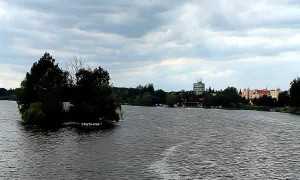
Real photos taken near the monument


Zdroj a licence jsou uvedeny u každého snímku.
Tips from visitors
No tips yet. Be the first!
Log in and add your tip.
Sources and literature
Photos: jib / CC0, rozlišení zvýšeno umělou inteligencí — Wikimedia Commons. The author and licence also appear when you hover over the image.
Location on the map




Příběhy a pověsti
Legendy, pověsti a příběhy spjaté s touto památkou
Fotografie návštěvníků
Zatím žádné fotografie. Buďte první, kdo přidá fotografii z návštěvy!
Log in a přidejte svou fotografii nebo hodnoťte.
Za ověřenou návštěvu v aplikaci získáte víc bodů — poznáme podle GPS, že jste na místě.
Reviews and comments