






Boží muka severně od Častrova Wayside shrine
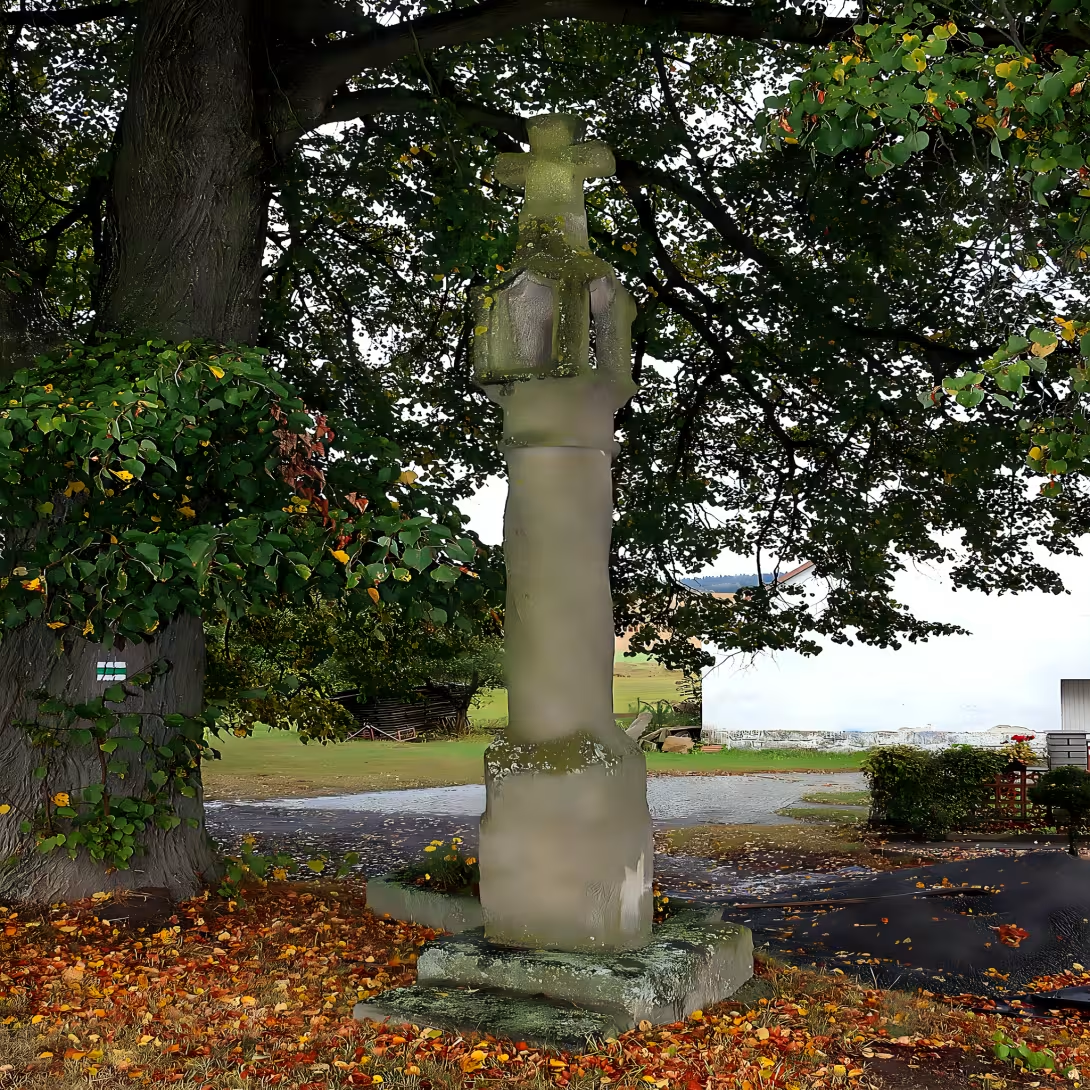
Boží muka severně od Častrova is a distinctive monument located in the village Častrov, district Pelhřimov, Kraj Vysočina. This monument is protected as a national cultural monument and comes from a late Gothic period around 1500. Its significance is not only historical but also architectural thanks to its unique shape and granite construction.
God's torment was built as a monument to tragic events or accidents, which is typical of such monuments. Its creation can be dated to a late Gothic period, namely around 1500, when it was built as a response to events requiring public slowdown and honours.
Architecturally, God's torture is exceptional in its design. It is made of granite, which was common for such monuments due to the resistance of this material. A characteristic element is a tormented blade that underlines the style of time and gives torture a unique aesthetic. Above it is a subtile lantern chapel with the so-called donkey spine, typical of Gothic architectural elements of the time. The chapel culminates in a hedgehog and a robust stone cross, which gives torture its religious function.
Although we do not have specific information about the owners or managers of God's torture, it is clear that such monuments were often linked to local communities and religious institutions. These institutions cared for their maintenance and maintained the memory of the tragic events that God's torment reminded of.
Today, God's torture north of Častrova is still well preserved and accessible to visitors. Its historical significance and architectural peculiarities make it interesting not only for historians but also for anyone interested in the rich history of the Czech Republic. Visiting this monument offers an opportunity to understand the importance of such monuments for local communities and their historical context.
God's torment is not only a monument to the past, but also a witness to the cultural heritage of the region. Her visit offers an insight into the life and traditions of people who once lived here, and recalls the importance of memory and worship in history. By exploring this monument, we can better understand not only the architectural aspects of the past, but also the social aspects of the past, which makes a visit to God's torture necessary for everyone interested in history.
Then and now
Drag the slider to compare how the landmark may have looked when it was built with the view today.
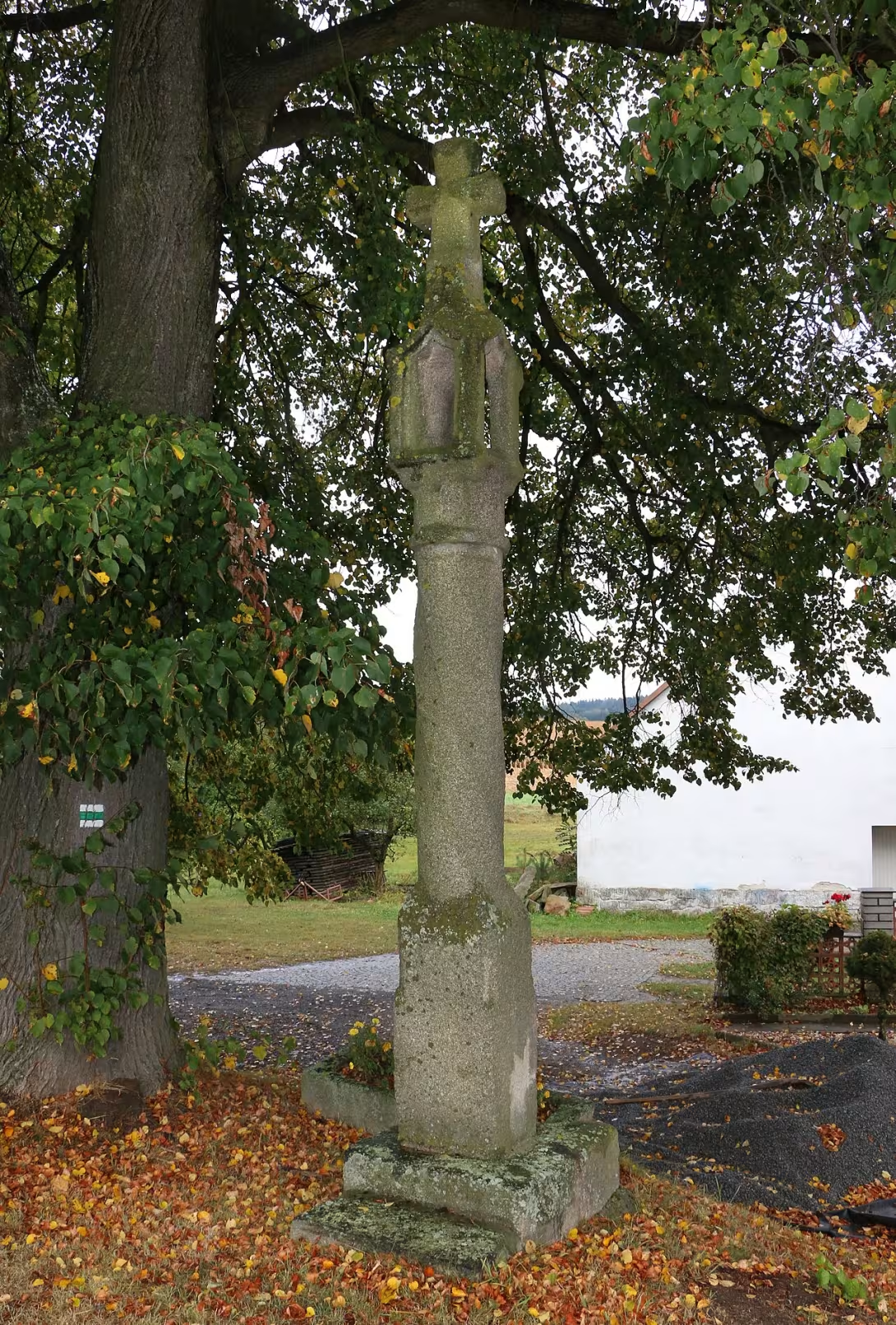
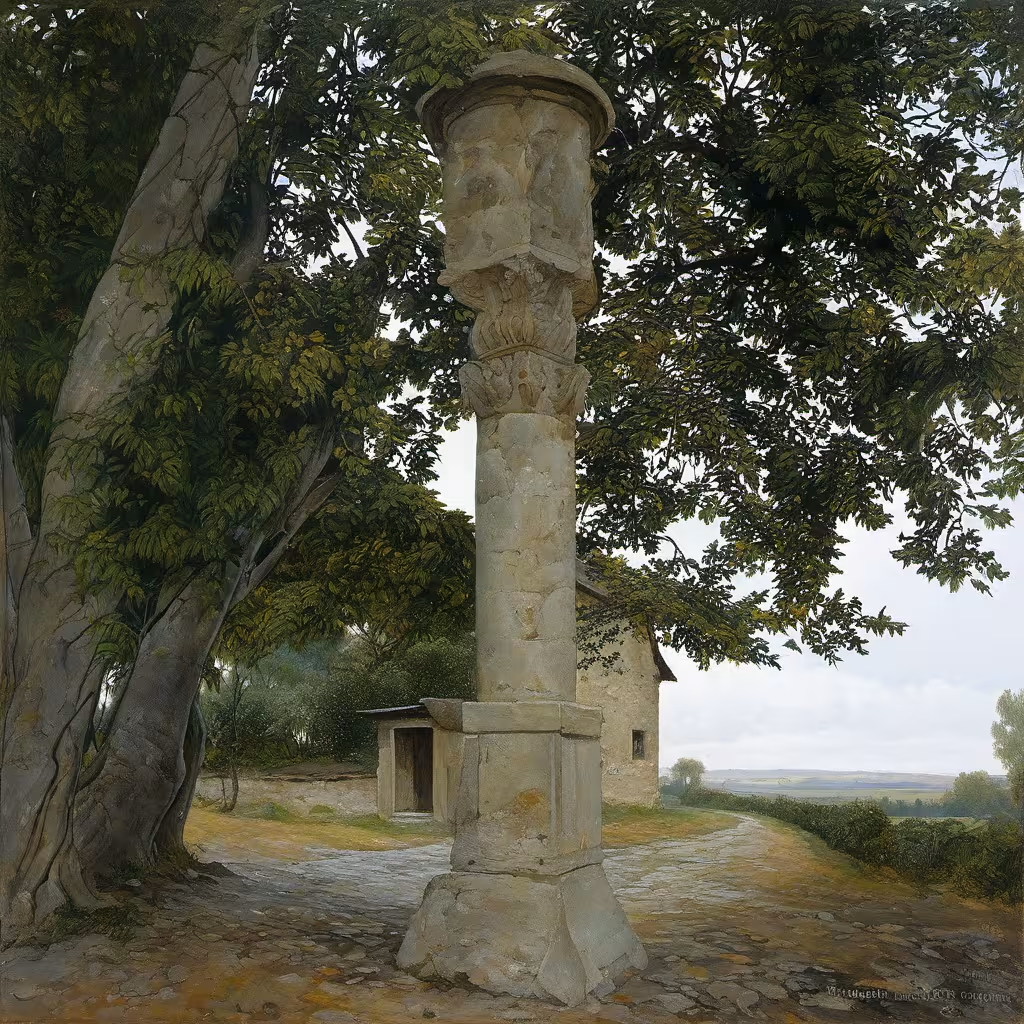
The historical appearance on the left is an AI-generated visualisation and serves as inspiration only.
Historical milestones
- 1500
- A late-gothic granite of God's torture with a tormented blade.
Points of interest
- Although God's torment north of Častrov is protected as a national cultural monument, its concrete origin and inspiration often remain unclear. Many of God's torments have been built without official records, which gives these monuments mystical expansion.
- During its history, God's torture north of Častrov has become a place for various community events. In the past there were traditional celebrations and public prayers that strengthened spiritual links between the inhabitants.
- One interesting thing is that God's torture was often used as a landmark for passengers. In the period before modern navigation systems, such a monument served not only spiritually but also practically.
- There's a legendary story about an ancient crystal being found under God's torment. This finding has become a local folklore and is still considered a sign of goodwill.
- Architecturally, God's torture is used by a tormented blade that is not just for Gothic. This element also appears in the construction of other European countries, suggesting possible cultural influences and trade relations at the time.
Guide
This guide is narrated by a synthetic voice generated by artificial intelligence.
Show guide text
This text was created by artificial intelligence and has not been editorially reviewed. It may contain inaccuracies.
Welcome to a unique and historically rich monument, which is Boží muka severně od Častrova. You are standing right in front of a remarkable testimony of the past, where architectural beauty and history intersect in one mild landscape Kraj Vysočina. This monument, protected as a national cultural monument, is a real treasure for anyone who likes history and architecture.
The torment of God you see before you today dates back to 1500. It's a late Gothic structure made of granite, which gives it a robust and durable look. Although the particular architects who proposed it are not known, its existence is indicative of the deep religious significance and effort of the people at the time. God's torments were a common part of the landscape at this time, often built as a reminder of tragic events or as places of prayer and comfort for travellers.
Look up at the torched shank, which is a characteristic of this monument object. This detail is not just aesthetically attractive; It also symbolizes the patience and anxiety of past generations. Notice how the granite statue of Jesus Christ in the center of torture watches the surroundings with constant calm. This statue is placed on the base plate, which is decorated with engravings and inscriptions, reminiscent of its original purpose as a place of prayer.
Although particular historical figures associated with this God's torment are not known, it is possible to imagine the lives of those who prayed here and told their stories. Everyone who passed here was often in a pilgrimage or on their way home after a long and difficult journey.
Now let's look at one of the attractions of this monument. Although we do not have specific legends, many such structures are surrounded by stories of mysterious events or the fate of their creators. Imagine how, in the silence of this country, living stories and prayers of people seeking comfort intermingled.
Let's move on to the conclusion of our short guide. This torment of God is more than a stone monument; It's a living story about the past, religious significance and human experience. When exploring the surrounding areas, you can find more historical gems waiting to be discovered.
Thank you for your attention and we hope you feel enriched here in Častrov. Be happy in your other adventures and remember to remember this God's torment as a place where history and presence harmonically exist together.
Tips for visitors
Best time to visit God's Torments North of Častrova is autumn when forest pallets are the most beautiful and the place offers quiet walks. Moreover, the temperature is not too high, which increases comfort during the visit.
The current connection is always good to verify in the search engine.
When you visit, wear a suitable suit because the climate can be variable. Additional things like shoes on dry soil and a drinking pocket are also useful for long walks.
For photography is the best place before God's torment, especially at dawn or in the evening when light is finer and shadow effects are stronger. This will help capture the atmosphere of this historic place.
In the vicinity of God's torture you can visit the village Častrov, where there are several picturesque gardens and parks suitable for families with children. These places offer a quiet environment for relaxing after walks.
Frequently asked questions
Can the monument be visited?
This is a structure in a public space that can usually be seen from outside free of charge. We have not verified that this particular one is freely accessible.
Where is the monument?
Location: Častrov, Kraj Vysočina. The map on this page shows the exact spot.
Why is the monument protected?
It is listed in the Central List of Cultural Monuments of the Czech Republic as a cultural monument (register no. 20246/3-2965).
For kids
Představ si, že se vrátíš zpět do doby, kdy tu žili lidé z vesnice Častrov. Bylo to v dobách husitských válek a země byla plná bojů a násilí. Ale i v těch těžkých časech zde stály Boží muka, krásné kamenné sloupy, které nesly kříž a symboly víry.
Jak vypadalo tohle místo? Tu bylo mnoho lidí, kteří se tu zastavovali na své pouti do nedalekého kostela. Byli to kuplíři s povozem, sedláci na koních nebo chudí pastýři s ovčami. Všichni ti lidé přicházeli z různých stran a měli různé příběhy.
Businesses nearby
Do you run a restaurant, accommodation, shop, museum, rental, wellness or other visitor service near this monument? Show yourself directly to the people heading to it — this is how they will see you in the app and on the web:
Nearby
ITEX Show interactive overview of the surroundings - restaurants, accommodation, rentals and other places within a 15 km radius.
Data: OpenStreetMap contributors, 15 km radius.
‡ Historical monuments
- Tomas Shield from Shield (7.2 km)
- sv. Václav (7.3 km)
- Vízslav Novák (7.3 km)
- Memorial to fallen private Hussite 1423-1923 (10.8 km)
- Place of birth of actor Rudolf Hrushin (10.9 km)
- hrz Nemojov (11.2 km)
- Master Jan Hus (11.4 km)
- Josef Krejči (11.4 km)
Restaurant and catering
- Budin - refreshments (6.9 km - Railway station 590)
- hostnec U Railway station (7.6 km - U Railway station 325)
- U Refrigerator (10.5 km)
- U Suchanka (10.8 km - Tyršova 218)
- Restaurant U zámze (10.9 km)
- Rubín (12.2 km - Janstejn 61)
- Manor Janštejn (12.3 km - Janštejn 152)
- Klep (13.7 km)
Accommodation
- Baron's grove Pe (2.5 km - 23)
- Hotel Artaban (6.2 km - Havlicka Square 740)
- Accommodation U Šimkou (8.4 km)
- Alone at forest (8.9 km)
- Hotel Jelen (10.8 km)
- Chadim Mill (11.1 km)
- Rustikal (11.3 km - Havlickova 120)
- Guesthouse Pod Javoricí (11.6 km - 170)
› Rental and sports
- SK Upper Cerekev (10.4 km)
- Centre (10.5 km - 434)
- Strelnice (10.5 km)
- Diving companies (11.1 km)
- Sport Vaccine (13.9 km)
- Velosport Valenta (14.1 km)
- broke (14.8 km)
© Tourism and nature
- Dresden (1.9 km)
- Barborka (grove) (2.2 km)
- Zajkov (9.8 km)
- Radňov (10.8 km)
- Váňova studenka (12.9 km)
- Na Horách (13.0 km)
- U Ivanin 2 (13.9 km)
- U Ivanin (14.2 km)
Accommodation nearby
Trips and activities nearby
Guided tours, tickets and activities nearby from GetYourGuide
Affiliate link: if you buy from the partner, we may receive a commission. The price for you does not change.
Search tours and activities →Themed route
Thematic cruise route around God's torture north of Častrova
1. Boží muka severně od Častrova (Divine Torture) Type: Historical monument Why is it worth a visit: This divine torture is a unique example of 18th century Baroque architecture that symbolizes faith and patience. It is an ideal starting point for exploring historical monuments of the village Častrov.
2. St. John Nepomuk Chapel Type: Religious construction Why is worth a visit: The chapel is a place of peace and shelter where you can appreciate the artistic value of baroque architecture. Its important location offers beautiful views of the surrounding landscape.
3. Church of St. Lawrence Type: Church Why is worth a visit: This church is the centre of spiritual life in Častrov and offers rich history and artistic elements. Its interior is full of details that attract visitors from the entire area.
4. Memorial of war fallen Type: Memorial Why is it worth visiting: This monument is a highly symbolic place that reminds the victims of war and commits to peace. It's a place for reflection and memory recognition.
5. Stop in the center of Častrova Type: Place with historical buildings Why is it worth a visit: The centre of the village offers a view of ancient houses and architectural interesting details. It is an ideal place for a short break where you can enjoy the outdoor environment and perhaps even purchase goods from local vendors.
This route will guide you through the historical and cultural sites of the village Častrov, offering a view of its rich past and present.
Seasonal recommendations
Spring: In spring the Boží muka severně od Častrova is decorated with flowering bushes and trees that bring live green shine to the landscape. Sun rays illuminating stone statues create a breathtaking atmosphere of peace and renewal. For a visit it is advisable to choose at the beginning or end of the day when temperatures are more pleasant and fewer people. Fine spring rains can improve flower colors, so you must not forget the protective clothing.
Summer: In the main summer season, God's torment is surrounded by full leaves of trees and diverse animals, creating a living natural paradise. The sunny days offer ideal conditions for celebration outdoors, but it can also be very hot and visitors often gather at quiet times in the morning or evening. Light clothes, sun protection and plenty of drinking are recommended.
Autumn: In the autumn period, God's torment takes on a special atmosphere thanks to the full leaves of trees, which turn into different shades. Sunny and cold days are ideal for walking between colored forests, while wet autumn days can be less pleasant due to falling temperature. A visit in the early morning or late afternoon is recommended for minimising contact with the crowd and taking beautiful colour changes.
Winter: During winter, God's torment is surrounded by a snow blanket, adding a calm and quiet atmosphere. The sunlight illuminates cold stone statues in a fascinating way, but low temperatures require warm clothes and protection from cold.
Visualizations and artistic views


The visualisations are generated by artificial intelligence and serve as inspiration.
Photos from the area
Real photos taken near the monument


Zdroj a licence jsou uvedeny u každého snímku.
Tips from visitors
No tips yet. Be the first!
Log in and add your tip.
Sources and literature
Photos: This file is available under Creative Commons BY-SA license. Basically: You can use this picture for any purpose, provid / CC BY-SA 4.0, rozlišení zvýšeno umělou inteligencí — Wikimedia Commons. The author and licence also appear when you hover over the image.
Location on the map


Příběhy a pověsti
Legendy, pověsti a příběhy spjaté s touto památkou

Fotografie návštěvníků
Zatím žádné fotografie. Buďte první, kdo přidá fotografii z návštěvy!
Log in a přidejte svou fotografii nebo hodnoťte.
Za ověřenou návštěvu v aplikaci získáte víc bodů — poznáme podle GPS, že jste na místě.
Reviews and comments