



Boží muka u domu 508 v Drnovicích Wayside shrine
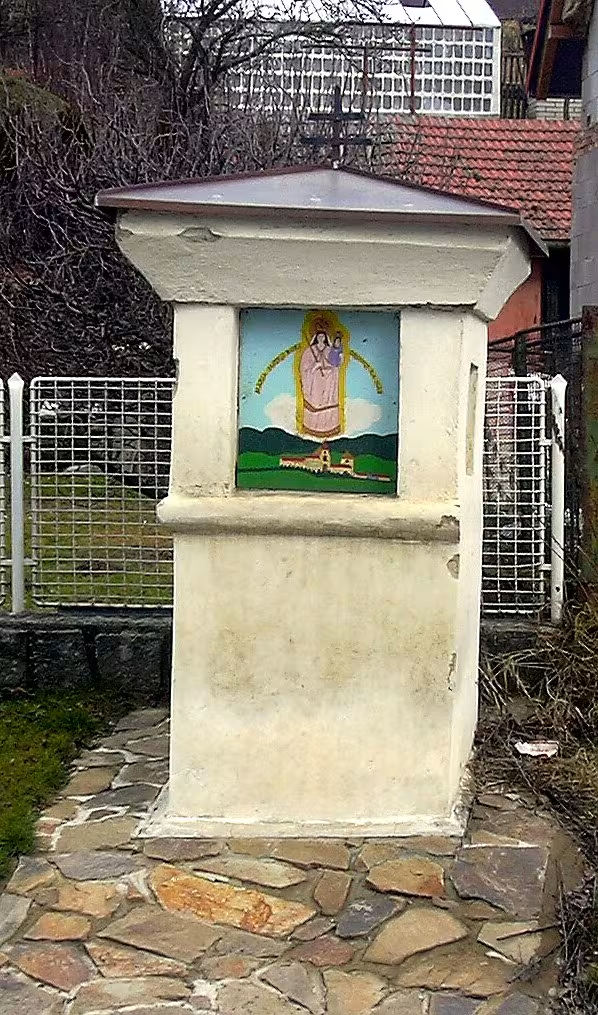
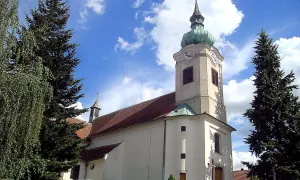
The torture of God in Drnovice is a valuable proof of the early modern small sacral architecture from the turn of the 18th and 19th centuries. It stands in the district of Vyškov in the South Moravian Region on the edge of the village, specifically on the road to Ježkovice.
We do not read about the origin of the monument in the historical sources available, but it is known to come from the turn of the 18th and 19th centuries. As an element of small sacral architecture, it effectively complements the landscape in which such works were common.
Due to the lack of documented information, it is not possible to specify specific building materials or detailed architectural elements. The object is classified as a small sacral work with historical value.
The register documents do not indicate the fate of the monument or its previous owners. However, it is confirmed that it is a protected cultural monument with registration number 29815 / 7-3620.
Today, God's torment is at the west end of the village Drnovice by the road to Ježkovic. As part of the protected cultural heritage, they remain at their original location at the edge of the village.
This object offers insight into the history of local sacral architecture and is a suitable destination for walking around Drnovice.
Historical milestones
- 18th Century
- The expansion of small sacral architecture in the South Moravian Region.
- Around 1800
- The creation of God's torment in Drnovice at the turn of the 18th and 19th centuries.
- 20th century
- Registration of the object in the register of cultural monuments.
Guide
Show guide text
This text was created by artificial intelligence and has not been editorially reviewed. It may contain inaccuracies.
Welcome to Drnovice, a picturesque village in the South Moravian Region, which hides many stories about the life of our ancestors in its streets and on its edges. You are standing just at the west end of the village, just off the road leading to the neighboring Ježkovice. In front of you stands a modest but very important monument that deserves your attention. It's God's torment at house 508. They may look like an ordinary part of the landscape at first glance, but believe me, behind this seemingly simple object lies deep meaning and long history. Look at it carefully. This building is not only a stone or wood object, but it is a valuable proof of early-modern small sacral architecture, which once formed an integral part of the spiritual life of the local inhabitants.
Let's move on to understanding why this monument is actually here. The torture of God, which you also know under the names of pilgrimage crosses or posts, was a very widespread phenomenon in Czech countries. Their creation dates back to a time when it was important to visually identify the places where religious ceremonies were held, or places that were meant to protect the community from disaster. This particular monument dates back to the turn of the eighteenth and nineteenth centuries. This is the period when small sacral buildings were intensively built and reconstructed in Czech villages. At the time, people felt the need to have their own close place to pray and worship, which would be easily accessible without having to travel to a further church. Location at the edge of the village, at the main exit, is not random. It served as a spiritual gate that the inhabitants went through when they went to the field or to the surrounding villages, and also as a protective element for the entire settlement.
Now pay attention to the architecture itself and to what you see before you. Even if it is a small structure, its form speaks of the skills and aesthetic feeling of the time. God's torment of this type usually forms a pillar, often decorated with reliefs or inscriptions, and above it stands a cross. Note the overall proportions and harmony with this object. Although we do not have detailed architectural plans or the names of the builders who created this monument, we can imagine what craftsmen and masters had to be involved in its creation. Small sacral architecture required precise work, whether it was stone cutting, wooden making of crosses, or painting work, if they were part of the original appearance. This monument is today registered as a protected cultural monument, which means that experts and the state recognise its value. This is proof that even small buildings can have huge cultural and historical significance.
If you look at this memory, try to imagine what it looked like at the time of its creation, the turn of the eighteenth and nineteenth centuries. Drnovice was then a smaller settlement, and the life of the people was closely linked to the seasons and religious holidays. God's torment served here as a point where people stopped to pray, light a candle, or just shut up for a moment and look far away. It was places of meeting, but also places of silence and contemplation. Although we do not know the particular historical figures who directly connected with this monument, we can be sure that for many generations Drnovians this place was an important landmark and a symbol of their faith and hope.
The interesting thing that can help you better understand the context is that God's torment has often been built as gratitude for the survival of a crisis, such as a plague epidemic, war or drought. It could also serve as a warning or a reminder of God's power. In this case, on the edge of the village by the road, it could also perform the function of protecting passengers. Imagine how travelers who passed Drnovice towards Ježkovice saw this cross and felt safer, aware that they were under the protection of higher forces. This monument is therefore not only an aesthetic object but also a bearer of the emotions and experiences of people who once lived and worked here.
Today, when you look at it, you can feel calm and connected to the past. Although times have changed and modern life has brought new technologies and customs, this monument remains a bridge between the present and the past. It's a place where time seems to slow down, where you can hear the wind in the trees and smell the smell of the earth. It's a place where you can stop for a while and think about what's really important in life.
I assume you've already looked at the memory from different angles. Try to move a step closer and notice the details you may have missed at first sight. Every stone, every line carries a trace of time and human work. This monument is proof of how important faith and spiritual life were to our ancestors. Even if we don't know the names of those who built it, their legacy is here.
Finally, I would like to offer you the opportunity to explore other parts of Drnovice after this short stop. The village offers many other places worth visiting. You can walk the streets where other historic buildings are located, or go to the nature surrounding the village. Drnovice is a place where history and nature are universally united. This God's torment at house 508 is just one of the many stories this village hides.
I hope this short walk and explanation has helped you better understand the importance of this monument. If you have time, stay here for a while and let the atmosphere of this place be on you. Sometimes the best way to understand history is just to sit on it and listen. Thank you for your attention and I wish you a pleasant stay in Drnovice. Let the journey back home bring you only good experiences and new knowledge. Let us say goodbye here, to this silent witness of the past, to remain in your memory as a place of peace and inspiration.
Tips for visitors
For the best visual experience we recommend a visit in late afternoon, when the sun best illuminates the details of early modern architecture. At this time the light is softer, which is ideal for photographing the historical object and capturing its texture.
Traffic to the monument is possible by car and public transport.
We recommend taking drinking water with us and comfortable shoes suitable for movement around the road. If you are planning detailed images, a stable background for your photographic device may be useful.
Families with children should be cautious in the search because God's torment is close to the road leading to Ježkovic. It is important to keep children under constant supervision for the safety of communication.
Within 30 minutes of the location, there are no other monuments in the background, so we recommend that you take the time alone to walk around this sacral object.
Frequently asked questions
Can the monument be visited?
This is a structure in a public space that can usually be seen from outside free of charge. We have not verified that this particular one is freely accessible.
Where is the monument?
Location: Drnovice, Jihomoravský kraj. The map on this page shows the exact spot.
Why is the monument protected?
It is listed in the Central List of Cultural Monuments of the Czech Republic as a cultural monument (register no. 29815/7-3620).
Businesses nearby
Do you run a restaurant, accommodation, shop, museum, rental, wellness or other visitor service near this monument? Show yourself directly to the people heading to it — this is how they will see you in the app and on the web:
Nearby
➜ Zobrazit interaktivní přehled okolí – restaurace, ubytování, půjčovny a další místa v okruhu 15 km.
Data: OpenStreetMap contributors, okruh 15 km.
🏰 Historické památky
- ROSS (0.4 km)
- Luleč (3.3 km)
- morový sloup (4.3 km)
- Vlasta Štrajtová (4.8 km)
- Památník konce II. světové války (5.3 km)
- zřícenina Hrádek (Stagnov) (6.6 km)
- zřícenina Kuchlov (7.2 km)
- památník padlým (7.3 km)
🍽️ Restaurace a stravování
- Pohostinství U Kumrů (0.8 km)
- Restaurace Sport (1.0 km – 1)
- Hospůdka u Kolóška (2.6 km – Račice-Pístovice 158)
- Hospůdka pod Kopcem (3.2 km)
- Hotel Selský Dvůr (4.2 km – Cukrovarská 480/7)
- Caribska Perla (4.5 km)
- U klauna (6.2 km)
- Rakovec (10.0 km)
🏨 Ubytování
- G Hotel (2.2 km)
- Allvet (2.7 km)
- DUKLA (3.6 km)
- Nemojanský Mlýn (3.7 km)
- penzion Sirius (3.8 km)
- Penzion a restaurace Chalupa U Městské brány (4.5 km)
- Hotel U krále (6.2 km)
- Penzion U Grmelů (7.8 km – Pustiměřské Prusy 108)
🚲 Půjčovny a sport
- Impakt Fitness (3.5 km – Sídliště Osvobození 670)
- KK Vyškov (3.9 km)
- Armed.cz (4.0 km)
- Fitness Club Zdena (4.1 km – Nádražní 5)
- Squash centrum (4.2 km)
- Fitness TRINITY (4.3 km)
- BIKEpro (4.6 km)
- Studio Havaj (5.0 km)
🥾 Turistika a příroda
- U Tří javorů (7.1 km)
- Parašutistická studánka (8.9 km)
- Kalečník (rozc.) (9.0 km)
- Tři studýnky (9.4 km)
- Vildenberská louka (10.6 km)
- Poustka (12.7 km)
- Proklest (12.8 km)
- Bukovina (rozc., bus) (12.8 km)
Accommodation nearby
Trips and activities nearby
Guided tours, tickets and activities nearby from GetYourGuide
Affiliate link: if you buy from the partner, we may receive a commission. The price for you does not change.
Search tours and activities →Themed route
Thematic cruise route from Drnovice
1. God's Torture at House 508 * Type: * Historical landmark It is worth visiting because of its historical and architectural value, which resembles the history of the village Drnovice. This divine torture is an important part of the region's cultural heritage.
2. St Anne's Chapel * Type: * Religious monument The chapel is close to God's torment and is an ideal place to visit due to its peaceful environment and historical significance. It provides a view of the traditional architecture of the region.
3. Memorial of the fallen in wars * Type: * Memorial This monument is an important place for remembering the victims of wars and reminiscing of historical events that shaped the region. It is suitable for stopping and reflecting.
4. Church of St. Gilji * Type: * Church building Visiting the church offers an opportunity to appreciate the rich history and architectural design that is typical of the region. It's a place of peace and spiritual thought.
5. Old school building * Type: * Historical construction site This building represents the educational tradition of the village Drnovice and is an interesting place to visit. It offers insight into past living conditions and education systems.
This route offers a view of the cultural and historical richness of the village Drnovice, each of the visited points has its unique value.
Seasonal recommendations
Spring: In the spring season, Boží muka u domu 508 v Drnovicích appears in its most beautiful form when flowering shrubs and trees revive the surroundings. Sun rays illuminate marble sculptures in the background of green nature, creating a wonderful contrast. Due to the spring solstice, it is recommended to visit the memory in the early afternoon to save heat. It is advisable to wear light clothes with the possibility to add layers for a cooler morning or evening. Visiting in spring is often calmer, so you can fully immerse yourself in the atmosphere without unnecessary crowd pressure.
Summer: During the summer months, God's torment in Drnovice offers a wonderful view in sunlight, when marble statues seem to flash. Summer is an ideal time for long walks under shady bushes and trees around the monument. Due to high temperatures, it is recommended to arrive at the beginning of the day or evening when there are fewer people and the temperature is more pleasant. Don't forget to bring sunglasses, UV protection and plenty of drinking water. Summer is a time when you can fully explore the surroundings and enjoy the natural environment.
Autumn: In the autumn period, God's torment in Drnovice takes on a unique atmosphere when tree leaves colour the surroundings in different shades of yellow and red. Sunlight joins marble statues in warm shiny light, creating views full of peace and beauty. Visitors should be prepared for colder weather and rain, so it is advisable to bring warm clothes and a protective coat. The best time to visit is usually in the prehistoric hours, when the weather is most calm and the atmosphere most attractive.
Winter: The winter moons offer God's torment in Drnovice in a completely different light, when marble statues are illuminated by cold rays of the sun or by a quiet light of glacier lamps. The snow blanket can add a romantic atmosphere and create views full of calm. Visitors should be well dressed, with a warm coat and protective skin on their feet, especially if there is a possibility of snow. Winter offers a calm and light atmosphere without large crowds, which allows you to fully experience the historic place.
Visualizations and artistic views


The visualisations are generated by artificial intelligence and serve as inspiration.
Photos from the area
Real photos taken near the monument


Zdroj a licence jsou uvedeny u každého snímku.
Tips from visitors
No tips yet. Be the first!
Log in and add your tip.
Sources and literature
Photos: cs:User:Pernak / CC BY-SA 3.0 — Wikimedia Commons. The author and licence also appear when you hover over the image.
Location on the map


Příběhy a pověsti
Legendy, pověsti a příběhy spjaté s touto památkou

Fotografie návštěvníků
Zatím žádné fotografie. Buďte první, kdo přidá fotografii z návštěvy!
Log in a přidejte svou fotografii nebo hodnoťte.
Za ověřenou návštěvu v aplikaci získáte víc bodů — poznáme podle GPS, že jste na místě.
Reviews and comments