



Bubenečská 35 Tenement house
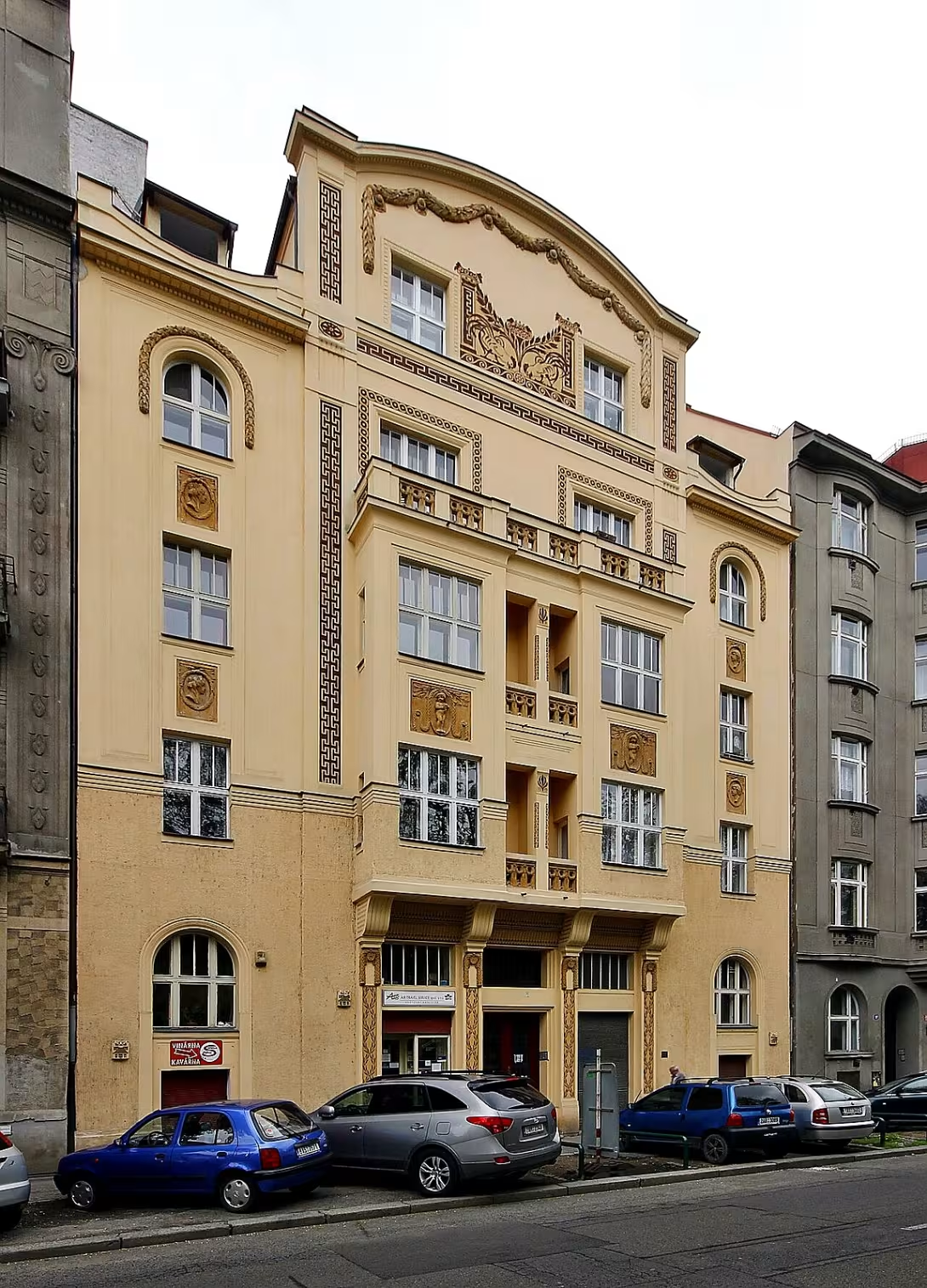
The rental house at Bubenečská 322 / 35 in the Prague part of Bubeneč is an ordinary building from 1910-1911. The building is a cultural monument and represents an example of Art Nouveau architecture from the beginning of the 20th century.
The building was created during the flowering of Prague construction. The author of the design was architect Ladislav Čapek, who built the house for the purpose of providing rental housing.
In terms of style, the object belongs to the Art Nouveau. It fits into the typical building of Prague 6. The specific details of the implementation or materials used are not specified in detail in the register records, the primary defining element remains the Art Nouveau character of the whole work.
The building is located in Bubeneči in Prague. Given the limited historical background, there are no specific changes in ownership or dramatic events that would be linked to the building over the years.
Today the house is protected as a cultural monument. This guarantees the preservation of its historical nature and architectural integrity. For visitors and interested in urban planning, it represents an authentic element of Prague development.
The building is a valuable witness to the development of housing in the period before the First World War. Her visit offers the opportunity to observe the specific work of Ladislav Čapka in the field.
Historical milestones
- 1910
- Start of construction of the rental house on Bubeneč 35.
- 1911
- Finishing the construction of a building in Art Nouveau style.
- around 1920
- The period when the house was probably used as rent housing.
- after 1945
- Possible changes in ownership or maintenance after World War II.
- around 1980
- A period where protection was probably introduced as a cultural monument.
Points of interest
- It's an ordinary rental house from 1910-1911. - The building represents an example of Art Nouveau architecture from the early 20th century. - The author of the design was architect Ladislav Čapek. - The object is registered and protected as a cultural monument. - The house is a testament to the development of housing before World War I.
Guide
Show guide text
This text was created by artificial intelligence and has not been editorially reviewed. It may contain inaccuracies.
Welcome to one of the most peaceful and beautiful parts of Prague. You're standing in front of a house with number five and thirty on Bubeneč Street. Stop for a moment, take a breath, and just observe the building that welcomes you. It is an ordinary rental house which naturally engages in the rhythm of the surrounding pit and contributes to the overall character of this neighborhood. If you look at it, you'll see a structure that doesn't need loud ornaments to impress, but it carries its value in the very essence of its existence. It is a place where the daily life of the people meets with the deep history of the city, which is why this object is written as a cultural monument.
Now let's think about how this house came into being and who was behind it. Although the exact dates of the construction are not clearly identified in the records, we know one fundamental thing about it. The author of this work was Ladislav Čapek. If you have ever studied Prague architecture, you probably know the name Čapka as a creator who has been able to balance perfectly the functionality with the aesthetic side. At a time when Bubeneč was developing in a prestigious neighborhood, it was important to create houses that would offer quality housing for tenants, but would also match the surrounding environment. Ladislav Čapek has approached this task with balance and precision, which is known today. This house was not built as a palace for one nobleman, but as a rental house, which means it was meant to serve many different people who were here looking for their home in the heart of the capital.
Now pay attention to the architecture itself. Look at the front of the building. Notice how the house ranks next to its neighbors, creating a continuous wall that defines the street space. It is in this order that one of the main features of this place lies. Try to follow the lines of the house, its proportions and the way in which windows and entrances are spread. Even if you don't find excessive decorating, feel the purity of the shapes and order that the architect brought into the space. It is an architecture that does not force the viewer to marvel at its size, but rather to acknowledge its balance. Take a look at the details that are visible from the level of the sidewalk, and consider how different this house is from the modern buildings you know from other parts of the city. There is a sense of peace and dignity that is so typical of Bubeneč.
If we stop at the question of who lived in these walls, we find ourselves in the fog area. The history of this house is not full of records of famous personalities or great political dramas that are known to the public. And that's where the magic lies. This house was not a scene for royal quarrels, but it witnessed thousands of small, human stories. Imagine those generations of people who came here with suitcases in their hands, who celebrated birthdays here, who argued in these rooms, laughed or quietly read books by the window. Every tenant who found shelter here left an invisible mark in these walls. It is a monument to everyday life, which in many ways is more valuable than a monument to power ambition.
You might wonder now if there's any bigger mystery hidden in this house. Although the documents remain silent about specific secrets, the very fact that the building is protected as a cultural monument is the answer in itself. The mystery here lies not in secret courses, but in how much a simple rental house can survive decades of changes, wars and social upheavals and yet retain its face. It's fascinating to think of how many times the locks in the doors have been changed in this house and how many different views of the world have been met here. Who was the first tenant who first opened the door to his new apartment at Ladislav Čapek's house? What did he want at the time and what was his idea of his future in Prague? These questions remain open and allow you to write your own story in spirit.
Feel now the atmosphere that rules this street. Bubeneč is a neighborhood where time has stopped or where at least it flows slower than in the city centre. This house is part of a larger complex which tells the story of the development of Prague as a modern metropolis of the beginning of the last century. When you look at the building, you see not only bricks and plaster, but you see the ambition of that time to create a city that is both elegant and practical.
Let's slowly close our short visit to this house. I hope you were able to enjoy this moment of stopping and to perceive beauty in simplicity and order. This row house in Bubeneči reminds us that history is not only about big battles and signed contracts, but also about quality housing and architecture that surrounds us every day.
Now I invite you to move on slowly. Explore the surrounding alleys, observe other houses and look for traces of similar architects. Praha is filled with such hidden jewels, who at first glance do not need to scream for their attention, but on closer examination they reveal their deep value. I wish you a pleasant continued walk through this beautiful neighborhood and enjoy every next step along the Prague pavement. That concludes our journey together at this house. Goodbye.
Tips for visitors
The best time to visit is in the morning or late afternoon when the sun hits the facade of the house at an angle that best excels the details of the series development. Since this is a residential building, we recommend that you maintain calm and discretion.
You can reach the place by car or public transport; Check the specific connection and stop options in the current path search engine.
You don't need any special equipment for an outside tour, you just need comfortable shoes to walk the city streets. We recommend to carry a map of the Bubeneč district.
Photograph from across the street to capture the entire height and rhythm of the facade. The best light for pictures of architecture is during the golden hour before sunset.
Families with children can use a visit to learn about what rental houses in Prague looked like in the past and what elements decorate historical buildings in this part of town.
Frequently asked questions
Can the monument be visited?
This is a residential or farm building, not a museum with opening hours. Please view it from public space and respect the owners' privacy. We have no information about access to the interior.
Where is the monument?
Location: Bubenečská 322/35, Bubeneč, Praha, Hlavní město Praha. The map on this page shows the exact spot.
Why is the monument protected?
It is listed in the Central List of Cultural Monuments of the Czech Republic as a cultural monument (register no. 10055/1-2222).
Businesses nearby
Do you run a restaurant, accommodation, shop, museum, rental, wellness or other visitor service near this monument? Show yourself directly to the people heading to it — this is how they will see you in the app and on the web:
Events nearby

Zdroj akcí: otevřená data měst a obcí ČR (Národní katalog otevřených dat) a kalendář akcí Národního památkového ústavu.
Nearby
➜ Zobrazit interaktivní přehled okolí – restaurace, ubytování, půjčovny a další místa v okruhu 15 km.
Data: OpenStreetMap contributors, okruh 15 km.
🏰 Historické památky
- Kolovratský palác ve Valdštejnské (1.2 km – Valdštejnská 150/4)
- Dům U Kohouta (1.8 km)
- Jaroslav Vrchlický (1.9 km)
- Clam-Gallasův palác v Praze (2.0 km – Husova 156/21)
- Památník trolejbusové dopravy na Hanspaulce (2.1 km)
- Hlávkova kolej (3.1 km – Gorazdova 1994/9)
- Vojenský historický ústav Praha (3.3 km – U Památníku 1600/2)
- Gorlice (4.2 km)
🍽️ Restaurace a stravování
- McDonald's (2.7 km – Vodičkova 736/15)
- Restaurant River's smokelab (3.2 km – Lidická 2)
- Pizzerie U Tučňáka (3.2 km – náměstí 14. října 1)
- Legenda (3.6 km)
- Pizzerie Giovanni (5.6 km – Střelničná)
- Yi Xiang Ge (5.8 km)
- Švejk restaurant U Brázdů (6.0 km – U Svobodárny 18)
- Pizzeria Cerreto (6.1 km)
🏨 Ubytování
- Old Town Jewel Apartments (1.7 km – Elišky Krásnohorské 10/2)
- The Mozart Prague (2.0 km – Karoliny Světlé 208/34)
- Old Prague Hotel (2.2 km – Skořepka 421/5)
- Hotel AXA (2.6 km – Na Poříčí 40)
- Plaza Prague Hotel (3.3 km)
- Plus Prague (3.5 km)
- EA Hotel Tosca (3.9 km – Blanická 718/10)
- Theatrino (4.0 km – Bořivojova 1216/53)
🚲 Půjčovny a sport
- U Tyrše (0.4 km – Jaselská 464/38)
- Florbal expert (0.5 km)
- JUN (1.7 km – Haškova 629/7)
- Velox Sport (2.1 km)
- Cykloservis Richard Eger (2.2 km)
- Bike Gallery (2.8 km – Kladenská 19)
- Kieser Training (2.8 km)
- Centrum volného času Botič (3.8 km)
🥾 Turistika a příroda
- Masarykova vyhlídka (1.3 km)
- Pražský hrad (1.3 km)
- Informační a rezervační centrum (1.6 km – Maiselova 38/15)
- Petřínka (2.0 km)
- Gabrielka (3.9 km)
- Vyšehrad (4.2 km)
- Ládví (5.8 km)
- Vyhlídka Emy Destinnové (5.8 km)
Accommodation nearby
Trips and activities nearby
Guided tours, tickets and activities nearby from GetYourGuide
Affiliate link: if you buy from the partner, we may receive a commission. The price for you does not change.
Search tours and activities →Themed route
Bubenečská 35 (building): A tour of the building itself and its architecture. The location serves as the main destination.
Area of the building (outdoor area): Walk around the house and explore its immediate surroundings. It offers the possibility to perceive the construction from different angles.
Seasonal recommendations
In spring, the surroundings are awakened to life and the young greenery in the streets of Bubeneče accompanies fine morning light. It is an ideal time for walks when the air smells fresh and the facade of the building makes it fresh. I recommend a light spring jacket and shoes suitable for walking, the best time to observe the details from the outside is in the morning.
In the summer months it dominates the areas of intense sun and hot air, which creates contrast with the cool shadow near the buildings. The atmosphere is relaxed and bright light highlights the colors of the house. It is practical to visit a place in the early morning to avoid the greatest heat, and not forget the hat for head protection.
Autumn brings golden shades of leaves to the quarter and melancholy mood accompanied by more frequent fog. The lighting is softer and more saturated, which gives the monument a nostalgic look. Due to the variable weather, it is advisable to choose layered clothes and waterproof shoes, with the most atmosphere felt during the afternoon hours.
Zimą operates a building in quiet and quiet, often surrounded by freezing air or snow, which will dampen urban noise. In advent time, the surrounding area is heated by the lights of the surrounding houses, which creates a cozy feeling. Hot winter clothes, gloves and hats are essential, while a short visit in daylight allows the best view of architecture.
Visualizations and artistic views


The visualisations are generated by artificial intelligence and serve as inspiration.
Photos from the area
Real photos taken near the monument

Zdroj a licence jsou uvedeny u každého snímku.
Tips from visitors
No tips yet. Be the first!
Log in and add your tip.
Sources and literature
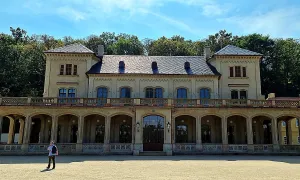
Photos: Gampe / CC BY-SA 3.0 — Wikimedia Commons. The author and licence also appear when you hover over the image.
Location on the map


Příběhy a pověsti
Legendy, pověsti a příběhy spjaté s touto památkou
Fotografie návštěvníků
Zatím žádné fotografie. Buďte první, kdo přidá fotografii z návštěvy!
Log in a přidejte svou fotografii nebo hodnoťte.
Za ověřenou návštěvu v aplikaci získáte víc bodů — poznáme podle GPS, že jste na místě.
Reviews and comments