






Planetárium Praha Other
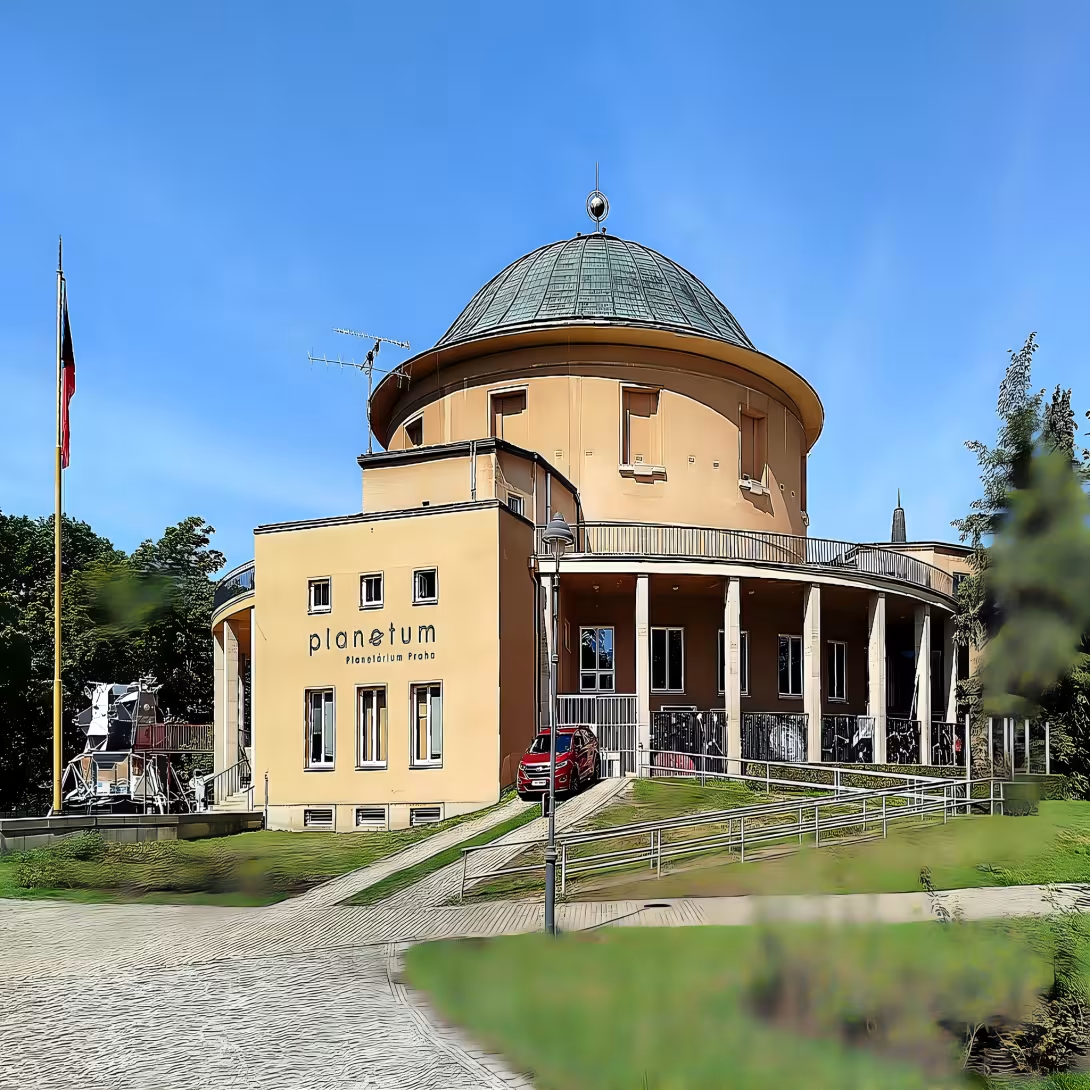
The Prague Planetarium, located in Bubeneč within the vibrant city of Prague, stands as a testament to historical significance and modern technological advancement. Opened on November 20, 1960, this planetarium is renowned for its large dome, measuring 23.5 meters in diameter, making it one of the largest globally. Its importance lies not only in its architectural grandeur but also in its role as a leading educational institution dedicated to astronomy and natural sciences.
The origin of Planetárium Praha can be traced back to the late 1950s when Czechoslovakia was under communist rule, with an emphasis on scientific advancement as part of its national agenda. The inspiration for building such a facility came from a Zeiss projector exhibition in Leipzig in 1954. Designed by architect Jaroslav Fragner, the planetarium opened its doors to the public in 1960, reflecting the era's focus on promoting science and technology education during a period marked by political and social transformation.
Architecturally, Planetárium Praha features elements of monumental style, including a portico entrance. The original construction began in 1958 and was completed two years later. Although plans for a mosaic decoration were made, they were ultimately not executed due to their anachronistic appearance at the time. In recent years, from 2023 to 2025, the planetarium underwent significant renovations, incorporating advanced LED projection technology that has positioned it as one of the most technologically advanced facilities in Europe.
The management and operation of Planetárium Praha fall under the non-profit organization Planetum – Hvězdárna a planetárium hl. m. Prahy, established by the city of Prague. This ensures its continued focus on educational and cultural enrichment. Over the years, the planetarium has seen significant technological upgrades, including the installation of an optomechanical Cosmorama projector in 1991, made by Carl Zeiss AG. Notably, this device is one of the last still functioning of its kind, now mounted on moving arms to avoid obstructing modern digital projections.
In terms of technology, Planetárium Praha boasts a state-of-the-art digital projection system known as SkySkan Definiti, installed in 2009 and updated in 2014. This system features six Sony SRX T-615 projectors capable of creating an 8K picture, making it the highest resolution in Europe. The planetarium offers numerous prepared shows daily, except on Fridays, providing visitors with a rich educational experience.
Located in Královské oboře (Stromovce) within Prague 7, the planetarium is surrounded by lush green spaces, including a botanical garden. Nearby cultural sites such as Štefánikova hvězdárna on Petřín and Hvězdárna Ďáblice add to its appeal. The site itself has historical roots, having once been a farmstead converted into a restaurant by Josef Bukovský in 1890.
Today, Planetárium Praha stands as a beacon of scientific education and cultural enrichment. Its combination of historical significance and cutting-edge technology makes it an essential visit for anyone interested in astronomy or the natural sciences. The planetarium's commitment to education and its stunning technological displays ensure that it remains a valuable resource for both locals and tourists alike. Visitors are invited to explore this remarkable institution, where history and modernity converge under one of Europe's largest domes.
Then and now
Drag the slider to compare how the landmark may have looked when it was built with the view today.
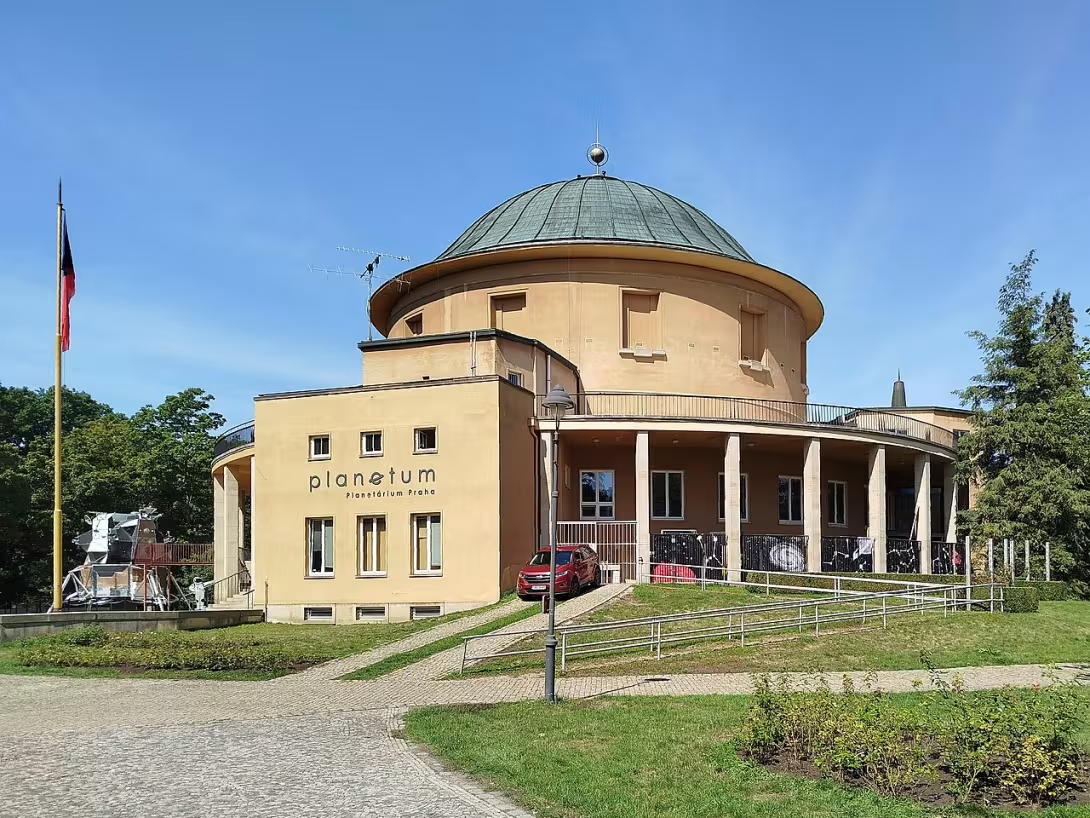
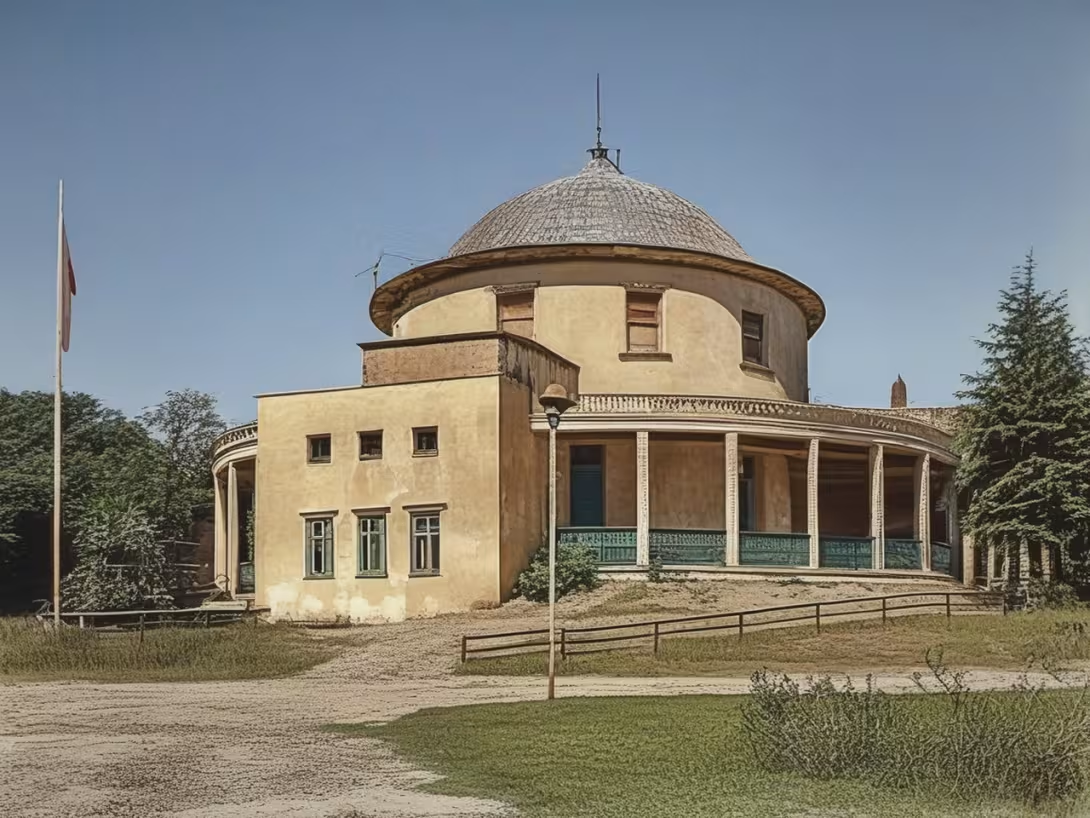
The historical appearance on the left is an AI-generated visualisation and serves as inspiration only.
Historical milestones
- 1890
- Josef Bukovský přeměnil farmu na restauraci.
- 1954
- Vystava Zeissova projektoru v Lipsku inspirovala stavbu planetária.
- 1958
- Začala stavba Planetárium Praha.
- 1960
- Otevření Planetárium Praha 20. listopadu.
- 1991
- Instalace optomechanického projektoru Cosmorama od Carl Zeiss AG.
- 2009
- Instalace digitálního systému SkySkan Definiti.
Architectural development
The original construction of Planetárium Praha began in 1958 and was completed in 1960. The building features elements of monumental style, including a portico entrance. A planned mosaic decoration was not executed due to its anachronistic appearance at the time. The recent renovation from 2023-2025 included significant technological upgrades such as a new LED projection dome.
Historical events
Opened to the public on November 20, 1960, after being designed by Jaroslav Fragner.
Underwent major renovation from 2023-2025, incorporating advanced LED projection technology.
Owners
The Planetárium Praha is managed by the non-profit organization Planetum – Hvězdárna a planetárium hl. m. Prahy, established and operated by the city of Prague.
Points of interest
- The inspiration for the construction of Planetárium Praha came from a Zeiss projector exhibition in Leipzig in 1954, highlighting international influence on its creation.
- Although plans were made to include mosaic decorations on the planetarium's exterior, they were ultimately not executed because they seemed anachronistic at the time.
- The optomechanical Cosmorama projector installed in 1991 is one of the last functioning devices of its kind and has been mounted on moving arms to accommodate modern digital projections.
- The SkySkan Definiti system, with its six Sony SRX T-615 projectors, allows Planetárium Praha to create an 8K picture, making it Europe's highest resolution planetarium projection system.
- Originally a farmstead, the site where Planetárium Praha is located was converted into a restaurant by Josef Bukovský in 1890 before becoming the renowned educational facility.
Guide
This guide is narrated by a synthetic voice generated by artificial intelligence.
Show guide text
This text was created by artificial intelligence and has not been editorially reviewed. It may contain inaccuracies.
Planetárium Praha serves to promote astronomy, natural sciences and technology. You can find it in Královská obora, which Prague residents know as Stromovka. It is managed by the organization Planetum, the Observatory and Planetarium of the Capital City of Prague, which also includes Štefánikova hvězdárna on Petřín and Hvězdárna Ďáblice.
On the site of today's planetarium once stood a farmyard. Its tenant Josef Bukovský transformed it into a restaurant in eighteen ninety. The impulse to build the planetarium came in nineteen fifty-four at a trade fair in Leipzig. The Carl Zeiss company from Jena presented there the Great Zeiss projection planetarium. Prague's mayor Václav Vacek and his Bratislava colleague signed a contract directly at the exhibition for two devices for ten million Czechoslovak crowns, even though buildings for them did not yet exist.
Prague began construction in nineteen fifty-eight according to the design of architect Jaroslav Fragner. The building bears elements of the monumental style called sorela, such as cornices and an entrance portico. The planned mosaic was ultimately not executed because it seemed outdated already during construction. The planetarium opened to the public on November twentieth, nineteen sixty. Bratislava did not begin building its structure. Its device remained in crates in storage on Žitný ostrov, where it was covered in mud by floods twice. In nineteen seventy-nine its remains appeared at an exhibition in the Prague planetarium.
The first director was the astronomer and cartographer Antonín Rükl until nineteen ninety-nine. At that time the building contained a forty-kilogram Foucault pendulum and a tellurium, in front of it a flower bed with a sundial. The original Zeiss device served until nineteen ninety-one, when it was replaced by a Cosmorama. Since two thousand and nine, the hall also had digital projection.
The building underwent the greatest transformation during two thousand twenty-three to two thousand twenty-five. The reconstruction cost approximately three hundred million crowns. The original projection surface was replaced by a dome twenty-two meters in diameter composed of more than forty-five million small light-emitting diodes. This was the first device of its kind in Europe and was supplied by the American company Cosm. The image is not projected onto the dome but radiates directly from its surface. Thanks to this, it is brighter, more contrasted and has no visible joints. Besides ready-made programs, it allows live astronomical simulations. Additionally, the heat from the dome is used to heat the building.
The hall can now accommodate two hundred eighty spectators instead of the previous two hundred thirty. Besides astronomical programs, concerts, lectures and film premieres are held there. The planetarium reopened to the public on June fourteenth, two thousand twenty-five.
Tips for visitors
The best time to visit Planetarium Praha is during the spring or autumn months when the weather is pleasant, making it ideal for exploring the surrounding green spaces of Královské oboře (Stromovce). These seasons offer comfortable temperatures and fewer crowds, allowing you to fully enjoy both the planetarium's exhibits and the nearby natural beauty. Additionally, visiting during these times often coincides with special events or exhibitions that enhance the educational experience.
Getting to Planetarium Praha is convenient via public transportation or by car. Public transport might offer a more stress-free arrival, especially during peak visiting hours.
When planning your visit, consider bringing comfortable walking shoes as you'll likely explore the surrounding green spaces of Královské oboře (Stromovce). Additionally, since Planetarium Praha focuses on astronomy and natural sciences, wearing layers is recommended due to varying indoor temperatures. Don't forget a camera or smartphone for capturing memories, especially if you're interested in photography.
For photography enthusiasts, the planetarium itself offers unique opportunities for night sky photography during special events, while the lush surroundings of Královské oboře (Stromovce) provide beautiful natural backdrops. Early morning or late afternoon light can create stunning effects on the landscape and architecture around the area. Always check if there are any restrictions on photography within the planetarium.
Nearby, within a 30-minute walk or short drive, is Štefánikova hvězdárna on Petřín, offering panoramic views of Prague along with its own astronomical exhibits. For those interested in exploring more cultural sites, Hvězdárna Ďáblice presents another opportunity to delve into astronomy and enjoy the scenic surroundings. These locations are perfect for extending your visit and experiencing a broader range of what Prague's 7th district has to offer.
Families with children will find Planetarium Praha particularly engaging, thanks to its interactive exhibits designed to spark curiosity about space and science. The planetarium often hosts family-friendly events and workshops that make learning fun for all ages. Don't forget to check the schedule in advance for any special programs tailored to younger audiences.
Frequently asked questions
Can the monument be visited?
We have not verified whether this monument is accessible. Please ask the owner or operator, or the local municipal office. According to the heritage register restoration is under way, so access may be restricted.
Where is the monument?
Location: Bubeneč, Hlavní město Praha. The map on this page shows the exact spot.
Why is the monument protected?
It is listed in the Central List of Cultural Monuments of the Czech Republic as a cultural monument (register no. 1000152672_0013). It is protected as part of a larger listed ensemble.
Businesses nearby
Do you run a restaurant, accommodation, shop, museum, rental, wellness or other visitor service near this monument? Show yourself directly to the people heading to it — this is how they will see you in the app and on the web:
Events nearby

Zdroj akcí: otevřená data měst a obcí ČR (Národní katalog otevřených dat) a kalendář akcí Národního památkového ústavu.
Nearby
Located in Královské oboře (Stromovce), Planetárium Praha is surrounded by green spaces, including a botanical garden. Nearby cultural sites include Štefánikova hvězdárna on Petřín and Hvězdárna Ďáblice.
Accommodation nearby
Trips and activities nearby
Guided tours, tickets and activities nearby from GetYourGuide
Affiliate link: if you buy from the partner, we may receive a commission. The price for you does not change.
Search tours and activities →Themed route
Tematická výletní trasa: "Hvězdy a zelená Praha"
1. Planetárium Praha
- Typ: Planetárium
- Proč stojí za návštěvu: Začněte svou cestu do hvězd v jednom z nejmodernějších planetárií Evropy, které nabízí fascinující prezentace astronomie a kosmologie. Své umístění v Královských oboře (Stromovce) má Planetárium Praha příjemnou zelenou okolnost, což je ideální místo pro relaxaci po návštěvě.
2. Botanická zahrada
- Typ: Botanická zahrada
- Proč stojí za návštěvu: Přibližně 5 minut chůze od Planetária Prahy se nachází krásná botanická zahrada, která nabízí rozmanitou flóru a příležitost prozkoumat různé ekosystémy. Je to ideální místo k uvolnění a prohlídce přírody v klidu.
3. Štefánikova hvězdárna na Petříně
- Typ: Hvězdárna
- Proč stojí za návštěvu: Tato historická hvězdárna je jednou z nejstarších v Evropě a nabízí pohled na nebesa z Petřínské rozhledny. Je to skvělý příležitost pro astronomicky nadšené návštěvníky, aby si užili hvězdové dny a speciální akce.
4. Hvězdárna Ďáblice
- Typ: Hvězdárna
- Proč stojí za návštěvu: Kolem 30 minut jízdy od Prahy se nachází Hvězdárna Ďáblice, která nabízí jedinečný pohled na nebesa díky své vysoké polohy. Je to ideální místo pro návštěvníky hledající klid a možnost pozorovat hvězdy bez rušivých městských osvětlení.
Tato trasa nabízí kombinaci astronomického vzdělávání s přírodním zážitkem, což ji činí ideální pro rodiny i jednotlivce nadšené hvězdami a zelenou Prahou.
Seasonal recommendations
Spring: As the planetarium in Bubeneč emerges from its winter slumber, spring brings a vibrant transformation to the surrounding landscape. The blooming cherry blossoms and fresh greenery create an enchanting atmosphere that enhances the experience of exploring historical sites nearby. Visitors can enjoy pleasant temperatures and longer daylight hours, making it ideal for leisurely exploration. During this time, the planetarium may still be experiencing fluctuating visitor numbers as people venture outdoors to appreciate the seasonal beauty. It’s advisable to wear comfortable layers to accommodate varying weather conditions throughout the day.
Summer: The summer months in Bubeneč are marked by long days and warm temperatures, creating an inviting setting for exploring historical sites like the planetarium during its re-construction phase. This is a popular time for visitors due to school holidays, which can result in larger crowds at tourist attractions. To make the most of your visit, it’s recommended to arrive early in the morning or later in the afternoon when temperatures are more bearable and visitor numbers may be lower. Light, breathable clothing is essential, along with sunscreen and a hat for sun protection.
Autumn: Autumn in Bubeneč offers a picturesque setting with its rich tapestry of changing leaves and crisp air. This season provides a unique charm as the natural landscape transitions into warm hues of red, orange, and gold. The planetarium's re-construction may attract curious visitors who are drawn to the blend of historical exploration and seasonal beauty. As temperatures cool down, it’s wise to wear layers that can be adjusted throughout your visit. This time of year tends to have moderate visitor traffic, allowing for a more relaxed experience compared to the peak summer months.
Winter: Winter in Bubeneč transforms the area into a serene landscape blanketed with snow, offering a magical backdrop for visiting historical sites like the planetarium during its re-construction phase. The shorter days and colder temperatures create an intimate atmosphere that can be particularly enchanting under the soft glow of streetlights reflecting off the snow. Visitors should dress warmly in layers to stay comfortable while exploring outdoors. Despite potentially lower visitor numbers, planning ahead is crucial to ensure a smooth visit.
Visualizations and artistic views


The visualisations are generated by artificial intelligence and serve as inspiration.
Photos from the area
Real photos taken near the monument

Zdroj a licence jsou uvedeny u každého snímku.
Tips from visitors
No tips yet. Be the first!
Log in and add your tip.
Sources and literature
Photos: Martin Hlauka (Pescan) / CC BY 4.0, rozlišení zvýšeno umělou inteligencí — Wikimedia Commons. The author and licence also appear when you hover over the image.
Faktickým podkladem tohoto textu byl článek na Wikipedii, jehož autory jsou přispěvatelé Wikipedie. Článek je dostupný pod licencí CC BY-SA 4.0.
Location on the map


Příběhy a pověsti
Legendy, pověsti a příběhy spjaté s touto památkou
Fotografie návštěvníků
Zatím žádné fotografie. Buďte první, kdo přidá fotografii z návštěvy!
Log in a přidejte svou fotografii nebo hodnoťte.
Za ověřenou návštěvu v aplikaci získáte víc bodů — poznáme podle GPS, že jste na místě.
Reviews and comments