






budova České správy sociálního zabezpečení Building
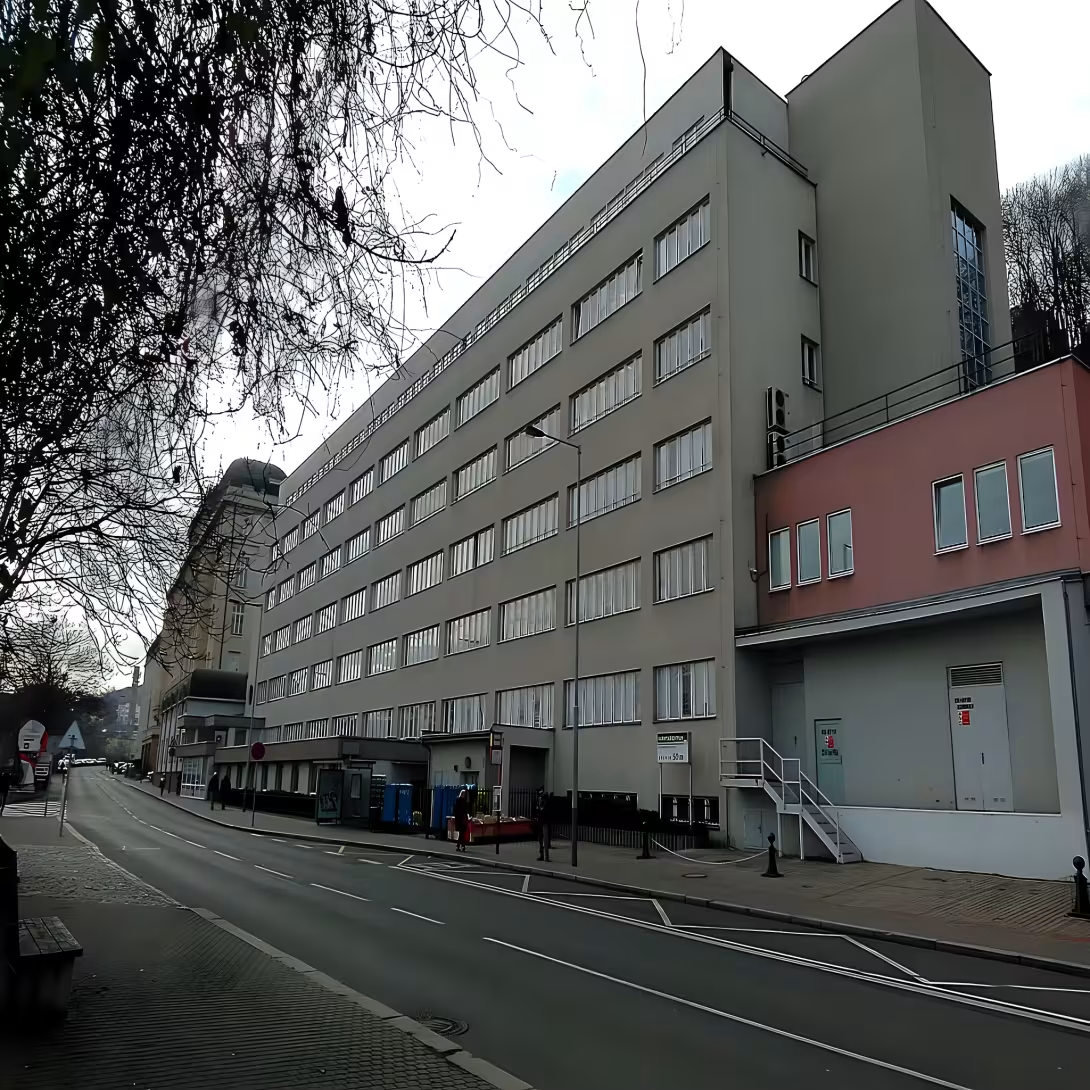
The České správy sociálního zabezpečení building, located on Křížová street in the Smíchov district of Prague 5, is a functionalist administrative structure built between 1935 and 1936. It is primarily notable for its unique mechanical card index facility, which has been protected as a cultural monument of the Czech Republic since February 11, 2004.
Architects F. A. Libra and Jiří Kana designed the structure to serve as the evidence center for the Ústřední sociální pojišťovna. Its construction took place during the First Czechoslovak Republic, a period characterized by rapid modernization and the rise of functionalism. Ferdinand Ludwig designed the mechanical card index system, while Vítkovické železárny manufactured the load-bearing structure. The system's cranes were supplied by ing. Podhajského strojírna from Hostivaře.
The building features a rectangular floor plan with five floors and a recessed sixth floor. Its smooth facade is divided by horizontal bands of windows. A rectangular staircase is attached to the shorter northern side, and the sixth-floor terrace is finished with a railing. While the upper floors are used for offices, the first two floors are occupied by the mechanical card index.
The card index system comprises two symmetrical parts, each 50 meters long and 8 meters high, containing nine blocks. A narrow corridor runs between the rear of these two sections. Across the eighteen total blocks, 9,000 drawers—each 3 meters long—are operated by a pedal mechanism. Each block is serviced by a traveling crane-loader. A wide corridor with crane tracks on both the floor and ceiling runs alongside these loaders. The cranes feature mobile platforms, allowing operators to move in all directions along the walls to manipulate the drawers. Metal thresholds on the guide rails ensure precise horizontal and vertical positioning of the platforms.
The 1936 mechanical system remained in use until 2002 and continues to serve as an archive today. The facility also served as a filming location for the 1941 film Rukavička, directed by J. A. Holman.
Currently owned by the České správy sociálního zabezpečení, the building remains a significant site of technical and architectural history. The preservation of the 1936 mechanical system offers a rare look at early 20th-century data management, making it a site of interest for those studying functionalist architecture and industrial history.
Historical milestones
- 1936
- Completion of the building and the installation of the mechanical card index system.
- 2002
- The mechanical card index system ceased its primary operational use.
- 2004
- The unique card index facility was designated as a cultural monument of the Czech Republic.
Architectural development
The structure has a rectangular floor plan with five floors and a sixth receding floor. It features a smooth facade divided by horizontal bands of windows and a rectangular staircase on the northern side. The interior is dominated by a massive mechanical card index system consisting of 18 blocks and 9,000 drawers.
Historical events
1935-1936: Construction of the building and its mechanical card index. 2004: The card index facility was officially declared a cultural monument of the Czech Republic.
Owners
Česká správa sociálního zabezpečení
Points of interest
– The building is notable for its unique mechanical card index facility, which has been protected as a cultural monument since February 11, 2004. – Architects F. A. Libra and Jiří Kana designed the structure to serve as the evidence center for the Ústřední sociální pojišťovna. – The card index system consists of 9,000 drawers that are operated by a pedal mechanism. – The facility served as a filming location for the 1941 film Rukavička, directed by J. A. Holman. – The 1936 mechanical system remained in use until 2002 and continues to serve as an archive today.
Guide
Show guide text
This text was created by artificial intelligence and has not been editorially reviewed. It may contain inaccuracies.
Welcome to Smíchov. As you stand here before this imposing structure, take a moment to simply breathe in the atmosphere of this historic district. You are looking at a building that is far more than just an administrative office; it is a testament to a specific moment in time when technology, social organization, and modern design converged. As you observe the facade, try to sense the weight of the history held within these walls, a history of order, precision, and the massive human effort required to manage a modernizing society.
To understand what you are seeing, we must travel back to the mid-1930s. The year was 1935, and the world was changing rapidly. In Prague, there was a growing need for sophisticated systems to manage the social welfare of the people. This building was conceived to serve as the vital evidence center for the Ústřední sociální pojišťovna. It was designed to be the brain of a massive social security network, a place where data was not just stored, but meticulously organized and managed. When the construction was completed in 1936, this site became a cornerstone of administrative efficiency in the region.
Now, let your eyes wander over the architectural lines of the building. You are witnessing a significant and pure example of functionalist administrative architecture. This was a movement that believed form should follow function, stripping away unnecessary ornamentation to focus on clarity, purpose, and logic. The architects behind this vision, F. A. Libra and Jiří Kana, were masters of this approach. As you look at the structure, notice how the design reflects its intended purpose. There is a sense of rhythm and order here, a geometric discipline that mirrors the very task the building was created to perform: the systematic organization of information. The architects did not want to distract with grand, empty gestures; instead, they created a space that felt efficient, modern, and reliable.
As you stand here, it is helpful to imagine the life that once pulsed through these halls. In the 1930s, this was a place of intense activity. Imagine the sound of footsteps on the floors, the rustle of papers, and the focused energy of officials working to maintain the social fabric of the nation. This era was shaped by figures like Ferdinand Ludwig, whose presence is woven into the historical context of this period of institutional growth. The building was not just a shell; it was a living machine, designed to facilitate the complex needs of the Ústřední sociální pojišťovna.
But the true heart of this building—the reason it stands as such a unique landmark today—is something you cannot see from the street, yet it defines the very soul of the architecture. I want you to imagine a mechanical marvel that occupied the first two floors of this structure. Long before the digital age, long before computers and cloud storage, there was a unique mechanical card index system housed right here. This was not merely a collection of filing cabinets; it was a massive, specialized facility designed to manage vast amounts of data through mechanical means. It was a physical manifestation of data processing, a giant, intricate system of cards and mechanisms that allowed the administration to navigate the lives and records of countless citizens.
For decades, this mechanical heart beat steadily, providing the essential infrastructure for social security. However, as the world moved toward the digital revolution, the role of this system began to change. By the year 2002, the mechanical card index system had reached the end of its primary operational life, eventually giving way to the electronic databases we use today. Yet, the importance of what was once here could not be ignored. The ingenuity of this system, and the way it was integrated into the very fabric of the building, was so profound that in February 2004, the facility was officially designated as a cultural monument of the Czech Republic. It was recognized not just as an old machine, but as a masterpiece of human organization and mechanical engineering.
It is rare to find a building where the architecture and the internal machinery are so perfectly synchronized. The functionalist design of F. A. Libra and Jiří Kana was not just an aesthetic choice; it was a necessity to accommodate this incredible mechanical index. The building was, in many ways, a specialized tool, a piece of architecture built to house a piece of technology.
As you prepare to move on and continue your exploration of Smíchov, I invite you to carry this image with you: the image of a building that functioned as a giant, mechanical brain. Think about how much effort and how much physical space was once required to do what we now do with a single click of a mouse. This building stands as a reminder of that transition, a bridge between the manual, mechanical world of the past and the digital world of the present.
Thank you for joining me on this brief journey through time. Please, continue your walk through this fascinating neighborhood, and keep your eyes open for the many other layers of history that Smíchov has to offer. Enjoy your visit.
Tips for visitors
The best time to visit the building is during the morning or late afternoon, as the shifting light emphasizes the clean, geometric lines of the functionalist facade. This allows visitors to fully appreciate the architectural austerity characteristic of the 1930s.
The site is accessible by both car and public transport. Since traffic and schedules can vary, it is recommended to verify the current connections and available parking options via a search engine or a navigation app before your trip.
When visiting, bring a camera to capture the unique details of the 1935–1936 construction. The best photography spots are along Křížová street, where the building's structural simplicity and functionalist character are most prominent.
Within a short distance, you can see the main administrative building of the social security office, which provides a broader context for the administrative architecture of the area.
For families with children, the visit can be turned into an educational walk. It is an excellent opportunity to explain the basics of functionalism and how administrative buildings in Smíchov were designed for efficiency during the interwar period.
Businesses nearby
Events nearby

Zdroj akcí: otevřená data měst a obcí ČR (Národní katalog otevřených dat) a kalendář akcí Národního památkového ústavu.
Nearby
The building is located in the Smíchov district of Prague 5 on Křížová street, situated north of the main administrative building of the social security office.
Accommodation nearby
Trips and activities nearby
Guided tours, tickets and activities nearby from GetYourGuide
Affiliate link: if you buy from the partner, we may receive a commission. The price for you does not change.
Search tours and activities →Themed route
Thematic Tour of Smíchov District
1. Česká správa sociálního zabezpečení (Main Building) *Type:* Government Office The main building of the Česká správa sociálního zabezpečení is a significant landmark in Prague 5's Smíchov district. This architectural marvel serves as the central hub for social security services, offering visitors insight into its modern design and functional layout.
2. Křížová Street *Type:* Historic Street Located just north of the main administrative building, Křížová street is a charming area worth exploring. The street's historical significance and vibrant atmosphere provide an excellent opportunity to experience local culture and architecture in Smíchov.
3. Smíchovský zámek *Type:* Castle Ruins Situated within the vicinity of Křížová street, the remnants of Smíchovský zámek offer a glimpse into Prague's medieval past. Although only ruins remain, they are an intriguing site for those interested in history and architecture.
4. Smíchovské nádraží *Type:* Railway Station A short walk from the castle ruins is Smíchovské nádraží, one of Prague's oldest railway stations. This historic station is not only a transportation hub but also an architectural gem that reflects the city's rich transport history.
5. Náměstí Jiřího z Poděbrad *Type:* Public Square Concluding the tour at Náměstí Jiřího z Poděbrad, this public square offers a peaceful retreat with its green spaces and proximity to Smíchovské nádraží. It's an ideal spot for visitors to relax and reflect on their journey through Smíchov.
This thematic tour provides a comprehensive exploration of the Smíchov district, focusing on its historical and cultural landmarks while highlighting the central role of the Česká správa sociálního zabezpečení.
Seasonal recommendations
In spring, the area surrounding the České správa sociálního zabezpečení building in Smíchov undergoes a beautiful transformation as greenery begins to reappear. The lighting becomes softer and more natural, creating a refreshing atmosphere for those walking through the district. Because the weather can still be quite unpredictable during this season, it is highly recommended to wear layers and carry a light waterproof jacket. A mid-morning visit is ideal to enjoy the mild temperatures before the afternoon breeze picks up.
During the summer, the atmosphere in Smíchov is vibrant and full of energy, characterized by long, bright days and intense sunlight. The architecture of the České správa sociálního zabezpečení building is clearly illuminated by the high sun, making it a striking sight. To avoid both the midday heat and the busier urban crowds, try to arrive as early as possible in the morning. Lightweight, breathable clothing is essential to remain comfortable while exploring the neighborhood.
Autumn brings a more tranquil and nostalgic mood to the site, with golden hues appearing in the nearby trees and a characteristic mist often settling in the mornings. The low-angled sunlight during this period provides excellent conditions for photography, casting long, dramatic shadows. It is best to visit in the afternoon to catch the warmest light, but ensure you are dressed in warm attire, such as a sturdy coat and a scarf, to protect yourself against the cooling temperatures.
In winter, the surroundings of the České správa sociálního zabezpečení building take on a quiet, stark beauty, especially during the advent season when the city feels more festive. The days are significantly shorter and the air can be quite biting, so heavy, insulated clothing is a necessity. To make the most of the limited daylight, plan your visit for the middle of the day when the sun is at its highest, ensuring you have sufficient light to appreciate the building before the early dusk.
Visualizations and artistic views


The visualisations are generated by artificial intelligence and serve as inspiration.
Photos from the area
Real photos taken near the monument


Zdroj a licence jsou uvedeny u každého snímku.
Tips from visitors
No tips yet. Be the first!
Log in and add your tip.
Sources and literature
Fotografie: Alena Pokorná / CC BY-SA 4.0, rozlišení zvýšeno umělou inteligencí — Wikimedia Commons. The author and licence also appear when you hover over the image.
Faktickým podkladem tohoto textu byl článek na Wikipedii, jehož autory jsou přispěvatelé Wikipedie. Článek je dostupný pod licencí CC BY-SA 4.0.
Location on the map
Příběhy a pověsti
Legendy, pověsti a příběhy spjaté s touto památkou

Fotografie návštěvníků
Zatím žádné fotografie. Buďte první, kdo přidá fotografii z návštěvy!
Přihlaste se a přidejte svou fotografii nebo hodnoťte.
Za ověřenou návštěvu v aplikaci získáte víc bodů — poznáme podle GPS, že jste na místě.
Reviews and comments