






Dům čp. 542 ve Zborovské ulici Tenement house
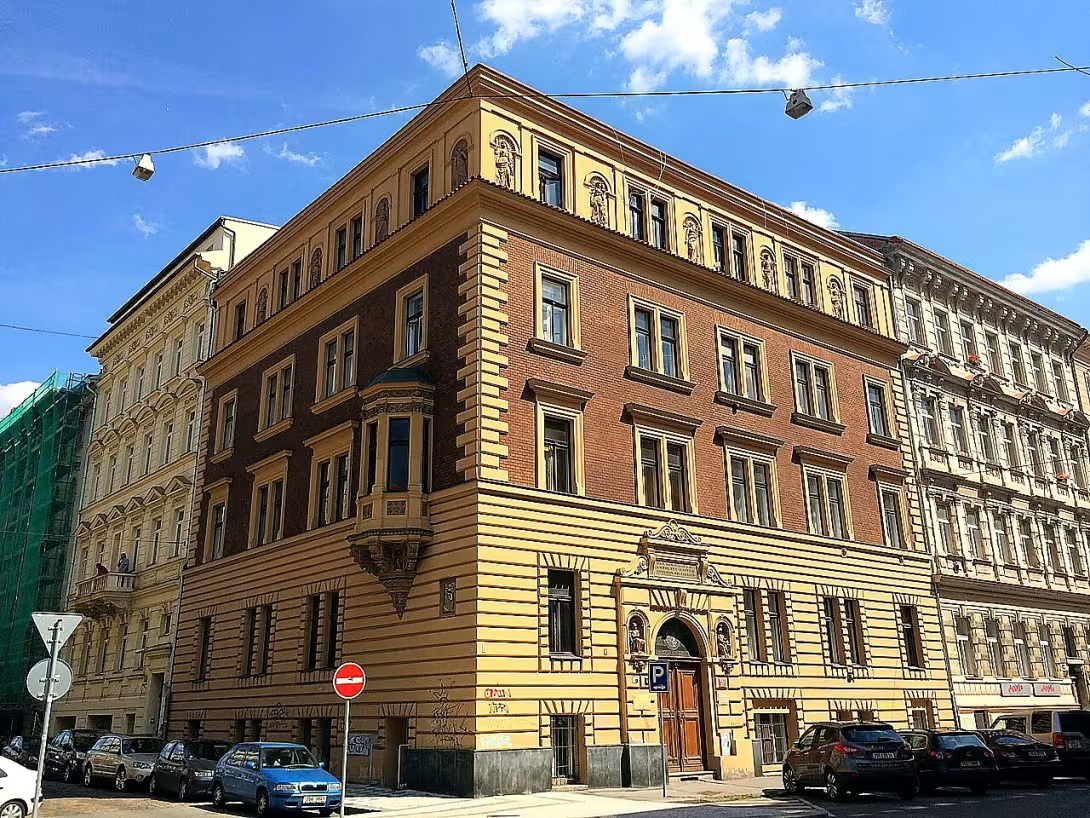
The house at čp. 542 in Zborovská Street is a corner, three-story Neo-Renaissance apartment building located in Prague's Smíchov district. Built in 1885, its architectural design was created by the prominent Czech architect Antonín Wiehl in collaboration with Karel Gemperl. The sculptural decorations were designed by the renowned sculptor Josef Václav Myslbek. Inscribed in the Central List of Cultural Monuments of the Czech Republic, the building stands out for its exposed brickwork, rustication, and detailed Italian-inspired sculptural program.
Construction took place in 1885 during a period of intensive urban development in the Czech lands, which were then part of the Austro-Hungarian Empire. Districts like Smíchov experienced significant growth during this era. Czech architecture and art actively sought inspiration in historical styles—predominantly the Renaissance—to express the national cultural revival. Antonín Wiehl designed the edifice as his seventh apartment project in Prague, working alongside builder Karel Gemperl, a partnership recorded on a plaque above the portal.
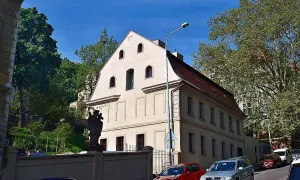
Architecturally, the structure is a corner, three-story Neo-Renaissance apartment building featuring a raised ground floor. It has five axes facing Zborovská Street (formerly Královská) and four axes facing Vodní Street (formerly Barrandovy). The ground floor is adorned with rustication, whereas the upper floors showcase exposed brickwork. The third floor is incorporated into the attic level and contains niches with high reliefs of female allegories. A polygonal bay window with a richly decorated console faces Vodní Street.
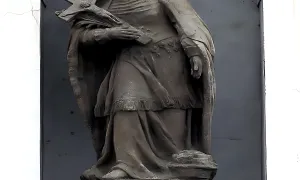
The sculptural ornamentation was entirely designed by Josef Václav Myslbek, who collaborated with Wiehl on numerous projects throughout the 1870s and 1880s in the spirit of Renaissance tradition. In the niches flanking the entrance, Myslbek placed figures of ancient soldiers. The niches between the windows on the third floor feature five reliefs of female figures on each side of the edifice, serving as allegories of virtues. A distinct feature of the facade facing Vodní Street is a small relief of the Virgin Mary adoring the child in an Italian style, executed as a stucco relief imitating robbiovesque majolica traditions. This element of naive folk piety brings a human touch to the classical grandeur of the exterior and recalls the decoration of various Italian urban buildings. Two informational plaques are also mounted on the property to designate its creators and significance.
Today, the structure is officially listed in the Central List of Cultural Monuments and remains a notable example of late-19th-century Neo-Renaissance architecture in Prague. Visitors exploring the Smíchov district can view the exterior elements, including Myslbek's sculptures and the distinctive architectural features at the corner of Zborovská and Vodní streets.
Then and now
Drag the slider to compare how the landmark may have looked when it was built with the view today.
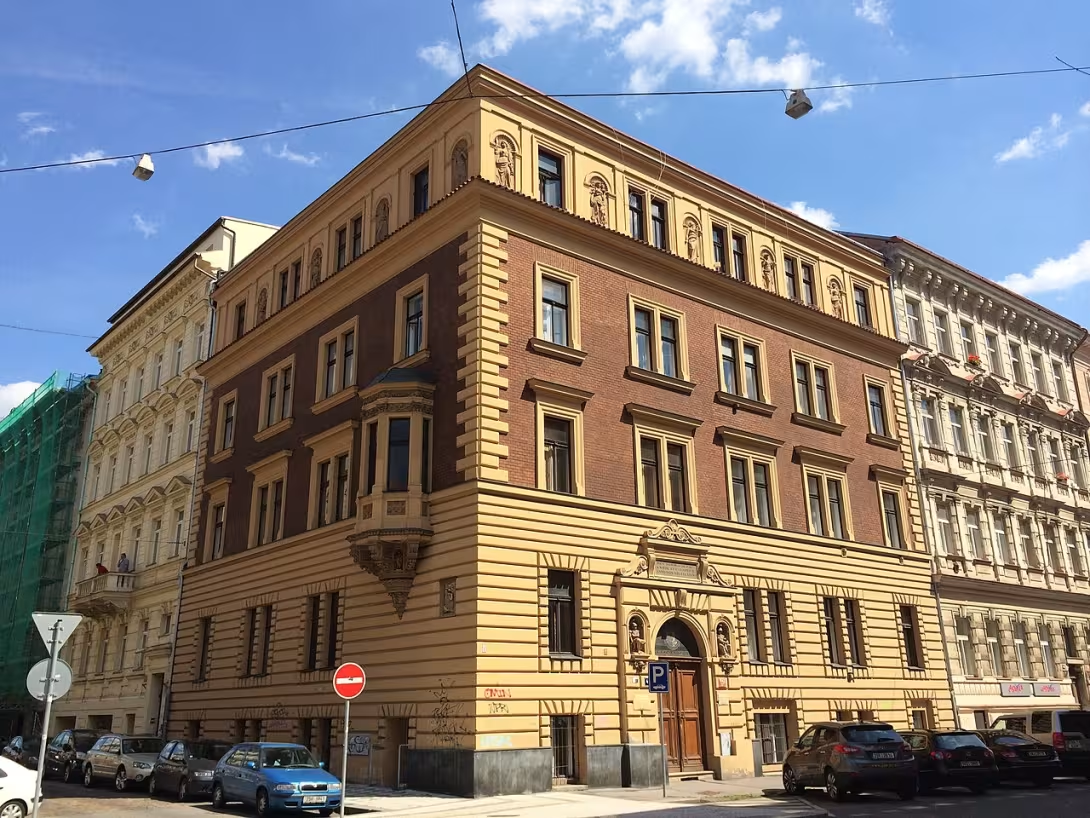
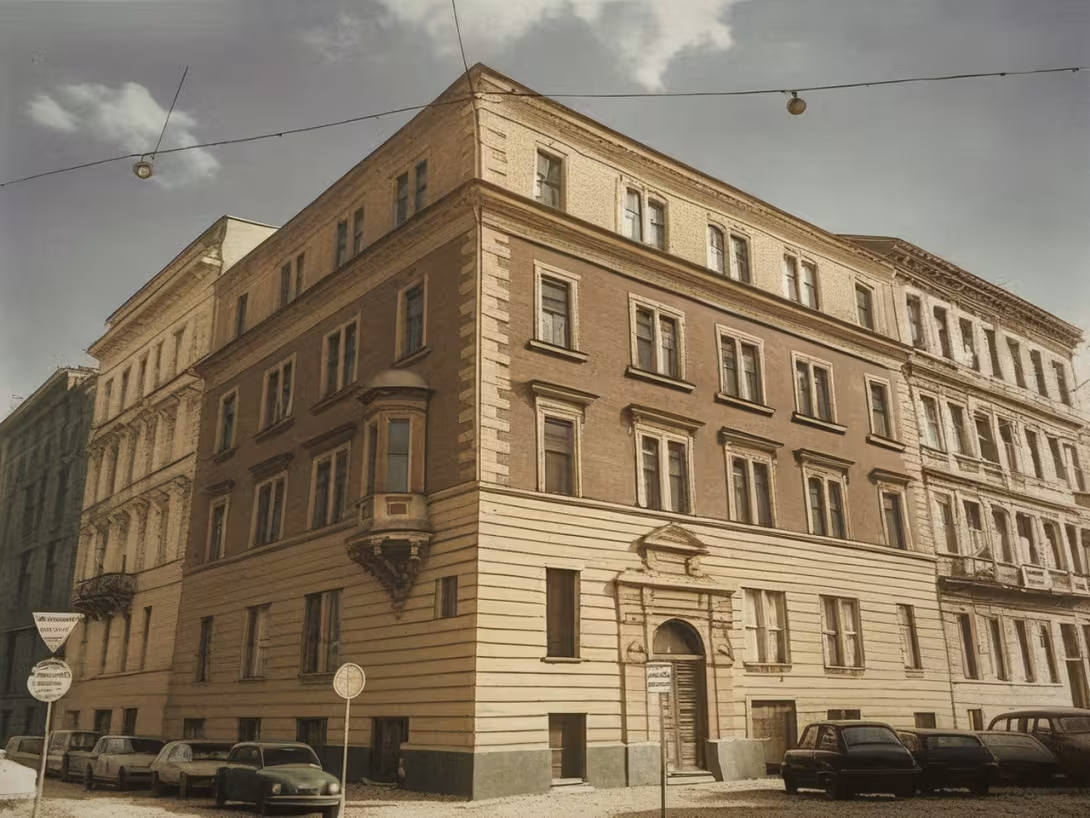
The historical appearance on the left is an AI-generated visualisation and serves as inspiration only.
Historical milestones
- 1885
- The building was constructed based on a design by architect Antonín Wiehl and builder Karel Gemperl.
Architectural development
The building was constructed in 1885 as a Neo-Renaissance apartment building designed by Antonín Wiehl and Karel Gemperl. The ground floor features rusticated masonry, while the upper floors are executed in exposed brick. The third floor is incorporated into the attic level and features niches with high reliefs of female allegories. A polygonal bay window with a richly decorated console faces Vodní Street.
Points of interest
– The building was constructed in 1885 and designed by the prominent architect Antonín Wiehl in collaboration with builder Karel Gemperl, whose partnership is recorded on a plaque above the portal. – Its sculptural decorations were entirely designed by the renowned sculptor Josef Václav Myslbek, featuring figures of ancient soldiers, allegories of virtues, and a small Italian-style relief of the Virgin Mary. – The exterior combines rustication on the ground floor with exposed brickwork on the upper floors, along with a polygonal bay window facing Vodní Street. – Antonín Wiehl designed the e
Guide
Show guide text
This text was created by artificial intelligence and has not been editorially reviewed. It may contain inaccuracies.
Welcome to Smíchov. Please, take a moment to settle in and look around you. You are currently standing before house number 542 in Zborovská Street, a building that serves as a wonderful testament to the urban elegance of late nineteenth-century Prague. As you look up, you will see a striking corner apartment building that commands the intersection with a sense of poise and architectural confidence. Notice how the structure rises three stories high, anchored by a raised ground floor that gives the entire building a feeling of elevation and prominence. This is not just a place of residence, but a piece of history carved into the streetscape of this vibrant district.
Let us step back in time to the year 1885. This was an era of immense growth and transformation for Prague, and Smíchov, in particular, was evolving rapidly. During this period, the city was expanding, and there was a great demand for sophisticated housing that reflected the status and tastes of the rising middle class. It was in this atmosphere of ambition and artistic revival that house number 542 was conceived. The building was the result of a professional partnership between two men who were instrumental in shaping the physical face of the city: the prominent architect Antonín Wiehl and the builder Karel Gemperl. Together, they sought to create something that was not merely functional, but aesthetically significant, blending the practical needs of an apartment house with the grandeur of the Neo-Renaissance style.
Now, I invite you to truly observe the architecture. As you scan the facade, you are seeing the hallmarks of the Neo-Renaissance movement. This style was all about a return to the harmony, symmetry, and classical proportions of the Renaissance, adapted for the modern needs of the 1880s. Notice the way the building occupies its corner position, utilizing the angle to create a dynamic presence on the street. Pay attention to the raised ground floor; this was a common architectural choice of the time, designed to separate the primary living quarters from the dust and noise of the street, while adding a layer of prestige to the entrance. While the building serves as a home to many, its exterior acts as a public gallery, showcasing the craftsmanship of a bygone era.
But the true magic of this building lies in the collaboration of the minds behind it. While Antonín Wiehl provided the architectural vision and Karel Gemperl ensured the structural integrity and execution, they brought in a third master to elevate the building from a mere structure to a work of art. That man was the renowned sculptor Josef Václav Myslbek. If you are unfamiliar with his name, Myslbek is widely regarded as one of the most important figures in the history of Czech sculpture. His involvement here is significant because he did not simply add a few ornaments; he designed the sculptural decorations of the building entirely. As you look at the decorative elements on the facade, remember that you are looking at the work of a man who defined the national sculptural style of his time. The presence of Myslbek's work here turns a residential corner into a cultural landmark, blending the rigid lines of architecture with the fluid, expressive power of sculpture.
As you continue to explore the building with your eyes, I want to point out a specific detail that often goes unnoticed by the casual passerby. I invite you to move slightly closer to the entrance. Look up toward the portal, the main gateway into the building. There, you will find a plaque. This is more than just a piece of stone; it is a historical record. The plaque explicitly commemorates the partnership between the architect Antonín Wiehl and the builder Karel Gemperl. In an age before digital archives and corporate branding, such plaques were the signatures of the creators, a way of claiming their legacy and marking their contribution to the city's skyline. It is a quiet, humble reminder of the human collaboration required to build the world we walk through today.
There is something deeply fascinating about the way this building has survived and remained a part of the Smíchov landscape. In a city that has seen wars, political upheavals, and the relentless march of modernization, house number 542 stands as a silent witness to the optimism of 1885. It represents a moment in time when beauty was considered an essential component of urban living, and when a simple apartment house was deemed worthy of the attention of the country's greatest architect and its most famous sculptor. The mystery of the building lies in the layers of lives that have passed through its doors over the last century and a half, all while the stone faces and sculptural details designed by Myslbek watched over the changing streets of Zborovská.
As you stand here, try to imagine the street as it was when the scaffolding first came down in 1885. Imagine the horses and carriages passing by, the sound of early industrial Smíchov in the distance, and the pride the residents must have felt moving into a building of such Neo-Renaissance splendor. The building does not shout for attention, but it commands it through its proportions and the quality of its artistic detail. It is a reminder that the environment we inhabit influences how we feel and how we perceive our place in the world.
Now that you have had a chance to appreciate the architectural harmony and the artistic legacy of Antonín Wiehl, Karel Gemperl, and Josef Václav Myslbek, I encourage you to take one last look at the facade. Let the details sink in—the height of the stories, the elegance of the corner, and the enduring presence of that commemorative plaque. There is much more to discover in this neighborhood, and the spirit of 19th-century Prague continues to linger in the surrounding streets.
Thank you for stopping here to uncover the story of house number 542. As you remove your headphones and continue your walk through Smíchov, I hope you carry with you a new appreciation for the hidden gems that make this city so extraordinary. Please feel free to explore the area further and discover the other secrets hidden in plain sight. Enjoy your journey through the streets of Prague.
Tips for visitors
Best Time to Visit: The Neo-Renaissance apartment building at čp. 542 is a year-round attraction, but the best time to visit is during spring and autumn when the weather is mild and sunny. This allows for optimal photography opportunities and a pleasant walking experience in the surrounding area.
Businesses nearby
Events nearby

Zdroj akcí: otevřená data měst a obcí ČR (Národní katalog otevřených dat) a kalendář akcí Národního památkového ústavu.
Nearby
Located in Smíchov, Prague 5, near Zborovská and Vodní streets.
Accommodation nearby
Trips and activities nearby
Guided tours, tickets and activities nearby from GetYourGuide
Affiliate link: if you buy from the partner, we may receive a commission. The price for you does not change.
Search tours and activities →Themed route
1. Dům čp. 542 ve Zborovské ulici - Type: Historical building - Why visit: This is the main destination of the trip, situated right in the Smíchov district. It offers a fascinating glimpse into the local architectural heritage of Prague 5.
2. Zborovská street - Type: Street - Why visit: This historic street provides the immediate setting for the main destination. A walk along it allows visitors to soak in the atmosphere of the surrounding Smíchov neighborhood.
3. Vodní street - Type: Street - Why visit: Located nearby and running close to the main destination, this street is an integral part of the local layout in Prague 5, offering an easy and authentic continuation of your neighborhood walk.
Seasonal recommendations
Summer at House čp. 542 at Zborovská Street (other) in Smíchov is characterized by long, sun-drenched days and a lively urban energy typical of the peak tourist months. The bright, high-altitude sun casts sharp shadows and bathes the immaculately maintained structure in a warm, golden glow late into the evening. Because the main visitor season is underway, the surrounding neighborhood sees higher foot traffic. To enjoy the site comfortably, the best time to visit is early in the morning when the temperature is cool and the streets are quiet. Lightweight, breathable clothing and sunglasses are essential, and visitors should remember to stay hydrated while exploring the Smíchov district on foot during warm afternoons.
Autumn transforms the setting around House čp. 542 at Zborovská Street (other) in Smíchov into a picturesque palette of amber and rust as the nearby trees shed their leaves. The lighting during this season is exceptionally soft and diffused, often enhanced by gentle morning mists that lend a romantic, timeless atmosphere to the historic streetscape. The summer crowds dissipate significantly, offering a much more tranquil experience. For practical preparation, visitors should dress in warm coats, scarves, and sturdy footwear to combat the chilly autumn winds and damp pavement. Late morning or early afternoon provides the most comfortable temperatures and the best natural light for appreciating the property's superb condition.
Winter envelops House čp. 542 at Zborovská Street (other) in Smíchov in a quiet, serene mood, occasionally accented by a dusting of snow on the historic rooftops. The days are short, and the low winter sun creates long, dramatic shadows early in the afternoon, followed by an atmospheric twilight in the growing evening hours. In the advent season, the surrounding area takes on a subdued, reflective charm without the overwhelming summer rush. Practicalities for a winter visit demand heavy winter gear, including insulated jackets, gloves, and warm hats, as temperatures can drop sharply. Visitors should also plan their trip earlier in the day to make the most of the limited daylight hours and shorter afternoon visibility.
Visualizations and artistic views


The visualisations are generated by artificial intelligence and serve as inspiration.
Photos from the area
Real photos taken near the monument


Zdroj a licence jsou uvedeny u každého snímku.
Tips from visitors
No tips yet. Be the first!
Log in and add your tip.
Sources and literature
Fotografie: Shadster / CC BY-SA 3.0 — Wikimedia Commons. The author and licence also appear when you hover over the image.
Faktickým podkladem tohoto textu byl článek na Wikipedii, jehož autory jsou přispěvatelé Wikipedie. Článek je dostupný pod licencí CC BY-SA 4.0.
Location on the map
Příběhy a pověsti
Legendy, pověsti a příběhy spjaté s touto památkou

Fotografie návštěvníků
Zatím žádné fotografie. Buďte první, kdo přidá fotografii z návštěvy!
Přihlaste se a přidejte svou fotografii nebo hodnoťte.
Za ověřenou návštěvu v aplikaci získáte víc bodů — poznáme podle GPS, že jste na místě.
Reviews and comments