



kaple Nejsvětější Trojice (Smíchov) Chapel
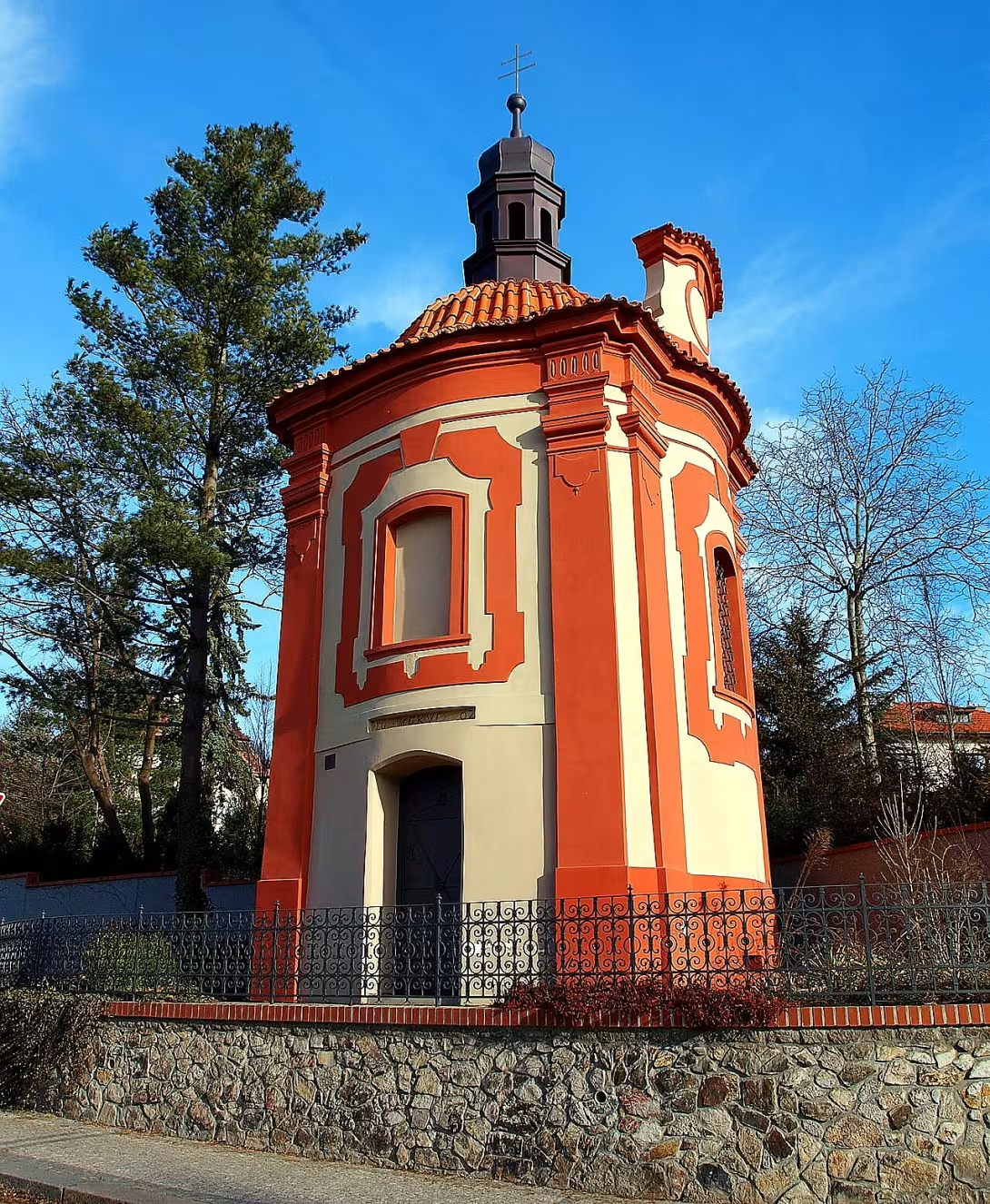
The Chapel of the Holy Trinity, standing in Swedish street number 108 in Prague 5-Smíchov, is an early Baroque building from 1667. It was part of the Nessypka estate, which no longer exists today. The chapel became the only room of this once larger property that has been preserved today. The building is protected as a cultural monument of the Czech Republic and is currently owned by JUDr. Karel Musicar.
The oldest layer of the chapel dates back to 1667 - the proof is a translation with a second period which was later placed above the entrance. But the estate of the following century has undergone major changes. In 1718 it was purchased by Jiří Maxmilián Nesyba and his wife Barbora Apolonie. According to their initiative, in the early 1930s, a large reconstruction of the chapel took place, which gained the highest baroque form, as it does today. In this reconstruction, the altar of the Holy Trinity was built inside. The mosque foundation from 1732 shows that the chapel was already fully operational at the time - according to it, the priest of Smíchov was to serve here Saturday's mass. During the second half of the 18th century, the Holy Trinity joined another altar dedicated to the Virgin Mary the Auxiliary.
But the period of Yosefin reforms has brought about a change. In 1784 the chapel was closed and its mosque foundation moved to the Smíchov parish church. In 1821 the estate was purchased by František Scheiba, who had it repaired with vineyards for private purposes. The traditional Smichov procession leading to the chapel was gradually restored. At the beginning of the twentieth century, however, the settlement expected demolition - the north-west part of the chapel was also demolished when it was demolished. The builders tried to preserve the existing system of decoration and plaster, and where the chapel was damaged, they tried to recreate it.
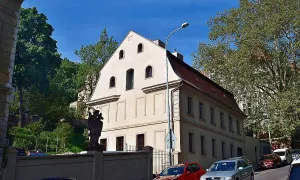
It is an architectural building on a square plan with bevelled corners and hollow walls. The facade is visibly accentuated by a pair of pilasters in the corners that grow from a high plinth and carry a profiled crown empire. The windows are closed with rounded upper parts and equipped with stuccative decoration with top vaults. A characteristic part of the building is the bell roof with octave lantern with onion and double cross. The interior is decorated with Baroque painting of the Holy Trinity in the ceiling.
A complete reconstruction of the chapel at the expense of its private owner took place between 2009 and 2010. The building was statically secured, a new roof was provided, facades and interior, floors and wall paintings were restored. Today the chapel is again a visible witness to the Smíchov past and accessible to those interested in architecture and история Prague microregions. / p >
Then and now
Drag the slider to compare how the landmark may have looked when it was built with the view today.
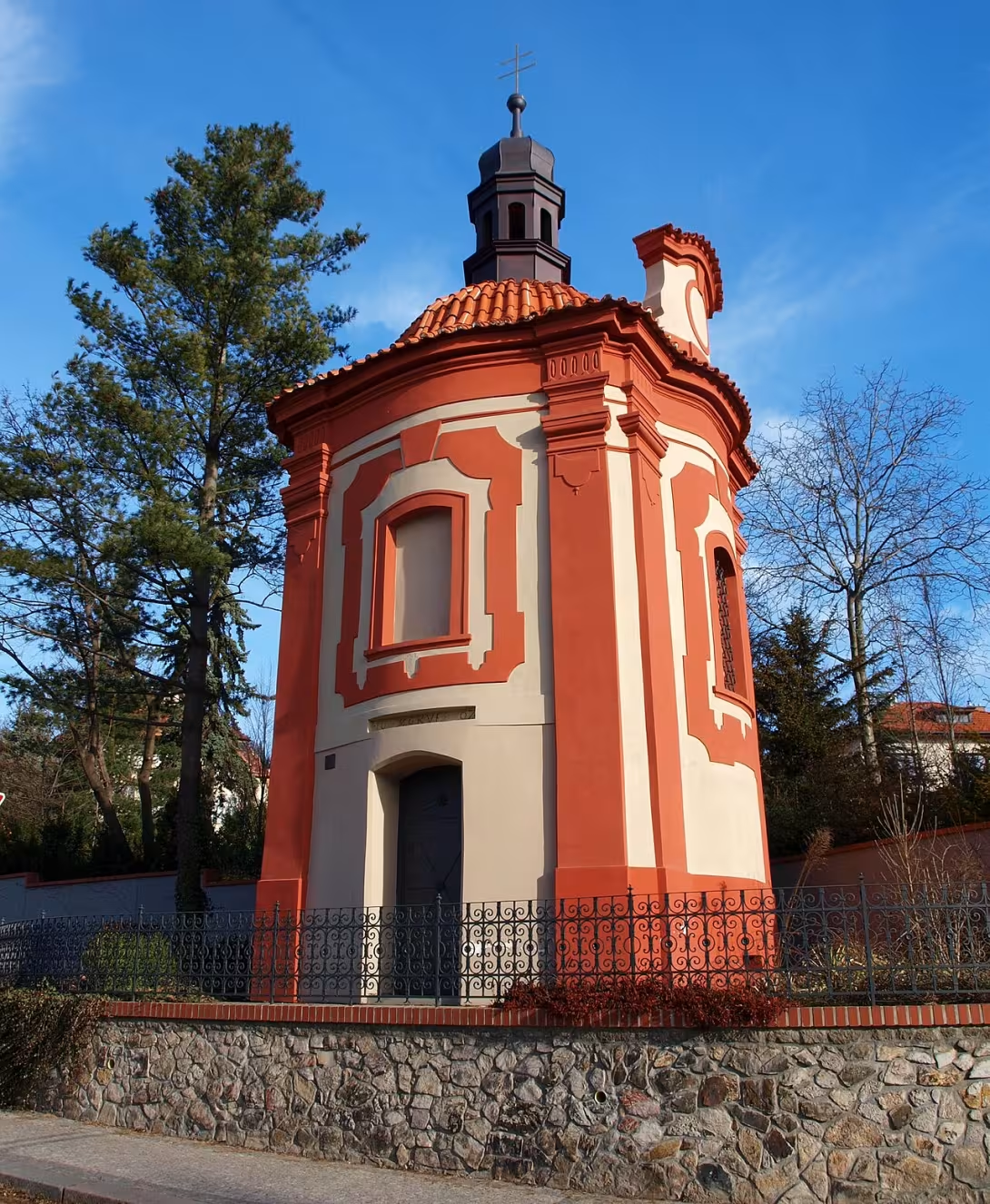

The historical appearance on the left is an AI-generated visualisation and serves as inspiration only.
Historical milestones
- 1667
- Chapel status
- 1732
- Highly baroque reconstruction
- 1784
- Cancellation of the chapel
Architectural development
The chapel was built in 1667, highly baroque in 1732 and restored in 1821.
Historical events
- 1667
- Chapel status
- 1732
- Highly baroque reconstruction
- 1784
- Cancellation of the chapel
Owners
Jiří Maxmilián Nesyba
Barbora Apolonie
František Scheiba
Points of interest
The Holy Trinity Chapel is an early Baroque building from 1667.
- The Nessypka estate in which the chapel is located no longer exists.
- The chapel was part of the estate and today it is the only room of this property that has been preserved to this day.
- In 1718 it was bought by Jiří Maxmilián Nesyba and his wife Barbora Apolonie.
- During the second half of the 18th century, another altar dedicated to the Holy Trinity joined the altar.
- In 1784 the chapel was closed and its mosque foundation moved to the Smíchov parish church.
- Architectural is a central building on a square plan with bevelled corners and hollow walls.
Guide
This guide is narrated by a synthetic voice generated by artificial intelligence.
Show guide text
This text was created by artificial intelligence and has not been editorially reviewed. It may contain inaccuracies.
The Chapel of the Holy Trinity on Švédská Street in Smíchov is the only remaining part of the long-vanished Nesypka estate. The chapel stood directly next to the residential part of the estate. Today it is protected as a cultural monument and belongs to a private owner.
Its origins date back to 1667, when an early Baroque chapel stood here. From it, only a single stone lintel with the carved date 1667 has survived. Later it was reused in the archway above the entrance to the younger chapel. This was built by Jiří Maxmilián Nesyba and his wife Barbora Apolonie, who acquired the estate in 1718. They first renovated the residential house and at the beginning of the 1730s they rebuilt the old chapel into its current High Baroque form. An altar of the Holy Trinity was created in it. A mass endowment from 1732 stipulated that the Smíchov parish priest was to hold Saturday masses here, and from this we can conclude that the renovation was completed by then. After the mid-eighteenth century, a second altar was added, dedicated to the Virgin Mary of Perpetual Help.
In 1784, under Josephine reforms, the chapel was closed and the mass endowments were transferred to the Smíchov parish church. In 1821, František Scheiba purchased the estate together with its vineyards. He had the chapel repaired for private use and soon the Smíchov processions resumed visiting it.
In 1914, the estate was demolished and along with the residential part, the northwestern section of the chapel was torn down as well. The missing sections were then supplemented by repeating the original decoration and shaping of the external walls. In 2009 and 2010, the chapel underwent a complete reconstruction, paid for by the private owner. The building was structurally secured and received a new roof. The facades were repaired both outside and inside, the floors were restored, and the wall paintings were restored.
The chapel is a central building with a square ground plan with beveled corners and slightly curved walls. At the corners, pairs of pilasters, that is flat columns protruding from the wall, rise from a high base. Their capitals carry a profiled cornice under the roof. Windows with arched tops are framed by decorative frames with stucco decoration and a barrel vault at their apex. The roof has a bell shape. It is topped by an octagonal lantern with an onion cupola, a finial, and a double cross. Inside, the chapel is vaulted with a flat ceiling, on which there is a Baroque painting of the Holy Trinity.
Tips for visitors
The best time to visit is in the morning or late afternoon when the chapel is slightly lit and people are less numerous. Don't forget to bring a pocket guide or a map to help you navigate around. Photography is permitted, but please respect other visitors and do not interfere with their search. The best places for photography are in front of the chapel and in its courtyard. In the vicinity of this monument there are several other interesting places such as the park Stromovka or Na Kampa street. All these places are available on foot in 30 minutes from the chapel. Tips for families with children: bring pocket toys and take the opportunity to explore the area.
Frequently asked questions
Can the monument be visited?
Religious buildings are usually open mainly during services; at other times a visit is normally arranged with the parish or the operator. We have not verified specific times.
Where is the monument?
Location: Švédská, Smíchov, Praha, Hlavní město Praha. The map on this page shows the exact spot.
Why is the monument protected?
It is listed in the Central List of Cultural Monuments of the Czech Republic as a cultural monument (register no. 40330/1-1380).
For kids
Imagine going back 359 years to when Praha-Smíchov was a small town. The chapel of the Holy Trinity was already there and was a beautiful early Baroque building.
How did it look here? Who lived here? What happened here? It was a time when people lived in peace and peace. The locals lived from agriculture and trade. The chapel was a place of prayer and religious acts.
Businesses nearby
Do you run a restaurant, accommodation, shop, museum, rental, wellness or other visitor service near this monument? Show yourself directly to the people heading to it — this is how they will see you in the app and on the web:
Events nearby


Zdroj akcí: otevřená data měst a obcí ČR (Národní katalog otevřených dat) a kalendář akcí Národního památkového ústavu.
Nearby
Swedish street, Praha 5-Smíchov
Accommodation nearby
Trips and activities nearby
Guided tours, tickets and activities nearby from GetYourGuide
Affiliate link: if you buy from the partner, we may receive a commission. The price for you does not change.
Search tours and activities →Themed route
1. kaple Nejsvětější Trojice (Smíchov) (sacral building) - tour of the interior and observation of religious art inside the building. 2nd courtyard of the chapel (outdoor area) - walk around the building to monitor the architectural details of the facade. 3rd area of the chapel (immediate surroundings) - final stop in a quiet environment for the perception of the atmosphere of the place.
Seasonal recommendations
Seasonal recommendation for visiting the historical monument of the Chapel of the Holy Trinity (Smíchov)
Spring: Specific is lighting of the chapel, which also likes tourists. The woods around the chapel are in full flowering power and nature is developing. The atmosphere is slightly warm and sunny. Practical advice: the best time to visit the chapel is in the morning or late afternoon to avoid the ladies of tourists. Visit her in warmer clothes because the woods around her are still cold.
Summer: Specific is the summer lighting of the chapel, which creates an amazing effect. The woods are full of life and nature is in full bloom. The atmosphere is warm and sunny. Practical advice: Visit the chapel in the morning or before lunch to avoid the ladies of tourists. Don't forget to take water and refreshments, because summer weather can be hot.
Autumn: Specific is the autumn lighting of the chapel, which creates an amazing effect. The woods are full of colorful leafy sheets and nature is beginning to cool. The atmosphere is slightly cold and foggy. Practical advice: Visit the chapel in the morning or late afternoon to avoid the ladies of tourists. Visit her in warmer clothes because the weather can be cold.
Winter: Specific is the winter lighting of the chapel, which creates an amazing effect. The woods are full of snow and nature is calm. The atmosphere is slightly cold and foggy. Practical advice: Visit the chapel in the morning or late afternoon to avoid the ladies of tourists. Visit her in warmer clothes because the weather can be cold.
Visualizations and artistic views


The visualisations are generated by artificial intelligence and serve as inspiration.
Photos from the area
Real photos taken near the monument


Zdroj a licence jsou uvedeny u každého snímku.
Atmosphere of the place
This atmospheric visualisation of the place and period was generated by artificial intelligence. It is not real footage of the location.
Tips from visitors
No tips yet. Be the first!
Log in and add your tip.
Sources and literature
Photos: VitVit / CC BY-SA 4.0 — Wikimedia Commons. The author and licence also appear when you hover over the image.
Faktickým podkladem tohoto textu byl článek na Wikipedii, jehož autory jsou přispěvatelé Wikipedie. Článek je dostupný pod licencí CC BY-SA 4.0.
Location on the map
Příběhy a pověsti
Legendy, pověsti a příběhy spjaté s touto památkou

Fotografie návštěvníků
Zatím žádné fotografie. Buďte první, kdo přidá fotografii z návštěvy!
Log in a přidejte svou fotografii nebo hodnoťte.
Za ověřenou návštěvu v aplikaci získáte víc bodů — poznáme podle GPS, že jste na místě.
Reviews and comments