






socha svaté Aji Statue
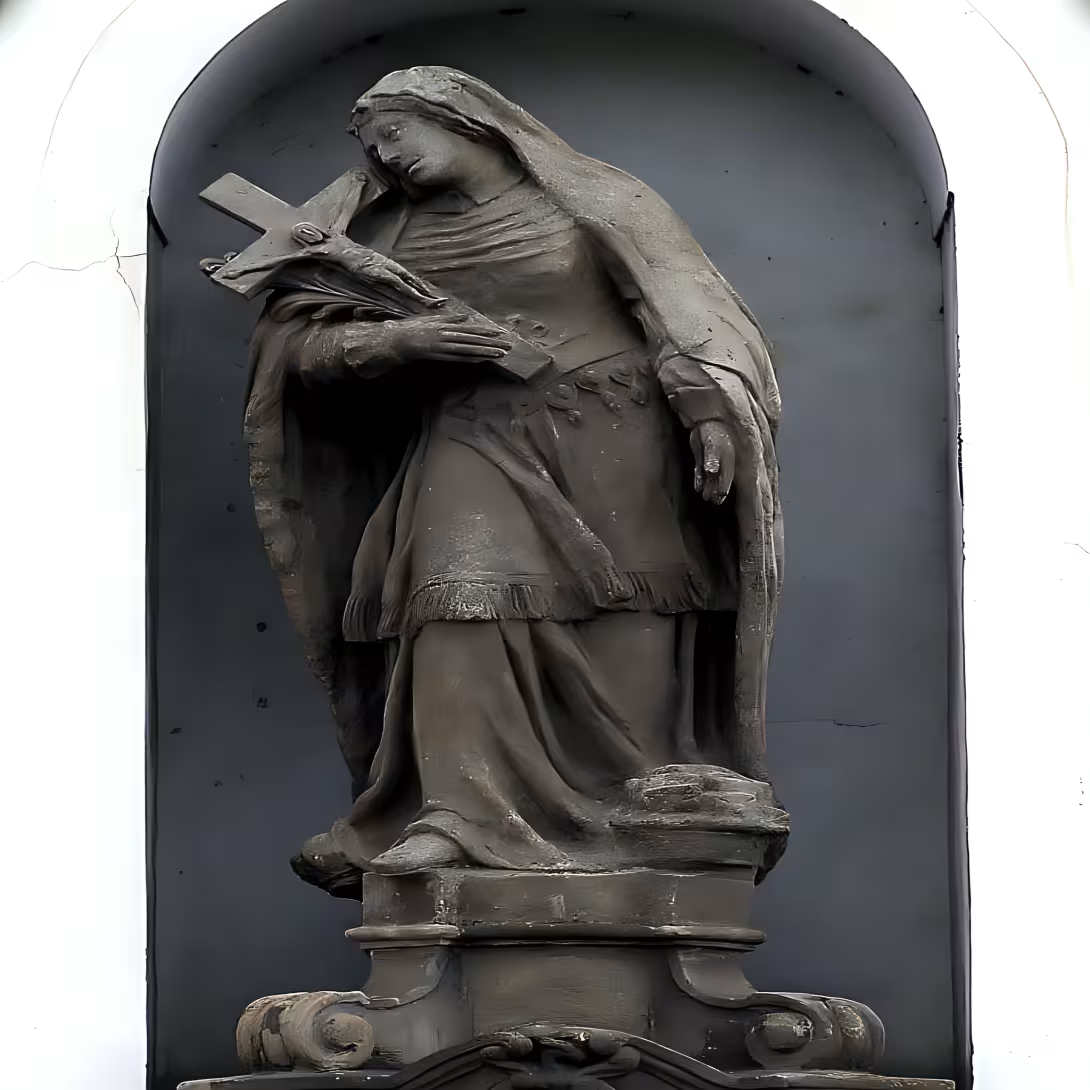
The Baroque Statue of Saint Aji stands in Nádražní Street on Smíchov in Prague, a testament to the city's rich cultural heritage. This remarkable monument was created in 1770 by Ignáce Platzera and is believed to be one of the earliest examples of Baroque architecture in Bohemia.
Origin and Historical Context The statue was commissioned by P. František Xaver Wissinger, rector of the Jesuit College on Staré Město, as a tribute to his wife, Saint Aji. Little is recorded about its early history, but it's clear that this monument held significant cultural importance during the Baroque era.
Architecture and Artistic Form The statue stands on a pedestal with volute-shaped wings, topped with a profiled rim featuring a shell-shaped recess. The inscription on the front of the pedestal reads: 'Honor to Saint Aji, wife of Duke Hildulpni Laubanensis, Virgin, Powerful, and Perilous.' The statue itself depicts Saint Aji holding a crucifix and palm branch, with her left hand slightly leaning forward.
Owners, Administrators, Fortunes The statue was originally located in the garden of the Jesuit College on Staré Město before being moved to its current location. In 1954, it underwent restoration by Jan Kahan, who repaired damaged hands and replaced worn-out fabric with artificial stone. Unfortunately, the statue suffered damage again in 1969.
Key Events and Curiosities The statue's creation in 1770 marked a significant milestone in Bohemia's cultural history. The inscription on the pedestal provides insight into its original purpose as a tribute to Saint Aji and her husband.
Today The Baroque Statue of Saint Aji remains an important cultural landmark, standing as a testament to Prague's rich heritage. Visitors can view this remarkable monument in Nádražní Street on Smíchov, gaining insight into the city's complex history and architectural evolution.
Then and now
Drag the slider to compare how the landmark may have looked when it was built with the view today.
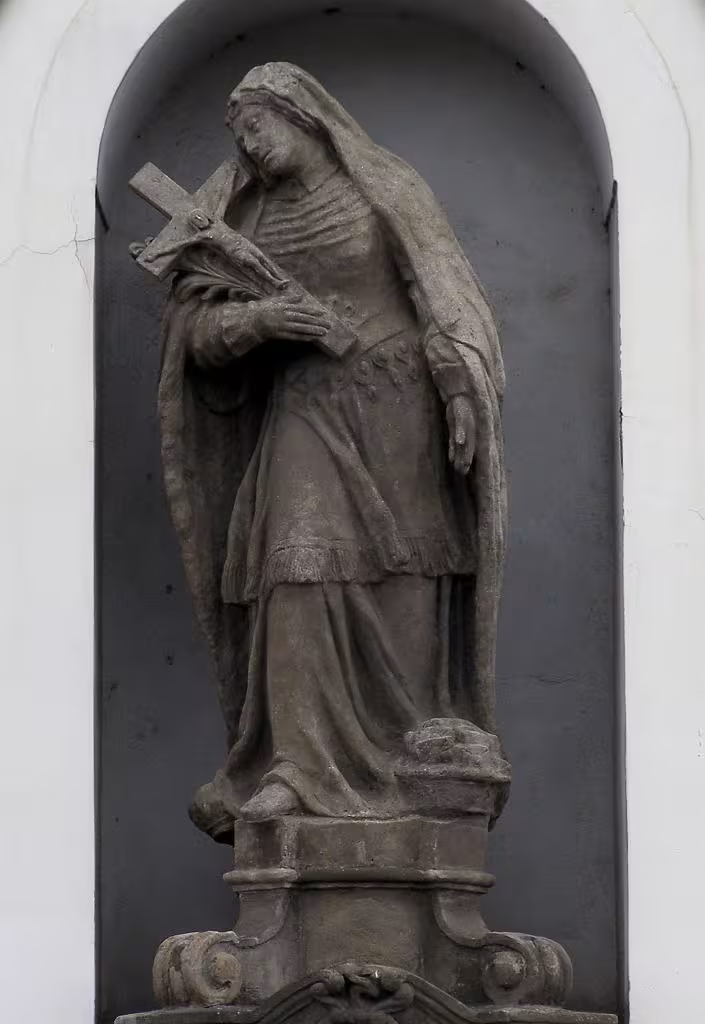
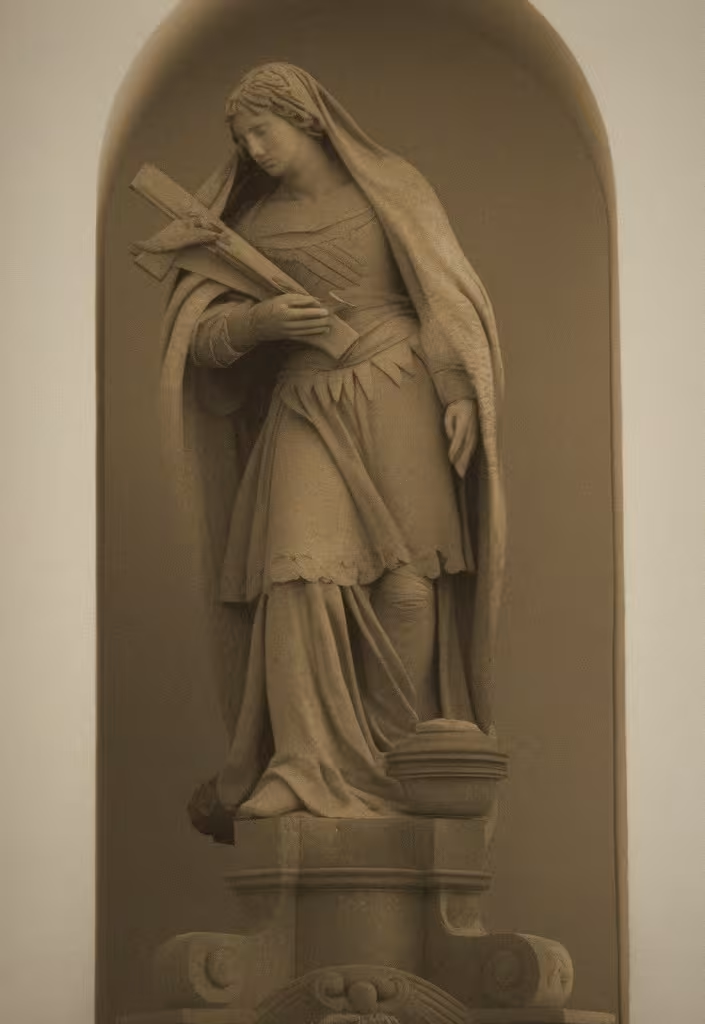
The historical appearance on the left is an AI-generated visualisation and serves as inspiration only.
Historical milestones
- 1770
- Creation of the statue by Ignáce Platzera.
- 1954
- Restoration of the statue by Jan Kahan.
- 1965
- Again restored, but suffered damage in 1969.
Architectural development
The Baroque-style statue stands on a pedestal with volute-shaped wings. The pedestal is topped with a profiled rim and features a shell-shaped recess.
Historical events
1770: The statue was created by Ignáce Platzera.
1954: The statue was restored by Jan Kahan.
1965: The statue was again restored, but suffered damage in 1969.
Points of interest
– The Baroque Statue of Saint Aji stands as a testament to Prague's rich cultural heritage in Nádražní Street on Smíchov.
– This remarkable monument was created in 1770 by Ignáce Platzera and is believed to be one of the earliest examples of Baroque architecture in Bohemia.
– The statue was originally located in the garden of the Jesuit College on Staré Město before being moved to its current location.
– In 1954, the statue underwent restoration by Jan Kahan, who repaired damaged hands and replaced worn-out fabric with artificial stone.
Guide
Show guide text
This text was created by artificial intelligence and has not been editorially reviewed. It may contain inaccuracies.
Welcome to Smíchov. As you stand here on Nádražní Street, take a moment to let the surrounding sounds of the city fade into the background. You are standing before a silent witness to centuries of change, a piece of Prague's living history that has watched this neighborhood transform around it. Before you stands the Baroque statue of Saint Aji, a monument that serves as a profound testament to the rich cultural and religious heritage of this district. Even in the midst of the modern urban landscape, this figure remains a focal point of grace and historical weight.
To understand what you are looking at, we must travel back in time to the year 1770. This was an era when the Baroque style was not just an artistic choice, but a way of expressing the divine and the dramatic through stone and form. It was during this year that the renowned sculptor Ignáce Platzera breathed life into this monument. As one of the earlier works of its kind in this area, the statue represents the peak of craftsmanship from that period. Ignáce Platzera was an artist who understood how to capture the essence of the Baroque, creating works that were intended to inspire awe and reflection in every passerby. When you look at the statue now, you are seeing the vision of an artist who lived over two and a half centuries ago, a vision that has survived the shifting tides of politics, war, and urban development.
Now, I invite you to direct your attention away from the figure itself for a moment and look closely at the foundation upon which it rests. The pedestal is a masterpiece of Baroque architectural detail in its own right. Notice the elegant, volute-shaped wings that curve outward from the base, providing a sense of movement and organic flow to the heavy stone. These scrolls, or volutes, are a classic hallmark of the era, designed to lead the eye upward and create a sense of lightness despite the material's weight. Above these wings, you will see a beautifully profiled rim that defines the top of the pedestal, acting as a transition between the base and the sacred figure above. If you look even closer, you might spot a delicate, shell-shaped recess carved into the surface. This shell motif is another significant element of Baroque design, often symbolizing rebirth or the divine, and it adds a layer of texture and shadow that changes as the sunlight moves across the street throughout the day.
As your eyes wander across the front of this pedestal, you will encounter a complex and deeply meaningful Latin inscription. It is a dense block of text that serves as a bridge to the spiritual world of the eighteenth century. The inscription reads: HONORI SANCTAE AVAE S.HILDULPNI DUCIS LAUBANENSIS CONIUGI VIRGINAE POTENTI N.CAUSIS FORENSIBUS PERICLITANTIUM ADJUTRICE A COLLEGIO CLEMENTINO SOCIETATIS JESU SINCEBO AFFECTVM YV. While these words may seem mysterious at first glance, they tell a story of devotion and institutional connection. They link this monument to the Collegio Clementino and the Society of Jesus, highlighting the profound influence of the Jesuit order in the religious life of Prague. This inscription is not merely a label; it is a prayer and a historical record, etched into the stone to ensure that the purpose of this monument would never be forgotten by future generations.
The history of this statue is not just a story of its creation, but also a story of its survival and the dedicated people who fought to preserve it. The passage of time is often unkind to stone, and this monument has faced its share of challenges. Throughout the twentieth century, several individuals stepped forward to ensure that the work of Ignáce Platzera would not be lost to decay. In 1954, the statue underwent a significant restoration led by Jan Kahan, a man whose efforts helped stabilize the monument for a new era. A second restoration followed in 1965, showing the continued commitment to preserving Smíchov's landmarks. However, history is often unpredictable, and in 1969, the statue suffered damage that required further care. When you look at the statue today, you are not just seeing a piece of 1770; you are seeing the cumulative work of restorers like Jan Kahan and the legacy of figures like P. František Xaver Wissinger, who all played a part in maintaining this connection to the past.
There is a certain mystery in how such a delicate piece of art can endure in such a busy, changing environment. Think for a moment about all the people who have stood exactly where you are standing. They have walked this same street in different clothes, under different skies, and through vastly different versions of Prague. The statue of Saint Aji has remained a constant, a fixed point in a world of motion. It has survived the transition from the era of horse-drawn carriages to the modern era of trams and cars, standing firm through every transformation of Smíchov.
As you prepare to continue your journey through the streets of this fascinating district, take one last look at the intricate details of the pedestal and the silent dignity of the statue. It stands as a reminder that even in our fast-paced modern lives, there is immense value in pausing to acknowledge the beauty and the stories that the past leaves behind for us. Thank you for taking this moment to explore with me. Please, continue your walk and keep discovering the hidden gems that wait around every corner of Prague.
Tips for visitors
The best time to visit the statue of Saint Aji is during spring or autumn when the weather is mild and sunny, making it ideal for photography.
Parking options are available along Nádražní Street, with limited spots near the statue. You can also use public transportation, such as buses or trams, which stop nearby.
To make the most of your visit, bring a camera to capture the intricate details of the Baroque statue and its pedestal. Don't forget sunscreen and comfortable shoes for walking around the area.
For photography enthusiasts, the best spots are near the statue itself, where you can capture its grandeur against the backdrop of Nádražní Street. The morning or late afternoon sun provides a beautiful golden light.
If you're looking to explore more of Smíchov, consider visiting the nearby [insert nearby attractions].
Businesses nearby
Events nearby

Zdroj akcí: otevřená data měst a obcí ČR (Národní katalog otevřených dat) a kalendář akcí Národního památkového ústavu.
Nearby
The statue is located in Nádražní Street on Smíchov in Prague.
Accommodation nearby
Trips and activities nearby
Guided tours, tickets and activities nearby from GetYourGuide
Affiliate link: if you buy from the partner, we may receive a commission. The price for you does not change.
Search tours and activities →Themed route
Smíchov Heritage Trail
This trail takes you through the charming streets of Smíchov, a district in Prague, and culminates at the iconic Saint Aji Statue.
1. Nádražní Street: Start your journey on this bustling street, lined with cafes and shops. Take a moment to admire the statue's imposing presence before moving on. 2. Smíchov Square: Head towards the square, where you'll find a lively atmosphere and plenty of seating areas. Enjoy the views of the surrounding buildings and take in the local culture. 3. Saint Aji Statue: The pièce de résistance is, of course, the statue itself. Standing tall on Nádražní Street, this impressive monument is not to be missed.
This trail offers a unique glimpse into Smíchov's history and culture, with its mix of modern amenities and historic charm. Take your time to soak up the atmosphere and enjoy the sights along the way.
Seasonal recommendations
Spring
As spring arrives, the statue of Saint Aji takes on a fresh and vibrant atmosphere. The surrounding nature awakens from its winter slumber, with blooming flowers and lush greenery creating a picturesque backdrop. The soft sunlight illuminates the area, casting a warm glow over the entire scene.
Practical tips: Spring is a popular time to visit, so be prepared for moderate-sized crowds. Wear comfortable shoes and clothing suitable for mild weather. Try to visit early in the morning or late in the afternoon to avoid the peak sun hours.
Summer
Summer brings warmth and long days to Smíchov. The statue of Saint Aji takes on a radiant quality as the sun shines brightly, casting a golden glow over the area. The lush greenery is in full bloom, creating a tranquil atmosphere perfect for relaxation.
Practical tips: Summer is peak tourist season, so be prepared for larger crowds. Arrive early to beat the heat and avoid the midday rush. Wear light, breathable clothing and don't forget sunscreen and a hat.
Autumn
As autumn arrives, the statue of Saint Aji takes on a cozy and inviting atmosphere. The surrounding nature transforms into a kaleidoscope of colors, with leaves turning shades of orange, red, and yellow. The air is crisp and cool, carrying the scent of ripe fruit and woodsmoke.
Practical tips: Autumn is a great time to visit if you prefer milder weather. Wear layers as the temperature can drop significantly in the evenings. Arrive early to avoid the peak tourist season and enjoy the peaceful atmosphere.
Winter
Winter brings a serene and quiet atmosphere to Smíchov, with the statue of Saint Aji standing tall against the backdrop of snow-covered trees. The air is crisp and cold, carrying the scent of woodsmoke and hot chocolate.
Practical tips: Winter is a great time to visit if you enjoy the festive atmosphere. Wear warm, layered clothing and bring gloves, hats, and scarves to keep you cozy. Arrive early in the morning or late in the afternoon to avoid the peak tourist season and enjoy the peaceful atmosphere.
Visualizations and artistic views


The visualisations are generated by artificial intelligence and serve as inspiration.
Photos from the area
Real photos taken near the monument


Zdroj a licence jsou uvedeny u každého snímku.
Tips from visitors
No tips yet. Be the first!
Log in and add your tip.
Sources and literature
Fotografie: RNDr. Milan Kožíšek / CC BY 3.0, rozlišení zvýšeno umělou inteligencí — Wikimedia Commons. The author and licence also appear when you hover over the image.
Faktickým podkladem tohoto textu byl článek na Wikipedii, jehož autory jsou přispěvatelé Wikipedie. Článek je dostupný pod licencí CC BY-SA 4.0.
Location on the map





Příběhy a pověsti
Legendy, pověsti a příběhy spjaté s touto památkou

Fotografie návštěvníků
Zatím žádné fotografie. Buďte první, kdo přidá fotografii z návštěvy!
Přihlaste se a přidejte svou fotografii nebo hodnoťte.
Za ověřenou návštěvu v aplikaci získáte víc bodů — poznáme podle GPS, že jste na místě.
Reviews and comments