






most na Dětský ostrov Bridge
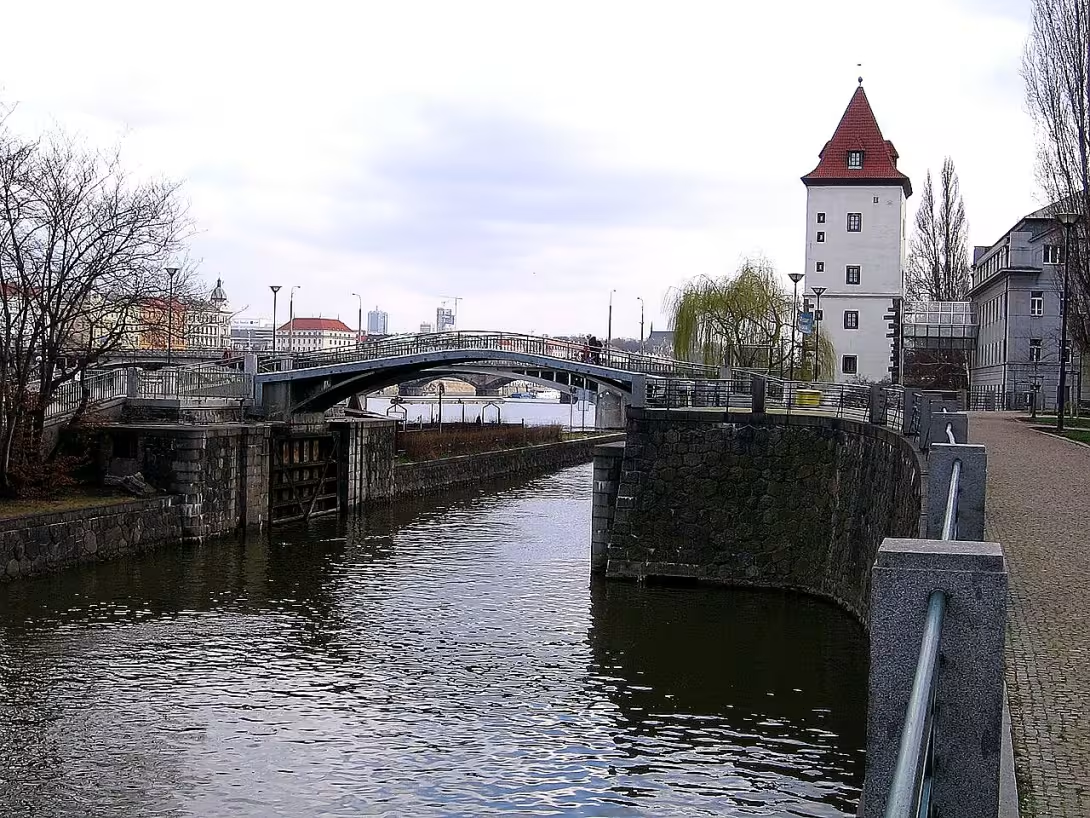
Children's island in Prague has a rich history of its connection to the city. Historically documented footbridge was located on the southern peak of the island since 1880 at the latest, the creation is expected in the 1970s, when the waterfront wall and protective buildings were built. In 1874, the lawyers Josef Malina and Matthew Fukík became owners of the island, who built the footbridge. In 1879 they built an elevated protective wall around the island protecting the island from flooding. The island gradually became a place of natural rink with electric lighting - it was the first ever such device on Smíchov. In 1887 they provided the background of the Filipoyabian pilgrimage, which was traditionally held at the Újezská gate.
The bridge of the island has changed over time. In 1891, a new iron lattice bridge was built at the level of Petřín Street after the flood. He only lasted two decades. In 1912 it was demolished during the construction of a new lock. It was temporarily replaced by a temporary wooden footbridge with steps on both sides, which existed until 1939.
The current bridge was built in 1939 according to the design of architect Vlastislav Hofman. It's a reinforced concrete arch with a cooperating bridge. The architecturally remarkable thing is that it uses the supports that originally served for the planned bridge from Mystery Street, now known as Jirásek Bridge. He's been protected as a monument since 1958. He proved his fortress during the first big test in 1940 when the flood hit him. The biggest test came 60 years later during the catastrophic flood in 2002. In both cases, the bridge was preserved without serious damage.
Today the bridge is one of the protected monuments of Prague and remains an important part of the connection of the island with the city. His modern architecture from the interwar period ranks him among the interesting buildings of his time.
Then and now
Drag the slider to compare how the landmark may have looked when it was built with the view today.
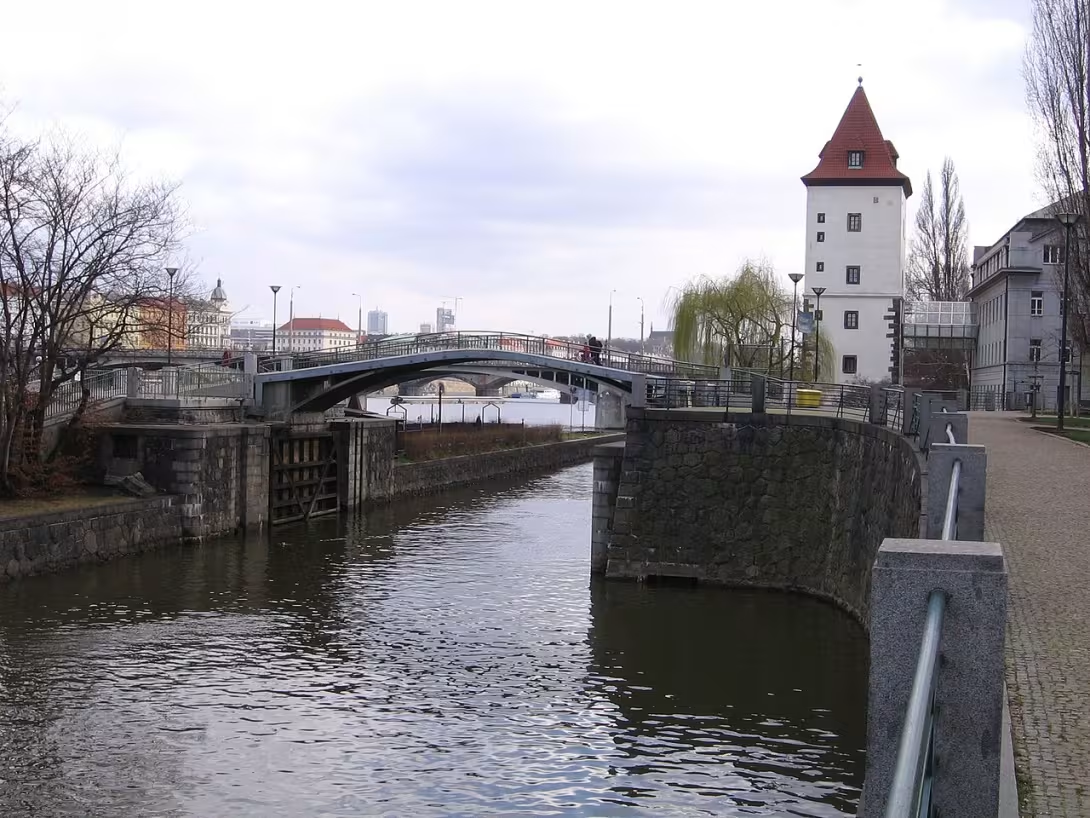
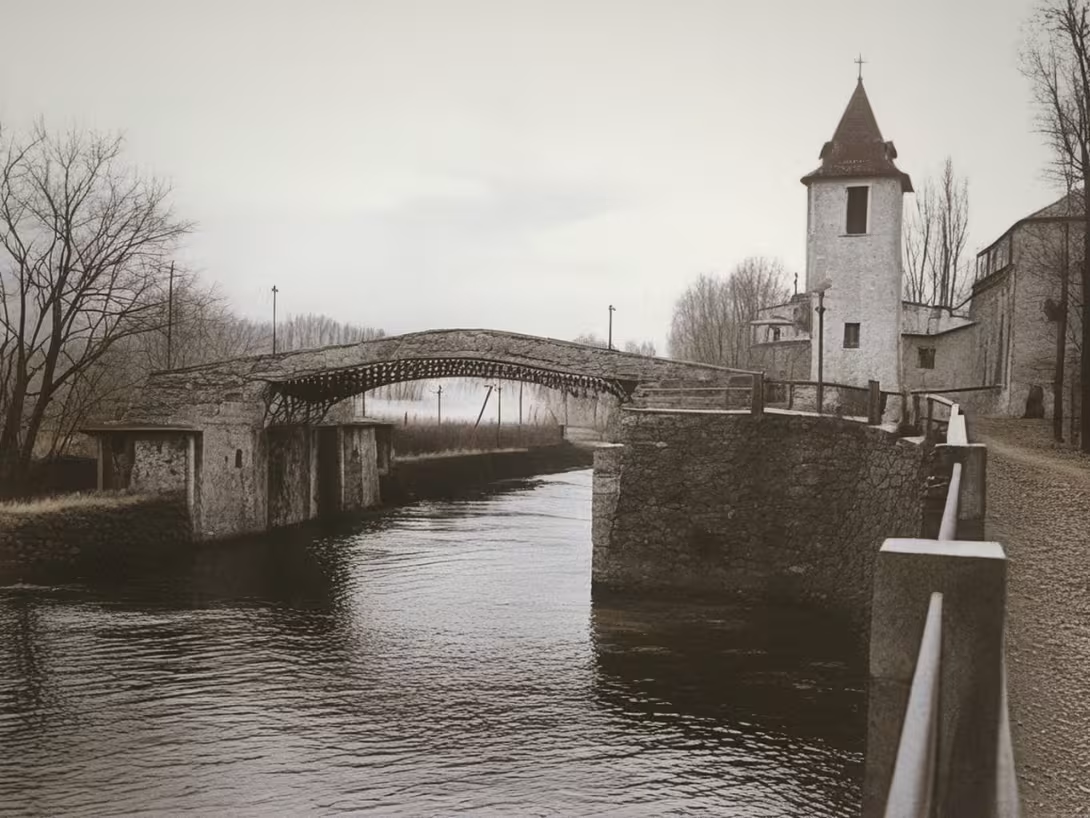
The historical appearance on the left is an AI-generated visualisation and serves as inspiration only.
Historical milestones
- 1939
- Position of the current reinforced concrete arc bridge according to the project Vlastislav Hofman
- 1940
- The bridge survived the first great flood
- 1958
- The bridge was declared a cultural monument
- 2002
- The bridge survived the biggest flood in history
Architectural development
The bridge was built as a reinforced concrete structure with an arc supporting element and a cooperating bridge. The original supports come from plans for the cancelled bridge from Mystery Street. The wooden makeshift from 1922 was replaced by the current bridge in 1939. The material is mainly reinforced concrete, using existing supports.
Historical events
1876-1877: The position of the protective wall around the island and the waterfront wall of Janáček's waterfront, allowing construction of the first bridge on the southern tip of the island.
1880: The documented existence of the first bridge on the Children's Island (Jewish Island), probably built earlier.
1912: Cancellation of the iron lattice bridge when building a new lock.
1958: The bridge was declared a cultural monument
Points of interest
- The Bridge to Children's Island was built in 1939 according to the design of architect Vlastislav Hofman.
- Its construction uses supports originally designed for the planned bridge from Mysík Street (now Jirásek Bridge).
In 1958, the bridge was registered as a protected monument.
- During the floods in 1940 and 2002, the bridge was leveled without any serious damage.
- In 1887 there was a background for the Filipoyakoba pilgrimage, which took place at the Újezská gate.
Guide
This guide is narrated by a synthetic voice generated by artificial intelligence.
Show guide text
This text was created by artificial intelligence and has not been editorially reviewed. It may contain inaccuracies.
Welcome to this elegant bridge that connects Children's Island to Smíchov. You are standing in a place where a simple but highly functional reinforced concrete arch rises over the Vltava pole - a bridge that has resisted time, flood and changing needs of the city. Before you is its solid structure, which wedged between water and shore as proof that even the simplest solution can be most durable. Notice how the arc is smoothly curved over the lock - its shape is not random, but the result of precise engineering thinking.
Let us go back several decades, until 1939, when this bridge was built according to the design of architect Vlastislav Hofman. It was the time when Praha developed its infrastructure and needed a connection between Children's Island and Smíchov. Hofman, known for his functionalist solutions, used already existing supports here, which were originally designed for the cancelled planned bridge from Mysík Street - which eventually became the Jirásek Bridge. This is how this practical but aesthetically tuned bridge was created, which became an integral part of the Prague water zone.
Now pay attention to its design. Look up - see how the arc turns smoothly over the water? It is a typical example of reinforced concrete architecture, which at that time became a favourite material for bridges due to its strength and longevity. The bridge overlaps the lock, which means ships and boats can pass under it. Its supports are firmly anchored in the field, giving it stability even in strong floods.
One of the most interesting stories associated with this bridge is its resistance to flooding. Already in 1940 he survived the first great flood without much damage. Its fortress, however, was most evident in 2002, when the bridge resisted the greatest flood in history, which affected Central Europe. During this disaster, many buildings collapsed, but this bridge swirled and acted as a solid pillar of stability. Its construction is such a real example of how technology and architecture can be compatible with nature.
Now look around you. Notice how the bridge is inserted into the surrounding environment. On the one hand it is Children's Island, which attracts families and nature lovers, and on the other hand Smíchov, which is full of life and history. The bridge has been a connecting element between these two worlds for over 80 years. Its simplicity is almost magical - there is no decorated statue, no monumental decoration, just a clean shape that performs its function without exaggerations.
One of the most interesting things on this bridge is its original purpose. The supports that now support this bridge were originally designed for another project - the bridge from Myk Street. When the project was canceled, these supports were adapted for this arc. It's like the bridge "survived" its original plan and found a new life. This gives this construction something special - the feeling that it is part of a living organism that changes and adapts.
If you look at the bridge from a historical point of view, you'll find that it was registered as a cultural monument in 1958. This means that it was recognised not only as an important technical building, but also as part of the cultural heritage of Prague. Its value lies not only in its functionality, but also in its being part of the story of the city. Anyone who goes after him becomes part of this history.
Now let's stop for a moment and feel the atmosphere of this place. You can hear the sound of water under the bridge, maybe even the wind in the trees on Children's Island. The bridge is like a bridge not only between the two shores, but also between the past and the present. Its simplicity is in contrast to the wealth of detail that you will find in other parts of Prague, but it is in this simplicity that its charm is.
If you want to look at other attractions around you can go to Children's Island where you can find beautiful parks and green areas. Or you can go back to the Smíchov bank, where there are other historical buildings and interesting places. This bridge is just one of many pieces of Prague history worth discovering.
When you say good-bye to us, don't forget to close your eyes for a moment and see how the bridge rises over the Vltava. It is a building that connects, that resists and is part of what makes Prague unique. Thank you for taking a look at this part of our city. Welcome back anytime!
Tips for visitors
{'paragraph': 'The best time to visit the bridge on Children's Island is early in the morning or late in the afternoon when there are fewer crowds. In these times you can enjoy a quiet walk along the bridge and surrounding waterfront without interference. If you prefer a pleasant light for photography, choose the time before noon when the sun lights up the bridge from one side and creates interesting shadows.'}
{'paragraph': 'The right to the bridge is simple. You can get here by car while parking is available nearby. If you prefer public transport, the place is well accessible by buses and trams. It is recommended to verify the current connection in the search engine or using the mobile phone app. If you are arriving by car, make sure that parking is restricted in the vicinity of historical monuments.'}
{'paragraph': 'When visiting a bridge, wear comfortable shoes and suitable clothes because walking along the bridge and surrounding waterfront can be quite challenging. It is advisable to carry sunglasses and sunscreen in the summer, while cover your heads in colder months. If you are planning to take pictures, take a camera battery or a phone with you because there may be longer exposure at this point.'}
{'paragraph': 'Photography of the bridge is very attractive, especially from places where you can see its arch and surrounding architecture. The best light can be found early in the morning or evening when the sun creates pleasant shadows and illuminates the bridge from one side. Interesting footage can also be obtained from Janáček's waterfront, where you can see the bridge combined with the protective wall. Don't forget also photos from the bridge towards the Petřín rocks.'}
{'paragraph': 'Around the bridge to Children's Island there are several interesting places worth visiting during your trip. You can walk along Janáček's waterfront and admire his historic 19th century wall of protection. Nearby is the Smíchov lock, which are interesting for lovers of water works and technical monuments. If you have time, go for a walk to the Petřín rocks, which are about a kilometre away and offer beautiful views of the city.'}
{'paragraph': 'For families with children, a visit to the Bridge to Children's Island is a great opportunity to actively spend time. Children can see the interesting construction of the bridge and walk along the waterfront. In the vicinity you can find places for a picnic where children can relax and have fun. Smíchov lock rooms can be interesting for children interested in water technology. For even more fun you can visit Vysehrad Cemetery, where there are tombs of famous personalities and children can see interesting tombstones.'}
Frequently asked questions
Is most na Dětský ostrov open to the public?
Yes, most na Dětský ostrov is open to the public. The opening hours are 9: 00 to 5: 00.
How do I get to the place by car / public transport?
You can reach the place by bus No. 4 or 15, stop Children's Island. Parking is possible around the bridge.
How much is the entrance fee and is it paid on the spot?
Admission to most na Dětský ostrov is free. No fees shall be paid.
Is the tour suitable for children and seniors?
Yes, a tour of the bridge on Children's Island is suitable for all ages. It has several degrees that are also accessible to people with movement problems.
How long does the tour take?
The tour of the bridge on Children's Island takes approximately 30 minutes. You can also have fun and relax around the bridge.
What are the opening times and booking is required?
The Bridge to Children's Island is open to the public from 9: 00 to 5: 00. Reservation is not necessary, but it is recommended for a group of more than 10 people.
What's interesting in the immediate vicinity?
In the immediate vicinity of the bridge on Children's Island you will also find the park Children's Island where you can have fun and relax. There is also a Prague castle nearby.
For kids
Imagine coming back four thousand four years... To Prague, to a city full of history and secrets. And it's on Children's Island that you find one of the most popular places in the whole republic - the bridge.
It was like before the war when the world was full of change and expectations. The bridge on Children's Island was created in 1941 when people sought comfort and hope in difficult times. Who lived here? Family couples with kids trying to build a new life. What happened here? People would hang out for walks, play football, make out.
Businesses nearby
Events nearby

Zdroj akcí: otevřená data měst a obcí ČR (Národní katalog otevřených dat) a kalendář akcí Národního památkového ústavu.
Nearby
Janáček's waterfront (adjacent waterfront with 19th century protective wall)
Smíchov lock (adjacent water work)
Petřín rocks (natural body about 1 km away)
Vysehrad Cemetery (about 3 km from the historical cemetery)
Accommodation nearby
Trips and activities nearby
Guided tours, tickets and activities nearby from GetYourGuide
Affiliate link: if you buy from the partner, we may receive a commission. The price for you does not change.
Search tours and activities →Themed route
Thematic cruise route: Smíchov and its water and historical treasures
1. Bridge to Children's Island * Type: Technical landmark * A unique bridge connecting the mainland with a small island in the river Vltava, built in the 19th century. Its construction and location close to Janáček's embankment with historic protective wall creates a picturesque setting for walks and photography.
2. Janacek's Raisins * Type: Historical promenade * A waterfront with a preserved 19th-century wall that protected the shore from flooding. Impressive architecture and views of Vltava complement the atmosphere of the industrial heritage Smíchova.
3. Smíchov lock lock * Type: Water work * Technically interesting water work from the end of the 19th century, which regulated the river cruise. The visit allows you to know the history of river transport and its importance for the Prague economy.
4. Petrin rocks * Type: Natural body * About 1 km away, rock formations offering panoramic views of Prague. Suitable for a short tourist trip with the possibility of visiting the Petřín Observatory (optional if it is a separate activity).
5. Vysehrad Cemetery * Type: Historical cemetery * About 3 km from the cemetery complex with significant tombs of Czech personalities. Quiet environment and architectural valuables offer space for relaxation and reflection.
Seasonal recommendations
Spring Spring on the bridge on Children's Island offers a unique atmosphere where nature wakes up after winter. The sun illuminates the bridge with a fine, scattered light that reflects green leaves and flowering trees along the Vltava. The air is fresh, but still cold, and on the bridge a gentle fog often floats, which gives the place mysterious beauty. At this time there are fewer crowds than in the summer months, but it is good to choose a day with mild weather - ideally after the rain, when the water is reflected and the bridge shines like a mirror. Light clothes with layers are suitable because temperatures change quickly during the day. The best time for a walk is in the morning when the light is softer and the places even quieter.
Summer Summer brings a lively atmosphere to the bridge where families, cyclists and tourists gather here. The sun shines here directly, and therefore it is best to visit the memory early in the morning or late in the afternoon when the heat is the least intense. Nature around the bridge is lush - shrubs and trees are in full power, and on the shore of the Vltava often people gather to rest by the water. In the main summer season it is necessary to count on crowds, so you should choose a weekend away from the main holiday days. Wear light, airy clothes, but don't forget sunscreen and hat. The water in the river is warm, so you can take a short bath or just refresh your feet.
Autumn Autumn on the Bridge to Children's Island is magical - leaves on trees are colored in golden, orange and red shades, which are reflected in the reflection of Vltava. The light is softer at this time, but it gets longer dark, so the visit in late afternoon is even more pleasant. The atmosphere is calm, as tourism gradually decreases. The air is colder, but pleasant, and there is often a gentle wind floating around that blows the leaves. Suitable is clothes in warm colors, which are suitable for autumn colors, and don't forget the warm sweater. The best time to visit is in September when the weather is still stable and nature is in full autumn beauty.
Winter Winter most na Dětský ostrov offers a quiet, almost fabulous atmosphere. The sun shines low above the horizon and is therefore reflected in the ice crust in Vltava, which is formed in some parts. Nature is calm, the trees are naked, but their cherry branches and tribes create interesting contrasts. In advent time, snowflakes often float here, giving the place mysterious beauty. In winter, however, it is necessary to take into account the shorter opening time of some surrounding facilities and possible freezing. Wear warm, layered clothes, including warm gloves and hats, and choose a day with bright weather. The best time to visit is the afternoon when the light is most pleasant and the ice on the river can be safer.
Visualizations and artistic views


The visualisations are generated by artificial intelligence and serve as inspiration.
Photos from the area
Real photos taken near the monument


Zdroj a licence jsou uvedeny u každého snímku.
Atmosphere of the place
This atmospheric visualisation of the place and period was generated by artificial intelligence. It is not real footage of the location.
Tips from visitors
No tips yet. Be the first!
Log in and add your tip.
Sources and literature
Fotografie: Jvs / CC BY-SA 3.0 — Wikimedia Commons. The author and licence also appear when you hover over the image.
Faktickým podkladem tohoto textu byl článek na Wikipedii, jehož autory jsou přispěvatelé Wikipedie. Článek je dostupný pod licencí CC BY-SA 4.0.
Location on the map
Příběhy a pověsti
Legendy, pověsti a příběhy spjaté s touto památkou

Fotografie návštěvníků
Zatím žádné fotografie. Buďte první, kdo přidá fotografii z návštěvy!
Přihlaste se a přidejte svou fotografii nebo hodnoťte.
Za ověřenou návštěvu v aplikaci získáte víc bodů — poznáme podle GPS, že jste na místě.
Reviews and comments