



Budova Gymnázia J. K. Tyla School building
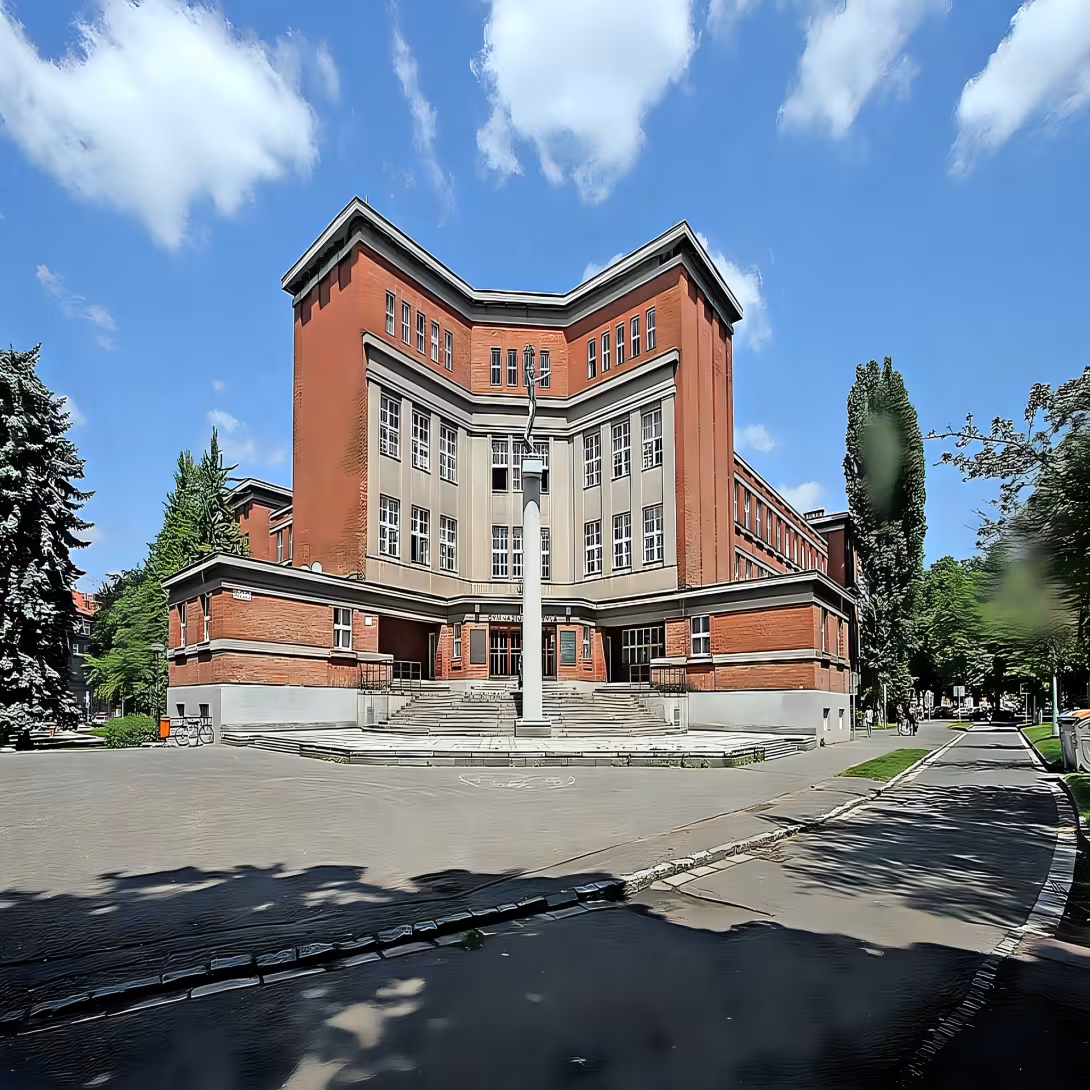
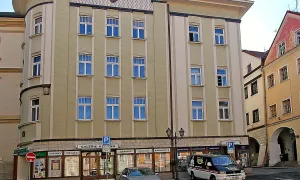
The J. K. Tyl Grammar School in Hradec Králové is a functionalist school building from 1920, standing on the bottom of the Elbe boiler. Josef Gočár is protected as a cultural monument and represents a key example of modern school building in the first half of the 20th century. The area is a unique exemplary object that reflects the efforts at the time to rationalise the educational space and architectural innovation.
The creation of the building is linked to the development of Czech education and architecture after the First World War. At that time, modern educational concepts were promoted, which required appropriate spatial solutions. Josef Gočár, one of the most important Czech architects of the interwar period, designed the school complex as an example of a functionalist approach. This style, which has been developing in Europe since the beginning of the century, highlights the functionality, simplicity and use of modern materials. In Hradec Králové other important projects were carried out at that time, which contributed to the modernisation of the city.
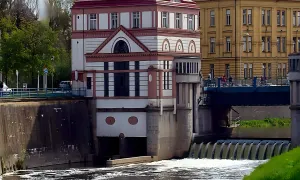
Architectural is a gymnasium characterized by a functionalist style. The building is a compact unit with a clear functionality of individual spaces. Gočár's proposals often use geometric shapes and minimalist design, which is evident in this school. It is typically a combination of concrete, steel and glass, common to modern buildings of the time. The area is located strategically near the Elbe River, which affected its urban solution.
The building has been used continuously since 1920 as a school building. It is named after the important Czech playwright Josef Kajetán Tyl, which combines educational space with cultural tradition. During its existence, it has probably undergone several modifications, but they have not changed its basic functionalist nature.
Today, the gymnasium is an active school, but also a protected cultural monument. The area is open to the public, even if its interiors serve solely educational purposes. The exterior offers the opportunity to recognize the unique architecture of the interwar period and understand its importance for Czech modern architecture. Visiting this building allows you to see how modern ideas have been applied in everyday life and education.
This monument is not only an architectural model, but also evidence of efforts to rationalise and innovate in the interwar period. Her visit brings not only knowledge of architecture, but also a reminder of the importance of schools in shaping modern society. For people interested in the history of Czech education and architecture, it is worth a visit.
Then and now
Drag the slider to compare how the landmark may have looked when it was built with the view today.
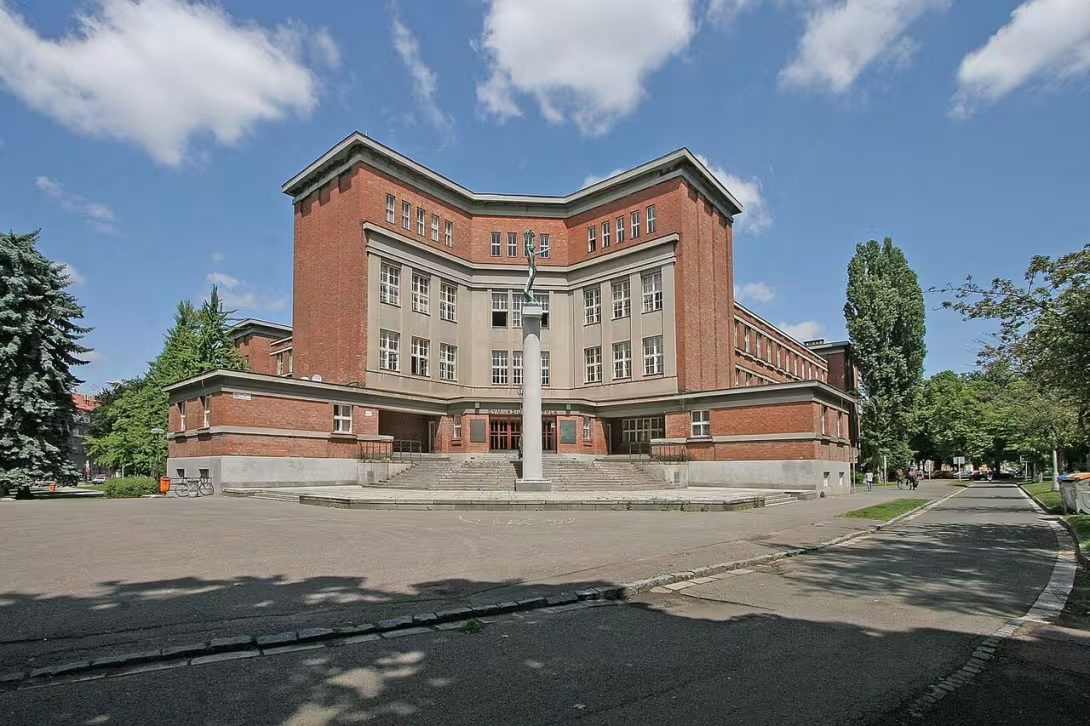

The historical appearance on the left is an AI-generated visualisation and serves as inspiration only.
Historical milestones
- 1920
- Construction of the premises of the functionalist secondary school according to the project Josef Gočár
Points of interest
- The building is the supreme work of Josef Gočár, an important Czech architect of the interwar period.
- It is an example of functionalist school building in the first half of the 20th century, where functionality, simplicity and modern materials are highlighted.
- The area is located in a strategic location near the Elbe River, which affected its urban solution.
- The building has been continuously serving as a school building since 1920 and is named after Czech playwright Josef Kajetán Tyl.
- It is protected as a cultural monument and offers the opportunity to recognize the unique architecture of the interwar period.
Guide
Show guide text
This text was created by artificial intelligence and has not been editorially reviewed. It may contain inaccuracies.
Welcome to one of the most important school buildings of our country - the building of the Gymnasium of Josef Kajetán Tyl in Hradec Kralove. You are standing where modern education and architecture met for the first time in our country in harmony. In front of you there is a functionalist school building that has shown as one of the first in the Czech Republic what the school can look not only like a place of learning but also as an art work. Its clean lines, spacious spaces and carefully thought-out disposition will interest you immediately. Take a look around - see how the building with calm dignity flows along the slope above the Elbe? It is as if she was offering herself to find not only knowledge but inspiration in it, as well as in teachers.
This school was founded in 1920 according to the plans of one of the most important Czech architects - Josef Gočár. He was a man who could combine modern ideas with our traditions, and here, in Hradec Kralove, he created a work that we still consider masterful. At that time, functionalism was developing in Europe - a direction that rejected unnecessary decoration and emphasized functionality, light and airspeed. Gočár transferred these principles to the school environment and showed that the classroom may not just be a simple place to sit behind the benches, but it may be a place where the soul wakes up. The building was built for a high school, but its importance goes beyond education - an example of how architecture can affect people's entire lives.
Now pay attention to what surrounds you. In front of you is the front of a building that immediately captures you with its pure, geometric shapes. Note how windows are arranged - not chaotic, but according to precise rules that promise enough light and fresh air. This was not obvious at the time - Gočár knew that good learning began with a well-designed space. Also look at the facade - its smooth surfaces and simple details indicate that there is no luxury excess, but only what is necessary. And it is in this modesty that its power lies.
Let's move a little further and think about how this building has influenced the next generation of architects. Gočár has shown here that school may not only be a cold, soulless building, but a place that promotes creativity and freedom of thought. His proposal was so revolutionary that he became a model for other school buildings not only in our country but also abroad. Although there were not many similar projects at the time, this building became proof that Czech architecture can be modern and at the same time deeply human.
Interestingly, despite her age, this school has remained in almost original condition. This is not obvious - many historical buildings have been rebuilt or even destroyed over time. But this is where we managed to preserve the original spirit of the place. When you look at details like staircases or entrance halls, you feel that every step has been thought out. Gočár knew that architecture should serve not only the moment, but also the future. That is why this building is still standing today - as a witness to the time when our country was learning how to combine tradition with progress.
Not only a monument, but also a place where the lives of hundreds of pupils and teachers took place. Even though we don't know the names of everyone who studied or taught here, each of them contributed to their own way of living this building. There were those here who learned to poem, paint or seek answers to questions of science. There were also teachers who transferred their knowledge and passion to the next generation. And it is this invisible network of people, thoughts and memories that gives this place its true value.
Take another look before leaving. You're standing where history and the present meet. This building is not just stone and plaster - it is a place where ideas are born, where we learn and where a new chapter is written every day. If you want to explore more, come for a walk around the premises. Stop at the entrance, look at the details you might miss at first sight, and get carried away by how this building can speak without words.
Thank you for taking the time to visit this place. We hope that you have taken away not only knowledge, but also the feeling that history is not just something that goes far, but that it is a part of each of us. Let this building bring you not only inspiration, but also joy that our country can create beauty that lasts centuries. When you return to Hradec Kralove again, know that here you will always find a place to welcome you. Goodbye!
Tips for visitors
The best time to visit this functionalist building is during spring or autumn months when the weather is pleasant outside and there are no crowds like in summer months. The building is a typical example of modern architecture from the beginning of the 20th century, so it is advisable to visit it in sunny weather when its clean lines and bright materials are better reflected. The morning or afternoon is also convenient because light falls favourably on the facade and creates interesting shadows.
At these times, it is possible to view the building more calmly and pay better attention to the details that make it unique.
The location is also well accessible by public transport. It is recommended to check the current connection in the traffic search engine because the frequency of connections may change.
Hradec Králové has a well-developed transport infrastructure that allows easy access to this historical monument.
When visiting, wear comfortable shoes and comfortable clothes, as a tour of the building may include short walks around the premises. It is also convenient to carry a map or mobile application with navigation so that you can easily navigate around. If you are interested in the history of architecture, you can bring a notebook and a pencil to make notes.
The building is located in the center of the city, but its area may be a little large and therefore it is good to be ready.
Photography is allowed, but the best places for quality images are the front facade of the building and its interiors if available. The best light for photography is in the morning or afternoon when the sun shines from an angle and creates interesting shadows. If you want to capture the overall impression from the premises, photograph the building from different angles and perspectives.
The facade and interiors of the building offer interesting architectural details that are better photographed in favourable light.
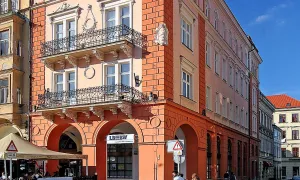
In the vicinity of the Gymnasium J. K. Tyla there are several interesting places worth visiting. You can visit other historical buildings in the heart of Hradec Kralove, which are also protected and have great cultural value. For nature lovers it is advisable to go to nearby parks or to the edge of the city, where there are picturesque walking routes along the Elbe River.
Hradec Králové offers a wide range of cultural and natural attractions that can be visited within a short time.
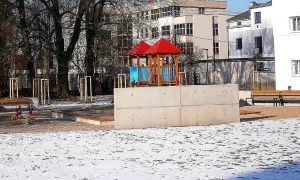
For families with children, visiting this building is a great opportunity to get to know history and architecture. Children can look at an interesting school building and find out what the school looked like a few decades ago. You can also talk about the importance of functionalist architecture and how it differs from current school buildings. It is also possible to find places where children can have fun, for example in the park or on the playground.
This visit can be an interesting and educational experience for children to help them better understand history and architecture.
Frequently asked questions
Can the monument be visited?
The building is in use (offices, a school, shops and the like). The interior is generally accessible only during operating hours and tours are not usually offered; we have not verified the details. You can see the exterior from the street.
Where is the monument?
Location: Tylovo nábřeží 682/12, Hradec Králové, Královéhradecký kraj. The map on this page shows the exact spot.
Why is the monument protected?
It is listed in the Central List of Cultural Monuments of the Czech Republic as a cultural monument (register no. 42132/6-540).
Businesses nearby
Do you run a restaurant, accommodation, shop, museum, rental, wellness or other visitor service near this monument? Show yourself directly to the people heading to it — this is how they will see you in the app and on the web:
Nearby
➜ Zobrazit interaktivní přehled okolí – restaurace, ubytování, půjčovny a další místa v okruhu 15 km.
Data: OpenStreetMap contributors, okruh 15 km.
🏰 Historické památky
- Galerie moderního umění (0.6 km)
- Válka 1866 (7.1 km)
- Pomník Karla Schulze a Pavla z Mosru (8.0 km)
- Pomník Adolfa von Stiegliz (8.1 km)
- Válka 1866 (8.2 km)
- Pomník Ernesta rytíře von Lowenthala (8.3 km)
- Pomník saského sboru (8.7 km)
- Válka 1866 (8.9 km)
🍽️ Restaurace a stravování
- Pho 99 (0.4 km)
- Alen Bakery (0.4 km – Velké náměstí 165/2)
- Restaurace Mustang U Děravýho Kotle (0.5 km)
- Faency Fries (0.6 km – třída Karla IV. 467/20)
- tulipán (0.6 km – třída Karla IV. 610/21)
- Sushi box UA (0.9 km – Československé armády 219/24)
- U Švagerků (1.1 km – Všehrdova 194/6)
- McDonald's (1.2 km)
🏨 Ubytování
- Hotel Pod Věží (0.4 km)
- Hotel Okresní dům (0.4 km – Palackého 6)
- Nové Adalbertinum (0.6 km – Velké náměstí 32/40)
- Penzion Amátka (0.8 km – Malé náměstí 120/13)
- Penzion MAR (1.0 km)
- Černigov (1.1 km)
- Penzion UNO (1.9 km)
- Penzion - Ubytovna U Mlejna (2.1 km – Zámostí 261/19)
🚲 Půjčovny a sport
- Cyklospeciality (0.2 km)
- Hudy Sport (0.3 km)
- MOJEKOLO (0.4 km)
- Husky (0.5 km)
- Jízdní kola V. Kulhánek (0.6 km)
- hejduk sport (0.6 km – Škroupova 16)
- Divecentrum CZ (0.7 km)
- lezecká stěna Hradec Králové (1.8 km – Brněnská 302)
🥾 Turistika a příroda
- Pod Kopcem sv. Jana (3.4 km)
- Ceres (3.4 km)
- Merkur (3.5 km)
- Venuše (3.5 km)
- Země (3.5 km)
- Měsíc (3.5 km)
- Mars (3.5 km)
- Hradec Králové - Kluky (3.6 km)
Accommodation nearby
Themed route
Thematic cruise route: Cultural and educational heritage in the centre of Hradec Králové
1.Budova Gymnázia J. K. Tyla Type: Historical school building One of the most important monuments of the city, built in a neo-Renaissance style. It is associated with the personality of Josef Kajetan Tyl, founder of Czech national school, and represents an important part of the educational tradition of the region.
2. Square of the Grand Square Type: City center with monuments It is located right near the Gymnasium and offers a view of historical development with Renaissance and Baroque elements. It's the heart of a city where trade, culture and social life meet.
3. Church of the Holy Spirit Type: Sacral monument A Gothic building with later modifications, standing near the gymnasium. It is an important example of medieval architecture and associated with the history of the city and the religious life of the population.
4. Zámek Hradec Králové Typ: Renesanční sídlo Leží v těsném sousedství gymnázia a je jednou z nejstarších a nejlépe zachovaných renesančních staveb v Čechách. Jeho historie sahá až do 16. století a je spojena s významnými šlechtickými rody.
5. Park near the castle pond Type: Garden and recreation area Quiet place near the castle, ideal for relaxing and walking. It offers a quiet atmosphere and a view of the water area, which is part of the historical area.
Seasonal recommendations
Spring: In the spring period, J. K. Tyl's Gymnasium building in Hradec Králové is transformed into a place full of life, when flowering gardens and trees come to life. Sun rays illuminate architectural details of the building with a softer light, which contributes to a harmonious atmosphere. Visitors can enjoy quiet moments without excessive crowds and it is advisable to dress up so that it is neither too cold nor too warm on the exit. The best time to visit is noon, when the sun lights the building best and the gardens are full of beauty.
Summer: In the summer period, J. K. Tyl's Gymnasium is a popular place to visit when the sun lights up the building with its hottest rays and gardens turn into a refuge from the heat. The atmosphere is full of activities and crowds can be quite large, especially on the middle of the day. It is recommended to visit in the morning or later in the afternoon to avoid the hottest times, and to wear light clothes suitable for warm soil. It is good to remember enough drinking when visiting.
Autumn: In autumn the gardens and surroundings of the Gymnasium J. K. Tyl of color charm are acquired, when the leaves move into living shades. Sun rays become shorter and light is softer, creating a calm and soothing atmosphere. Visitors can enjoy mild temperatures without excessive crowds; It is advisable to dress so that it is neither too cold nor too warm at the exit. The best time to visit is in the afternoon when the sun illuminates the building and the surrounding area in its most beautiful autumn colours.
Winter: In winter the J. K. Tyl Gymnasium takes on a unique appearance when snow sheets decorate the architectural structure and light is less intense. The atmosphere is calm and quiet, which contributes to a comfortable walk. Visitors should wear warm clothes and prepare for a shorter opening time of the sights. The best time to visit is in the morning, when the sun's rays light the building best and provide a pleasant temperature for walking.
Visualizations and artistic views


The visualisations are generated by artificial intelligence and serve as inspiration.
Photos from the area
Real photos taken near the monument

Zdroj a licence jsou uvedeny u každého snímku.
Tips from visitors
No tips yet. Be the first!
Log in and add your tip.
Sources and literature
Photos: Prazak / CC BY 2.5, rozlišení zvýšeno umělou inteligencí — Wikimedia Commons. The author and licence also appear when you hover over the image.
Location on the map
More monuments – Hradec Králové
Show all in the municipality
Příběhy a pověsti
Legendy, pověsti a příběhy spjaté s touto památkou
Fotografie návštěvníků
Zatím žádné fotografie. Buďte první, kdo přidá fotografii z návštěvy!
Log in a přidejte svou fotografii nebo hodnoťte.
Za ověřenou návštěvu v aplikaci získáte víc bodů — poznáme podle GPS, že jste na místě.
Reviews and comments