






V Kopečku 14 Tenement house
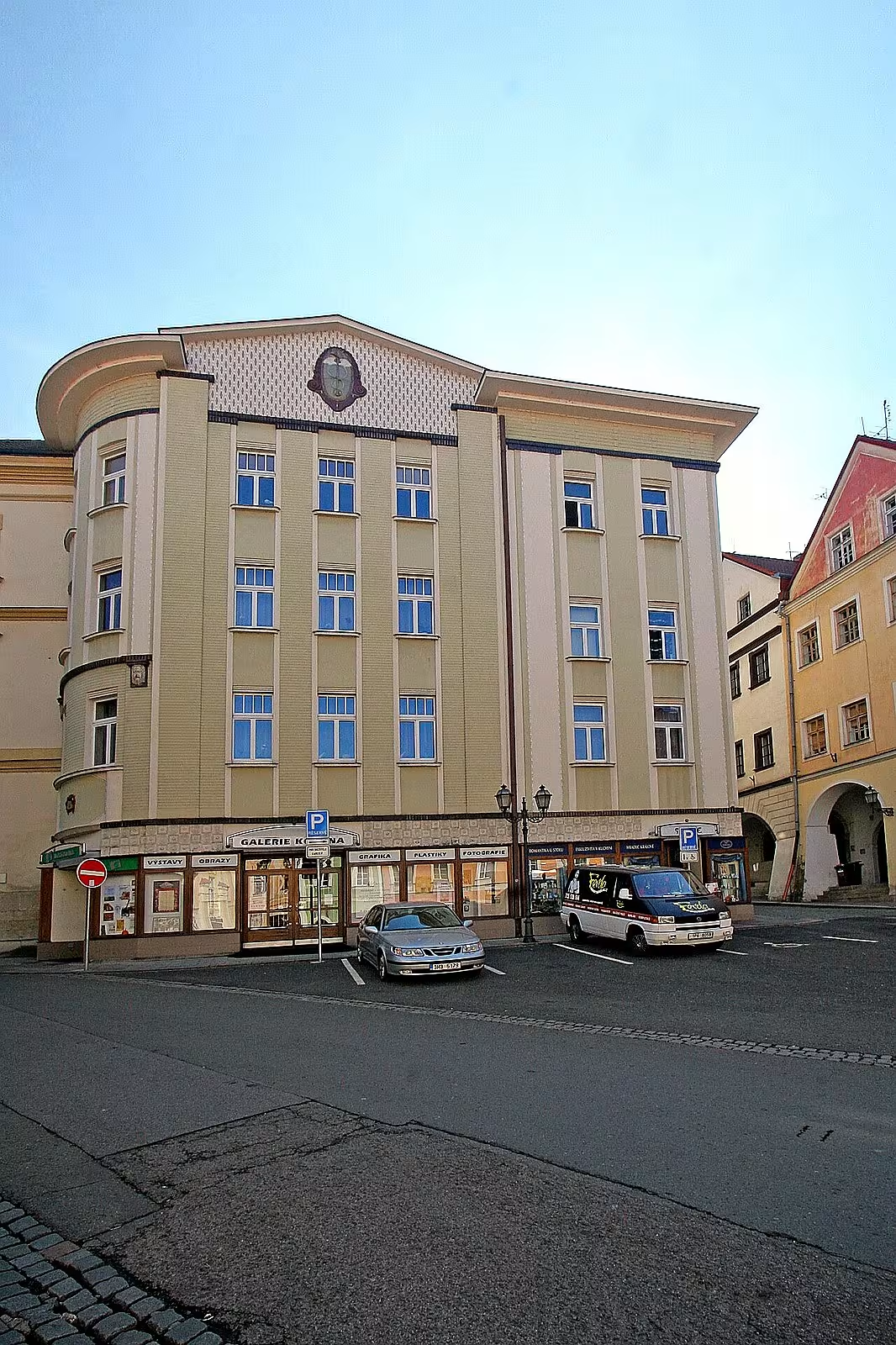
Hanušův dům at V Kopečku 14 in Hradec Králové is an important example of early modernist architecture in the Czech Republic. Designed by Vladimír Fultner for his uncle Antonín Hanuš, this building was completed between 1909 and 1911. It stands out as one of the first modernist structures integrated into Hradec Králové's historical core, symbolizing a transition from traditional architecture to emerging modern trends.
Construction began in 1909 under Vladimír Fultner, who was just starting his career at age 22 and had not yet finished his studies at Prague Technical University. Despite lacking formal qualifications, he received support from Antonín Hanuš, an industrialist known for his leather empire, and Mayor František Ulrich. Their collaboration helped overcome opposition from city building officials, marking a pivotal moment in Hradec Králové's architectural history by introducing modernist elements into its historic center.
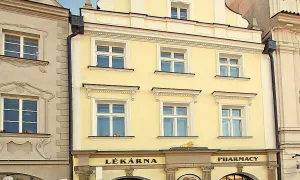
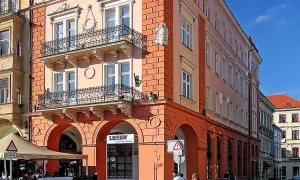
Architecturally, Hanušův dům is distinguished by its secessionist style, which Fultner skillfully integrated with modern trends. The three-part main facade faces the expanded Svatojánské náměstí (historically known as V Kopečku). It features a slightly protruding central rizalit divided by pilasters, two of which are taller and support a triangular tympanum containing an oval medallion with a stucco motif of Mercury's caduceus. The right section is simpler, consisting of two parts separated by colorful pilasters and topped with a prominent cornice. On the left, the oblique corner features a band cornice supported by consoles with secessionist masks and an oval cartouche bearing the initials AM above the main entrance. These elements reflect typical modern trends such as moderate division, pronounced verticality, a striking horizontal roof cornice, and tasteful incorporation of secessionist motifs.
Originally built for Antonín Hanuš, specific details about subsequent ownership are not documented in available sources. However, its construction from 1909 to 1911 was significant in Hradec Králové as one of the first modernist buildings in the city’s historical center.
Today, Hanušův dům remains an important architectural landmark within Hradec Králové. Located near other notable modernist structures like the municipal museum and Hotel Grand, it offers visitors insight into early 20th-century cultural and architectural shifts towards modernism in Bohemia. The building's integration of traditional materials with innovative design elements makes it a fascinating site for those interested in architectural history.
Visiting Hanušův dům provides an opportunity to appreciate the pioneering spirit of early modernist architecture in the Czech Republic. Its unique blend of secessionist and modernist styles, coupled with its historical significance, makes it a must-see destination for anyone exploring Hradec Králové's rich architectural heritage.
Then and now
Drag the slider to compare how the landmark may have looked when it was built with the view today.
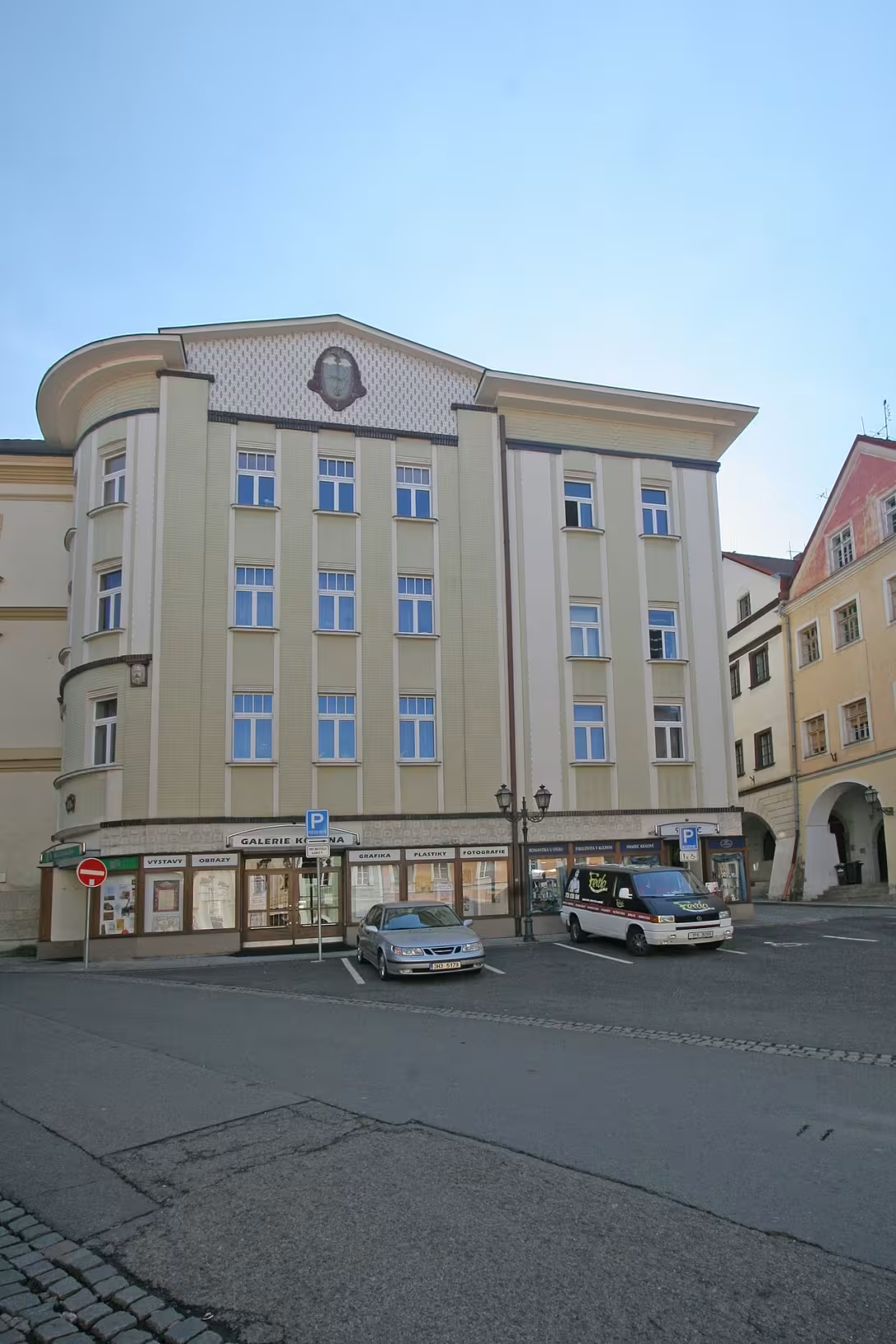

The historical appearance on the left is an AI-generated visualisation and serves as inspiration only.
Historical milestones
- 1909
- Construction began on Hanušův dům by Vladimír Fultner as one of the first modernist buildings in Hradec Králové's historical center.
Architectural development
Hanušův dům was designed by Vladimír Fultner, who incorporated elements of secessionism into its architecture. The building features a three-part main facade with distinctive pilasters and a tympanum adorned with an oval medallion. It represents a blend of modernist trends with traditional materials, including reinforced concrete structures.
Historical events
1909-1911: Construction of Hanušův dům by Vladimír Fultner as one of the first modernist buildings in Hradec Králové's historical center.
Owners
The house was originally built for Antonín Hanuš, an industrialist known for his leather empire. Specific details about subsequent ownership are not documented in the provided sources.
Points of interest
- Despite being just 22 years old and not having completed his studies at Prague Technical University, Vladimír Fultner was entrusted with designing Hanušův dům due to his innovative vision and the support of influential figures like Antonín Hanuš and Mayor František Ulrich.
- The building's facade features a unique stucco motif of Mercury’s caduceus within an oval medallion, symbolizing commerce and communication, which reflects Antonín Hanuš’s connection to his leather empire business.
- One of the distinctive architectural elements is the secessionist masks on consoles supporting the band cornice at the oblique corner, representing a blend of traditional motifs with modern design trends that characterized early 20th-century architecture in Hradec Králové.
- Hanušův dům was one of the first buildings to introduce modernist elements into Hradec Králové's historic center, marking a significant shift from the city’s predominantly traditional architectural styles and paving the way for future developments like the municipal museum and Hotel Grand.
- The initials "AM" in an oval cartouche above the main entrance subtly honor Antonín Hanuš, whose financial backing was crucial in overcoming opposition from city officials and facilitating this pioneering modernist project.
Guide
This guide is narrated by a synthetic voice generated by artificial intelligence.
Show guide text
This text was created by artificial intelligence and has not been editorially reviewed. It may contain inaccuracies.
Hanuš's house on V Kopečku street in Hradci Králové is a modernist building whose construction is dated to the year 1909, or possibly 1911. It was designed by architect Vladimír Fultner for his uncle, industrialist Antonín Hanuš, on a corner plot.
Fultner was just at the beginning of his career at the time. He was 22 years old and had not completed his architecture studies at the Prague technical school. Apart from his uncle's trust, however, he had the support of the city mayor František Ulrich, who championed young creators. Among them were also Josef Gočár, Rudolf Němec, and Bedřich Bendelmayer.
The task was not simple. Fultner had to rebuild the corner house number 169 and newly construct houses on the neighbouring plots 170 and 171. He was then to connect everything with a unified facade into one whole, which would correspond to the growing prestige of Hanuš's tanning business. It was the very first modernist building in the historic core of the city. With the mayor's support, Fultner pushed it through despite considerable resistance from the city's building officials. Symbolically, he thus connected new buildings with the original historical development, buildings that arose on the site of former fortifications. These were the city museum, the District House, and the Grand Hotel. The house was built by the firm of Robert Schmidt, and the reinforced concrete structures were carried out by František Jirásek.
The main facade faces the widened section of V Kopečku street, which was formerly called Svatojánské náměstí. It is divided into three parts. The central section projects slightly forward, has three window axes, and is articulated by pilasters. The two end sections are taller and appear to carry a triangular gable. In it is an oval medallion with a stucco Mercury's rod. The right part has only two window axes and differently coloured pilasters, and at the top it is closed off by a markedly projecting cornice. The left part forms a curved corner. The eye is caught by a band of cornice made of brick, which is supported by consoles with Art Nouveau mascarons, that is, decorative masks. Above the main entrance is a stucco cartouche with the initials A M.
The facade thus employs typical elements of the modern trends of that time. It has restrained articulation, distinctly emphasizes vertical lines, and features a striking horizontal roof cornice. Art Nouveau elements are restrained and predominantly geometric.
Tips for visitors
The best time to visit Hanušův dům is during the late spring or early fall when the weather is pleasant, allowing you to comfortably explore both the building itself and its surroundings. These seasons offer mild temperatures and vibrant natural scenery, enhancing your experience of Hradec Králové's historical center. Additionally, visiting outside peak tourist season can provide a more intimate exploration of this architectural gem.
The area is well-served by buses and trams, making it easy to reach on foot from various points around Hradec Králové. Always check for the most current transport options before your visit.
When visiting Hanušův dům, consider bringing a camera or smartphone with a good camera app, as well as comfortable walking shoes since you'll likely be exploring on foot. A light jacket is also recommended due to variable weather conditions in Hradec Králové. Additionally, carrying water and some snacks can make your visit more enjoyable.
For photography enthusiasts, the best spots for capturing Hanušův dům are from its front façade or across the street where natural lighting accentuates its modernist features, especially during golden hour in the early morning or late afternoon. The surrounding area of Hradec Králové's historical center provides a picturesque backdrop that complements the architectural style.
Nearby attractions within 30 minutes include the municipal museum and Hotel Grand, both offering insights into the region's cultural heritage and modernist architecture. These sites provide additional context to Hanušův dům’s significance in Czech architectural history. Families with children might also enjoy exploring the nearby parks or historical sites for a more comprehensive experience of Hradec Králové.
Frequently asked questions
Can the monument be visited?
Some buildings of this kind are open for guided tours, others serve another purpose or are privately owned. We have not verified whether and when this monument is open – please ask the operator.
What are the opening hours and admission?
We have not verified the opening hours or admission. Current information is published by the operator.
Where is the monument?
Location: Hradec Králové, Královéhradecký kraj. The map on this page shows the exact spot.
Why is the monument protected?
It is listed in the Central List of Cultural Monuments of the Czech Republic as a cultural monument (register no. 1000146756).
Businesses nearby
Do you run a restaurant, accommodation, shop, museum, rental, wellness or other visitor service near this monument? Show yourself directly to the people heading to it — this is how they will see you in the app and on the web:
Nearby
Hanušův dům is situated in Hradec Králové's historical center, near other significant modernist structures such as the municipal museum and Hotel Grand. The area features a mix of historic buildings and newer constructions.
Accommodation nearby
Themed route
Trasa: Hradec Králové - moderní architektura
1. Hanušův dům (hlavní cíl) - 10 minut chůze od nádraží Tento nájemní dům je příkladem funkcionalistického stylu architektury z roku 1931. Je zajímavý svou jednoduchou a funkční architekturou, která vychází z potřeb obyvatel města.
2. Městské muzeum (1,5 km od Hanušova domu) Nachází se v blízkosti Hanušova domu a představuje moderní architekturu města Hradec Králové. V muzeu je k vidění expozice o historii města a jeho architektonickém vývoji.
3. Hotel Grand (1 km od Hanušova domu) Tento hotel je další příkladem modernistické architektury v Hradci Králové. Jeho jednoduchá a funkční architektura je charakteristická pro tento styl.
Seasonal recommendations
Jaro: In the spring season, there is a specific warming after winter that creates a pleasant atmosphere for exploring historical sites. Visitors are expected to be numerous, so it's best to start early in the morning to avoid crowds. The best time to visit is in the first half of the day when the sun shines and illuminates the historic buildings.
Léto: In the summer season, there is specific warm weather that allows for exploring historical sites without winter clothing. During the peak of summer, it's also advisable to bring water and snacks to rest from the heat.
Podzim: In the autumn season, there is a specific charm of historic buildings surrounded by autumn nature. Leaves and flowers create beautiful colors that complement the historic structures. The best time to visit is in the second half of the day when the sun shines and illuminates the historic buildings. Visitors are expected to be numerous, so it's good to start early in the morning to avoid crowds.
Zima: In the winter season, there is specific cold weather that requires warm clothing. Visitors are expected to be numerous, so it's best to start early in the morning to avoid crowds.
Visualizations and artistic views


The visualisations are generated by artificial intelligence and serve as inspiration.
Photos from the area
Real photos taken near the monument


Zdroj a licence jsou uvedeny u každého snímku.
Tips from visitors
No tips yet. Be the first!
Log in and add your tip.
Sources and literature
Photos: Petr1888 / CC BY-SA 3.0 — Wikimedia Commons. The author and licence also appear when you hover over the image.
Faktickým podkladem tohoto textu byl článek na Wikipedii, jehož autory jsou přispěvatelé Wikipedie. Článek je dostupný pod licencí CC BY-SA 4.0.
Location on the map
More monuments – Hradec Králové
Show all in the municipality
Příběhy a pověsti
Legendy, pověsti a příběhy spjaté s touto památkou
Fotografie návštěvníků
Zatím žádné fotografie. Buďte první, kdo přidá fotografii z návštěvy!
Log in a přidejte svou fotografii nebo hodnoťte.
Za ověřenou návštěvu v aplikaci získáte víc bodů — poznáme podle GPS, že jste na místě.
Reviews and comments