






budova Riunione Adriatica di Sicurtà House
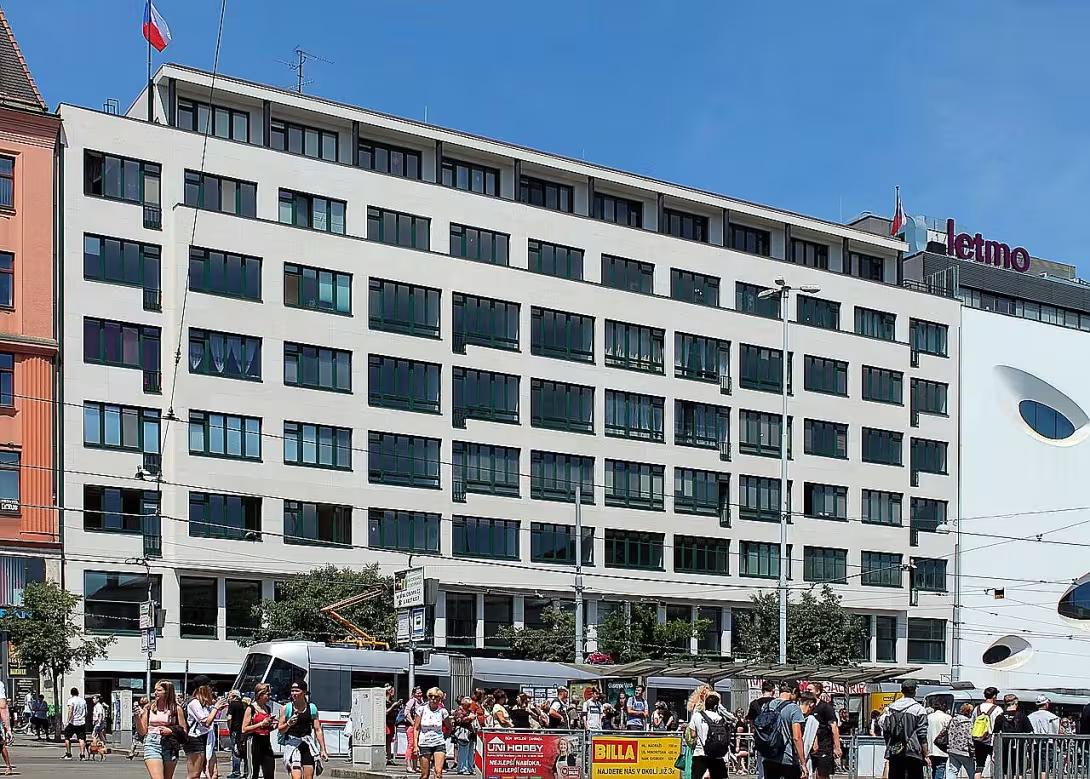
The Riunione Adriatica di Sicurtà Building in Brno is a proof of late architectural innovations from the 1930s, embodying the principles of functionalism that gained endurance in Czechoslovakia. This building is designed by architect Karel Kotas and completed in 1938 and is located on the railway part of the Brno circuit road, which stands at the main railway station. Its importance lies not only in its architectural style, but also as a cultural monument reflecting aesthetic values and the sociopolitical context of its time.
This building, which was entrusted by Riunione Adriatica di Sicurtà (RAS) in 1936, was an important moment in Brno's architectural history. Karel Kotas, a graduate of the Vienna Academy of Fine Arts, designed it as part of the expansion of the RAS to key Czechoslovak locations such as Prague and Liberec. Replacing the existing four-story neoRenaissance structure with a functionalist design Kotas underlines the shift towards modern architecture in the region. This transition took place against the growing political tension that led to World War II, highlighting its role in broader cultural and historical currents.
Architecturally, the Riunione Adriatica di Sicurtà Building illustrates Kot's championship of functionalism through its large metropolitan scale and balanced dimensions. On the ground floor there is a black marble cover that highlights the entrance, which leads to a glazed passage for commercial spaces - functions integrating function with aesthetic attraction. The upper floors are designed for living, while the distinctive roof apartment on the terrace adds an elegant silhouette to the profile of the building. This design reflects Kotas' architectural vision and serves as a physical expression of the emphasis of functionalism on practicality and simplicity.
During its history, the Riunione Adriatica di Sicurtà Company experienced significant changes in ownership and use. After World War II, it was based in the offices of Czechoslovak airlines and later the Brno transport company. From 2021 to 2022, the town of Brno-stroed committed to a major reconstruction project, which cost over CZK 89.3 million. Today, the building serves as the Office of Civil Register for Brno-stroed, with other residential units in the upper floors.
Today, the Building Riunione Adriatica di Sicurtà is not only an architectural monument, but also a functional space in Brno's urban fabric. Its location near the main train station underlines its continuing importance in the main transport hub, surrounded by modern infrastructure and ongoing urban development. Visitors of Brno can appreciate this building for its historical significance, architectural beauty and role in the present life of the city.
The Riunione Adriatica di Sicurtà building is more than an architectural monument; is a living part of Brno's history and culture. His journey from a functionalist masterpiece to a modern administration center reflects a broader story about the city's changes and continuity. For people interested in architecture, history or urban development, this building offers a unique view of the past while still serving current needs. Visiting this site is an opportunity to explore the rich architectural heritage of Brno and its continued evolution.
Then and now
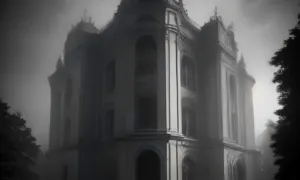
Drag the slider to compare how the landmark may have looked when it was built with the view today.
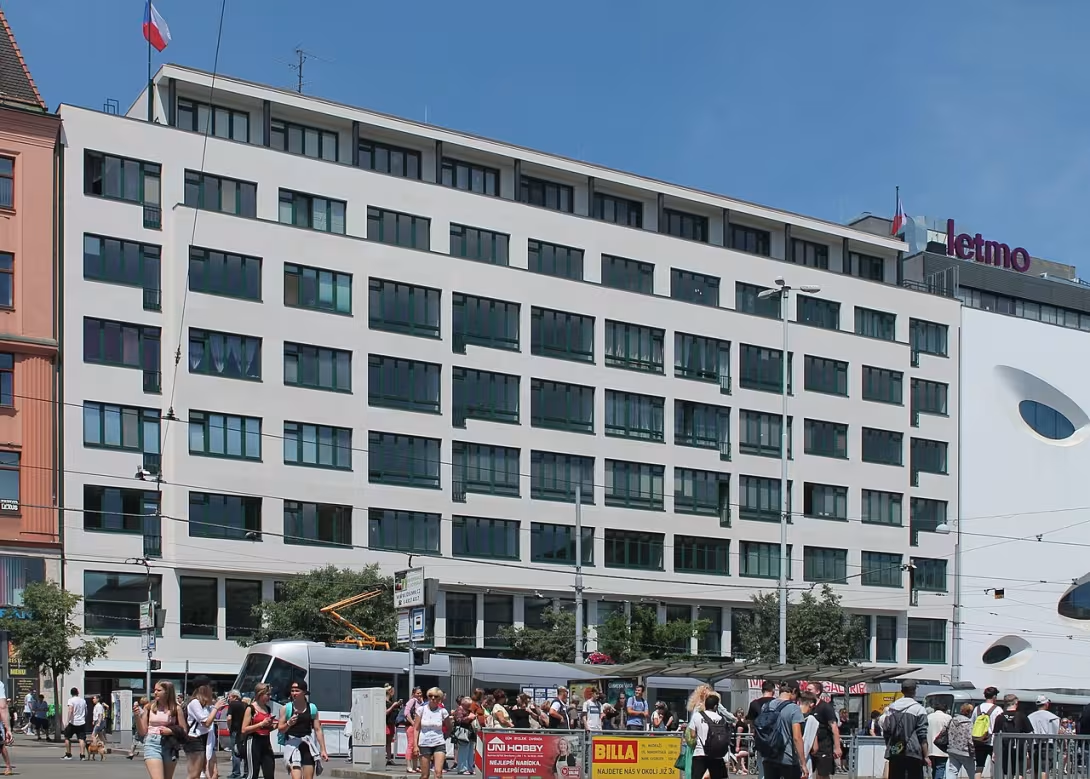
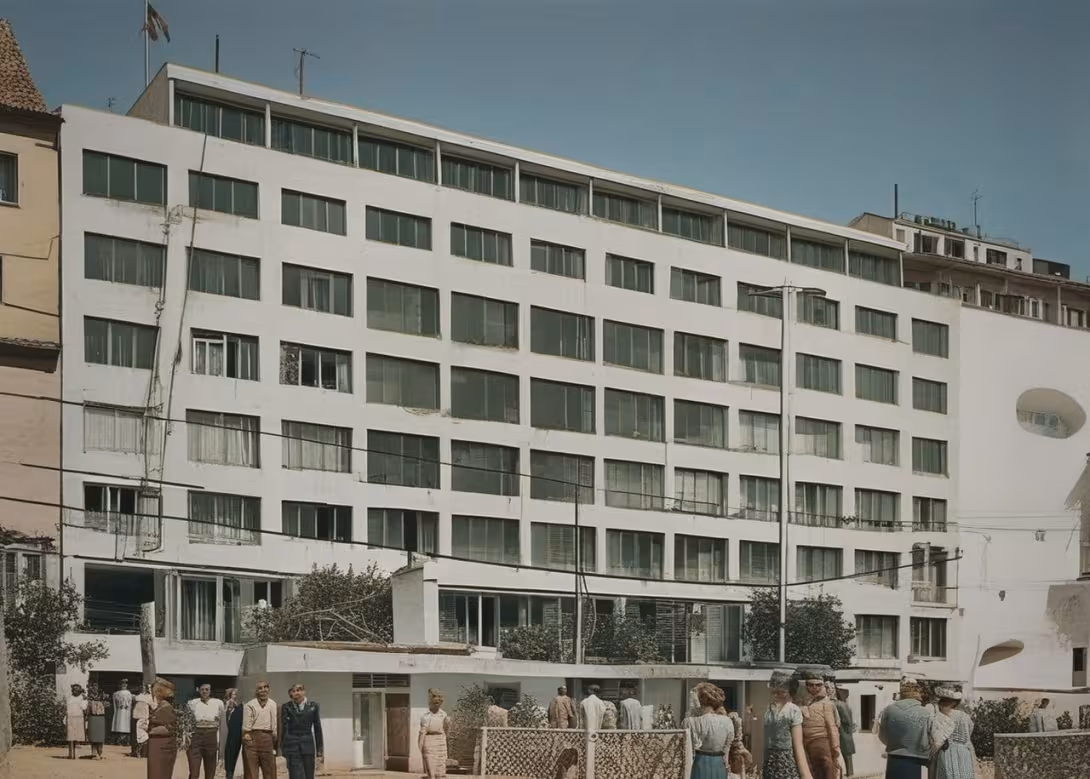
The historical appearance on the left is an AI-generated visualisation and serves as inspiration only.
Historical milestones
- 1938
- Completion of the Building Riunione Adriatica di Sicurtà architect Karel Kotas.
Architectural development
The original construction, built at the beginning of the 20th century of the Neo-Renaissance style, was replaced by the functionalist design Karel Kotas. The building has a ground floor with a black marble cover and business premises, while the upper floors are residential. The attic apartment on the roof terrace adds to its distinctive silhouette.
Historical events
1936: Commission Riunione Adriatica di Sicurtà (RAS) for a new building in Brno.
2021-2022: The reconstruction was financed by the city district of Brno-stroed.
Owners
It was originally entrusted in 1936 with the insurance company Riunione Adriatica di Sicurtà (RAS), later with the housing of Czechoslovak State Airlines and the Brno Transport Company after World War II. In recent years it has been renovated from 2021 to 2022, which cost more than CZK 89.3 million and now the Office for Civil Register in Brno.
Points of interest
- The design of the Karel Kotas building was part of a wider initiative by Riunione Adriatica di Sicurtà to create presence in key Czechoslovak cities during the 1930s, which increased its strategic importance beyond mere architectural innovation.
- Although the Building Riunione Adriatica di Sicurtà is designed as a functionalist structure, it contains elements such as black marble tiles and a distinctive penthouse, mixing functionality with aesthetic attraction - proof of Kotas' ability to combine practicality with elegance.
- The building has served many roles throughout its history, from the housing offices of the Czechoslovak State Aviation Company to becoming the Office for the Civil Register of Brnostrad, reflecting its adaptability and continued relevance in the administrative life of the city.
- During the reconstruction in the years 2021-2022, which cost more than CZK 89.3 million, the building underwent significant updates while maintaining the historical facade and showed a commitment to maintain its architectural heritage as part of modernization.
- The Riunione Adriatica di Sicurtà building is located near the main railway station in Brno and on a circular road and remains strategically located within the urban transport network and highlights its continuing importance in facilitating urban connectivity.
Guide
This guide is narrated by a synthetic voice generated by artificial intelligence.
Show guide text
This text was created by artificial intelligence and has not been editorially reviewed. It may contain inaccuracies.
Welcome to the Building Riunione Adriatica di Sicurtà, a remarkable testimony of architectural innovation and historical importance in Brnomesto. As you stand here on this vibrating section of the Brno road, take a moment to absorb your surroundings. You are placed in front of an iconic structure that will attract attention with its large metropolitan scale, perfectly prepared in front of the facade of the central station.
This building, completed in 1938 by the esteemed architect Karel Kotas, is an example of functionalism - a style characterized by simplicity and practicality. The proposal reflects the period in which modernist architecture flourished throughout Europe to create buildings that were aesthetically pleasant and highly utilitarian.
As you look at the facade of the building, notice the balanced dimensions and clean lines - characteristic features of the architectural philosophy Karel Kotas. Although specific details are not immediately visible from your point of view, the overall structure emits a sense of order and purpose that was revolutionary for its time. The building is protected as a cultural monument that underlines its importance in the Brno urban landscape.
The creation of this building was part of a broader initiative by Riunione Adriatica di Sicurtà to create itself in key Czechoslovak cities during the 1930s. This strategic step underlines not only architectural innovation, but also society's ambition to expand and consolidate its influence throughout the region.
While Karel Kotas is an architect credited with bringing this vision to life, many other individuals contributed to its implementation, although their names remain largely unknown today. Yet it is clear that the building stands as evidence of collective effort and thought out during the era of major changes.
One interesting aspect of this structure is how it encapsulates both historical context and architectural progress. Designed at a time when functionalism broke new ground, it serves as a reminder of the Brno role in adopting modernist ideals at that time.
As you continue to explore, I suggest you dig deeper into its history and design. Consider how this building reflects broader trends in architecture and urban development in the early 20th century. Let your curiosity guide you through the layers of stories inside his walls.
Thank you for joining me on this journey through architectural time. I call on you to continue to explore the rich cultural tapestry in Brno, where history and modernity are smoothly intertwined. Until next time, enjoy discovering more hidden jewels in this historic city.
Businesses nearby
Do you run a restaurant, accommodation, shop, museum, rental, wellness or other visitor service near this monument? Show yourself directly to the people heading to it — this is how they will see you in the app and on the web:
Events nearby


Zdroj akcí: otevřená data měst a obcí ČR (Národní katalog otevřených dat) a kalendář akcí Národního památkového ústavu.
Nearby
The building is located on the Brno circular road near the main train station, a key transport junction. The area offers modern infrastructure and urban development.
Accommodation nearby
Trips and activities nearby
Guided tours, tickets and activities nearby from GetYourGuide
Affiliate link: if you buy from the partner, we may receive a commission. The price for you does not change.
Search tours and activities →Themed route
Thematic cruise route: Brno - city and budova Riunione Adriatica di Sicurtà
1. Building Riunione Adriatica di Sicurtà - Type: Architectural monument - Proc stands behind the tower: This historically important building is a beautiful example of architecture from Article 20. A century to be established by a unique facade and rich history associated with the position of Riunione Adriatica di Sicurtà. It should be noted that for the implementation of the modernization of Brno.
2. Main Station Brno - Type: Key transport centre - Why is it worth filling: It is located in the nearby building of Riunione Adriatica di Sicurtà and is an indirect railway junction in the city. The impact is the modernization of architects by the work that serves as a link between Brno and other parts of the Czech Republic and Europe.
3. Brno Ring Road - Type: Modern infrastructure - Why is it worth it: This important transport artery surrounds the centre of Brno and represents a modernised urban city. It is an ideal place for development as Brno has led the world to integrate historical with modernization.
4. Around Business Center - Type: Modern business and reconstruction centre - Proc is worth the effort: These centers offer a wide staff of shops, restaurants and recreation activities. They are part of the modernisation of the Brno urban project and the provision of assistance for the activity of trends in the sector.
5. Parks and green spaces to increase - Type: Urban green food - Proc stands for the promotion: These parks provided a liquid place to postpone and relax within the economic infrastructure. They are ideal for short stays among other atrocities of Brno.
This route offers combined historical and modernization elements of Brno, which allows you to understand the dynamics and development of the city.
Seasonal recommendations
Spring: A visit to the Riunione Adriatica di Sicurtà building during spring offers a refreshing experience as nature wakes up around the Brno city. The delicate warmth of the season and longer hours of the day create an attractive atmosphere for exploring historical monuments. Spring often brings mild weather, making it ideal for wearing light layers that can be modified during your visit. Although it is before the peak of the tourist season, some local events can attract visitors, so consider the start of your day soon to enjoy a quieter survey.
Summer: Summer in the building Riunione Adriatica di Sicurtà is characterized by pulsating greenery and longer days, ideal for immersion in the rich history of Brno. The warm weather allows you to comfortably explore the outdoor areas and surrounding parks. However, this season also sees an increase in visitors, so it is advisable to visit early in the morning or later in the afternoon to avoid the crowd. Light clothing is recommended, along with sunscreen and sun protection hat.
Autumn: Autumn represents a picturesque environment in the building Riunione Adriatica di Sicurtà, where Brno-město turns into a palette of warm colors. Thanks to cold temperatures it is nice to walk with historic streets without summer heat. This season is less crowded compared to summer, offering a more relaxed visit. Laminated clothing is ideal for adapting to fluctuating temperatures all day long, and wearing an umbrella can be wise thanks to the occasional autumn shower.
Winter: Winter in the building Riunione Adriatica di Sicurtà offers a unique charm with snow covered with surroundings and festive lights that illuminate the historical architecture of the Brno city. Short days mean visiting earlier in the day is best for as much of your time as possible. During your visit, we can make you comfortable in warm, isolated clothes along with hat and gloves. Keep in mind that some devices could have shortened hours or be closed on certain days due to the season.
Visualizations and artistic views


The visualisations are generated by artificial intelligence and serve as inspiration.
Photos from the area
Real photos taken near the monument


Zdroj a licence jsou uvedeny u každého snímku.
Tips from visitors
No tips yet. Be the first!
Log in and add your tip.
Sources and literature
Photos: Harold / CC BY-SA 4.0 — Wikimedia Commons. The author and licence also appear when you hover over the image.
Faktickým podkladem tohoto textu byl článek na Wikipedii, jehož autory jsou přispěvatelé Wikipedie. Článek je dostupný pod licencí CC BY-SA 4.0.
Location on the map
Příběhy a pověsti
Legendy, pověsti a příběhy spjaté s touto památkou
Fotografie návštěvníků
Zatím žádné fotografie. Buďte první, kdo přidá fotografii z návštěvy!
Log in a přidejte svou fotografii nebo hodnoťte.
Za ověřenou návštěvu v aplikaci získáte víc bodů — poznáme podle GPS, že jste na místě.
Reviews and comments