






Biskupský dvůr Castle
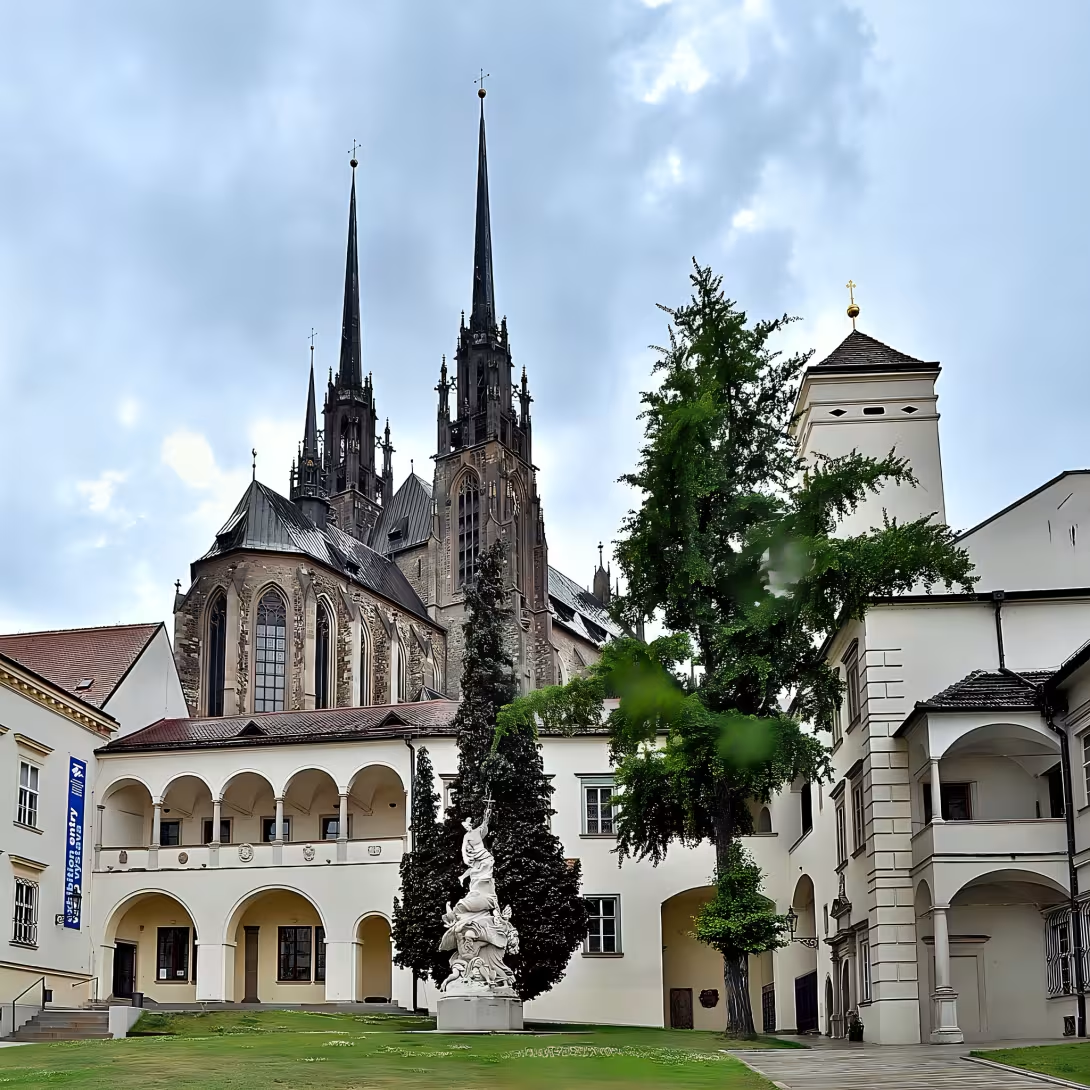
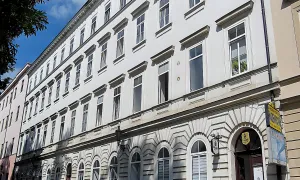
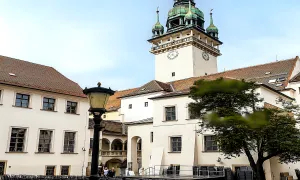
Biskupský dvůr is located at Museum No. 1 in the centre of Brno, just below St. Peter and Paul's Cathedral. It is a collection of several buildings surrounding a park-decorated courtyard. Its history goes far back - the existence of the complex is underlined by written documents from 1352. It was originally used as a Gothic building for the probostness owned by the Brno capitula.
A major breakthrough came in 1588 when the Bishop of Olomouc Stanislav II. Pavlovský purchased the building. He wanted to get a representative residence here, and therefore had the Brno builder Antonio Gabrii perform a large reconstruction in a new style. The work on modifications continued after 1600 under the leadership of Cardinal František of Ditrichštejn, who was the successor of Bishop Pavlovský. It was after Bishop Pavlovský that this architectural complex acquired its permanent name - Biskupský dvůr. Ditrichštejna had a significant share in the reconstruction of Brno; He built a nearby Dietrichstein Palace nearby.
Several interesting elements have been preserved from the oldest Gothic stage. The building was preserved with partially exposed brick brick masonry and cut-off broken or rectangular windows. The prism tower is also visible; On her second floor, there is a chapel with frescoes depicting scenes from the life of the saints. During the Renaissance, the buildings were enriched with elements of a new type - an arcade and a single-storey arcade were built, which changed the shape of the original spaces.
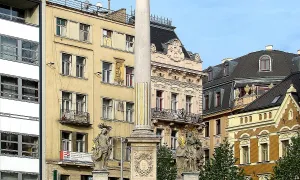
The story of the complex was linked to the history of science and culture in the 19th century. In 1818, shortly after its foundation, the Museum of Francisco (part of the later Moravian Museum) established its first seat. In the 1880s, the so-called d'Elvert wings were added; Its main entrance is decorated with a balcony portal, which has been moved over time from the demolished palace of Mitrovský to the Brno Square of Liberty. In 1858, the statue of Mercury's fountain, which was carved by the sculptor Ignác Bendla, was transferred from the same square; Today he stands at the top of the courtyard. The extensive construction and park modifications finalized in 1963 maintained the overall character of the site, although they changed it considerably. In September 2009, the courtyard underwent a comprehensive revitalisation - new reinforcement, restoration of grassy areas - and now serves for various public events including theatre performances.
There are currently collections of the Moravian Museum, especially its natural sciences department and exhibition focused on the history of money, fauna and sponsorship. The complex includes the Historical Hall for Lectures and the Marble Hall for Temporary Exhibitions. The historical layer of the place is supplemented by nature - in the courtyard there are rare specimens of the steeped, fast growing tree, which is located in only a few places in Brno.
Then and now
Drag the slider to compare how the landmark may have looked when it was built with the view today.
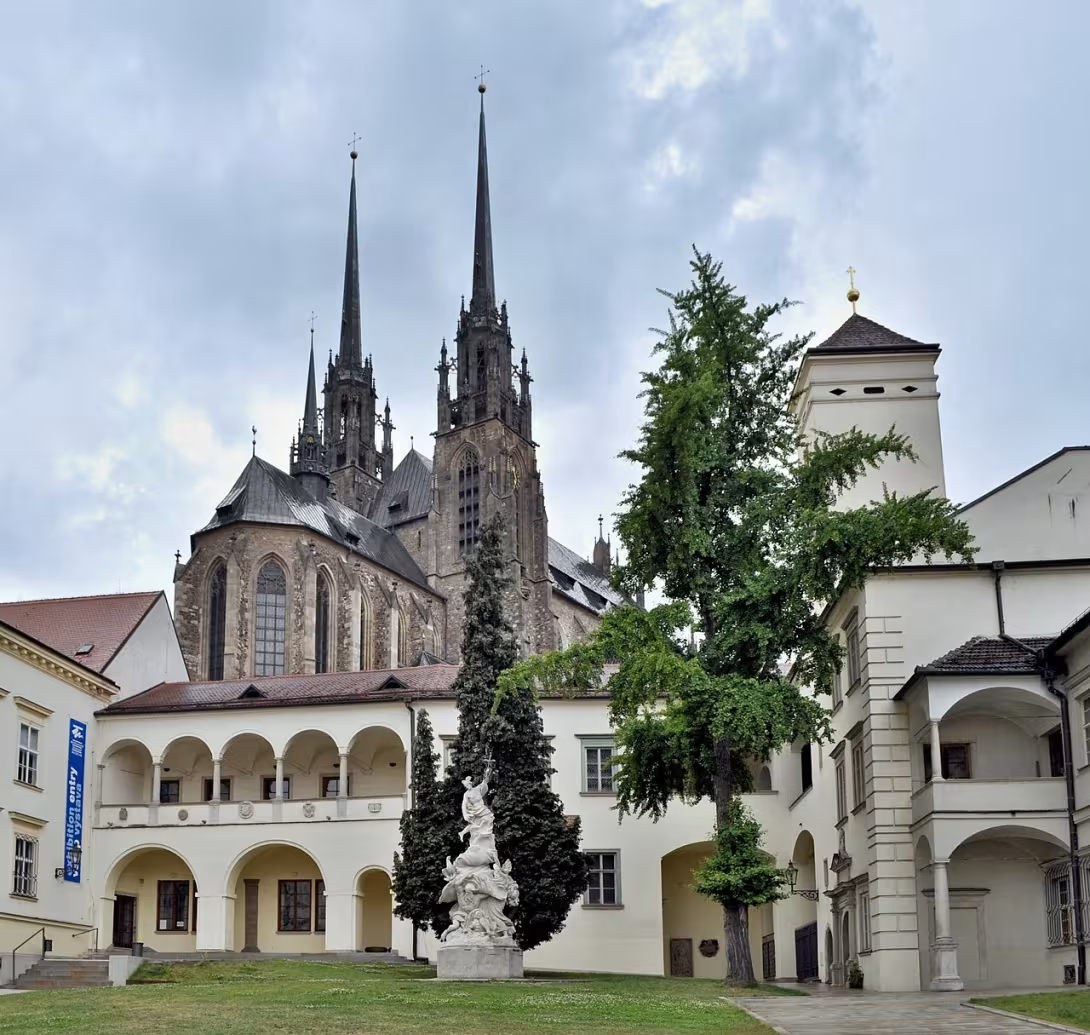
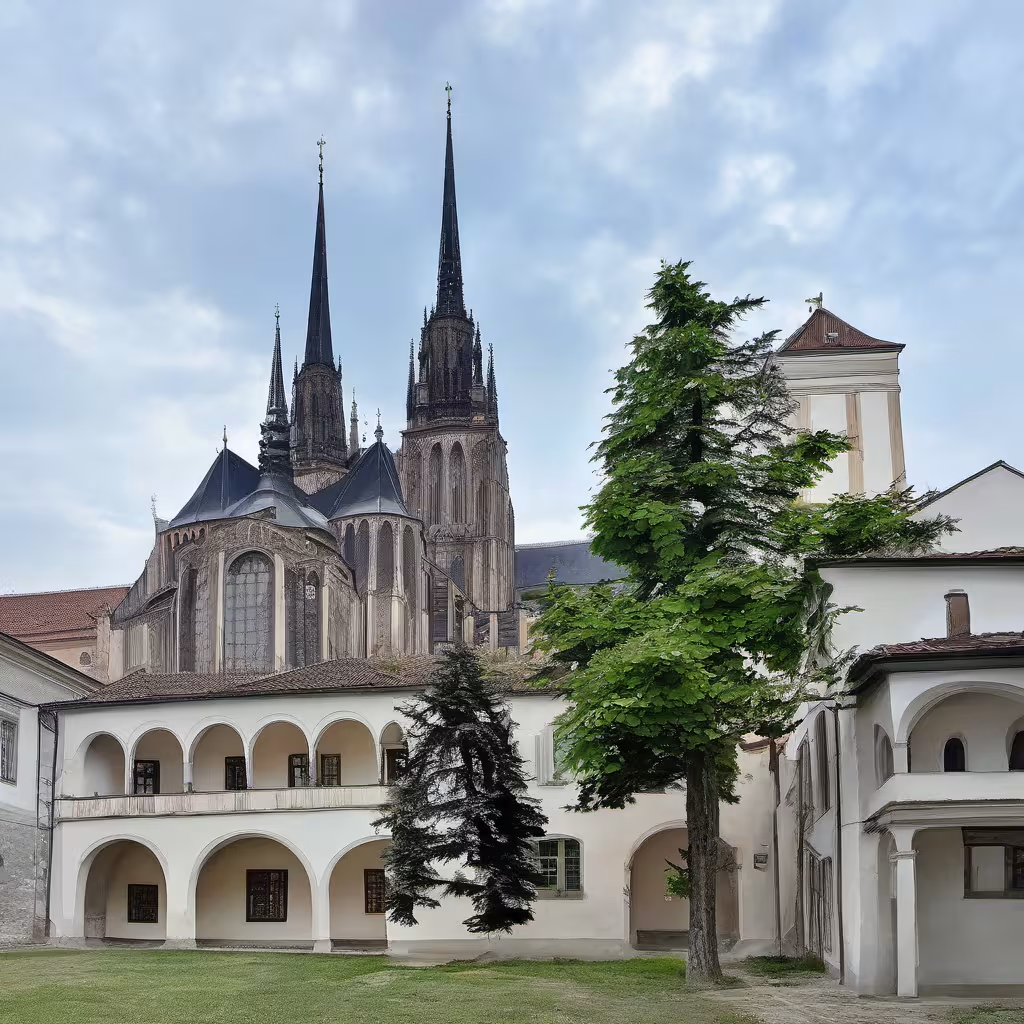
The historical appearance on the left is an AI-generated visualisation and serves as inspiration only.
Historical milestones
- 1818
- The Francisco Museum has established its headquarters in the Bishop Court.
- 1858
- The statue of Mercury's fountain by Ignatius Bendl was transferred to the courtyard.
Architectural development
Originally, the Gothic Probostness was rebuilt in a new style by Bishop Stanislav II. Pavlovsky and his successors, Cardinal Francis of Ditrichstein. In the period of the Renaissance, further development took place with the addition of arches and loggia. The complex was further developed in the 19th century for museum needs.
Historical events
- 1818
- The Francisco Museum, the predecessor of the Moravian Museum, acquired its first seat in the Bishop's court.
- 1963
- The complex was subjected to a complex reconstruction, which included a Capuchin monastery.
Owners
1352: Brno chapter; 1588: Bishop of Olomouc Stanislav II. Pavlovský; the following owners include different members of the Ditrichstein family.
Points of interest
- Biskupský dvůr has a history dating back to 1352, when the existence of the complex is confirmed by written documents.
- In 1588, the Olomouc Bishop Stanislav II. Pavlovský purchased the building and had it rebuilt in a new style by the Brno builder Antonio Gabrihem.
- After 1600, the reconstruction continued under the leadership of Cardinal František of Ditrichštejn, who was the successor of Bishop Pavlovský and thanks to him the complex gained its permanent name - Biskupský dvůr.
- The oldest Gothic stage has preserved partially exposed brick masonry, chopped windows and prism tower with a chapel with frescoes of the life of the saints.
- In 1818, the Museum Francisco (part of the later Moravian Museum) established its first seat.
Guide
This guide is narrated by a synthetic voice generated by artificial intelligence.
Show guide text
This text was created by artificial intelligence and has not been editorially reviewed. It may contain inaccuracies.
Welcome! You are standing in front of the Bishop Court, a complex of historical buildings that extend under the Cathedral of Brno, St. Peter and Paul. Your view narrows to the Gothic portal that leads to the courtyard. Look up and observe the Gothic architecture that has been preserved here in its original state. Note that the entrance gate is lightened by two powerful pillars that are decorated with Gothic circles.
Let's move on to history. Biskupský dvůr has a rich history dating back to 1352, when the existence of the complex is confirmed by written documents. In 1588, Olomouc Bishop Stanislav II. Pavlovský purchased the building and had it rebuilt in a new style by Brno builders Antonio Gabrihem. After 1600, the reconstruction under the leadership of other builders continued, but not known.
Note that the facade of the building is a combination of Gothic and Renaissance elements. Merkur's fountain, which was transferred to the courtyard in 1858, is part of the complex. The sculpture was created by the Brno sculptor Ignatius Bendl. Note that the fountain is located in the middle of the courtyard and is surrounded by several trees that provide a peaceful atmosphere.
Biskupský dvůr is also associated with important historical personalities. One of them is Cardinal František z Ditrichštejna, who was significantly responsible for rebuilding the complex. The next is Stanislav II. Pavlovský, the Olomouc Bishop, who purchased the building in 1588 and had it rebuilt.
Let's get back to the present. Today, Biskupský dvůr is the headquarters of the Moravian Museum, which brings various architectural elements to the complex. Look at the facade of the building and notice how it combines Gothic and Renaissance elements. The atmosphere of the courtyard is calm and quiet, as if time had stopped.
Today you have seen Biskupský dvůr, a complex of historical buildings, which is part of the historical core of Brno. Stay here for a while and take the time to see all the details and details you can find here. Wait until time allows you to explore the entire complex and get a better idea of its rich history.
Tips for visitors
The best time to visit the Bishop Court is in spring or autumn, when the weather is pleasant and less humane. This time of year also offers a beautiful green landscape around the monument, which increases its historical charm.
Parking can be found near the Square of Liberty or under Petrov. For those travelling by public transport, Biskupský dvůr is well accessible by bus and tram; you can find a specific connection in the current route search engine.
When visiting, bring comfortable clothes, as exploring historical spaces and passages around the castle can take several hours. Don't forget to wear sunglasses and umbrella in case of unpredictable weather.
Photography of the Bishop Court will offer the best possibilities in the afternoon when light is soft and sunny. The most beautiful views of the building complex can be found from Liberty Square or while walking around the Capuchin monastery.
In the vicinity of the Bishop Court, it is possible to visit the Cathedral of St. Peter and Paul, which is already inside the castle, or to explore the Capuchin monastery with its historic buildings and park. These places are ideal for those who want to expand their knowledge of Brno history.
Frequently asked questions
Can the monument be visited?
Yes. We verified the opening hours or admission on the official website (12. 10. 2026); you will find them in the visitor information on this page. Please double-check with the operator before you travel.
What are the opening hours and admission?
Details verified on the official website (12. 10. 2026) are listed in the visitor information on this page. Official website: https://www.mendelianum.cz/
Where is the monument?
Location: Muzejní 295/2, Brno-město, Brno, Jihomoravský kraj. The map on this page shows the exact spot.
Why is the monument protected?
It is listed in the Central List of Cultural Monuments of the Czech Republic as a cultural monument (register no. 32883/7-86). It is protected as part of a larger listed ensemble.
For kids
Businesses nearby
Do you run a restaurant, accommodation, shop, museum, rental, wellness or other visitor service near this monument? Show yourself directly to the people heading to it — this is how they will see you in the app and on the web:
Events nearby


Zdroj akcí: otevřená data měst a obcí ČR (Národní katalog otevřených dat) a kalendář akcí Národního památkového ústavu.
Nearby
Biskupský dvůr is located under Petrov, close to the Capuchin monastery and the Square of Liberty. It's part of the historical core of Brno.
Accommodation nearby
Trips and activities nearby
Guided tours, tickets and activities nearby from GetYourGuide
Affiliate link: if you buy from the partner, we may receive a commission. The price for you does not change.
Search tours and activities →Themed route
Route Biskupský dvůr and historical core Brno:
1. Biskupský dvůr (castle) - the main goal is to look at the complex of Gothic and Renaissance buildings that make up Biskupský dvůr. It is an important historical and cultural monument that offers a view of the life of the bishops in Brno in the past. 2. Capucin monastery - worth visiting for its unique architecture and peaceful atmosphere. The monastery is a beautiful example of Baroque architecture and offers an opportunity to relax and reflect. 3. The Square of Liberty - is the centre of the historical heart of Brno and offers a view of historical buildings and monuments of the city. It's an ideal place to walk and admire architecture. 4. Petrov - is worth visiting for its unique position on the hill above Brno and offers a wonderful view of the city. It is an ideal place to relax and admire the Brno panorama.
Seasonal recommendations
Spring: In spring the Biskupský dvůr is surrounded by flowering trees and green lawns, creating a pleasant atmosphere. It is convenient to visit the memory in the morning, when it is still relatively quiet and you can see the interiors without large crowds.
Summer: In the main summer season Biskupský dvůr is visited by a large number of tourists, therefore it is recommended to come before the daily temperature rises. In summer you can also enjoy gardens where there are many flowers and you can relax in a pleasant environment.
Autumn: In autumn the Biskupský dvůr is surrounded by the colors of falling leaves, which creates a pleasant atmosphere. It is convenient to visit a monument at noon when sunlight lights up interiors and you can see the details of architecture.
Winter: In winter Biskupský dvůr is lit by lights, which creates a pleasant atmosphere. It is convenient to visit a monument at noon when it is open for a shorter time, and you can see the interiors without large crowds.
Visualizations and artistic views


The visualisations are generated by artificial intelligence and serve as inspiration.
Photos from the area
Real photos taken near the monument


Zdroj a licence jsou uvedeny u každého snímku.
Atmosphere of the place
This atmospheric visualisation of the place and period was generated by artificial intelligence. It is not real footage of the location.
Tips from visitors
No tips yet. Be the first!
Log in and add your tip.
Sources and literature
Photos: Millenium187 / CC BY-SA 3.0, rozlišení zvýšeno umělou inteligencí — Wikimedia Commons. The author and licence also appear when you hover over the image.
Faktickým podkladem tohoto textu byl článek na Wikipedii, jehož autory jsou přispěvatelé Wikipedie. Článek je dostupný pod licencí CC BY-SA 4.0.
Location on the map
Příběhy a pověsti
Legendy, pověsti a příběhy spjaté s touto památkou
Fotografie návštěvníků
Zatím žádné fotografie. Buďte první, kdo přidá fotografii z návštěvy!
Log in a přidejte svou fotografii nebo hodnoťte.
Za ověřenou návštěvu v aplikaci získáte víc bodů — poznáme podle GPS, že jste na místě.
Reviews and comments