



Bývalá benediktinská prádelna House
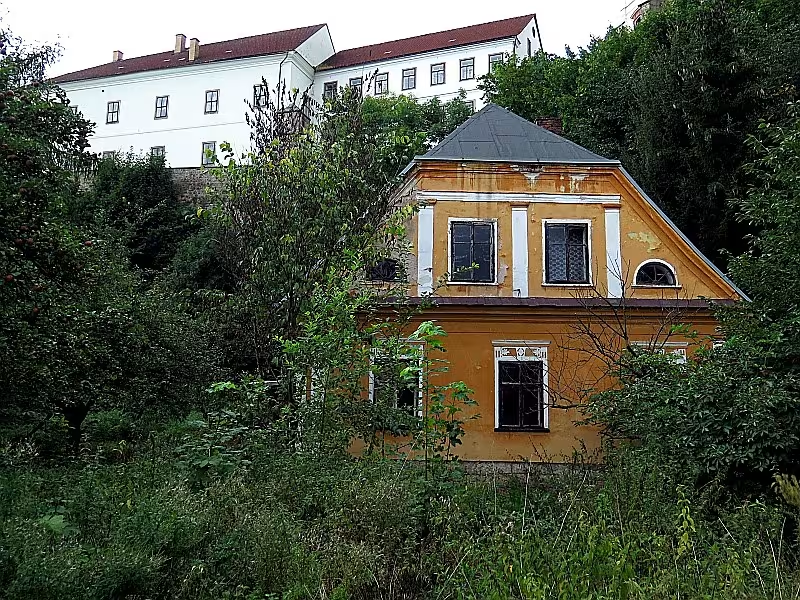
Bývalá benediktinská prádelna is a medieval ground house in the village Olivětín, district Náchod, in the Králové Hradec region. The building served as an operational part of the Benedict Abbey and is today registered as a cultural monument of the Czech Republic.
There are limited reports of the oldest history of the construction, but it is evidenced that the house comes from the Middle Ages. Its primary function was to provide laundry for the needs of the monastery.
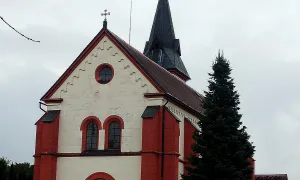
Architecturally, it's a ground-floor building with a halibut roof. The roof area is illuminated by a continuous skylight and small segment skylights. The last building modifications took place between 1844 and 1886.
The monument is located at the address of the class Soukenická 39 in OlivětínA, within the local administration of Broumov. It is registered in the register of cultural monuments under number 51191 / 6-6220.
The building represents a rare example of the historical economic building associated with the monastery administration. It is interesting for visitors as an authentic testimony about medieval infrastructure and subsequent modifications from the nineteenth century.
The construction is proof of the long-term functioning of the Benedict Abbey in this location. We recommend visiting the building as part of a survey of the historical development of the village Olivětín.
Points of interest
- It's a medieval ground house that used to do laundry for the needs of the monastery. - The building is registered as a cultural monument of the Czech Republic. - The roof is polo-shaped and illuminated by a continuous skylight along with tiny segmented skylights. - The last modifications to the building took place between 1844 and 1886. - The construction represents a rare example of the historical economic building associated with the monastery administration.
Guide
Show guide text
This text was created by artificial intelligence and has not been editorially reviewed. It may contain inaccuracies.
Welcome to Olivětín. Right now, you're standing in front of a building that may seem modest at first glance, but it carries a silent story of daily anguish and order. There's an ex-Benedict laundry in front of you. It is a ground floor house that is entered into the landscape of the Náchod district as a testament to how economic care was organised in the past in the framework of monastic life. When you look at it now, try to imagine that this building was not a place of prayer or deep spiritual balance sheets, but a place of hard work, water and steam.
Let us now stop at why this building was created and what its meaning was. Although the exact date of her position remains forgotten at times, her existence is closely linked to the Benedict Abbey. Monasteries were not only centres of faith and education, but they worked as separate small towns that had to be completely self-sufficient. In order for the Order to perform its spiritual duties in peace, all essential needs, including the cleanliness of clothing and linen, had to be ensured. That's why this laundry was built here. It served as a facility where it took care of the purity of everything the abbey needed and thus formed a necessary link in the chain of monastery traffic.
Now pay attention to the architecture itself. Because it is a ground floor object, its appearance is naturally practical and functional. Notice the overall layout of the house and its connection to the surrounding space. For such buildings, it is not important to seek pomp, but rather to perceive their useful character. Take a look at the facade and think about how the spatial layout had to be resolved to allow handling of large quantities of laundry and access to water. Feel the atmosphere of this place, which is calm today, but it was once filled with the rhythm of regular work.
When we think about the people who worked here, we have to admit that history has not given us the names of the specific personalities that would be associated with this laundry. We don't know the names of the architects who designed it or the names of the people who worked here every day. And that's where the special power of this place lies. This building is not a monument to an individual but a monument to invisible helpers. It is a tribute to all those who have carried out routine tasks in silence and without recognition so that the rest of the community can operate in harmony. It is a space where discipline of order met with physical complexity of work.
You may be wondering at this point if there is any great mystery surrounding this place. Although we will not find dramatic stories in the records, the mystery remains the silence of history itself. Why don't we know exactly when it was built? What details of her equipment were lost in time? It is this emptiness in the archives that encourages us to imagine the details ourselves. Try to remember how many hours of work have taken place in these walls, how many conversations have been heard here and how it felt to have completed work under the Benedict motto ora et labora, which means pray and work. This laundry was the embodiment of the working part of this rule.
Today, this building is recognised as a cultural monument of the Czech Republic, which means that the state recognises its value for our common heritage. Even though it does not have tall towers or decorated facades, its value lies in truth. It is a true picture of a monastic economy that survived for decades and became part of the landscape of Olivětína.
Now that you've looked at this silent witness in the past, I suggest you look around slowly and perceive the connection of this building to the whole area. History is not only about great battles and well-known rulers, but also about these little pieces of everyday life that tell us how life was lived centuries ago.
Thank you for a moment together at this monument. I hope you've felt the quiet respect for the work that was done here. You can now continue to explore the beauty of this region and discover other hidden corners waiting for you. I wish you a pleasant continued journey and many new knowledge.
Tips for visitors
The best time to visit is late spring or autumn, when the surrounding landscape in the Nadědská district excels beautifully and trees do not interfere with the view of the facade of the building. The building is accessible by car or public transport; Check the specific path and connection in maps or search engines.
For the tour we recommend to wear comfortable shoes suitable for outdoor terrain because the building is located in the village and is only viewed from the outside. Since it is a former laundry room, focus on architectural details of the ground floor house, which suggests its original function for the abbey.
For the best photos we recommend to come in the morning or late afternoon light, which gently highlights the wall structure. The best angles for the pictures are from surrounding roads, from where you can see the whole volume of the building in the context of the village Olivětín.
Families with children can use the visit to tell about how laundry was washed in monasteries in ancient times. Since there are no other sights in the immediate vicinity, we recommend that you focus on walking around the village itself.
Frequently asked questions
Can the monument be visited?
This is a residential or farm building, not a museum with opening hours. Please view it from public space and respect the owners' privacy. We have no information about access to the interior.
Where is the monument?
Location: třída Soukenická 39, Olivětín, Broumov, Královéhradecký kraj. The map on this page shows the exact spot.
Why is the monument protected?
It is listed in the Central List of Cultural Monuments of the Czech Republic as a cultural monument (register no. 51191/6-6220).
Businesses nearby
Do you run a restaurant, accommodation, shop, museum, rental, wellness or other visitor service near this monument? Show yourself directly to the people heading to it — this is how they will see you in the app and on the web:
Nearby
➜ Zobrazit interaktivní přehled okolí – restaurace, ubytování, půjčovny a další místa v okruhu 15 km.
Data: OpenStreetMap contributors, okruh 15 km.
🏰 Historické památky
- Muzeum stavebnice MERKUR (9.2 km – Tyršova 341)
- J. W. Goethe 28 VIII 1790 (11.2 km)
- Pamięci Franciszka Pabla (11.2 km)
- Osówka II Wejście (11.3 km)
- Vlčinec (11.4 km)
- Ochota Magdaleńska (11.5 km)
- St. Florian (11.6 km)
- Turistická trasa Franciszka Pabla (11.7 km)
🍽️ Restaurace a stravování
- Sudetka (0.3 km – Stanislava Opočenského 90)
- Restaurant Gritz (0.5 km)
- U Markéty (0.8 km – Pionýrská 350)
- Motorest Lucky Luck (8.7 km – 28)
- Jídelna Pellyho domy (9.1 km – U Damiánky 268)
- Restauracja "Graniczna" (10.2 km – Rynek 18)
- Hostinec U Lidmanů (10.3 km – Machovská Lhota 40)
- Szczelinka (10.6 km)
🏨 Ubytování
- Hotel Praha (0.2 km – Mírové náměstí 49)
- Winterswijk (0.2 km – U Horní brány 25)
- Hotel Manor House (0.5 km – Vančurova 67)
- Penzion Benešov (2.9 km – 41)
- Dom Gościnny Radków (10.2 km – Rynek 19)
- Złoty Kłos (10.7 km)
- Leśny Dwór (10.8 km)
- Siedem Łanów (10.8 km)
🚲 Půjčovny a sport
- JM Sport (0.2 km)
- Cyklodům Broumov (0.2 km)
- Střelnice (8.0 km)
- Bowling bar (8.0 km)
- Horolezecká stěna (8.0 km)
- Pítrs bikes (9.0 km)
- Doldy (10.7 km)
- Delfinek (11.2 km)
🥾 Turistika a příroda
- Nad Kovářovou roklí (4.9 km)
- Supí hnízdo - vyhl., odb. (4.9 km)
- Zaječí rokle (5.8 km)
- Chata pod Korunou (odb.) (6.0 km)
- Nad Slavným (6.0 km)
- Kamenná brána (6.4 km)
- Kamenná brána (6.4 km)
- Pod Kamennou branou (6.5 km)
Accommodation nearby
Themed route
Here is the route design within the area:
1. Bývalá benediktinská prádelna - main building. Explore the unique architecture and space where laundry was used for the monastery community. 2. Laundromat tank - outdoor area. Walk around the building allows you to look at the state of the object from different angles. 3. The immediate surroundings of the complex - the surrounding area. A short walk near the monument for a sense of peace and perception of the place.
Seasonal recommendations
In the spring, the surroundings wake to life and the young greenery accompany a walk to the building. The light is fine, which helps to observe the facade details from the outside. We recommend shoes suitable for wet grass and visit in the morning when the air is the cleanest.
In the summer months, the landscape is dominated by green and bright sun, which strongly highlights the shape of the building. Because of the heat, it is best to leave early in the morning or at dusk to avoid the heat. Don't forget the cap and plenty of water to go.
Autumn brings golden colours and fog to the landscape, which provide a mysterious atmosphere. Lighting is soft and nostalgic, which is ideal for outdoor photography. It is suitable for layered clothing and solid footwear that can handle fallen leaves and mud.
In winter, the building operates in quiet and calm, often surrounded by snow, which highlights its white tones. The atmosphere is strict and clean. It is necessary to wear warm clothes, gloves and non-slippery sole to keep the path to the building safe.
Visualizations and artistic views


The visualisations are generated by artificial intelligence and serve as inspiration.
Photos from the area
Real photos taken near the monument


Zdroj a licence jsou uvedeny u každého snímku.
Tips from visitors
No tips yet. Be the first!
Log in and add your tip.
Sources and literature
Photos: Sovicka169 / CC BY-SA 4.0 — Wikimedia Commons. The author and licence also appear when you hover over the image.
Location on the map


Příběhy a pověsti
Legendy, pověsti a příběhy spjaté s touto památkou

Fotografie návštěvníků
Zatím žádné fotografie. Buďte první, kdo přidá fotografii z návštěvy!
Log in a přidejte svou fotografii nebo hodnoťte.
Za ověřenou návštěvu v aplikaci získáte víc bodů — poznáme podle GPS, že jste na místě.
Reviews and comments