



bývalý jezuitský konvikt v Olomouci Other
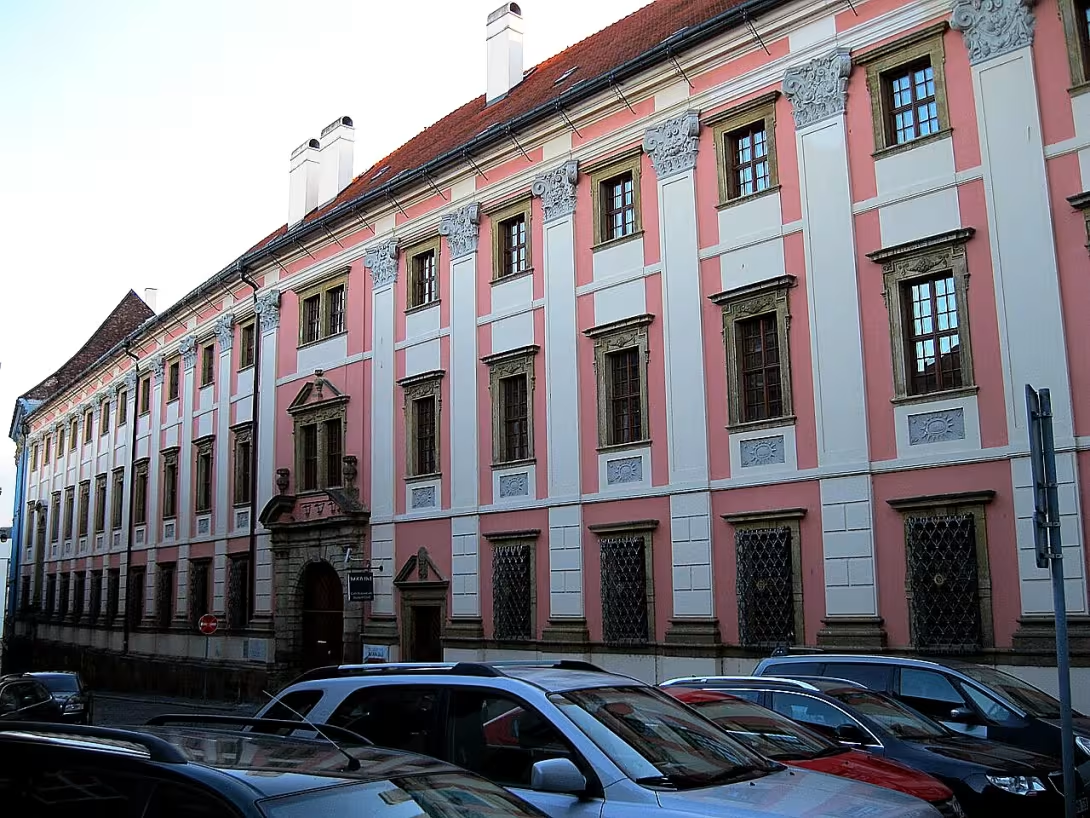
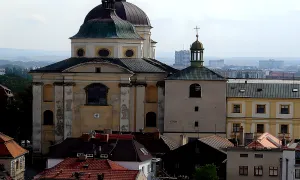
The former Jesuit Convikt in Olomouci, a monument-protected Baroque building, belongs to the architectural complex of the former Jesuit college. Today it serves as the Art Center of Palacký University and includes the Old Convikt, the New Convikt and the Chapel of the Body of God. He is known for his rich stucco decoration, historical interiors and long history associated with Tovarishty Jesus and later with the army.
The Jesuit Convikt was founded after the occupation of the first members of the Tovarysch of Jesus by Bishop Wilhelm Prusinovský in 1566. The aim was to provide education in the bishop's seminar and the establishment of a college approved by Pope Pius V. The first rector was Spaniard Hurtado Pérez. Bishop Vojtěch Prusinovský z Víckova founded a convikt for the accommodation and catering of noble students in 1567, which was related to the recatonization and arrival of Jesuits in Czech countries.
The development was interrupted by a 30-year war. Between 1661 and 1668 built Olomouc architect Petr Schüller An old teapot at the site of 12 houses, which created a three-wing two-storey building. Around 1674 another wing was added, thus the ground plan took the form of the letter E. Later modifications took place during the Baroque period after the war. Between 1721 and 1724, the New Convikt was built by Wolfgang Reichem, connecting the original building with the School Building, where the Chapel of the Body of God was also created.
The architecture is characterized by baroque shapes. The facade with pilaster order and stucco decoration highlights the Baroque character of the building. The barefoot portal, the art bars of windows and frescoes such as the one on the main staircase from 1724 or at the entrance to the chapel with the painting of St. Cecilia add to its historical significance.
After the abolition of the Order in 1773, the Convikt was taken over by the army and served it until 1994. It was taken over in 1998 by Palacký University, which opened the Art Centre in 2002 after reconstruction.
The konvikt is located on University Street 3 in Olomouci. The temple of the Virgin Mary Snow, the former Jesuit School Building and the Cyrilomethodology Theological Faculty of Palacký, is nearby.
This historical site represents a valuable proof of Baroque culture in Olomouci, which successfully connected its heritage with modern academic use. The visit offers a view into the space that has served education and the army for centuries and now forms the centre of university art.
Historical milestones
- 1566
- The foundation of the Jesuit Convikt by Bishop Vojtěch Prusinovsky of Víckov.
- 1661
- The construction of the Old Convikt under the leadership of architect Peter Schüller.
- 1773
- The abolition of the Jesuit Order and the surrender of the object to the army.
- 2002
- Opening of the Art Center of Palacký University after extensive reconstruction.
Architectural development
The construction began in the seventeenth century by building a three-wing building of the Old Convikt on the site of the twelve townhouse Olomouc architect Petr Schüller. The floor plan was later extended to the shape of the letter E and in the eighteenth century the construction of the New Convikt was followed by the builder Wolfgang Reichem, which included the Chapel of the Body of God. The architectural expression of the building is determined by baroque sculptures with a barefoot portal and demanding stucco decoration.
Historical events
In 1566 was approved rarely Jesuit College in Olomouci and established a convikt for students. The construction of the Old Convikt according to the Petr Schüller project took place between 1661 and 1668. In 1773 the order was abolished and the army took over the building, which used it until 1994. From 1998 to 2002 the building underwent reconstruction for the purposes of the university art centre.
Owners
Tovaryšstvo Jesus, Czechoslovak and Czech armies, Palacký University in Olomouci
Points of interest
- The building belonging to the architectural complex of the former Jesuit College is today serving as the Art Center of Palacký University and includes the Old Convikt, the New Convikt and the Chapel of the Body of God. - Convikt was founded in 1567 by Bishop Vojtěch Prusinovský of Víckov for accommodation and catering of noble students. - The architect Petr Schüller built between 1661 and 1668 The old convikt on the site of twelve houses and from 1721 to 1724 was built the New Convikt by Wolfgang Reichem. - After the abolition of the order in 1773 the army took over and served until 1994, after which the building was taken over in 1998 by Palacký University.
Guide
Show guide text
This text was created by artificial intelligence and has not been editorially reviewed. It may contain inaccuracies.
I welcome you to this historic place, which is the real pearl of the Olomouc Centre - the former Jesuit Convito. Look up and you will see the monumental facade of this important Baroque building, which immediately captures you with its architectural beauty. This building is part of the complex of the former Jesuit College and today serves as the Art Center of Palacký University.
Let's go into history. In 1566 Bishop Vojtěch Prusinovský z Víckova founded this kettle to provide accommodation and food to noble youth. This move was aimed at promoting education and the moral formation of young people. The architectural heritage of the Convikt began with its construction, which extends from the seventeenth century to the later years when the New Convikt and the Chapel of the Body were built.
Now pay attention to the facade of the building. Take a look at the high Pilaster Order and rich stucco decoration that are characteristic of Baroque architecture. Note also the order triangle that gives the facade uniqueness and elegance.
Key figures associated with this location include Bishop Vojtěv of Víckov himself, who gave the Convikt to the nation. Architects Petr Schüller and Wolfgang Reich have contributed to its creation, whose work can be seen in the composite details and structural elements of the building.
The interesting thing about this place is that the Convikt was founded not only to provide education, but also to protect young people from disorder and promote their spiritual growth. In 1773, when the Jesuit Order was abolished, the convoy went into the assets of the army, reflecting the variable history of this place.
Now that you have noticed the main elements and historical context, I invite you to further explore. Take a look at the interiors of the Art Center of Palacký University, which today serves as a platform for cultural events and works of art. I hope your visit here was engaging and inspiring. Thank you for your attention and have a nice day.
Tips for visitors
A tour of the former Jesuit Convikt in Olomouci is best enjoyed during the morning hours, when the sunlight optimally illuminates the baroque architecture and inner spaces of the former Old Convikt. Transportation to the centre of the historic city is possible by car and by public transport, whose current connection can be easily verified in the local search engine. Don't forget to bring comfortable shoes for walking on historic tiles and camera, because the whole building offers many interesting architectural details. The best light for shooting outside facades and surrounding historical objects is in the morning when the sun hits the facade of buildings. In the immediate vicinity of the monument, you can admire the Church of the Virgin Mary Snow during a half-hour walk, the former Jesuit School Building and the Cyril Methodology Faculty.
Frequently asked questions
Can the monument be visited?
We have not verified whether this monument is accessible. Please ask the owner or operator, or the local municipal office.
Where is the monument?
Location: Olomouc. The map on this page shows the exact spot.
Why is the monument protected?
It is listed in the Central List of Cultural Monuments of the Czech Republic as a cultural monument (register no. 1000123597).
Businesses nearby
Do you run a restaurant, accommodation, shop, museum, rental, wellness or other visitor service near this monument? Show yourself directly to the people heading to it — this is how they will see you in the app and on the web:
Events nearby

Zdroj akcí: otevřená data měst a obcí ČR (Národní katalog otevřených dat) a kalendář akcí Národního památkového ústavu.
Nearby
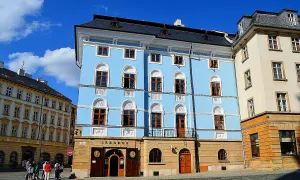
V těsné blízkosti se nachází chrám Panny Marie Sněžné, bývalá jezuitská Školní budova a budova Cyrilometodějské teologické fakulty.
Accommodation nearby
Trips and activities nearby
Guided tours, tickets and activities nearby from GetYourGuide
Affiliate link: if you buy from the partner, we may receive a commission. The price for you does not change.
Search tours and activities →Themed route
Thematic cruise route: Former Jesuit convikt and surroundings in Olomouci
1. Former Jesuit Convikt - Type: Historical landmark - Why it is worth a visit: This building was an important centre of the Jesuit education system and represents a key element of the Baroque era by its architecture. Its history and decoration are a fascinating record of the spiritual and cultural influence of the order of Jesuits.
2. The Temple of Our Lady of Snow - Type: Religious memorial - Why is it worth a visit: This temple, famous for its extraordinary Baroque architecture and rich history, is one of the most important sacral monuments of Olomouce. Its interior with beautiful sculptures and frescoes attracts many visitors.
3. Building of the Cyril Methodology Theological Faculty - Type: Educational institutions - Why is it worth visiting: This building is part of the heritage of Jesuit schools and is now hosting a theological faculty which continues the tradition of intellectual development. It is interesting for its architectural style and historical importance.
4. Former Jesuit School Building - Type: Historical building - Why is it worth visiting: This building was an important part of the Jesuit education system and its history reflects the development of education in the region. It is interesting for its architecture and for the roles it has played over the years.
5. Tanks of the former Jesuit Convention - Type: Historical courtyard - Why is it worth a visit: The reservoir represents a key part of the site where the former Jesuit Convikt is located today. It's a place that allows you to understand the scale and structure of life in the Jesuit Convention.
This route offers a view of the Jesuit heritage in Olomouci through their key institutions that have influenced local culture and education.
Seasonal recommendations
Spring awakens Olomouc streets and surrounding parks into a fresh green color, while the sun's rays penetrate deep into historical corners and create interesting geometric shadows on the ancient walls of the former Jesuit convikt. In this period you will appreciate lighter overwear, such as a skivvies or denim jacket, because spring weather is usually variable and the morning cold quickly turns into a nice warm afternoon. Walk around this monumental building attracts you to sit on nearby benches in blooming orchards, the best time for admiring architecture in peace and without rush is the morning, when the morning mist slowly retreats to bright daylight.
Summer brings hot days of bright light to the Hanac metropolis, which is reflected from bright facades and creates strong contrasts between the sunlit spaces and the deep shadow under the mighty windows of the convikt. In the warm months, choose air cotton clothes, headgear and don't forget enough liquids because the hot historical center holds a lot of heat. The outdoor atmosphere surrounding the monument is lively and energetic, ideal for long evening walks, when the sun slowly falls beyond the horizon and the temperature of the air drops to a more tolerable value, which perfectly complements the overall experience of the external tour of the exteriors.
Autumn covers the old Olomouc in melancholic mood, accompanied by falling leaves in shades of yellow and rusty colour that covers the tiles around the buildings. Foggy mornings and early dimming give the former Jesuit complex a mysterious character, which underlines muted autumn lighting through low clouds. Put on a warm wool coat, tight shoes, and remember to take an umbrella, because persistent little rain can surprise you any moment. The best time to visit the outdoor area is around noon, when daylight has the best chance to drill through gray clouds and show details of stoneware works in full glory.
Winter turns Olomouc into a quiet, snow-dusted city, where in the period of pre-Christmas markets and advent time the festive lights cast off the glare on the ancient wall of the kettle. Freezing air and snow cover dampen the sounds of the surrounding city, creating a calm and almost sacred atmosphere ideal for contemplation at historical monuments. Quality winter clothes, i.e. warm feather jacket, hat, gloves and tight shoes with non-slip soles, are necessary to stay outside in the winter months. You will experience the best atmosphere in the late afternoon, when it gets dark fast, street lamps are lit up and the whole architecture is given a completely different, warm-acting dimension thanks to artificial lighting.
Visualizations and artistic views

The visualisations are generated by artificial intelligence and serve as inspiration.
Photos from the area
Real photos taken near the monument

Zdroj a licence jsou uvedeny u každého snímku.
Tips from visitors
No tips yet. Be the first!
Log in and add your tip.
Sources and literature
Photos: Lehotsky / CC BY-SA 3.0 — Wikimedia Commons. The author and licence also appear when you hover over the image.
Faktickým podkladem tohoto textu byl článek na Wikipedii, jehož autory jsou přispěvatelé Wikipedie. Článek je dostupný pod licencí CC BY-SA 4.0.
Location on the map
Příběhy a pověsti
Legendy, pověsti a příběhy spjaté s touto památkou

Fotografie návštěvníků
Zatím žádné fotografie. Buďte první, kdo přidá fotografii z návštěvy!
Log in a přidejte svou fotografii nebo hodnoťte.
Za ověřenou návštěvu v aplikaci získáte víc bodů — poznáme podle GPS, že jste na místě.
Reviews and comments