



Částkov Chateau
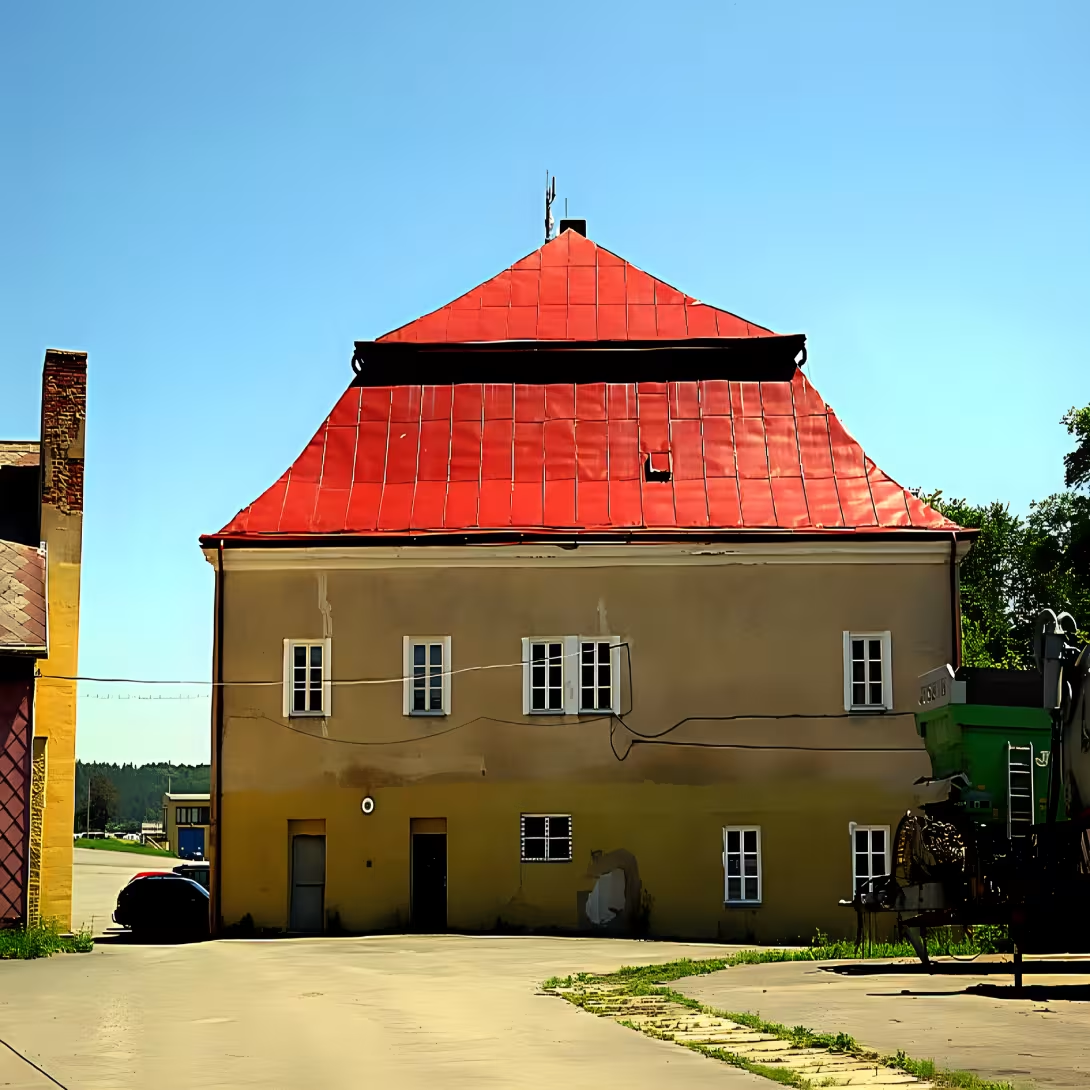
Částkov is located in the village of the same name in the district of Tachov and belongs to interesting documents of the development of noble construction on the Czech border. His history dates back to the early Middle Ages - the first written mention dates back to the year 1272 and mentions the flag of James as owner of the mansion. But it took almost two centuries for the right fortress, which was owned by the Tachov Purcraby Boouš of Otroušice, in 1471.
The House of Otroušický remained here for almost a hundred years. Bohuslav z Otěšic is documented between 1493 and 1529, followed by his son George. The last member of the family, Vilém z Otěšic, sold the thing in 1591. The transformation followed: Jan Vilém Kfelíř ze Zakšova transformed the village into a bourgeois village and extended its territory with parts originally subordinate to Tachov. However, his participation in the state uprising ended in 1623 with a judicial conviction and a partial loss of land. The new owner of Jan Kryštof Kavka z Říčan eventually sold Částkov to brothers of the Brisigell family, where their ownership, property sharing and family transfer lasted more than one century.
The gentlemen of Brisigell have decided to transform the space completely. At the turn of the seventeenth and eighteenth centuries, they had the original Gothic fortress built a chateau in the Baroque style, which became the seat of many generations. In 1669 Částkov fell in the division of Jan Tomáš Brigigell, who married the widow Anna Markéta of Gloven. From their marriage was born a son of Jan Albert, who, however, faced financial difficulties and after his father's death in 1708, had to offer the chateau for sale. In 1710 it was bought by Jan Albert's uncle, Osvald Brisigell, owner of a nearby Old Sedlice. After Osvalda's death, three years later, the widow Anna Barbora, together with the sons of Částkov, sold to Count Losym of Losynthal in 1718, who subsequently joined him to his Tachov estate.
Since the eighteenth century, the owner no longer lived here, but only the farm manager. Although during the nineteenth century the chateau had several reconstructions under the rule of Prince Alfred Windischgrätz, its architecture still retains the elements of its multi-layered history.
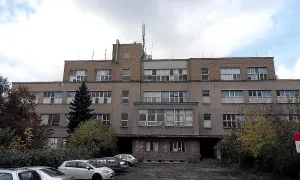
The oldest part of the building is a Gothic fortress - a three-space building with a wall strong one and a half meters, which survived in the northwest corner. Later the fort was extended by the south wing, which filled the original moat. From the Renaissance period, the memories retain partially buried cellars with vaulted vaults, crest vaults on the ground floor and a beautiful eight-piece star vaults in the southwest corner. The Baroque chateau has an almost square floor plan with a Mansard roof covered with sheet metal. The outside facade distinguishes moderation - without ornaments except the crown ledge. The main entrance to the east side of the roof is encapsulated with a semi-liptic waist with the feet removed.
The farm is located in Částkov today. Since 1996 the chateau has been protected as a cultural monument, which prevents further degradation and perhaps prepares a future of more full renewal.
Then and now
Drag the slider to compare how the landmark may have looked when it was built with the view today.
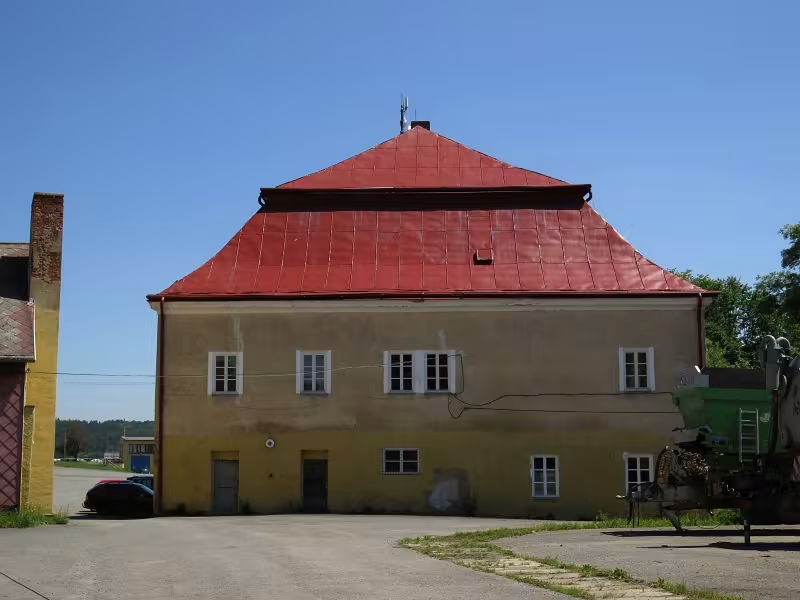
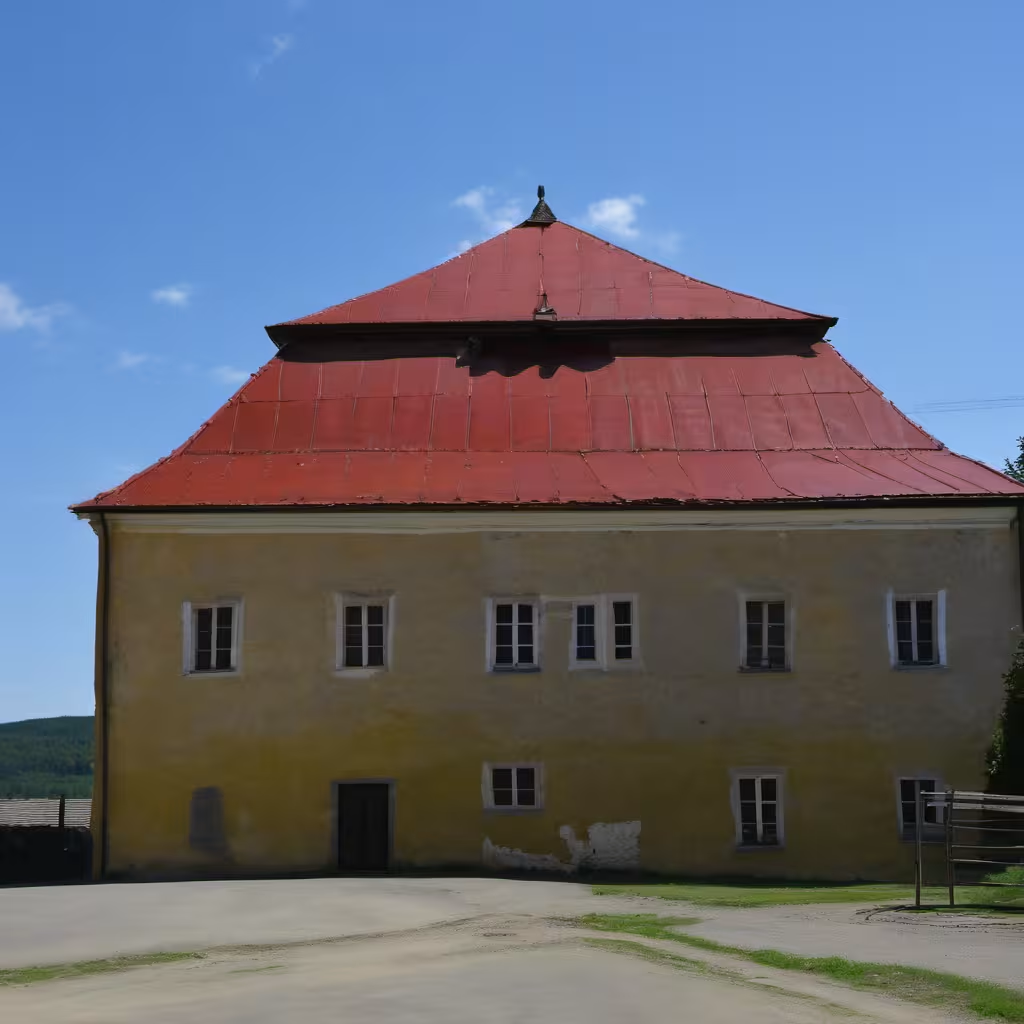
The historical appearance on the left is an AI-generated visualisation and serves as inspiration only.
Historical milestones
- 1272
- The first written mention of the manor of James.
- 1471
- Mention of the true fortress held by Bohe of Otroušice.
- Around 1700
- Building a Baroque chateau on the site of a Gothic fortress.
- 1718
- The sale of Count Losy's chateau from Losynthal.
- 19th Century
- Rebuilding the chateau under Prince Alfred Windischgrätz.
- 1996
- The chateau is declared a cultural monument.
Architectural development
The original Gothic fortress was rebuilt at the turn of the seventeenth and eighteenth centuries into a Baroque chateau. The oldest parts of the fort, such as a three-space building with 1.5 meters thick masonry, are preserved in the northwest corner. The Renaissance phase has preserved cellars and vaults, while the Baroque chateau has a square ground plan with a mansard roof.
Owners
Wow from Částkova
Points of interest
- Částkov is located in the village of the same name in the district of Tachov and belongs to interesting documents of the development of noble construction on the Czech border. - His history dates back to the early Middle Ages - the first written mention dates back to 1272 and presents the flag of James as owner of the mansion. - The House of Otroušický remained here for almost a hundred years, with Bohuslav from Otroušice documented between 1493 and 1529. - The masters of Brisigell at the turn of the seventeenth and eighteenth centuries had the chateau built in a Baroque style that had become the seat of generations. - The oldest part of the building is a Gothic fortress - a three-space building with valuable vaults and a beautiful eight-star vault from the Renaissance period.
Guide
This guide is narrated by a synthetic voice generated by artificial intelligence.
Show guide text
This text was created by artificial intelligence and has not been editorially reviewed. It may contain inaccuracies.
Částkov Castle stands in the village of the same name in the Tachov region, on the site of an older fortified structure. Since 1996, it has been protected as a cultural monument.
The first written mention of Částkov dates from 1272 and mentions a lord named Jakub. In 1354, a lord named Sulek is mentioned, and in 1404, Nevlas. So a noble residence probably stood here earlier, but the fortified structure is explicitly mentioned only in 1471. That year, the village was acquired by Tachov's burgrave Bohuše from Otěšic. After him, Částkov was held by his son Bohuslav, and then by his grandson Jiří, who had the estate with the fortified structure and manor registered in the land records. The last of the family line, Jiří's son Vilém, sold the estate in 1591 to Jan Vilém Kfelíř from Zakšov.
The new owner granted the village town privileges and purchased the part of it that until then had belonged to Tachov. However, for his participation in the Bohemian Estates Rebellion, he was condemned in 1623 to loss of part of his property. Částkov was then purchased by Jan Kryštof Kavka from Říčany. His daughters sold it in 1657 to Mark Alexander from Brisigellu and his brothers.
The lords from Brisigellu had a Baroque castle built on the site of the fortified structure. In 1669, Částkov fell to Jan Tomáš Brisigelli upon the division of his property. His only son, Jan Albert, fell into debt, and after his father's death in 1708, he had to offer the estate for sale. In the autumn of 1710, it was purchased by his uncle Osvald Brisigell, the owner of the neighboring Staré Sedliště, who died three years later. His widow and sons sold Částkov in 1718 to Count Losy from Losynthal. He promptly attached the castle to the Tachov estate. From that time on, only the estate manager resided there. Nevertheless, the castle was remodeled several times in the nineteenth century under Prince Alfred Windischgrätz. Today, the building houses the offices of an agricultural company.
The history of construction can be read from the building itself. The oldest part of the Gothic fortified structure was a building with three rooms. Its wall, one and a half meters thick, is preserved in the northwestern corner of the castle. Later, the fortified structure gained a southern wing, which filled in the moat. From the Renaissance period come partially filled-in cellars with barrel vaults, comb vaults on the ground floor, and an eight-part star vault in the southwestern corner.
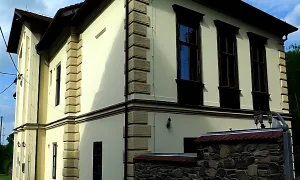
The Baroque castle has an almost square ground plan and a mansard roof covered with sheet metal. The exterior walls are plain except for the crown cornice. The main entrance on the east side is spanned by a semi-elliptical arch with set-back feet.
Tips for visitors
For the best experience we recommend a visit during spring or summer vegetation, when the Baroque architecture of the chateau works most slowly in the landscape and surrounding nature is in full bloom.
Bring comfortable shoes suitable for walking and plenty of liquid. For photography lovers, the best moments around the sunrise or sunset are when soft light beautifully highlights the Baroque details of the chateau facade.
Since there are no other tourist destinations in the immediate vicinity, we recommend paying attention to the memory itself. It is advisable for families with children to prepare a story about the history of the original hardness to make the tour for the smallest attractive.
Frequently asked questions
Can the monument be visited?
Some buildings of this kind are open for guided tours, others serve another purpose or are privately owned. We have not verified whether and when this monument is open – please ask the operator.
What are the opening hours and admission?
We have not verified the opening hours or admission. Current information is published by the operator.
Where is the monument?
Location: č.p. 1, Částkov, Plzeňský kraj. The map on this page shows the exact spot.
Why is the monument protected?
It is listed in the Central List of Cultural Monuments of the Czech Republic as a cultural monument (register no. 11226/4-5066).
For kids
Imagine going back to the past. Where would you go? The chateau or the chateau? I'd go to lock Částkov! This is where medieval architecture and nature meet.
So let's go back in time. The chateau Částkov was built as a fortress of masters from Částkova in the 13th century. What does that mean? That there were rich and powerful people who had lots of land and animals. They were great nobles!
Businesses nearby
Do you run a restaurant, accommodation, shop, museum, rental, wellness or other visitor service near this monument? Show yourself directly to the people heading to it — this is how they will see you in the app and on the web:
Nearby
Ambient landscape, natural elements
Accommodation nearby
Themed route
Thematic cruise route chateau Částkov
1. Chateau Částkov - * Type: * Historical chateau - * Why is it worth visiting: * Chateau Částkov is a beautiful representation of Baroque architecture with rich history. Its views and interiors offer a view of the life of aristocratic families that once lived here.
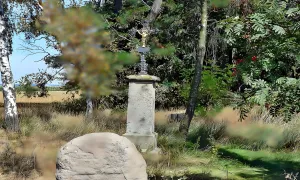
2. Chapel by the chateau - * Type: * Chapel - * Why is it worth visiting: * This picturesque chapel is an ideal place for a quiet moment and consideration. Its space allows the user to intervene in a quiet atmosphere that has spiritual significance.
3. Park by the chateau - * Type: * Park - * Why is it worth visiting: * Park around the chateau offers beautiful walks between old trees and decorated fountains. It is an ideal place to relax in nature, where you can enjoy a quiet moment in the outdoor courtyard.
4. Chateau Částkov - Tanks - * Type: * Historical courtyard - * Why is it worth a visit: * The chateau tank is an exceptional place where you can enjoy the view of historical architecture and imagine the lifestyle of past residents. It's also an ideal place for photography.
5. Tower of the Chateau - * Type: * Historical tower - * Why is it worth visiting: * The tower offers unique views of the surrounding landscape, which is a great opportunity for lovers of panoramic views. It is also a fascinating place for people interested in history and architecture.
This route allows you not only to discover the beauty of the Částkov chateau itself, but also its immediate surroundings full of peace and historical atmosphere.
Seasonal recommendations
Spring: In the spring season, the Částkov Chateau is released in a beautiful flower dress when the surrounding meadows and groves brighten up the diverse colors of flowering plants. The sunny days offer ideal conditions for exploring the chateau and its natural surroundings when the weather slowly opens from cold frost to sunny days. Visitors should be dressed in several layers to enjoy spring temperatures that can change quickly. The best time to walk is usually in the afternoon when the sun fills the chateau and surrounding landscape with its heat.
Summer: In the summer season, the Částkov Chateau offers an opportunity to explore its historic towers and gardens in the sunlight, which emphasizes even more architectural beauty. The atmosphere is full of life, where local and tourists gather for walks and trips. Visitors are advised to come early in the morning or late in the afternoon to enjoy a place without excessive crowds. Early times also mean avoiding the main sun and less heat. Remember warm clothes and enough drinking water to enjoy your stay even with the strongest summer sun.
Autumn: In autumn months the Částkov Chateau offers a unique atmosphere where leaf colours turn into hot brush strokes. The sunny days are the perfect time for a tour when the chateau is lit by sunlight and the surrounding landscape is braided by various shades of yellow, orange and red. Visitors are advised to wear warmer clothes because autumn weather can suddenly be cold and wet. The best time to walk is usually in the afternoon, when the sun rises above the clouds and illuminates the historical memory.
Winter: Winter visit to the chateau Částkov offers a peaceful atmosphere when the surrounding landscape is covered with snow. The sunny days bring specific lighting, which emphasizes architectural details of the chateau and creates a magical atmosphere. Visitors are advised to be dressed in warm clothes because winter weather can be very cold, especially in days without sun. The best time for a tour is usually early in the morning or late in the afternoon, when temperatures rise slightly and snow swells under your feet. It is also important to remember the limited opening times of the monument this season.
Visualizations and artistic views


The visualisations are generated by artificial intelligence and serve as inspiration.
Photos from the area
Real photos taken near the monument


Zdroj a licence jsou uvedeny u každého snímku.
Atmosphere of the place
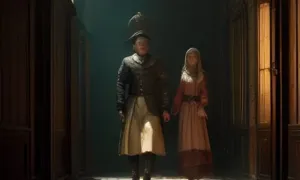
This atmospheric visualisation of the place and period was generated by artificial intelligence. It is not real footage of the location.
Tips from visitors
No tips yet. Be the first!
Log in and add your tip.
Sources and literature
Photos: Sovicka169 / CC BY-SA 4.0, rozlišení zvýšeno umělou inteligencí — Wikimedia Commons. The author and licence also appear when you hover over the image.
Faktickým podkladem tohoto textu byl článek na Wikipedii, jehož autory jsou přispěvatelé Wikipedie. Článek je dostupný pod licencí CC BY-SA 4.0.
Location on the map

Příběhy a pověsti
Legendy, pověsti a příběhy spjaté s touto památkou
Fotografie návštěvníků
Zatím žádné fotografie. Buďte první, kdo přidá fotografii z návštěvy!
Log in a přidejte svou fotografii nebo hodnoťte.
Za ověřenou návštěvu v aplikaci získáte víc bodů — poznáme podle GPS, že jste na místě.
Reviews and comments