



Čepička Castle
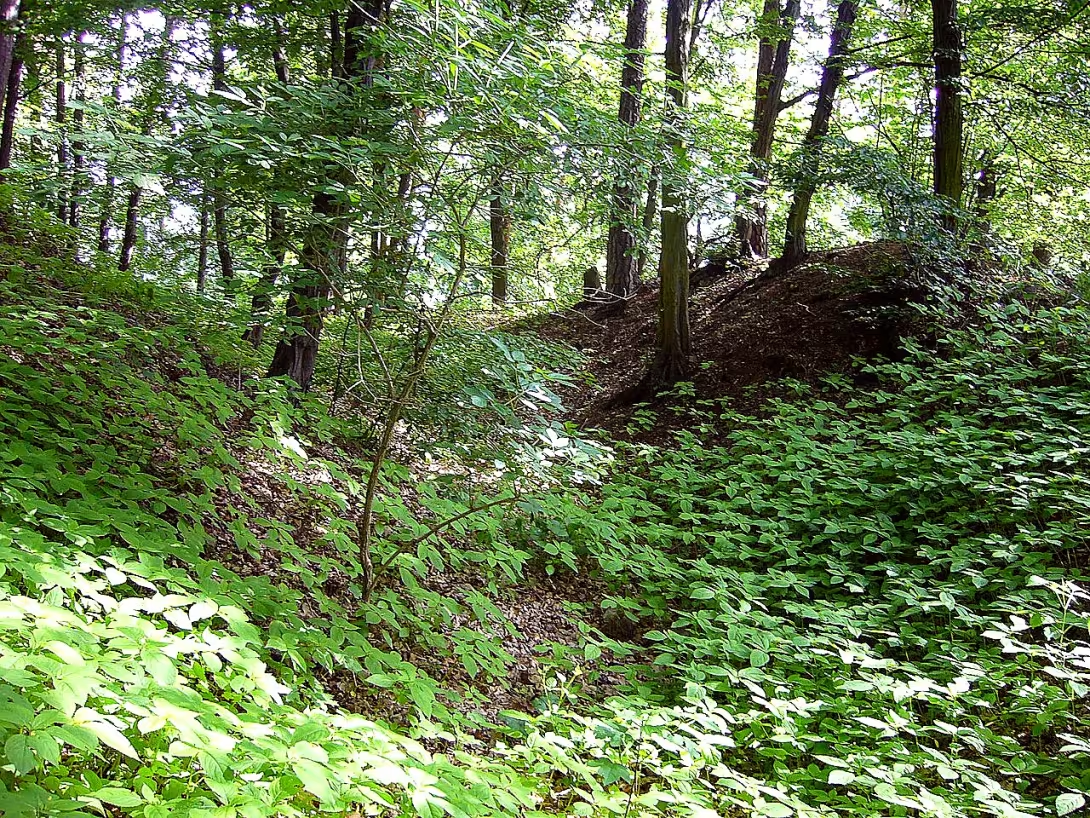
The castle Čepička is located on a hill of 391 meters high west of the village Předklášteří near Tišnova. The peak is now covered with deciduous trees, yet three floors of deep moats are clearly visible in the forest undergrowth, proving the previous attempt to fortify the settlement.
The origin of the fortification remains unclear. According to local tradition, he was supposedly built by nuns from the nearby Porta coeli monastery as a refuge from Hussite attacks. But historians seem more likely to think it was a guard castle. Regardless of the original purpose, the construction was never completed. In 1428, when the Hussite monastery of Porta Coeli was destroyed, the hill Čepička ceased to exist as a separate military work. The monastery and the surrounding property became part of the holdings of the Pernstejn family. After 1450 the monastery was restored, but the fortifications on the Czech Republic were never completed. On the contrary, part of the building material was used to repair the monastery itself, making the unfinished fortress only a source of stones for the restoration of the religious institution.
The scientific knowledge of this place was too late. Between 1983 and 1986, the Museum of Brno carried out a systematic archaeological survey which illuminated both the structure and the chronology of the fortifications. There were attempts by amateur archaeologists to further expand knowledge of this unfinished project.
Today, Čepička is a destination for travelers interested in medieval history and military architecture. The trench rolling systems are still visible in the forest environment and allow an idea of the original fortifications. Access to the top is possible from the village Předklášteří, however the path is not marked. The visitor must follow the map or local advice and find his own way.
Then and now
Drag the slider to compare how the landmark may have looked when it was built with the view today.
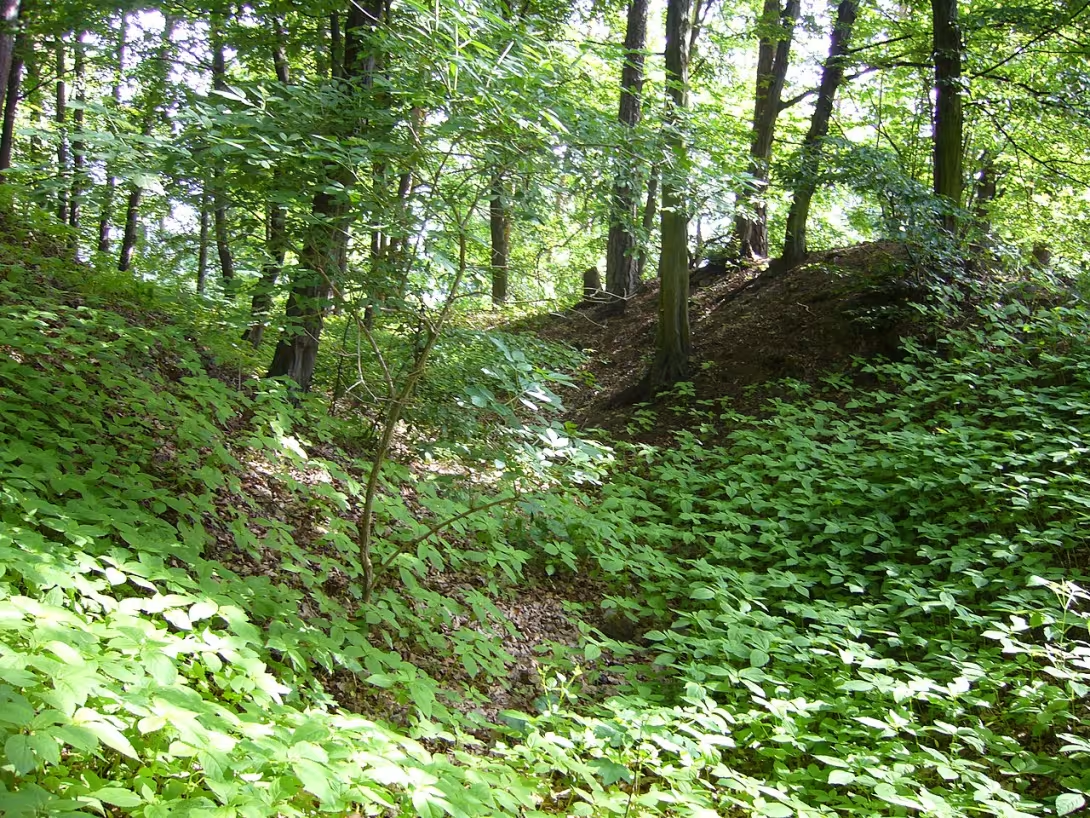

The historical appearance on the left is an AI-generated visualisation and serves as inspiration only.
Historical milestones
- 1428
- The Hussite destroyed the monastery of Porta Coeli.
- 1450
- Restoring the monastery and ending efforts to complete the castle.
- 1983
- The beginning of archaeological research by the Museum of Brno.
Architectural development
The fortifications consisted of three floors of ditches. The construction was never finished and part of the building material was later used to repair Porta Coeli monastery.
Historical events
1428: Destruction of the Hussite monastery; after 1450: Restoration of the monastery and final abandonment of the castle building.
Owners
Porta Coeli monastery, followed by Pernštejnové after 1428.
Points of interest
- There are clearly three floors of deep moats in the forest floor. According to local tradition, he was supposedly built by nuns from the nearby Porta Coeli monastery as a refuge from Hussite attacks. - The construction was never finished and part of its building material was used to repair the monastery. - From 1983 to 1986, the Museum of Brno carried out a systematic archaeological survey. - Access to the top of the village Předklášteří is possible, but the path is not marked.
Guide
This guide is narrated by a synthetic voice generated by artificial intelligence.
Show guide text
This text was created by artificial intelligence and has not been editorially reviewed. It may contain inaccuracies.
On the hill called Čepička to the west of Předklášteří u Tišnova, a fortification once arose, which is known today as the castle Čepička. The hill stands at three hundred and ninety-one meters above sea level, and its summit is overgrown with deciduous forest. Among the trees, three layers of earthen ramparts with ditches are still visible to this day.
According to tradition, the nuns from the nearby monastery Porta coeli began to build the fortification themselves. It was supposedly meant to serve as a refuge for them against the Hussites. However, it is more likely that a guard castle was being built on the hill. The construction was never completed. In the year fourteen hundred and twenty-eight, the Hussites destroyed the monastery, and the monastery together with the hill later came into the possession of the Pernštejns.
After the year fourteen hundred and fifty, the monastery was restored, but work on the fortification that had been started was never resumed. Some of its material was instead used in repairs to the monastery.
Between the years nineteen eighty-three and nineteen eighty-six, the present-day Museum Brněnska conducted an archaeological survey here. After that, several amateur archaeologists searched the hill.
Tips for visitors
The best time to visit Castle Čepička is in summer when the conditions are perfect for walking along the hill and surrounding countryside. The sunny days offer the most beautiful views of Western Moravia.
For those travelling by public transport, it is advisable to look at the current connections to the Předklášteří area using a search engine.
When visiting, you better take water and protective sun clothes, especially if you plan to spend the whole day in the countryside. Visitors should also be in charge of suitable shoes for walking on hilly surfaces.
The best place for photography is at the top of the castle, where a panoramic view is opened. The most beautiful lighting conditions offer a period before and after noon when the sun is lower in the sky.
In the vicinity of the castle Čepička there is a monastery Porta Coeli, which can be visited within short walks. The monastery garden and the monastery offer a comfortable break and an opportunity to see historical architecture.
For families with children it is advisable to prepare some toys or game cards, because walking along the hill can be long and require patience. In addition, there are places suitable for easy play.
Frequently asked questions
Can the monument be visited?
This is a ruin. Such sites are often freely accessible, but some can only be visited with a guide or are closed for safety reasons. We have not verified the current situation – take care and respect any restrictions.
Where is the monument?
Location: Předklášteří, Jihomoravský kraj. The map on this page shows the exact spot.
For kids
Imagine going back to the past, when Castle Čepička was still young and full of life. On the same-name hill west of the village Předklášteří near Tišnov, this castle stood as a mighty tower that observed the surrounding countryside.
How did it look here? Who lived here? What happened here? The castle Čepička was the seat of powerful nobles who controlled the surroundings. In those times, the land was full of fighting and wars, but the castle remained an unshakable fortress.
Businesses nearby
Do you run a restaurant, accommodation, shop, museum, rental, wellness or other visitor service near this monument? Show yourself directly to the people heading to it — this is how they will see you in the app and on the web:
Nearby
The monastery Porta Coeli in the village Předklášteří.
Accommodation nearby
Trips and activities nearby
Guided tours, tickets and activities nearby from GetYourGuide
Affiliate link: if you buy from the partner, we may receive a commission. The price for you does not change.
Search tours and activities →Themed route
1. Porta Coeli Monastery (Monastery) - Significant tanker monument with rich history in the village Předklášteří. 2. Castle Čepička (Castle) - The main destination of a trip where you can admire the historical establishment. 3. Castle station Čepička (Part of Castle) - Space for exploring the inner area and architecture. 4. Park at castle Čepička (Green) - A place to relax in the immediate vicinity of the monument.
Seasonal recommendations
Spring - After a winter sleep, a fine light spreads over the ruins of the cap, which penetrates between flowering bushes and the first leaves of submountain trees. The air is fresh and slightly moist, giving the old stone wall a strange green touch. We recommend arriving early in the afternoon when the sun's rays are the least sharp and the crowds of tourists have not yet culminated. It is convenient to dress in layered clothes - light jacket, scarf and tight shoes, because the terrain can be slippery after rain and loose excavations appear in some places.
Summer - In the summer months, a strong, direct sun stretches on the castle ruins, highlighting the texture of broken stone blocks and creating long shadows between the ruins and the surrounding vineyards. The surrounding landscape is green and full of the smell of wild flowers, which adds a romantic atmosphere to the place. To avoid the biggest rush of visitors, it is best to arrive right after the opening, i.e. in the early morning hours, and carry a sun cap, sunscreen and plenty of water. Comfortable shoes with good soles are necessary because stone steps and inequalities can be hot.
Autumn - The autumn sun waters the ruins with golden light, which underlines aging stones and falling leaves on the surrounding leaves and oak. Colder temperatures and mild humidity create a quiet, almost mystical atmosphere, complemented by the rustling of leaves beneath the feet. The ideal time to visit is the late afternoon, when light changes and the crowds gradually rain. We recommend to dress in warmer layers - sweater, light jacket and tight shoes with anti-slip soles, because wet spots and slippery sections may appear under the leaves.
Winter - In winter, soft, scattered light appears on the ruins of the cap, reflecting from snowy hills and creating a quiet, almost intangible impression. The air is sharp and cold, often accompanied by light snow, which covers the stones with a white coat and reduces sounds. Hot clothes - thermal linen, thick jacket, hat, gloves and waterproof shoes are essential, as the sidewalks can be snowy and slippery. Due to the smaller number of visitors, it is possible to enjoy panoramic views of the snowy landscape.
Visualizations and artistic views


The visualisations are generated by artificial intelligence and serve as inspiration.
Atmosphere of the place
This atmospheric visualisation of the place and period was generated by artificial intelligence. It is not real footage of the location.
Tips from visitors
No tips yet. Be the first!
Log in and add your tip.
Sources and literature
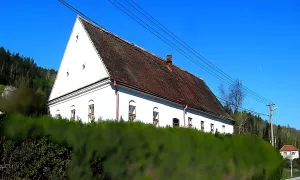
Photos: zarco / Public domain — Wikimedia Commons. The author and licence also appear when you hover over the image.
Faktickým podkladem tohoto textu byl článek na Wikipedii, jehož autory jsou přispěvatelé Wikipedie. Článek je dostupný pod licencí CC BY-SA 4.0.
Location on the map



Příběhy a pověsti
Legendy, pověsti a příběhy spjaté s touto památkou
Fotografie návštěvníků
Zatím žádné fotografie. Buďte první, kdo přidá fotografii z návštěvy!
Log in a přidejte svou fotografii nebo hodnoťte.
Za ověřenou návštěvu v aplikaci získáte víc bodů — poznáme podle GPS, že jste na místě.
Reviews and comments