



Červený Dvůr (Hradec Králové) Homestead
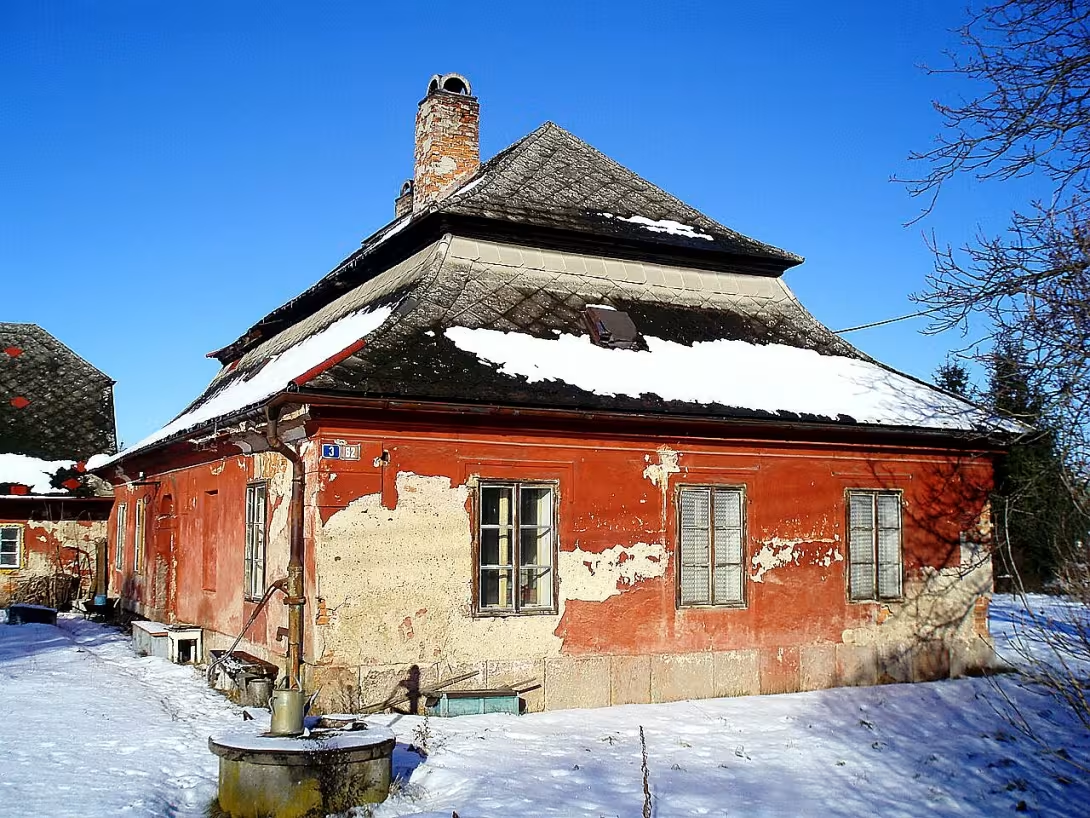
The Red Court, located on the edge of the garden colony in Farástí in the village Pražské Předměstí, is a rural Baroque courtyard built in 1789-1790. This building boasts its historical value as a typical settlement from the proverbs of the royal castle fortress and was declared a cultural monument in 2016.
The creation of the Red The court is closely linked to the historical context of the late eighteenth century, the period of abrogation of monasteries and the sale of religious property in the context of the Josephine reforms. In the place of today's court was originally the forest of Faráří, which was part of the property of St. Anne's Church and later managed by the Minorite monastery. After the abrogation of the monastery in 1789, these lands were sold to Josef Vostinio, who decided to exterminate the pheasants and build a rustic yard no. 1, also known as the Shosten Court.
The architecture of the Red Court is characterized by stylishly late Baroque and classical elements. The building consists of buildings built around a quadrilateral courtyard, with a mansard roof. This type of settlement is typical of the prefix of the royal castle fortress and preserved its original character despite frequent changes of owners.
The Red Court's ownership has changed many times over the years. Joseph Vostini was followed by Ferdinand Scherer, František Uhlíř and Wilhelm Freiherr von Pierse. In 1870, the court was the owner of Václav Píša, who built a new granary. In the 1920s, the building became the property of Matylda Eiselt, the widow of the university surgeon and pathology of MUDr. Bohumil Jan Eiselt.
The Red Court witnessed several key events. After the battle on Hlum around 1866, Saxon and Austrian soldiers retreated here, who refreshed in the courts. Despite frequent ownership changes, the object was preserved in its original state, although the lack of interest in its maintenance was reflected in it.
Today, the Red Court is open to the public as a cultural monument. Despite the fact that homeless people often lived in the past and the building-technical condition of the complex deteriorated, it is important to recognize its historical value and the preserved elements of the farm court from the late eighteenth century. There are many legends and fairy tales that have been written to writers like F. L. Hall and J. V. Tolman.
The Red Court is not only a witness to rich history, but also a reminder of the time when there were significant changes in society and property arrangements. His visit offers a unique view of the past and recalls the importance of preserving cultural heritage for future generations.
Then and now
Drag the slider to compare how the landmark may have looked when it was built with the view today.
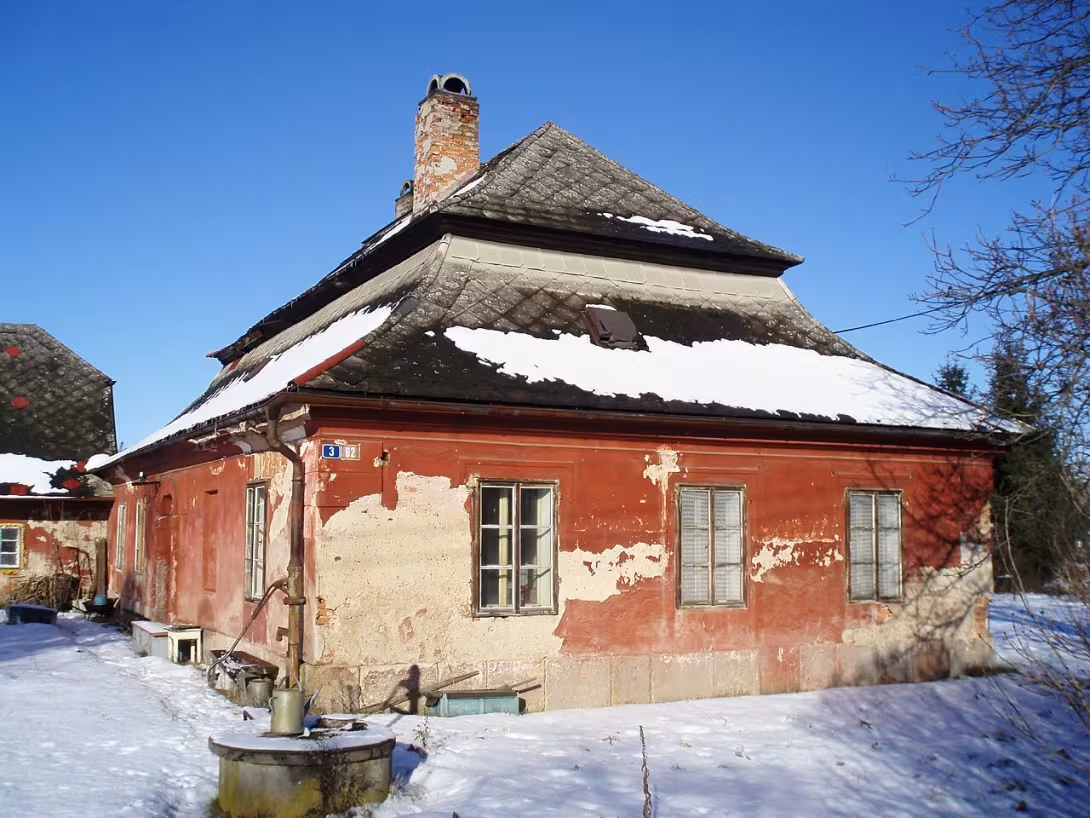
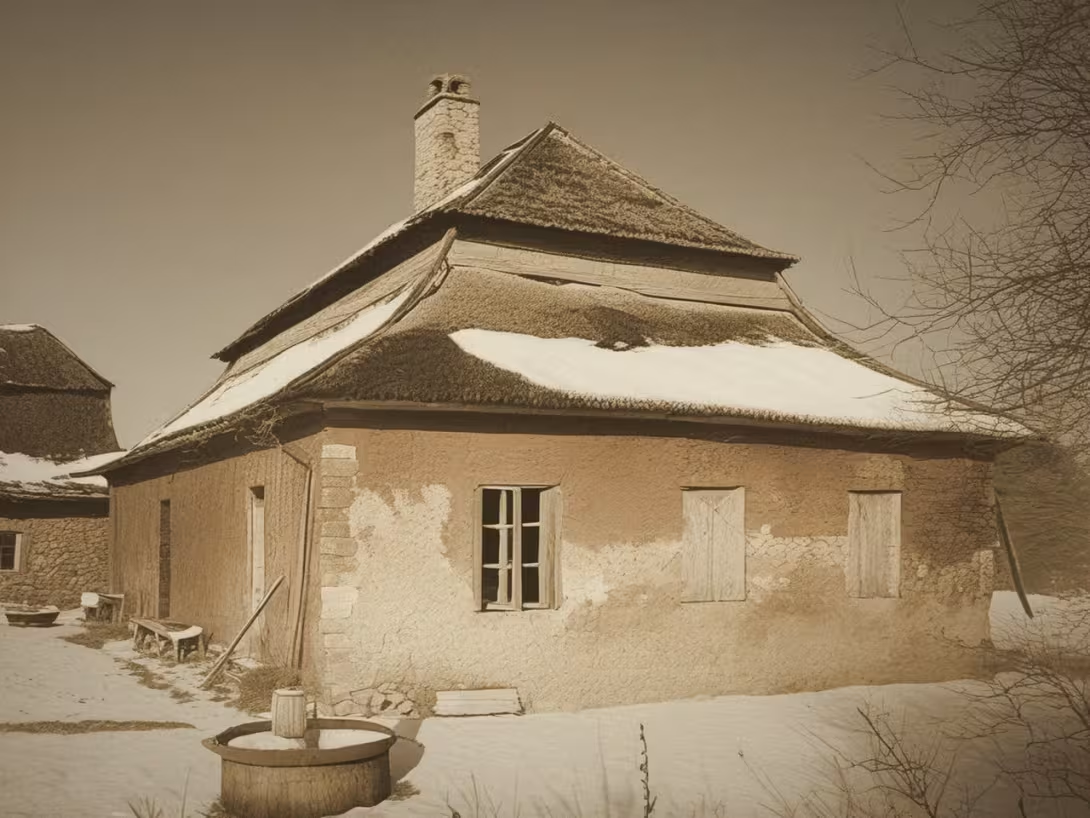
The historical appearance on the left is an AI-generated visualisation and serves as inspiration only.
Historical milestones
- 1789
- Cancellation of monastery and subsequent sale of property
- 1789
- Beginning of the construction of a rural Baroque yard
- 1870
- The position of the new granary by Václav
- 2016
- Declaration of the object for cultural monument
Architectural development
The construction is stylishly late Baroque and classicist. The area consists of buildings surrounding the quadrilateral courtyard, with a mansard roof. In 1870 a new granary was added to the complex.
Historical events
1789- 1790 yard construction, 1870 new granary construction, 2016 declaration for cultural monument
Owners
Josef Vostina (after 1790), Ferdinand Scherer, František Uhlíř (1813), Wilhelm Freiherr von Pierse (1836), Václav Píša (1870), Matylda Eiseltová (20th century)
Points of interest
- The Red Court is a rural Baroque courtyard built in 1789-1790. - The building was declared a cultural monument in 2016. - The creation of the Red Court is closely linked to the disruption of the monasteries and the divestment of church property under the josefin reforms. - The architecture of the yard has stylish late Baroque and classicist elements, characterized by buildings surrounding the four-sided courtyard with a mansard roof. - After the Battle of Hlum around 1866, Saxon and Austrian soldiers retreated here, who were refreshing in the courts.
Guide
Show guide text
This text was created by artificial intelligence and has not been editorially reviewed. It may contain inaccuracies.
Welcome to the Red Dvorce in Prague Pageant! You're standing in front of a historical monument that is a great witness to the past. Look up and see the buildings surrounding the courtyard with a distinctive Mansard roof on the exchange. Notice how these structures harmonically exist together, representing the enlightened spirit of their time.
Let's dive into the history of this place. The Red Court was built between 1789 and 1790 on the land that previously formed the former forest of the Fararians. This creation is closely linked to the Yosefin reforms, namely the abolition of the monastery and the subsequent sale of the property. In these years, this typical settlement began to be built from the proverbs of the royal castle fortress.
Now pay attention to the architecture you see. This Baroque country court has a style of late Baroque and classicist elements, which is typical of its time of origin. Note the details on the facade and roofs, which tell about the artistic taste of those years.
The key personalities associated with the Red Court are Josef Vostina, Ferdinand Scherer, František Uhlíř and Wilhelm Freiherr von Pierse. These historical figures played an important role in shaping this place. Later, Václav Píša intervened in the history of the court, which in 1870 built a new granary.
The interesting thing is that the Red Court was declared a cultural monument until 2016. This event highlighted its importance as a preserved example of the rustic court from the late eighteenth century.
Let's take a look at the other attractions that make up this yard. Notice the historical stories and personalities every stone tells here. Matylda Eiseltová and Bohumil Jan Eiselt are other characters whose link is connected to this monument.
Thank you for your visit to the Red Court. I hope you have immersed yourself in the rich history and atmosphere of this place. If you have time, explore the surroundings and discover other hidden pieces of the past. When we meet history again!
Tips for visitors
The best time to visit the Red Court is in the spring or autumn season when vegetation is full of beauty and weather is favourable. This courtyard offers a quiet atmosphere that allows you to enjoy its historical character without excessive pressure from tourists.
When planning a visit, take a suitable suit according to the weather as well as shoes for comfortable walks. Also remember the sun's protective equipment and water, especially in warmer months.
For photography is the best place garden yard where you can capture beautiful views of architectural detail and natural environment. The best light for photography is usually in the early morning or evening when the sun is not too strong.
In the vicinity of the Red Dvora there is the Church of St. Anne in Kukříry and the town pheasant, which can be visited after a short walk. These places are ideal for those who want to extend their stay by another cultural experience.
Frequently asked questions
Can the monument be visited?
This is a residential or farm building, not a museum with opening hours. Please view it from public space and respect the owners' privacy. We have no information about access to the interior.
Where is the monument?
Location: Pražské Předměstí, Královéhradecký kraj. The map on this page shows the exact spot.
Why is the monument protected?
It is listed in the Central List of Cultural Monuments of the Czech Republic as a cultural monument (register no. 1999990017).
Businesses nearby
Do you run a restaurant, accommodation, shop, museum, rental, wellness or other visitor service near this monument? Show yourself directly to the people heading to it — this is how they will see you in the app and on the web:
Nearby
Kostel svaté Anny v Kuklenách, městská bažantnice, zahrádkářská kolonie ve Farářství
Accommodation nearby
Themed route
1. The Church of Saint Anne in Kukřije, a religious object, offers visitors peace and a view of historical architecture. 2. Urban pheasant, natural area, is an ideal place to walk near nature. 3. Červený Dvůr (Hradec Králové), a historical monument, represents the center of your route with rich significance. 4. The Garden Garden, a garden, provides a pleasant ending to the trip in a quiet environment.
Seasonal recommendations
Spring: In the spring season, the Red Court opens up in the full beauty of the blooming nature, where green meadows and trees begin to sprout. The sun rays illuminate historical architecture with fine light, creating a unique atmosphere of calm and restoration. At this time it is advisable to visit the castle without too many crowds because the weather is often pleasant and visitors are most often focused on outdoor activities. It is recommended to wear comfortable clothes suitable for mild temperature, with the possibility of adding top clothing in case of cold morning and evenings.
Summer: In the summer, the Red Court is a popular destination for visitors looking for an escape from urban life. Sun day and warm weather create ideal conditions for walking around historic buildings and gardens. However, due to the popularity of the summer season it is recommended to visit the memory earlier in the day to avoid long queues and exhausting temperatures. Hot clothes with sun protection such as hats and cream protective products are essential for a comfortable stay.
Autumn: In autumn the Red Court offers visitors wonderful experiences of changing the colors of nature. Trees are revealed in vivid colors and the sun's dawn illuminates historical architecture in mild, warm light. This season is particularly comfortable for visiting thanks to lower temperatures and fewer tourists compared to the summer season. It is recommended to wear top clothes that protect against cool winds, and to consider visiting in quiet times of the day for fun without large crowds.
Winter: Winter visit to the Red Dvor offers unique views of the historical monument under the cover of snow and an illuminated icy atmosphere. Cold winter may be a challenge, but it also brings a calm feeling and the opportunity to view itself without large crowds. Hot clothing, moisture protection and suitable footwear are crucial for comfortable stay during cold days.
Visualizations and artistic views


The visualisations are generated by artificial intelligence and serve as inspiration.
Photos from the area
Real photos taken near the monument


Zdroj a licence jsou uvedeny u každého snímku.
Tips from visitors
No tips yet. Be the first!
Log in and add your tip.
Sources and literature
Photos: Boris7 / Public domain — Wikimedia Commons. The author and licence also appear when you hover over the image.
Faktickým podkladem tohoto textu byl článek na Wikipedii, jehož autory jsou přispěvatelé Wikipedie. Článek je dostupný pod licencí CC BY-SA 4.0.
Location on the map

Příběhy a pověsti
Legendy, pověsti a příběhy spjaté s touto památkou

Fotografie návštěvníků
Zatím žádné fotografie. Buďte první, kdo přidá fotografii z návštěvy!
Log in a přidejte svou fotografii nebo hodnoťte.
Za ověřenou návštěvu v aplikaci získáte víc bodů — poznáme podle GPS, že jste na místě.
Reviews and comments