






českobratrský evangelický chrám Jana Amose Komenského Church
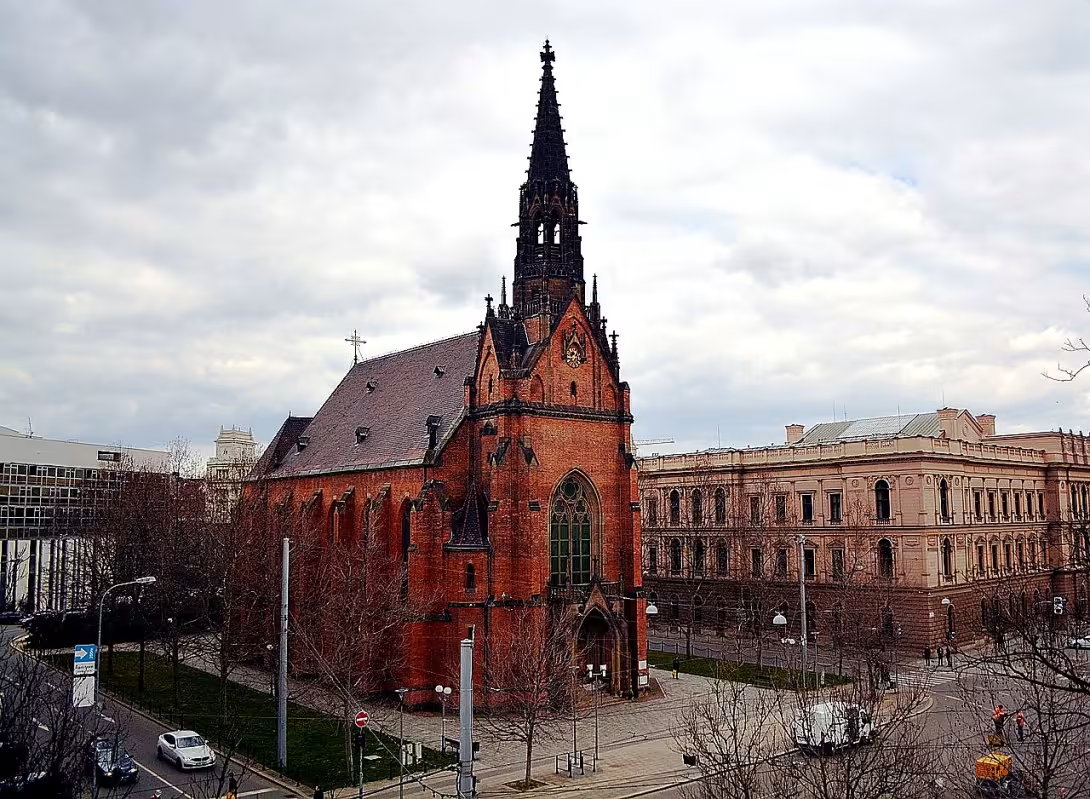
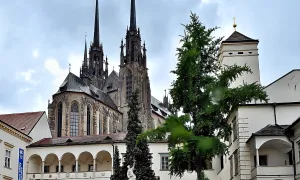
The Českobratrský evangelický chrám Jana Amose Komenského, commonly known as the Red Church, is a significant historical monument in Brno-město, within the Jihomoravský kraj of the Czech Republic. Constructed between 1863 and 1867, this Evangelical church features Northern German Gothic architecture and distinctive red brick construction. Originally named Christuskirche, it was later renamed to honor Jan Amos Komenský, a pivotal figure in Czech history. Today, it serves as a cultural monument for the Evangelical Church of Czech Brethren.
The church's origins date back to a period of religious tolerance within the Austro-Hungarian Empire following the February Patent of 1861. This decree allowed Lutherans to build churches, leading to a design competition won by architect Heinrich von Ferstel. The foundation stone for the Red Church was laid in 1863 and it opened to the public two years later. Its construction reflects the increased rights afforded to Protestant communities during this era.
Architecturally, the church exemplifies Northern German Gothic style, designed by Heinrich von Ferstel with oversight from Mořic Kellner von Brünnheim. The building's red brick gives it a striking appearance, while its long nave and tall tower contribute to its imposing presence. Inside, the church embodies Protestant simplicity, featuring minimal decoration but notable sculptural works by Franz Schönthaler. This design choice underscores the Protestant emphasis on functionality and modesty in religious spaces.
Ownership of the Red Church has evolved over time. Initially built for Brno's Lutheran community, it became part of the Českobratrská církev evangelická (Czech Brethren Church) after World War II. The church faced closure from 1975 to 1990 due to structural issues but has since been restored and continues to serve its religious community.
Throughout its history, the Red Church has witnessed several key events. In 1782, the foundation of the Lutheran congregation in Brno was established following the Tolerance Patent. Post-World War I changes led to the integration of Czech and German congregations into separate denominational structures. Additionally, in January 2011, a USB flash disk was embedded into the church's wall as part of the street art project 'Dead Drops,' adding a modern twist to its historical narrative.
Today, the Red Church remains an accessible and prominent feature in Brno's urban landscape, located at Komenského Square near Pirchan's obelisk and Denis Gardens. Its architectural significance and historical context make it a worthwhile visit for those interested in religious history and Gothic architecture. The church not only serves as a place of worship but also stands as a testament to the cultural and religious evolution within the region.
Visitors are invited to explore this remarkable monument, which continues to hold both spiritual and historical value. Its unique blend of architectural beauty and rich history offers a compelling glimpse into the past while remaining an active part of Brno's contemporary community.
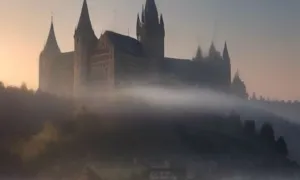
Then and now
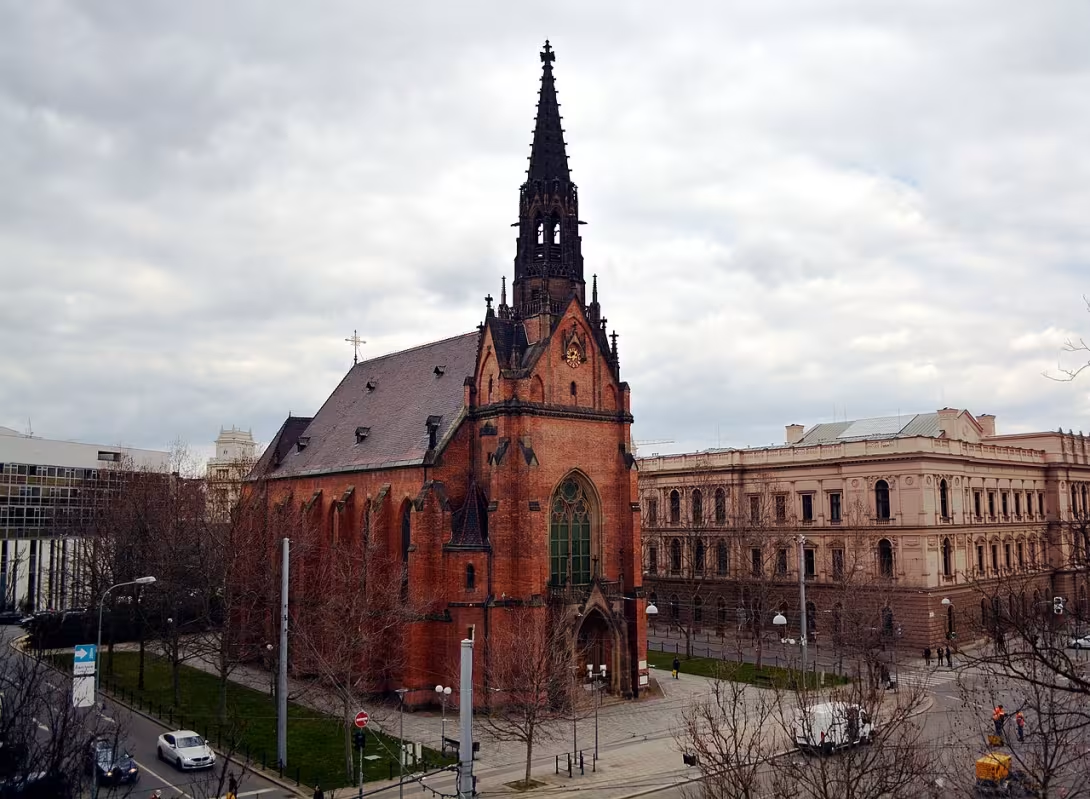
Drag the slider to compare how the landmark may have looked when it was built with the view today.
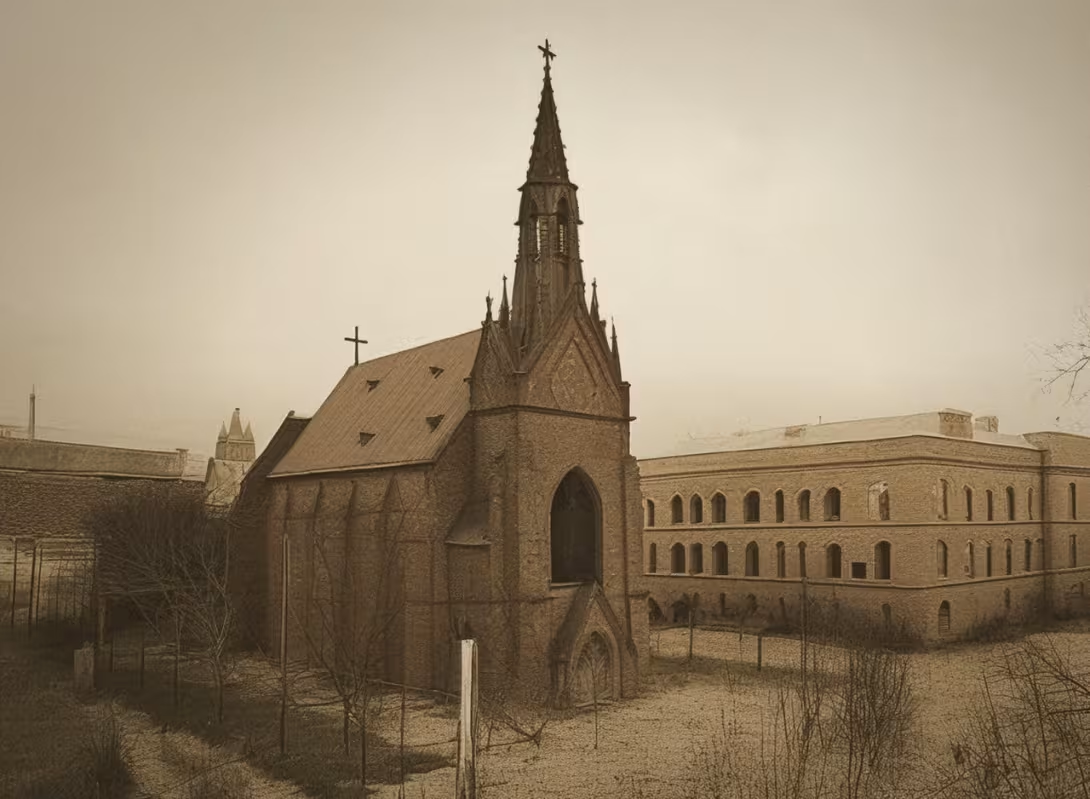
The historical appearance on the left is an AI-generated visualisation and serves as inspiration only.
Historical milestones
- 1861
- February Patent allows Lutherans to build churches.
- 1863
- Foundation stone of the Red Church laid.
- 1867
- Red Church construction completed and opened.
- 1782
- Lutheran congregation in Brno established.
- 1975
- Church closure due to structural issues begins.
- 1990
- Red Church restoration and reopening after closure.
Architectural development
The church was designed in Northern German Gothic style by Heinrich von Ferstel, with construction overseen by Mořic Kellner von Brünnheim. Built from red bricks, it features a long nave and a tall tower. The interior is characterized by its Protestant simplicity, with minimal decoration except for notable sculptures.
Historical events
- 1782
- Foundation of the Lutheran congregation in Brno following the issuance of the Tolerance Patent.
- 1861
- The February Patent allowed Lutherans to build churches, leading to a competition for the church's design won by Heinrich von Ferstel.
- 1918
- Post-World War I changes led to the integration of Czech and German congregations into separate denominational structures.
Owners
Initially owned by the Lutheran community of Brno, it became part of the Českobratrská církev evangelická (Czech Brethren Church) after World War II. The church was closed from 1975 to 1990 due to structural issues but has since been restored.
Points of interest
- The Red Church was originally named Christuskirche before being renamed to honor Jan Amos Komenský, reflecting its evolving cultural significance and connection to Czech history.
- In a modern twist on historical preservation, the church became part of an urban art project in 2011 when a USB flash disk was embedded into its wall as part of 'Dead Drops,' blending contemporary digital culture with its Gothic architecture.
- The church's foundation stone was laid during a period of religious tolerance following the February Patent of 1861, highlighting how political changes within the Austro-Hungarian Empire directly influenced architectural and community developments in Brno.
- Despite facing closure from 1975 to 1990 due to structural issues, the Red Church has been restored and continues to serve as an active place of worship for the Českobratrská církev evangelická, demonstrating resilience through historical challenges.
- Architect Heinrich von Ferstel won a design competition to create the church, showcasing how architectural talent was sought after during this era to represent the newfound freedoms and rights afforded to Protestant communities.
Guide
This guide is narrated by a synthetic voice generated by artificial intelligence.
Show guide text
This text was created by artificial intelligence and has not been editorially reviewed. It may contain inaccuracies.
Welcome to the Českobratrský evangelický chrám Jana Amose Komenského, affectionately known as the Red Church, a jewel nestled in Brno-město within the vibrant Jihomoravský kraj. As you stand before this striking edifice, its red brick façade captures your attention, setting it apart from the cityscape with its bold Northern German Gothic style. This church is not just an architectural marvel; it's a testament to history and culture.
Let’s delve into the origins of this remarkable site. The journey began in 1861 when the February Patent granted Lutherans the right to construct churches, paving the way for what would become a significant religious and cultural landmark. Just two years later, in 1863, the foundation stone was laid, marking the start of an ambitious project that culminated in 1867 with the completion and opening of the Red Church. This was not merely a building; it was a symbol of newfound freedoms for the Lutheran community established here as early as 1782.
As you explore further, take a moment to appreciate the architectural prowess behind this structure. Designed by Heinrich von Ferstel and Mořic Kellner von Brünnheim, the church's red brick construction is both striking and harmonious with its surroundings. Inside, the Protestant ethos of simplicity prevails; minimal decoration allows the sculptural works by Franz Schönthaler to truly shine, inviting contemplation.
The Red Church holds a special place in history, not just for its architectural beauty but also for its connection to Jan Amos Komenský, an influential figure whose legacy is honored here. Originally named Christuskirche, it was later renamed to celebrate his contributions, reflecting the church's evolving cultural significance within Czech history.
Now, let your imagination wander to a modern twist on historical preservation: in 2011, this sacred space became part of an urban art project when a USB flash drive containing digitized artworks was embedded into its structure. This innovative approach marries tradition with technology, inviting us to see the past through a contemporary lens.
As we conclude our journey, I invite you to continue exploring and discovering more about this fascinating site. The Red Church is not just a building; it's a narrative woven from history, culture, and community spirit. Thank you for joining me on this auditory exploration, and may your curiosity lead you to uncover even more stories hidden within the walls of Brno’s historic treasures.
Tips for visitors
The best time to visit the Českobratrský evangelický chrám Jana Amose Komenského, or Red Church, is during late spring or early autumn when the weather is mild and pleasant for exploring. This period also coincides with fewer tourists, allowing you to appreciate the church's architecture without large crowds. Additionally, visiting on a weekday can provide an even quieter experience.
The area is well-served by trams and buses, making it convenient for visitors traveling from other parts of Brno. Always check current transport options online before your visit.
When visiting the Red Church, bring comfortable walking shoes as there are several architectural landmarks and green spaces around Komenského Square worth exploring on foot. A camera is recommended for capturing the beautiful details of the church's red sandstone facade and its surrounding area. For photography enthusiasts, early morning or late afternoon light provides a softer glow that enhances the building’s features.
For families with children, the Red Church offers an engaging visit due to its historical significance and proximity to Denis Gardens, which provide a lovely space for relaxation and play. The nearby Pirchan's obelisk can also be of interest as it adds a touch of history and architecture to explore together. Ensure you check any family-friendly facilities or activities in advance.
Within 30 minutes from the Red Church, visitors can explore other notable sites such as the Cathedral of St. Peter and Paul, which offers stunning Gothic architecture. Another nearby attraction is the Moravian Gallery, which houses impressive art collections. These destinations are easily accessible by public transport or a short drive.
Frequently asked questions
Can the monument be visited?
Religious buildings are usually open mainly during services; at other times a visit is normally arranged with the parish or the operator. We have not verified specific times.
Where is the monument?
Location: Joštova, Brno-město, Brno, Jihomoravský kraj. The map on this page shows the exact spot.
Why is the monument protected?
It is listed in the Central List of Cultural Monuments of the Czech Republic as a cultural monument (register no. 18703/7-66).
Businesses nearby
Do you run a restaurant, accommodation, shop, museum, rental, wellness or other visitor service near this monument? Show yourself directly to the people heading to it — this is how they will see you in the app and on the web:
Events nearby


Zdroj akcí: otevřená data měst a obcí ČR (Národní katalog otevřených dat) a kalendář akcí Národního památkového ústavu.
Nearby
Located at Komenského Square, the church is near Pirchan's obelisk and Denis Gardens. The area features significant architectural landmarks and green spaces.
Accommodation nearby
Trips and activities nearby
Guided tours, tickets and activities nearby from GetYourGuide
Affiliate link: if you buy from the partner, we may receive a commission. The price for you does not change.
Search tours and activities →Themed route
Thematic Walking Tour: The Legacy of Jan Amos Komenský
1. Czech Brethren Evangelical Church of John Amos Comenius (Komenského Church) - Type: Religious and Historical Landmark - Why Visit: Begin your journey at the heart of Brno's historical landscape, where this church stands as a testament to the rich religious history of the Czech Brethren. Explore its architectural beauty and learn about Jan Amos Komenský's influence on education and religion.
2. Pirchan's Obelisk - Type: Historical Monument - Why Visit: A short walk from the church, this obelisk commemorates the 17th-century Czech nobleman Jan Pirchan. It offers a glimpse into the city's past and serves as a reminder of Brno's resilience through turbulent times.
3. Denis Gardens - Type: Urban Park - Why Visit: Located nearby, Denis Gardens provide a serene escape amidst urban life. Wander through its well-maintained paths to enjoy the greenery and tranquility, reflecting on the historical context of the surrounding landmarks.
This tour offers an immersive experience into Brno's cultural and historical fabric, focusing on significant sites that highlight the legacy of Jan Amos Komenský and his era.
Seasonal recommendations
Spring: The spring season at the Jan Amos Komenský Church is a time of renewal and natural beauty, as the surrounding park begins to bloom with vibrant flowers and lush greenery. The soft light filtering through budding trees creates a serene atmosphere perfect for contemplation. Visitors can enjoy the fresh air without the summer crowds, making it an ideal time for photography enthusiasts to capture the church's architecture against the backdrop of spring foliage. For comfort, wear layers that you can adjust with the changing temperatures and consider bringing a light jacket in case of cooler mornings or evenings.
Summer: Summer at the Jan Amos Komenský Church is characterized by long days filled with warm sunshine, making it a popular time for both locals and tourists to explore Brno's historic sites. The church gardens are particularly inviting during this season, offering shaded areas where visitors can relax after their tour. Due to its popularity in the peak tourist months of July and August, arriving early is advisable to avoid larger crowds. Comfortable walking shoes and light clothing are recommended, along with sunscreen and a hat to protect against the sun.
Autumn: The autumn months bring a stunning display of colors as the leaves around the Jan Amos Komenský Church turn shades of red, orange, and gold. This picturesque setting provides a unique backdrop for photography and leisurely walks through the park. Although temperatures start to cool down, it's still pleasant weather for exploring outdoor sites. Visitors should wear layers that can be easily adjusted as the day progresses from warm afternoons to cooler evenings. The reduced number of tourists compared to summer offers a more tranquil experience.
Winter: Winter transforms the Jan Amos Komenský Church with its own unique charm, as snow blankets the surrounding park and enhances the church's architectural details. While some areas may be less accessible due to weather conditions, the crisp air and quiet atmosphere create an intimate setting for those who venture out during this season. Dress warmly with thermal layers, a hat, gloves, and waterproof footwear to comfortably enjoy the historic site amidst the winter landscape.
Visualizations and artistic views


The visualisations are generated by artificial intelligence and serve as inspiration.
Photos from the area
Real photos taken near the monument

Zdroj a licence jsou uvedeny u každého snímku.
Tips from visitors
No tips yet. Be the first!
Log in and add your tip.
Sources and literature
Photos: Martin Nováček / CC BY-SA 4.0 — Wikimedia Commons. The author and licence also appear when you hover over the image.
Faktickým podkladem tohoto textu byl článek na Wikipedii, jehož autory jsou přispěvatelé Wikipedie. Článek je dostupný pod licencí CC BY-SA 4.0.
Location on the map
Příběhy a pověsti
Legendy, pověsti a příběhy spjaté s touto památkou
Fotografie návštěvníků
Zatím žádné fotografie. Buďte první, kdo přidá fotografii z návštěvy!
Log in a přidejte svou fotografii nebo hodnoťte.
Za ověřenou návštěvu v aplikaci získáte víc bodů — poznáme podle GPS, že jste na místě.
Reviews and comments