






Chata Horalka Homestead
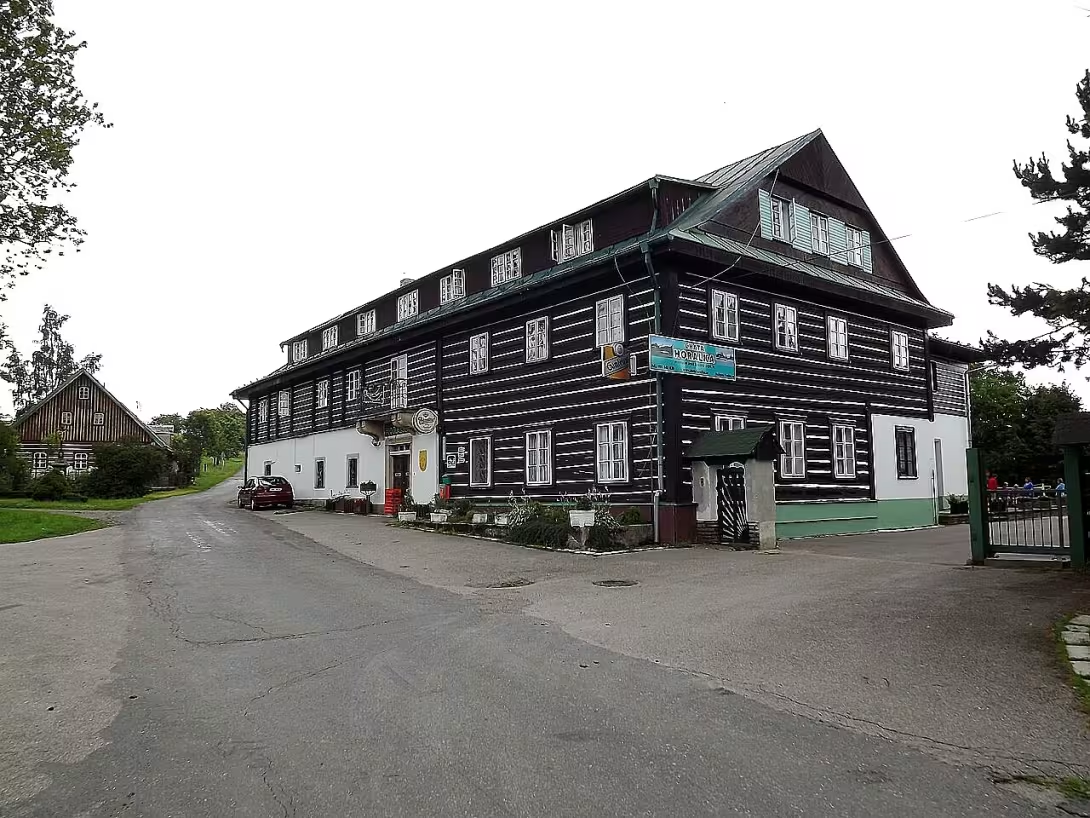
Chata Horalka is a storey, mainly grafted estate in the village of Sněžné in the district of Rychnov nad Kněžnou in the Králové Hradec region. In the region it represents a unique document of the early stage of industrial production because it served as a textile factory with a housing factor.
We are not aware of the oldest history and circumstances of the settlement. However, historical records confirm its importance for the early development of an area where the foundations of the later industrial character of the region were formed.
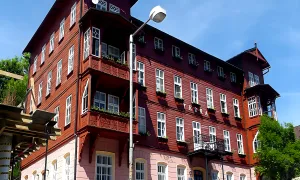
Architecturally, it's a free-standing storey building. The main building material is wood, since the construction is mainly grafted. Such a design is characteristic of the historical buildings of the region and shows the technical possibilities and material background in the construction of similar buildings.
Today the estate is protected as a cultural monument of the Czech Republic. It is registered in the Register of Monuments under No 31959 / 6-2429 at no. 1 in the municipality of Sněžné.
Visiting this place offers insight into the history of the early industry and shows what production looked like before the development of modern factories. It is a valuable testimony of the past that deserves the attention of any interested party in the history of the region and its economic development.
Historical milestones
- Around the 18th century
- The creation of a grafted estate typical of this region
- Around 19th Century
- Operation of the building as a textile factory and housing factor
- Present
- Protection of the estate as a cultural monument of the Czech Republic
Points of interest
- It was used as a textile factory with a housing factor. - It represents a unique document of the early stage of industrial production in the region. - It's a loose storey building, which is mostly grafted. - Today the estate is protected as a cultural monument of the Czech Republic. - It is registered in the register of monuments under No 31959 / 6-2429.
Guide
Show guide text
This text was created by artificial intelligence and has not been editorially reviewed. It may contain inaccuracies.
Welcome to village Sněžné. You've just stopped in front of one of the most important construction sites in the area. You're standing right in front of the Mountaineer's cabin. Before we go into deeper exploration, let yourself stand for a moment and perceive the atmosphere of this place. In front of your eyes is a building that carries an unrepeatable peace and a strong sense of history. It is a building that dominates its surroundings, and even though it may seem to be part of a quiet rural landscape today, in its walls there is still a impression of human work and then economic life. Feel the present, as this building rises above the ground, as it is firmly anchored in a place where what is home once clash with what was work.
Let's now try to understand why this building is so special. Chata Horalka has not in the past been a mere residence for a rural family. Its origin and purpose are deeply linked to the industrial history of our region. This is a textile factory, which means that this place was the heart of production, a place where materials were formed that were necessary for both life and trade. This building served as a complex whole which combined two essential functions. On the one hand there was the production itself, i.e. the work in the manufacturer's invoice, and on the other hand there was a housing for the factor. At the time, the factor was a key figure, an administrator who oversaw the operation of the whole enterprise, the quality of the work and the order in this operation. This combination of industrial facilities and representative dwellings makes Horalka such an interesting historical entity. Its importance for this region is so great that it is today protected as a cultural monument of the Czech Republic, which confirms to us that even such settlements play a vital role in our national memory.
Now pay attention to the architecture itself, which you are now observing. Look at the overall structure of the building. It is a storey building, which, with its height and scope, clearly stands out over ordinary rural development. Notice how the building is built as a free standing object. He has his own space, his own breath, and he doesn't bow to other houses, but he stands here as a separate symbol of his time. If you look at her walls, you'll see that the building is mostly grafted. This construction technique, where wooden beams filled with material are used, is absolutely characteristic of our region and gives the construction the right, warm but robust look. Feel the texture of the wood, feel the uniformity of the structure. Although time is constantly changing, this grafted form allows us to perceive the continuity of tradition. Looking at the floors of the building you can imagine how the spaces were divided between the working part and the living part of the factor. Each floor, each part of this structure had a clear purpose, which was firmly determined by the needs of the then economy.
Even though it seems to us today that history is clearly written in the books, we are seeing something at Horalka's cabin that makes us think deeper. Even though we know that people lived here, that people have worked here, the names of the particular people who have resurrected or lived in it have not given us history. We don't know the names of the architects who designed this building or the exact date when the first stone or the first beam was laid. However, this absence of specific names does not mean that the site is without stories. On the contrary, it is this ignorance that creates a special charge around the mountain. But we can imagine these people. Imagine the factor that came through the halls every morning, checked the state of the machinery or supplies and spent the evening in the living quarters with the family. Imagine the workers who spent long hours here to secure the production that was important for the surrounding village and for the wider trade. Their lives were imprinted in these walls, even though their names were forgotten by time.
And here comes the greatest mystery that you might be interested in. What happened in these walls when the night closed around? What did these walls hear? Since the exact chronology of the creation of the building remains unknown, the cottage of Horalka becomes a kind of time capsule. It's a place that exists in a certain period of time where reality is mixed with the unknown. This ambiguity about the beginnings of the construction adds mysticism to the site. It's like the building doesn't want to be fully read, like it wants to keep some of its secrets to itself and those who look at it with enough respect and patience. This ignorance of architects and the exact years of creation makes us stop asking questions about facts and start asking questions about the feelings and atmosphere that this place radiates.
Now that you've gone over the basic view of this monument, I suggest you continue your tour of the area. Let the atmosphere of the village Sněžné drift and see how this historical settlement fits into the wider context of this beautiful region. Maybe the next time you look at the grafted walls or the structure of the building, you'll see something new, something you missed before. Thank you for spending this moment with us and for exploring the history of the Horalka cottage. We wish you a pleasant continued journey and many other interesting discoveries in this beautiful region. Goodbye.
Tips for visitors
The best time to visit the cottage of Horalka is spring and summer, when the surrounding landscape is in full bloom and the weather allows comfortable walks around the village Sněžné. Since this is a free building, the outdoor tour is independent of the opening hours of the interior, allowing you to visit the monument anytime during the day.
Transport availability is provided by road network, which leads directly to the municipality Sněžné. If you can get here by car, I recommend you park in local pocket parking lots or in dedicated stalls near the historic core, so that you don't stop the locals. The current parking possibilities and possible charges should be checked on site or in local map applications.
When visiting, bring comfortable shoes for walks around the village and possibly a light layer of clothing, because the mountain climate can be variable. Although the state of the monument is listed as unknown, it is advisable to check in advance the actual accessibility of the interior on the official channels of the monument manager so that you will not be disappointed.
For photography is ideal morning or afternoon light, which beautifully illuminates the grafted construction of the building and highlights its architectural details. The best views of the cottage Horalka can be obtained from the surrounding streets of the village Sněžné, where you can capture the building in the context of local development and nature.
Since there are no specific locations in the area within 30 minutes, I recommend focusing on the village Sněžné itself and its historical centre, which offers other cultural and architectural attractions. For families with children, this location is suitable thanks to a quiet environment and the possibility of active discovery of history in the field.
Businesses nearby
Do you run a restaurant, accommodation, shop, museum, rental, wellness or other visitor service near this monument? Show yourself directly to the people heading to it — this is how they will see you in the app and on the web:
Events nearby
Zdroj akcí: otevřená data měst a obcí ČR (Národní katalog otevřených dat) a kalendář akcí Národního památkového ústavu.
Nearby
ITEX Show interactive overview of the surroundings - restaurants, accommodation, rentals and other places within a 15 km radius.
Data: OpenStreetMap contributors, 15 km radius.
‡ Historical monuments
- Broken castle Homole (8.2 km)
- Fortress Dobrošv (9.0 km)
- ruin Chábor (9.8 km)
- Castle Skalka (9.9 km)
- Klečkov (10.0 km)
- 1866 (11.5 km)
- Stanisław Moniussko (11.9 km)
- 1866 (12.3 km)
Restaurant and catering
- Guesthouse U Matulo (6.0 km - 12)
- Hotel Praha (7.4 km - 175)
- Castle - Bar (9.4 km - Husovo Square 1202)
- Rambousek (9.4 km - Comenius 60)
- Rychta (9.5 km - Komenský 34)
- U Drašvě (9.6 km - T. G. Masaryka 396)
- Stop (9.7 km)
- Pizzeria Malecí (9.8 km - Maléčí 205)
Accommodation
- Cuckoo (5.9 km - 29)
- U Supa (6.1 km - ev.112)
- Panorama (6.1 km - 19)
- Čihalka (6.4 km - 223)
- Home (7.6 km - 178)
- Grey Wolf (7.8 km - 183)
- Ranczo "Panderoza" (7.8 km)
- Słoneczne Podgórze ZV124; (7.9 km)
› Rental and sports
- Pohl Sport (6.1 km)
- Climbing wall (7.0 km)
- Sklep-wypożyczalnia (7.1 km)
- Skicenter Destisné (7.3 km)
- R2 sport bike (9.3 km - Husovo Square 1212)
- BN Activities (10.0 km - Church 369)
- Indoor pool Dobruška (10.3 km)
- Cyclone Bike (11.1 km)
© Tourism and nature
- nad Poloma (upbringing) (4.3 km)
- nad Czech Cermno. (7.0 km)
- Brzozowie (9.0 km)
- Velké Drastná (9.2 km)
- Rozdroże pod Brzeziem (9.5 km)
- Skanzen Villa Nova - medieval villages (10.9 km)
- Jakub (11.0 km)
- Hraštic kopec (11.8 km)
Accommodation nearby
Themed route
1. The main building of the estate (architecture) - A tour of historical spaces and an exhibition focused on life in the mountain cottage. 2. Internal courtyard (outdoor) - A place to observe the traditional layout of the area and a short rest. 3. Area around the cottage (nature) - Walk through the immediate surroundings of the estate with views of the landscape.
Seasonal recommendations
Spring: In the spring season Chata Horalka turns into a green sanctuary where nature wakes up from its winter sleep. Discover the blooming grass and the first tree leaves that celebrate new life. The atmosphere is full of calm and sweet smells of flowers. When visiting, remember warm clothes because winter can still be present in the form of a cool wind or rainy weather. The best time to visit is an early afternoon when the sun lights up the landscape and the crowds have not yet grown.
Summer: Summer brings an unforgettable atmosphere to Chata Horalka with long days and warm sunshine. Nature is in full power where you can explore the green meadows and the grass. This season visitors are looking forward to outdoor activities and relaxation under trees. We recommend you come earlier to enjoy the place before drowning the crowd of tourists in the main summer season. Don't forget about sun protection - capes and cream with high SPF are necessary.
Autumn: Autumn brings wonderful colors and a quieter atmosphere to Sněžné. Leaves turn into golden, red and yellow shades, creating views that are a real stimulus for photography. This season the opening hours of visitors are usually shorter due to falling days and colder temperatures. We recommend wearing layered clothes to avoid cold and enjoy the beauty of autumn nature.
Winter: Winter in Sněžné offers a unique view of Chata Horalka filled with snow, making it an ideal place for the love of cold and the possibility to watch the drapes. The atmosphere is calm and quiet, with lightning on the snow cover. Opening hours can be limited due to cold weather, so notice the current information before visiting. Don't forget the warm clothes and winter protection - this is the key to using snow views without inconvenience.
Visualizations and artistic views


The visualisations are generated by artificial intelligence and serve as inspiration.
Photos from the area
Real photos taken near the monument


Zdroj a licence jsou uvedeny u každého snímku.
Tips from visitors
No tips yet. Be the first!
Log in and add your tip.
Sources and literature
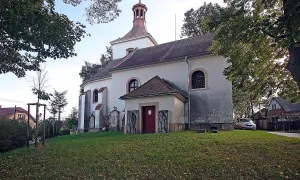
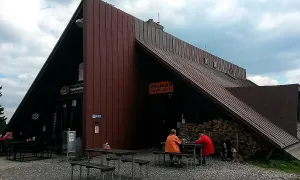
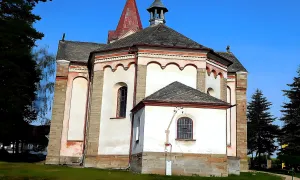
Photos: JAn Dudík / CC BY-SA 3.0 — Wikimedia Commons. The author and licence also appear when you hover over the image.
Location on the map

Příběhy a pověsti
Legendy, pověsti a příběhy spjaté s touto památkou
Fotografie návštěvníků
Zatím žádné fotografie. Buďte první, kdo přidá fotografii z návštěvy!
Log in a přidejte svou fotografii nebo hodnoťte.
Za ověřenou návštěvu v aplikaci získáte víc bodů — poznáme podle GPS, že jste na místě.
Reviews and comments