






Cimburk (hrad, okres Svitavy) Ruin
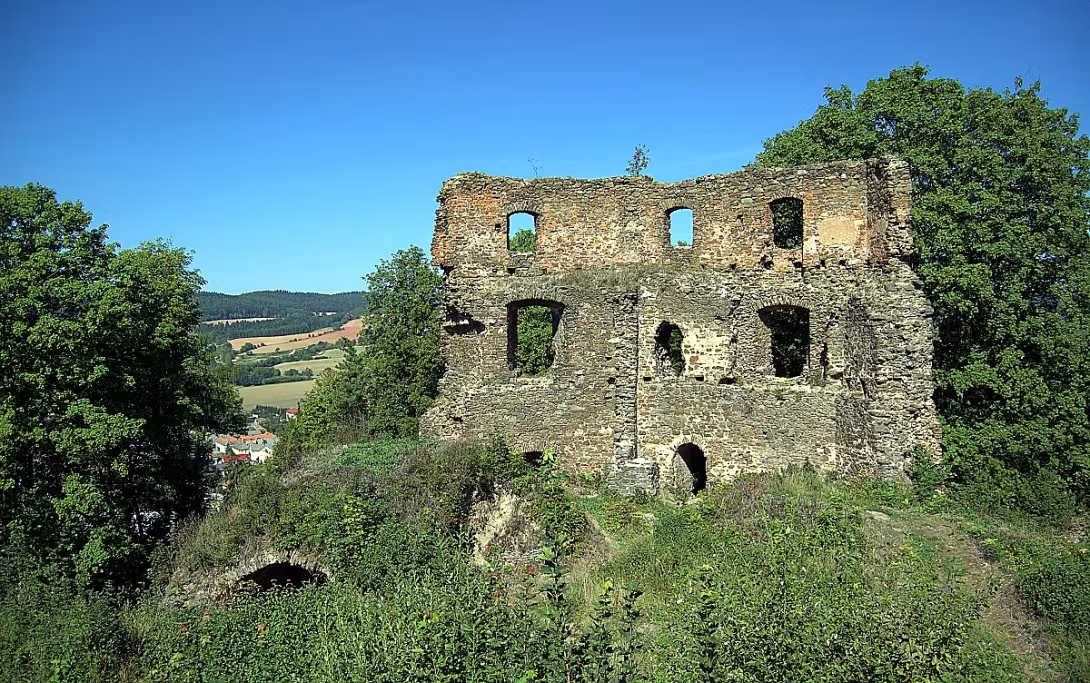
Cimburk, also known as Trnávka, is a captivating castle ruin located in Městečko Trnávka within the Svitavy district of the Czech Republic. Built around 1300 by Ctibor z Lipnice, this historical site stands on a hilltop offering strategic advantages and natural defenses. The remnants of Cimburk's thick walls, palace, and gate towers highlight its medieval Gothic architecture. Its significance is underscored by its role as an important stronghold during the Hussite Wars and its rich history of ownership changes.
The origins of Cimburk trace back to the late 13th century when the noble family known as the pánů z Cimburka acquired land around Trnávka. Ctibor z Lipnice, a member of this family, constructed the castle circa 1300. The site's strategic location was ideal for defense and control over two intersecting routes, which were crucial during its time.
Architecturally, Cimburk is characterized by its Gothic style, evident in the thick defensive walls that still stand today. These walls are over 2.5 meters thick, showcasing the fortification techniques of the era. The castle's layout included a main fortress area and a bailey protected by three towers, with access controlled through a single path that could be easily monitored from these vantage points. Notable architectural elements include a Gothic window in the palace wall and late Gothic door tracery.
Throughout its history, Cimburk experienced several ownership changes. After Ctibor z Lipnice's descendants inherited it, the castle passed to the pánů z Lipé and then to Moravian margrave Jošt in 1406. It later became part of the estate of Markéta ze Šumvaldu. During the Hussite Wars, Cimburk served as a key stronghold for the Hussites. Ownership continued to change hands through various noble families, including Vaňek z Boskovic and Eder ze Štiavnice, until it was acquired by Karel z Lichtenštejna in 1629.
Cimburk's history is marked by significant events, such as its role during the Hussite Wars. In 1934, a valuable hoard of over 2500 silver coins from the 13th century was discovered at the site, now housed in the National Museum in Prague. The Teutonic Order considered reconstructing Cimburk before World War I, and in the 1960s, a summer open-air theater was built on its ruins.
Today, Cimburk is under the care of Městečko Trnávka municipality and is recognized as an important state cultural monument. Visitors can explore the well-preserved remnants of this medieval fortress, offering insights into its historical significance and architectural grandeur. The site's picturesque setting near Moravská Třebová adds to its allure, making it a worthwhile destination for those interested in Czech history and heritage.
Cimburk stands as a testament to the region's rich past, inviting visitors to step back in time and explore its storied ruins. Its enduring legacy continues to captivate historians and tourists alike, offering a unique glimpse into medieval life and architecture.
Then and now
Drag the slider to compare how the landmark may have looked when it was built with the view today.
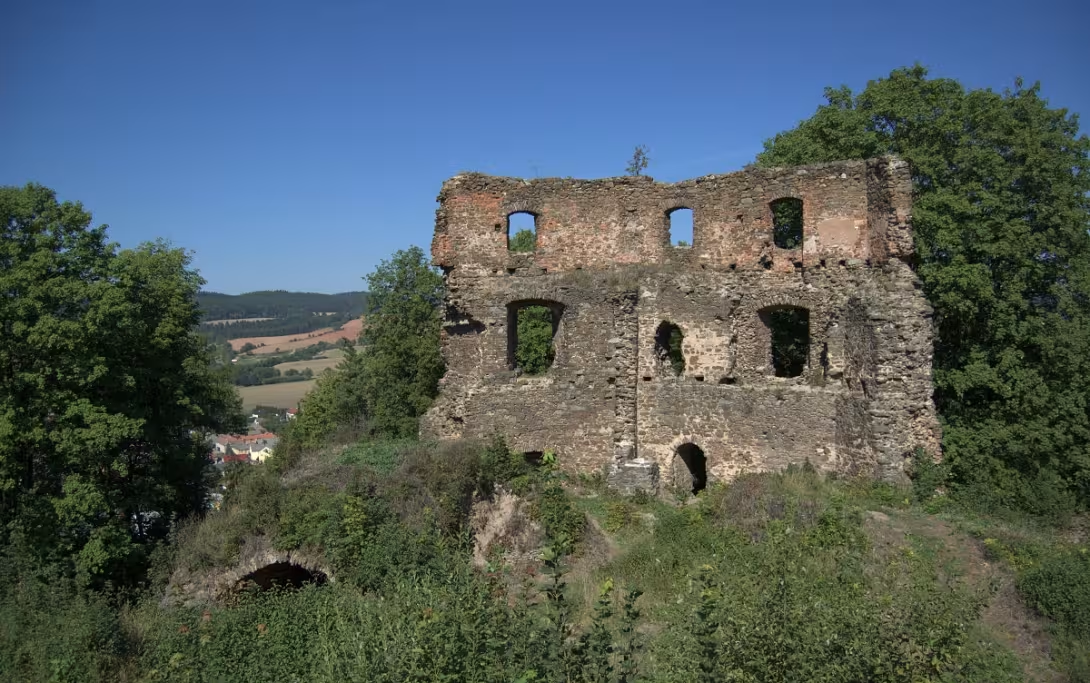

The historical appearance on the left is an AI-generated visualisation and serves as inspiration only.
Historical milestones
- 1934
- Discovery of a valuable hoard of over 2500 silver coins from the 13th century.
Architectural development
Constructed in the early 14th century with Gothic architectural elements, Cimburk featured thick defensive walls and strategic positioning. Over time, it underwent minor modifications by its owners but largely retained its original medieval structure until it fell into disrepair.
Historical events
Cimburk served as a key Hussite stronghold during the Hussite Wars.
In 1934, a valuable hoard of over 2500 silver coins from the 13th century was discovered at the site.
Owners
Ctibor z Lipnice (circa 1300)
Páni z Lipé (after 1308)
Moravský markrabě Jošt (1406)
Markéta ze Šumvaldu (1406-1446)
Vaňek z Boskovic (before 1547)
Eder ze Štiavnice and subsequent owners
Věžníkové z Věžník (late 16th century)
Karel z Lichtenštejna (1629 onwards)
Points of interest
- Despite its strategic location, Cimburk was never involved in any major battles after the Hussite Wars, serving more as a symbol of power and control rather than an active military stronghold.
- The discovery of over 2500 silver coins from the 13th century at Cimburk hints at its past wealth and importance, suggesting it may have been a hub for trade or taxation during medieval times.
- Before becoming part of the Czech Republic's cultural heritage, there were plans by the Teutonic Order to reconstruct Cimburk before World War I, reflecting its enduring appeal as a site of historical significance.
- In the 1960s, an open-air theater was built on the ruins of Cimburk, blending modern culture with ancient history and providing a unique venue for performances amidst medieval architecture.
- The castle's thick walls, over 2.5 meters in some places, not only served as formidable defenses but also housed intricate architectural details like Gothic windows and late Gothic door tracery, showcasing the craftsmanship of its era.
Guide
This guide is narrated by a synthetic voice generated by artificial intelligence.
Show guide text
This text was created by artificial intelligence and has not been editorially reviewed. It may contain inaccuracies.
The ruins of Cimburk Castle, also called Trnávka, stand on a prominent hill above the village of Městečko Trnávka, approximately eight kilometres southeast of Moravská Třebová. Since 1964 it has been protected as a cultural monument and ranks among significant state monuments.
At the end of the thirteenth century, the family of the lords of Cimburka arrived in Moravia. Its first Moravian member, Ctibor z Lipnice, built a castle around the year 1300 near the town of Trnávka. The name Cimburk refers to the crenellations in the family coat of arms, the name Trnávka refers to a nearby village.
The castle had an advantageous location because it guarded the place where two roads met. The hill, which is 412 metres high, drops steeply into the valley of the Třebůvka river on the north side. On the other sides, the castle was protected by a ditch fifteen metres wide, reinforced by a substantial rampart. The castle complex formed an oval 300 metres long and 35 metres wide. A ditch separated it from the outer castle ward. Three towers guarded the outer ward, and a single access road led around it. The castle had no main tower.
The remains of walls over two and a half metres thick have survived to this day. You can make out a palace, remains of towers of the outer ward, gates with ditches and a filled-in well. A Gothic window remained in the palace wall, and late Gothic door frames in the southwestern annex. Many tiles with various motifs were found in the ruins. The Order of German Knights wanted to rebuild the castle and conducted a construction and archaeological survey. During it, in 1934, a treasure of more than 2500 silver coins from the thirteenth century was discovered. Today it is stored in the National Museum in Prague.
The castle frequently changed owners. It belonged to the lords of Lipá, Moravian margraves, and from 1406 to Markéta ze Šumvaldu. During the Hussite wars it was one of the Hussites' main strongholds. Later it was acquired by the lords of Boskovic. Oldřich z Boskovic made minor alterations to the castle and founded a pond beneath it. In 1629 the estate passed to Prince Karel z Lichtenštejna.
In 1645 an imperial garrison was stationed at the castle, which more often extorted from the surrounding area than protected it. After their departure the castle fell into decay because Moravská Třebová became the centre of the estate. During the plague in 1715 it served as a refuge for the townspeople of Moravská Třebová. From 1766 it was abandoned, and in 1776 it burned down after a lightning strike.
In the sixties of the last century, an open-air summer theatre was created here. From 2000 onwards, the monument was being preserved. The ruins today belong to the municipality of Městečko Trnávka.
Tips for visitors
The best time to visit Cimburk is during late spring or early autumn, when the weather is mild and pleasant for exploring outdoor ruins. During these seasons, you can enjoy clear views of the surrounding landscapes without the crowds that peak in summer. The natural light at this time of year also enhances the beauty of the castle's remains.
It's advisable to check current transport schedules online before your visit.
When visiting Cimburk, consider bringing comfortable walking shoes as there are uneven paths and stairs leading up to the ruins. A hat, sunscreen, and water are also recommended due to exposure to the sun. Additionally, a camera or smartphone is useful for capturing the stunning views from the hilltop.
For photography enthusiasts, the best spots at Cimburk are those offering panoramic views of the Třebůvka River valley and surrounding hills. Early morning light provides soft shadows that enhance the textures of the ruins, while late afternoon light can create dramatic contrasts. Be sure to explore different angles for unique shots.
Nearby attractions within a 30-minute drive include the picturesque town of Moravská Třebová, known for its historic architecture and cultural events. Another nearby site is the charming village of Trnávka itself, which offers insights into local history and culture. These destinations provide additional context to Cimburk's historical significance.
Frequently asked questions
Can the monument be visited?
This is a ruin. Such sites are often freely accessible, but some can only be visited with a guide or are closed for safety reasons. We have not verified the current situation – take care and respect any restrictions.
Where is the monument?
Location: Městečko Trnávka, Pardubický kraj. The map on this page shows the exact spot.
Why is the monument protected?
It is listed in the Central List of Cultural Monuments of the Czech Republic as a cultural monument (register no. 1000148306).
Businesses nearby
Do you run a restaurant, accommodation, shop, museum, rental, wellness or other visitor service near this monument? Show yourself directly to the people heading to it — this is how they will see you in the app and on the web:
Nearby
Cimburk is situated near Moravská Třebová, surrounded by picturesque landscapes and natural features such as the Třebůvka River valley. The area offers a glimpse into medieval fortifications and Czech cultural heritage.
Accommodation nearby
Themed route
Tematická výletní trasa: Cimburk a jeho okolí
1. Cimburk (hrad, zřícenina)
Typ: Historická památka
Proč stojí za návštěvu: Cimburk je jednou z nejvýznamnějších a nejlépe zachovaných hradeb v České republice. Tato zřícenina nabízí nádherný pohled na historii středověkých obranných stavb a umožňuje návštěvníkům prozkoumat její úzké chodby, věže a dvořany. Je to skvělý způsob, jak se ponořit do minulosti a ocenit architektonickou dokonalost středověku.
2. Třebůvka (řeka)
Typ: Přírodní atraktiva
Proč stojí za návštěvu: Třebůvka, která tekla nedaleko Cimburku, je klíčovou součástí kraje a poskytuje pohodlné okolí pro relaxaci a kroužení po malebných stezkách. Řeka přispívá k idylickému prostředí oblasti a nabízí možnosti pro piknik nebo mírnou výletní chůzi, což je ideální způsob, jak si užít klidného okamžiku přírody.
3. Moravská Třebová (město)
Typ: Kulturní a historický centrum
Proč stojí za návštěvu: Moravská Třebová, ležící nedaleko Cimburku, je městem bohatým na historii a kulturu. Návštěvníci si zde mohou prohlédnout středověké památky jako Třebovský hrad nebo kostel svatého Jakuba, které přinášejí hlubší vhled do historického vývoje regionu. Město nabízí také kulturní aktivity a obchody, což je ideální místo pro odpočinek po návštěvě Cimburku.
4. Okolní lesy
Typ: Přírodní prostor
Proč stojí za návštěvu: Lesy kolem Cimburku a Moravské Třebové jsou ideálním místem pro přírodovědce i milovníky klidné chůze. Tyto lesy nabízejí široký výběr stezek, které umožňují návštěvníkům prozkoumat původní flóru a faunu regionu. Je to také skvělý způsob, jak si užít klidné chvilky v přírodě a odpočinout po náročném výletu.
Tato trasa nabízí kombinaci historických i přírodních atrakcí, což zajišťuje plnohodnotné zážitky pro každého cestovatele.
Seasonal recommendations
Spring: Visiting Cimburk during spring offers a unique experience as the surrounding landscape begins to bloom with vibrant wildflowers, creating a picturesque backdrop for the ancient ruins. The gentle warmth of the sun and longer daylight hours make it an ideal time for exploring the site without the intense heat of summer. However, be prepared for occasional showers that can add a misty charm to the atmosphere but might also lead to muddy paths. It's advisable to wear comfortable walking shoes and bring a light rain jacket. Early mornings are particularly serene, allowing you to enjoy the ruins with fewer visitors before the day fully warms up.
Summer: Summer at Cimburk is characterized by lush greenery and abundant sunshine, making it perfect for outdoor activities amidst the historic setting. The long days provide ample time to explore, but be mindful of the potential crowds during peak tourist season in July and August. To avoid the midday heat, plan your visit for early morning or late afternoon when temperatures are more comfortable. Wearing breathable clothing, a hat, and sunscreen is essential, as well as carrying plenty of water. The open spaces around the ruins offer great opportunities for picnics or simply relaxing under the shade.
Autumn: Autumn brings a magical transformation to Cimburk with its rich tapestry of fall colors enhancing the ancient stones' mystique. The cooler temperatures and crisp air make it an inviting time to visit, as the site is less crowded compared to summer months. This season offers stunning photographic opportunities, especially during sunrise or sunset when the light casts a golden hue over the ruins. Dress in layers to accommodate fluctuating temperatures throughout the day, and consider bringing a warm jacket for the cooler evenings. The tranquil atmosphere of autumn makes it an excellent time for reflection and enjoying nature's beauty.
Winter: Winter at Cimburk presents a stark yet beautiful contrast as snow blankets the ruins, creating an ethereal landscape that feels like stepping into another world. While the site may be less accessible due to shorter daylight hours and potential closures during extreme weather conditions, visiting on a clear day can offer breathtaking views with the soft light of winter sun illuminating the ancient stones. It's important to dress warmly in layers, wear waterproof boots, and bring gloves and a hat to stay comfortable during your visit. Early mornings are ideal for enjoying the quiet solitude before any potential snowfall or frost sets in, providing a peaceful experience amidst the historic ruins.
Visualizations and artistic views


The visualisations are generated by artificial intelligence and serve as inspiration.
Photos from the area
Real photos taken near the monument


Zdroj a licence jsou uvedeny u každého snímku.
Tips from visitors
No tips yet. Be the first!
Log in and add your tip.
Sources and literature
Photos: Macamica / CC BY-SA 3.0 — Wikimedia Commons. The author and licence also appear when you hover over the image.
Faktickým podkladem tohoto textu byl článek na Wikipedii, jehož autory jsou přispěvatelé Wikipedie. Článek je dostupný pod licencí CC BY-SA 4.0.
Location on the map
More monuments – Městečko Trnávka
Show all in the municipality

Příběhy a pověsti
Legendy, pověsti a příběhy spjaté s touto památkou
Fotografie návštěvníků
Zatím žádné fotografie. Buďte první, kdo přidá fotografii z návštěvy!
Log in a přidejte svou fotografii nebo hodnoťte.
Za ověřenou návštěvu v aplikaci získáte víc bodů — poznáme podle GPS, že jste na místě.
Reviews and comments