






synagoga v Jevíčku Synagogue
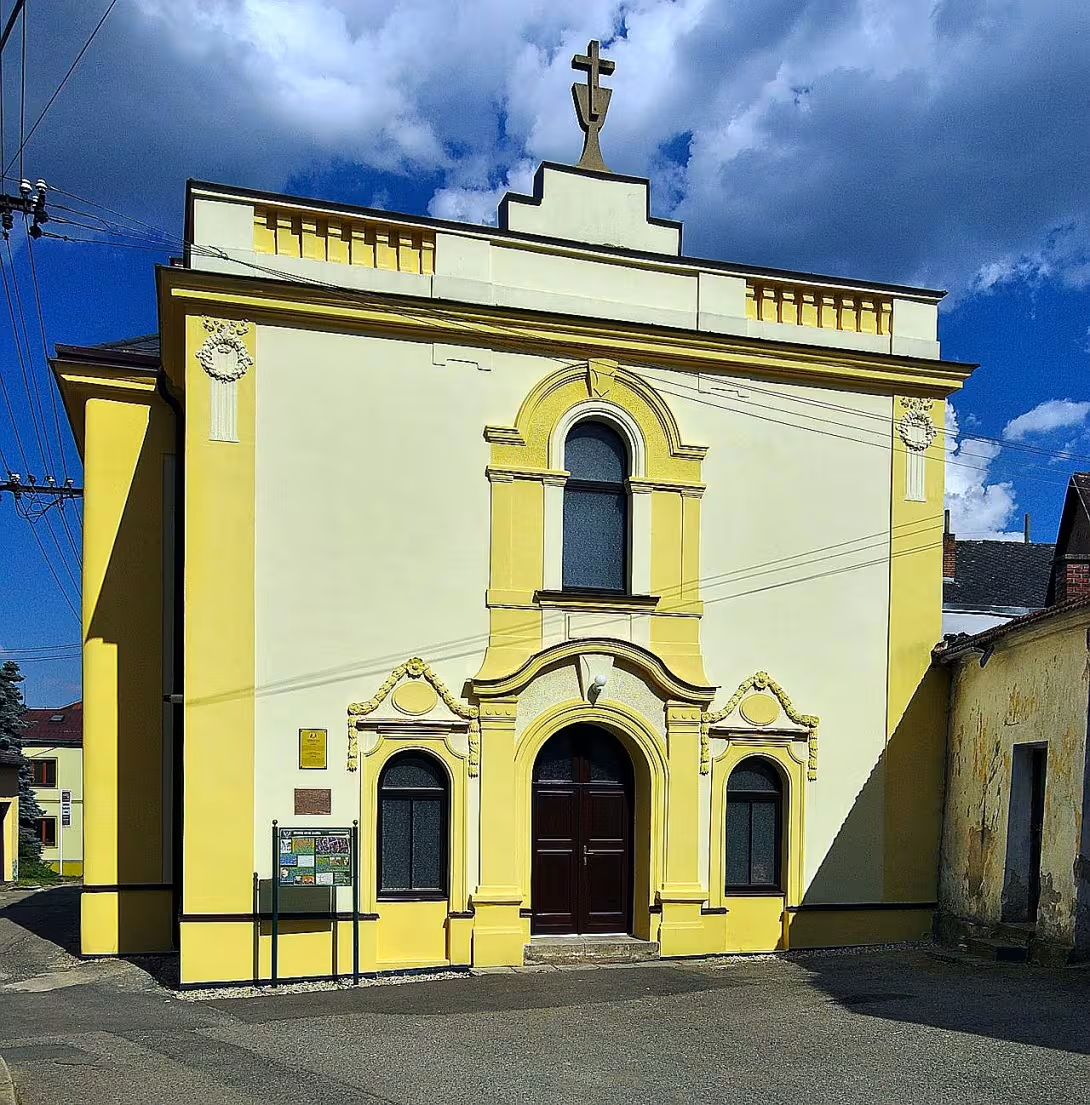
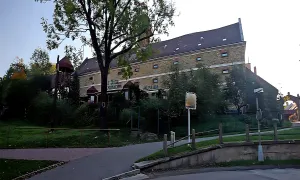
The Synagogue in Jevec is located in Court Street, downtown. Since 1993, it has been registered as a protected cultural monument. Since the early 1950s, it has been used by the Czechoslovak Hussite Church, which maintains its prayer house in the building.
The Jewish community has a long history. The original synagogue was built of wood and served the town until 1747 when the fire destroyed it. Rebuilding took a long wait. For nearly 50 years, the Jewish community had to raise funds before it could start building a new synagogue. The new building, this time from stones and bricks, was erected between 1792 and 1794. According to tradition, materials from a broken parish church were used in the construction.
Architecturally, the building was one of the classicist buildings, which corresponded to the style of the construction period. In 1907, the synagogue underwent a major reconstruction that turned it into a Art Nouveau style. This modernization reflected changes in architectural preferences that took place during the 19th and early 20th centuries in European construction.
World War II and the Holocaust brought tragic consequences to both the synagogue and the Jewish community. The local Jewish community was rapidly reduced and the synagogue stopped serving its original purpose. Her future was decided in the early 1950s when the Czechoslovak Hussite Church took over. Since then, it has served as her house of prayer and represents a living part of religious life in the city. The synagogue in Yevíček remains a testament to the flourishing of the Jewish community in the past and a reminder of the complicated fates of our 20th century.
Then and now
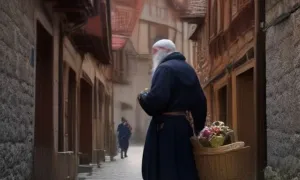
Drag the slider to compare how the landmark may have looked when it was built with the view today.
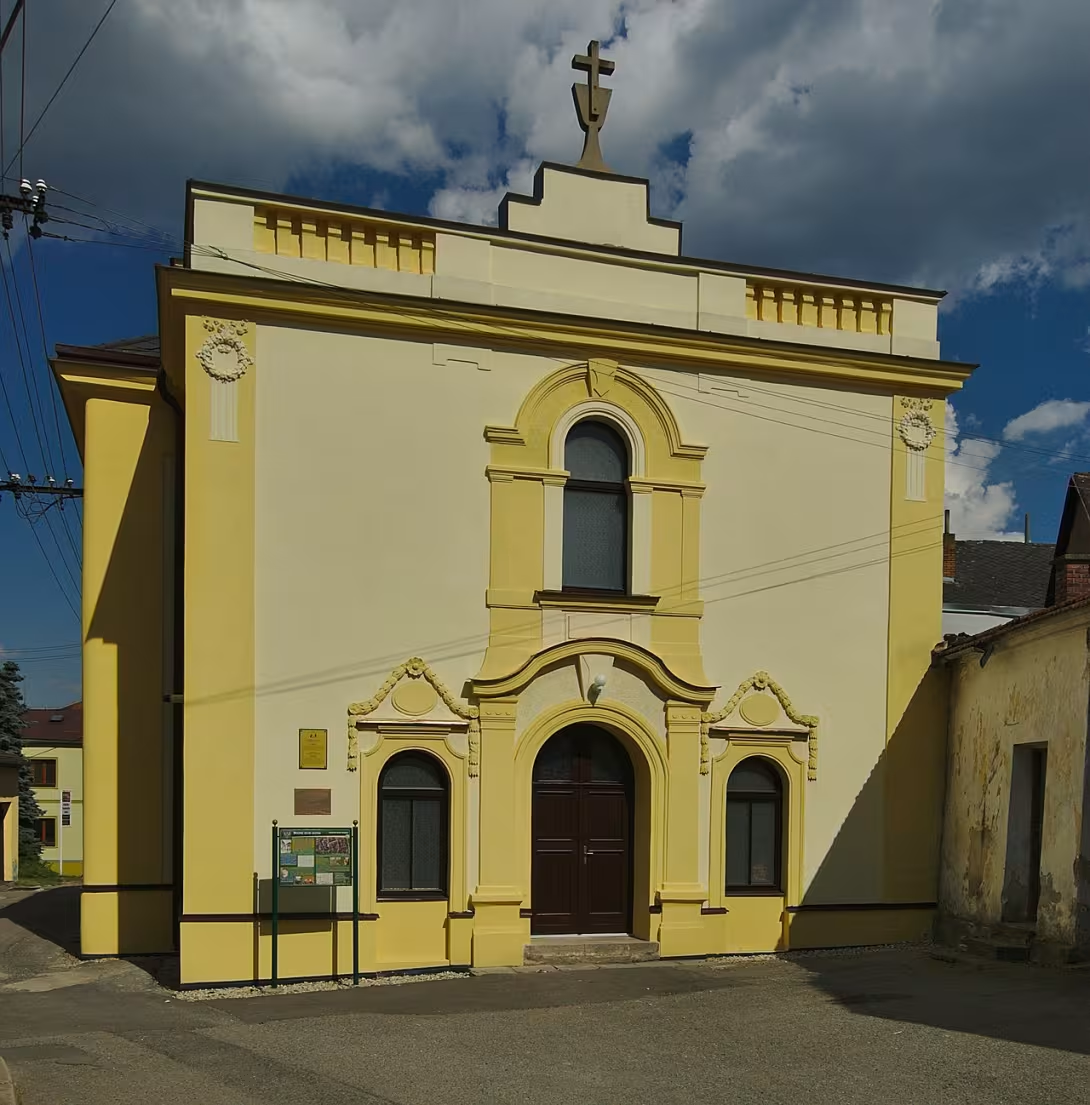
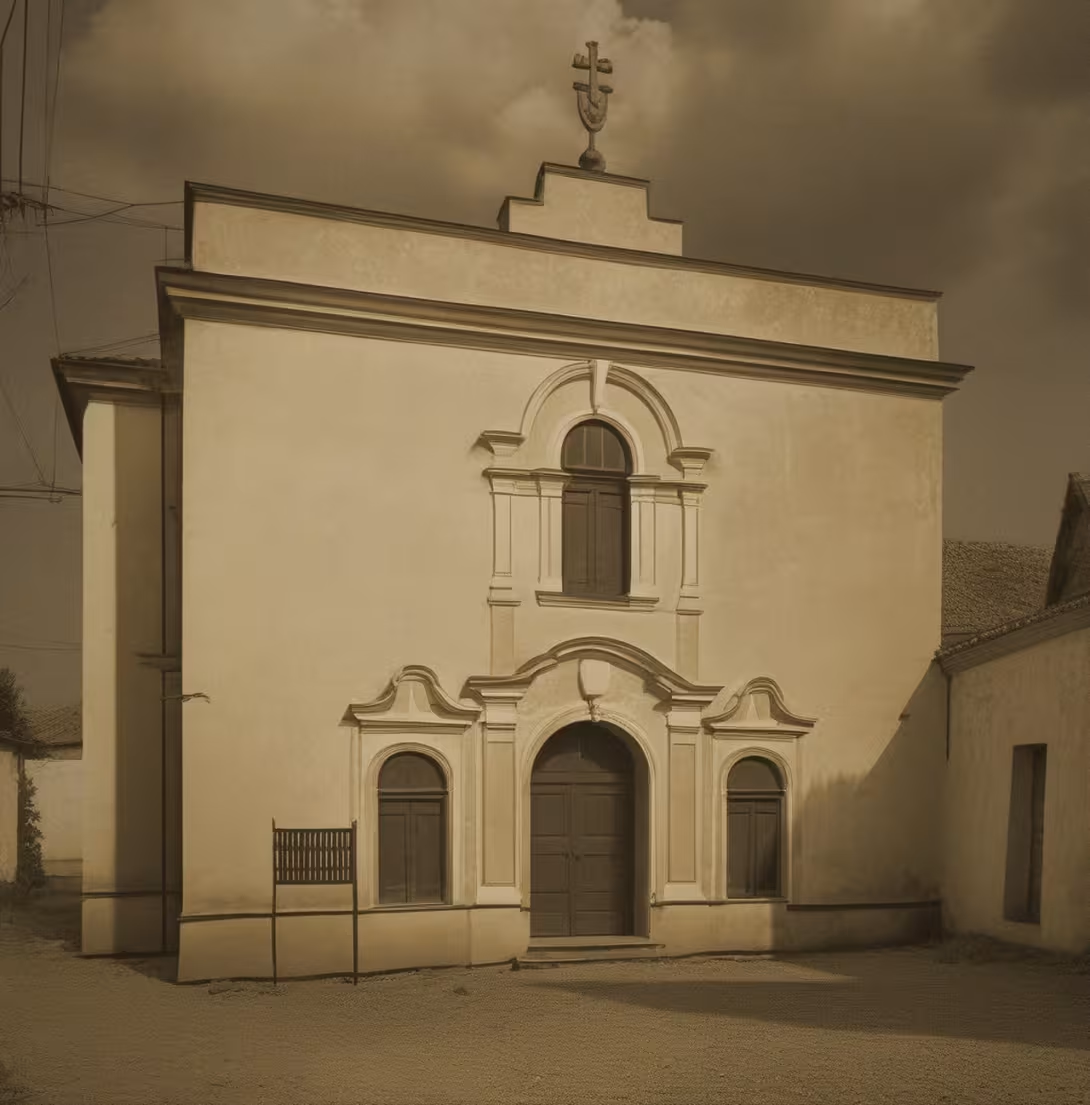
The historical appearance on the left is an AI-generated visualisation and serves as inspiration only.
Historical milestones
- 1747
- Destruction of the original wood synagogue by fire, which led to a decision to build a new brick building
- 1794
- Completion of the new brick synagogue building in classical style
- 1907
- Conversion of the synagogue in Art Nouveau style that changed its appearance
- 1993
- Writing the synagogue into the list of cultural monuments
Architectural development
The synagogue was built in 1792-1794 in a classical style, probably from a broken parish church. In 1907 she went through reconstruction in Art Nouveau style, which significantly affected her appearance. The construction is walled, with typical elements of Jewish sacral architecture such as orientation to the east and interior breakdown.
Historical events
1747 - Destruction of the original wooden synagogue by fire
1792-1794 - Position of the new brick object in the position of the elder
1907 - Reconstruction of the synagogue in Art Nouveau style
1951 - Taking over the building Church of Czechoslovak Hussite
Owners
The sequence of owners with years if available, otherwise zero.
Points of interest
The synagogue was originally built of wood and served until 1747 when the fire destroyed it.
- The new stone synagogue was built between 1792 and 1794 after almost fifty years of fundraising.
- Materials from a broken parish church were used in the construction of the new synagogue.
In 1907, the synagogue was remodeled, which turned it from classical style to Art Nouveau.
- Since the 1950s, the synagogue serves as a prayer house of the Czechoslovak Hussite Church.
Guide
This guide is narrated by a synthetic voice generated by artificial intelligence.
Show guide text
This text was created by artificial intelligence and has not been editorially reviewed. It may contain inaccuracies.
Welcome to Needle. You are standing in front of one of the most important and important places in the entire Pardubice region. In front of your eyes is a synagogue that is not only a walled building, but a living witness to the long, complicated and deep history of this city. Feel the atmosphere of peace and nobility radiating from this place. This building carries traces of the many generations that lived here, believed and created. It's a place where human fate meets architecture and where every wall tells the story of endurance, loss and recovery.
Let's go back deep into the past together so you can better understand what you're watching. In order to understand the meaning of this building, we must first look at what no longer exists. In this place, there was a different, older synagogue. It wasn't walled, but it was made of wood. It was a simple but important building for the Jewish community. But in the 1970s, the fate will be attributed to her by unfortunate events. In the 1970s, this wooden object was completely destroyed by a devastating fire. The fire may have destroyed the wooden walls and the roof, but it could not have destroyed the spirit of the community that lived here.
There was a period that might seem hopeless. After the fire, the community had to face enormous uncertainty. Imagine the incredible patience and determination of people who have decided to build something more durable and resilient. It wasn't a quick thing. It took nearly 50 years to find enough money to build a new, walled synagogue. Imagine the decades of waiting, the effort to get every coin so that this religious home can be reborn. This endurance finally prevailed. In the years 92 to 94 of the eighteenth century, the synagogue was finally completed as a new, solid object.
Now pay attention to the architecture of the building itself, which is right in front of you. Feel her face, which is the result of two completely different epoch. The original brick building was built in a classical style. This style is evident in its balance, in the order and in the sense of dignity that the building radiates. It's an architecture that seeks harmony and peace. However, history did not stop in the eighteenth century. In the year nine hundred and seven, the synagogue went through a major reconstruction that completely changed its appearance. The spirit of Art Nouveau style was introduced into her form. If you look around now and look at the details of the building, you can feel this connection. Classicist foundations and order meet here with a richer and more dynamic Art Nouveau line. It is a fascinating architectural dialogue between two different times that gives this monument its unique and unmistakable character.
Looking at the material from which the building is built, you may encounter one very interesting thing. The construction of this new stone synagogue did not only look at what was available, but also at what was already present in the area. Did you know that materials from a broken parish church were used to build it? It's a fascinating example of how things were recycled in the past and how new buildings were born literally from the ruins of the elders. This synagogue is therefore firmly linked to the entire history of the city and its spiritual life, although its purpose was changing over time.
This building was the heart of Jewish life in Yevíček until the tragic events of World War II. That was the moment when the history of the city and this place changed irreversibly. That's when the Jewish community practically disappeared and the synagogue lost its original meaning and its daily use. It's a sad story about people who were forced to leave their homes, but also about a building that stayed standing as a silent memorial to their presence.
Today, however, the fate of this building is different. The synagogue is not an abandoned ruin fragment, but a living place that has a new direction. Today this building is used by the Czechoslovak Hussite Church. It is proof that even when people change, confessions and political regimes, spiritual spaces can continue to exist and serve new generations. Thanks to the fact that the synagogue is protected as a cultural monument, which happened in nine hundred and ninety-three, we can now view it as an untouchable piece of history that we must protect for the future.
Before you go on another part of your walk, let me leave you with one thought to think about. Now, if you look at the walls of this synagogue, look below the surface of these materials. Imagine the fifty years of waiting, the prayers in the wooden structure that burned down, and the stones from the parish church that now form this solid structure. This building is literally from the history of the city.
Now that you have the key to understanding this place in your hands, I suggest you continue your search of the area. Feel every moment, feel the silence and sound of the outside world, which in this place clashes with the past. This synagogue is just one of many chapters Jevíčko can offer you. Thank you for stopping by and paying attention to this place. We wish you a beautiful and inspiring walk in history.
Frequently asked questions
What's a synagogue?
The synagogue is a place of prayer, study and meeting of the Jewish community. Filled with a similar function as churches for krestans or messiids for Muslims. Inside is Arca - schrana with scrolls Torah - and pulpit for cini bohosluzby.
When did Zide live in Yevick?
The Zidovska community in Yevick has been overlapping since the 18th century. Zide worked as a businesswoman and a grifter. In 1941-1945, the Holocaust destroyed the community - most of the Wines of Zidu died in concentration tabors.
Is the synagogue in Yevick open?
The access of the synagogue depends on the current state of the building and the administrators. Contact the master tourist information or municipal authority for current information.
What's in the area of Yevick?
Evicko lezi blizko Boskovice - town with famous Jewish four and ghetto. Boskovick's Jewish memoirs are available and well preserved. Another attraction is Castle Boskovice.
Why are the Jewish memories in Cechach important?
Ceske Jewish communities have thousands of years of history and they have accepted culture, lead and the economy of Cech and Moravia. The Holocaust has destroyed these communities, but the Zidovské remember - synagogues, hrbits, houses - are important memorials and evidence of rich cultural heritage.
Where is the most preserved zidovudine's mother in Moravia?
Boskovice has one of the most preserved Jewish quarters on Morave with synagogue, Jewish hump and traditional houses. Mikulov was also one of the most distinguished centres of Moravian zidovudine.
How big was the Jewish community in Yevick?
The specific honours are not readily available without archival research. In general, the Jewish communities in the Moravian mesteckach were relatively small - desks and hundreds of people. But even a small community built its own synagogue and led a full-fledged community life.
For kids
Businesses nearby
Do you run a restaurant, accommodation, shop, museum, rental, wellness or other visitor service near this monument? Show yourself directly to the people heading to it — this is how they will see you in the app and on the web:
Nearby
- A neglected cemetery with tombstones from the 19th and early 20th century, which is part of a desolate Jewish community.
- Baroque church from the 18th century, which is one of the dominant cities.
Accommodation nearby
Themed route
Thematic cruise route in the footsteps of Jewish history and Baroque heritage in Yevíček
1. The Synagogue in Needle Why? It is the only preserved synagogue in the Pardubice region, built in 1866. The interior has preserved original Jewish symbols and furniture, which tells about the life of the local community. The visit offers a rare view of Jewish culture in the region.
2. Jewish cemetery in Yevíček Why? Approximately 500 metres from the synagogue is a neglected, but historically significant cemetery with tombstones from the 19th and early 20th centuries. It is the last remnant of the extinct Jewish community and an important document of local history.
3. Parish Church of St. Jacob the Greater Why? West of the synagogue stands a Baroque church from the 18th century, which with its interior and architecture becomes an interesting contrast to the Jewish monument. Visiting the church will complement the picture of the religious diversity of the region.
The route is designed so that the visitor gradually passes through the key points associated with Jewish and Christian history. All targets are close to each other and can be visited within hours.
Seasonal recommendations
Spring In the spring months, the Evíčská synagogue offers a unique atmosphere where historical stone masonry turns into contrast with flowering trees and field flowers that spread around. Sun rays that penetrate glass windows create playful shadows and golden reflections on the inner walls that illuminate ancient furniture and Jewish symbols. Nature outside is full of life - limestone flowers, hemp and the primordial meadows, while birds awaken in the park near the synagogue. The ideal time for visiting is morning or afternoon when there are fewer tourists. Light clothes are recommended, but prepare a sweater as well, because morning and evening cold can be temporary. Entrance crowds are the smallest in April, when the main tourist season has not yet ended.
Summer In the summer months synagoga v Jevíčku attracts visitors not only with its historical value, but also with warm sun, which illuminates the interior from the outside and creates warm, golden shades on the stone walls. The outdoor areas are revived by greenery, which lie around the fields and gardens, while visitors gather in the park to relax on the benches. The atmosphere is alive, but in the main summer season - especially in July and August - more people must be counted on. It is recommended to come to the synagogue early in the morning to avoid crowds, and wear light but protective clothing against the sun. Tickets should be purchased in advance because they are often sold out in summer days.
Autumn The autumn visit to the synagogue in Jevec offers a unique atmosphere where golden and red leaves on the trees outside contrasts with dark stone walls of the building. The sun, which is already falling below, creates soft, golden shadows in the interior that illuminate historical elements and create a calm, intimate mood. Nature is changing around - the field flowers are receding, while the woods are dressed in coloured clothing. Autumn is the perfect time to visit because the crowds are smaller than in summer, and visitors can explore the synagogue in peace. It is recommended to dress in warm colors because evenings are cold, and visit the synagogue in the afternoon when the light is most pleasant.
Winter The winter visit to the synagogue in Jevec offers a quiet, almost mysterious atmosphere, where the snow cover in the surrounding fields and trees creates a quiet, freezing scenery. The sun, which appears only briefly in winter days, illuminates the interior from the outside and creates silver reflections on the stone walls that give the place a magical mood. In advent time, the synagogue is often lit by inner light, which creates a pleasant, warm atmosphere. Visitors should expect shorter opening times, because in winter months the synagogue is only open in certain hours. It is recommended to warm clothes because outside there is cold, and visit the synagogue in the morning when there is the most light. Winter visit is ideal for those who want to see the synagogue in peace and without crowds.
Visualizations and artistic views


The visualisations are generated by artificial intelligence and serve as inspiration.
Photos from the area
Real photos taken near the monument


Zdroj a licence jsou uvedeny u každého snímku.
Tips from visitors
No tips yet. Be the first!
Log in and add your tip.
Sources and literature
Fotografie: xkomczax / CC BY-SA 4.0 — Wikimedia Commons. The author and licence also appear when you hover over the image.
Faktickým podkladem tohoto textu byl článek na Wikipedii, jehož autory jsou přispěvatelé Wikipedie. Článek je dostupný pod licencí CC BY-SA 4.0.
Location on the map



Příběhy a pověsti
Legendy, pověsti a příběhy spjaté s touto památkou
Fotografie návštěvníků
Zatím žádné fotografie. Buďte první, kdo přidá fotografii z návštěvy!
Přihlaste se a přidejte svou fotografii nebo hodnoťte.
Za ověřenou návštěvu v aplikaci získáte víc bodů — poznáme podle GPS, že jste na místě.
Reviews and comments