






Cornštejn Ruin
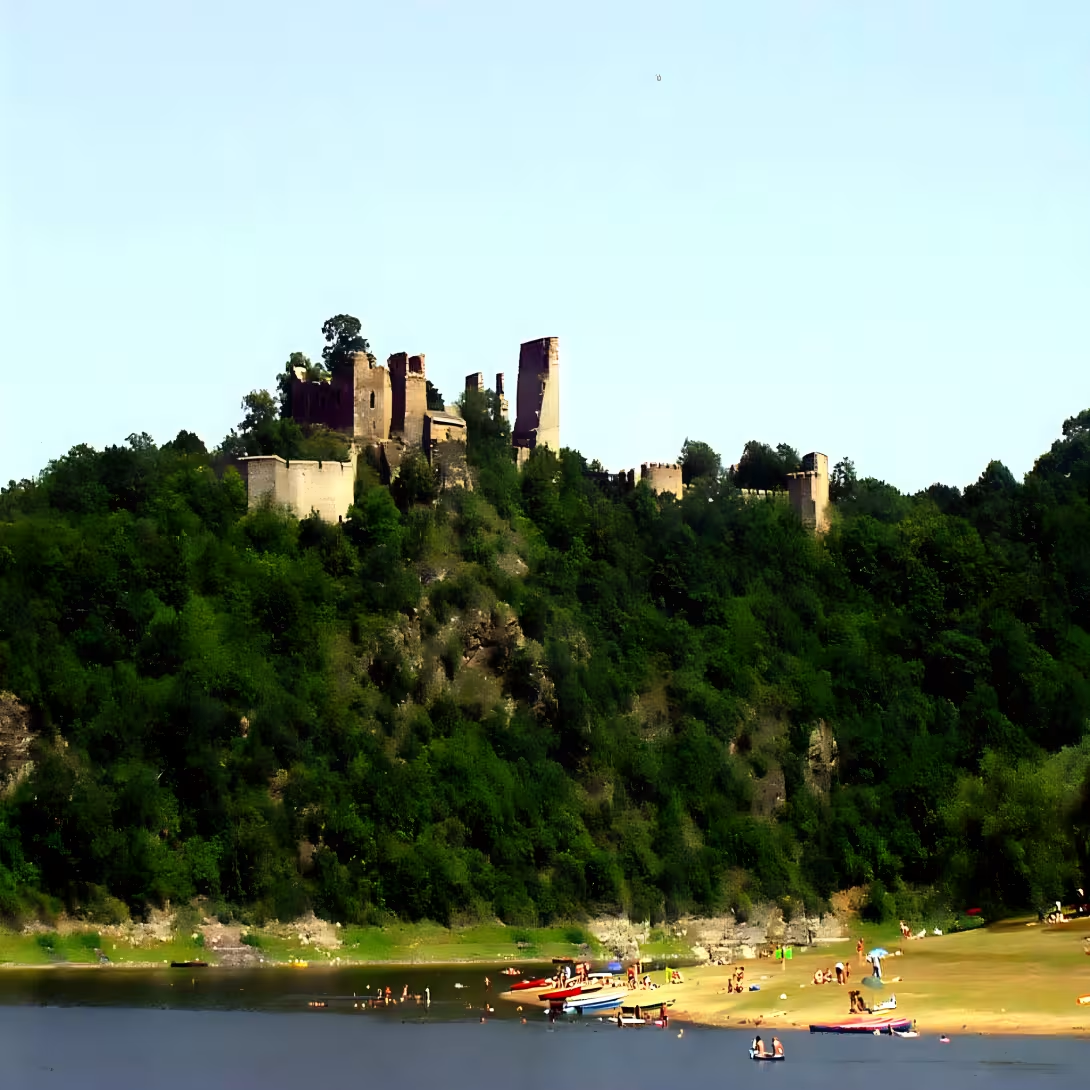
Cornštejn Castle, known in German as Zornstein, is a captivating medieval ruin located near Bítov in southwest Moravia, Czech Republic. Perched on a rocky promontory by the Dyje River, this historical site was constructed around 1420 with royal consent to bolster the defense of nearby Bítov Castle and serve as a residence for the Lichtenburg family. Recognized as a cultural monument since 1973, Cornštejn is celebrated as one of southern Moravia's most romantic locations.
The origins of Cornštejn trace back to the early 14th century when it was built on royal demesne land subordinated to Bítov Castle. Raimund of Lichtenburg, a favorite of King Wenceslaus II, initiated its construction in the 1320s to enhance security along the road connecting Bítov with Vranov Castle. The first documented mention of Cornštejn dates to May 31, 1343, when Moravian Margrave Charles allowed Raimund’s sons Smil and Czenek to divide their father's demesne, including "Vethow" and "Czornstein" castles.
Architecturally, Cornštejn began as a modest Gothic noble residence with a courtyard, high enclosing wall (enceinte), and palace. Over time, it evolved into a large medieval fortress. In the latter half of the 14th century, Henry of Lichtenburg expanded its defenses by building a pre-wall around the castle, forming the Upper Bailey. The first third of the 15th century saw further development under Albrecht and John of Lichtenburg and Zornstein, who erected another palace across from the courtyard and established the Lower Ward with barracks and additional buildings, surrounded by new curtain walls, gates, and bastions.
Cornštejn's history is marked by significant events, including a notable siege in 1422 by Hussite troops. Later, between 1463-1465, Hynek of Lichtenburg resisted Holy Roman King Frederick III with papal support but was ultimately besieged for eleven months until surrendering due to starvation. Following this, the castle changed hands multiple times, reflecting its strategic importance and the turbulent political landscape.
Post-medieval status saw Cornštejn fall into ruin after the Lichtenburgs died out in 1576. Subsequent owners, including the Streuns of Schwarzenau, abandoned it, leading to further decay. The castle was nationalized post-World War II and underwent partial reconstruction by the Monument Preservation Institute in Brno during the early 1970s. Since 1987, it has been administered by the South Moravian Museum in Znojmo, with stabilization efforts completed in 1998, making it accessible to the public.
Today, Cornštejn stands as a testament to medieval fortification and architectural evolution. Its strategic location near the Dyje River, now impounded by Vranov Dam, adds to its historical allure. Visitors are drawn not only to its storied past but also to the surrounding nature reserve, which covers 18.6 hectares and offers a glimpse into the region's natural beauty.
Cornštejn Castle is more than just ruins; it is a window into the medieval era, reflecting both the grandeur and conflicts of its time. Its preservation allows us to appreciate the architectural ingenuity and historical significance that have endured through centuries. For those interested in history and architecture, Cornštejn offers an enriching experience, inviting exploration and reflection on its storied past.
Then and now
Drag the slider to compare how the landmark may have looked when it was built with the view today.
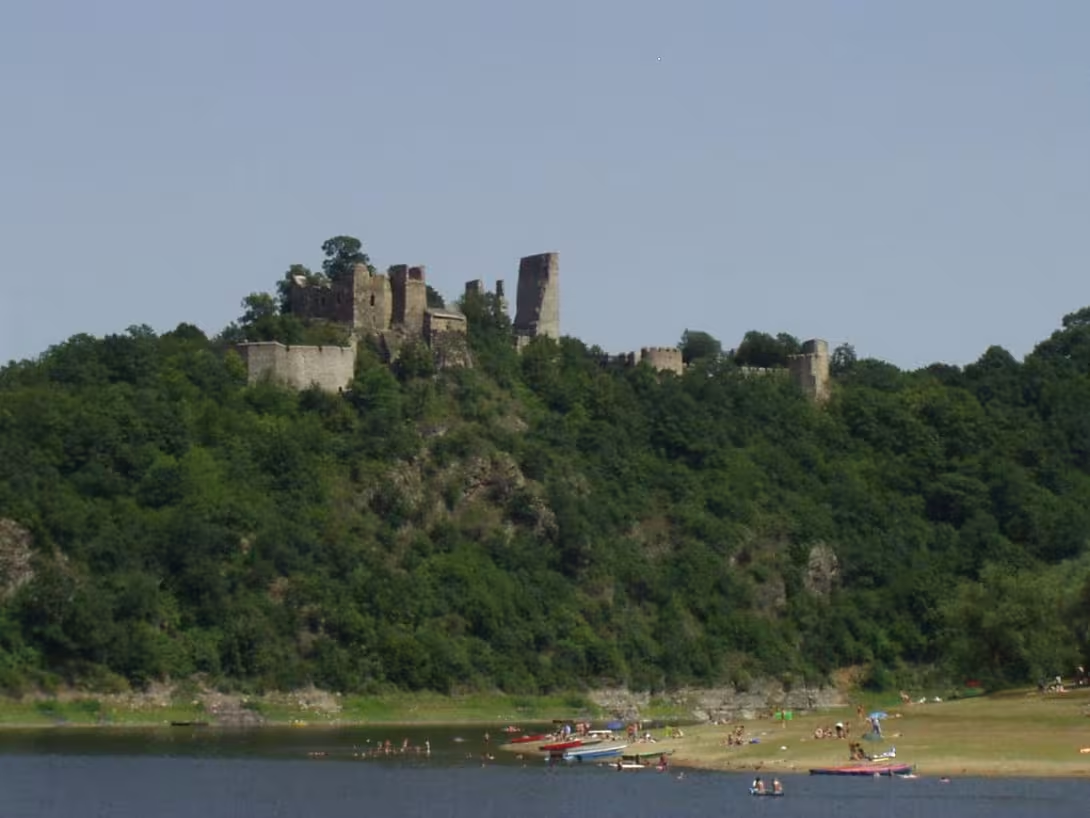

The historical appearance on the left is an AI-generated visualisation and serves as inspiration only.
Historical milestones
- 1320
- Raimund of Lichtenburg initiated construction to enhance security.
- 1343
- First documented mention of Cornštejn Castle.
- 1420
- Construction of the castle with royal consent.
- 1422
- Siege by Hussite troops.
- 1463
- Hynek of Lichtenburg resisted Holy Roman King Frederick III.
- 1576
- Lichtenburg family died out, leading to the castle's decline.
Architectural development
Originally a modest castle featuring a single-story palace and high defensive walls, Cornštejn was expanded in the late 14th century with an outer bailey. In the early 15th century, it saw further development under Jan z Lichtenburka, including a new two-story palace and fortified defenses. Post-siege renovations added another floor to the old palace and updated the chapel.
Historical events
Construction began in the early 1420s with royal approval.
The castle was unsuccessfully besieged by Hussites in 1422.
A significant siege occurred from 1463 to 1465, ending with the garrison surrendering due to starvation.
Owners
Raimund z Lichtenburka (early 14th century)
Lichtenburkové (until mid-15th century)
Krajířové z Krajku (post-confiscation)
Štrejnové ze Švarcenavy (from 1576)
Jankovští z Vlašimi (1617 onwards, marked as abandoned)
Hrabata z Daunu (1788)
Haasové z Hasenfelsu (until 1945)
State ownership post-1945
Jihomoravské muzeum (since 1987)
Points of interest
- Cornštejn Castle's name has an intriguing etymology; it is derived from the Czech word "černý," meaning black, possibly referring to its dark appearance against the landscape or a nickname for Raimund of Lichtenburg.
- A lesser-known fact about the castle involves its role in local folklore: legends tell of hidden tunnels and secret passages within Cornštejn that were supposedly used by inhabitants during sieges, adding an air of mystery to its history.
- Despite being largely abandoned post-medieval era, Cornštejn Castle played a brief but notable role in modern times as a film set. Its dramatic ruins provided the perfect backdrop for historical movies and television series, showcasing its enduring allure.
- The castle's strategic position near the Dyje River was not just for defense; it also made Cornštejn an important point of trade control during medieval times, influencing economic activities in the region.
- An unexpected feature of Cornštejn is its resilience to natural elements over centuries. Despite being a ruin, certain parts of the castle's walls and structures have remarkably withstood weathering better than others, sparking curiosity about ancient construction techniques used at the site.
Guide
This guide is narrated by a synthetic voice generated by artificial intelligence.
Show guide text
This text was created by artificial intelligence and has not been editorially reviewed. It may contain inaccuracies.
Cornštejn is a castle ruin above the Dyjí River, approximately eight kilometers northwest of Vranov nad Dyjí in the Znojmo region. The German name Zornstein combines words for anger and for a stone castle. The castle stands on a high rocky neck of a massive river peninsula, near the mouth of the Želetavka and half a kilometer from the castle Bítov. The valley below it is partly flooded by the Vranov Dam. The surrounding slopes with warmth-loving forest-steppe vegetation form a nature reserve covering eighteen point six hectares. Since nineteen seventy-three, the castle has been a cultural monument, and in two thousand eight, readers voted it the most romantic place in South Moravia in a poll.
The castle was built in the nineteen twenties by Rajmund of Lichtenburk, a powerful nobleman, with the consent of King John of Luxembourg. Cornštejn strengthened the defense of Bítov, as it guarded the route from Austria and from Vranov. At the same time, it served as an additional residence for the numerous descendants of the family. The first written mention dates from thirteen forty-three.
In the mid-fourteenth century, the Lichtenburks held the castle in a dispute with the lords of Jindřichův Hradec and Telč. In fourteen twenty-two, Hussite forces probably made an unsuccessful attempt to capture it. It experienced its greatest flourishing under John of Lichtenburk and Cornštejn. At that time, a lower outer ward was added, with reinforced gates with drawbridges and a new two-story palace. On a nearby hill called Na Baště, a timber and clay fortification was built, which was meant to prevent artillery fire on the castle from close range.
John's son Hynek refused to swear allegiance to King George of Poděbrady. With papal support, he launched an open rebellion in fourteen sixty-three. The Moravian provincial army then besieged the castle for eleven months and built three fortified camps in the area. It did not take the castle by force, and the garrison surrendered in June fourteen sixty-five due to hunger.
The castle then fell to the lords Krajíř of Krajek, who repaired and modernized it. In the saddle in front of the castle, a small fortress with artillery chambers was built. However, the Krajířs constantly quarreled with the Lichtenburks at Bítov, so the castle around fifteen thirty returned to the Lichtenburks through purchase. Because of the Turkish threat, it was fortified one last time in fifteen forty-two.
After the family died out in fifteen seventy-six, the Štrejn of Švarcenava purchased the castle and stopped maintaining it. By sixteen seventeen, it was already marked as abandoned. Later it was owned by the counts of Daun and finally by the Haas of Hasenfeld. In nineteen forty-five, the castle was nationalized, and since nineteen eighty-seven, it has been managed by the South Moravian Museum in Znojmo.
Tips for visitors
The best time to visit Cornštejn is during late spring through early autumn, specifically from May to September. During these months, the weather is generally mild, making it ideal for exploring the castle ruins and enjoying the surrounding landscape. The area around the Dyje River is particularly beautiful in this period, with lush greenery and blooming flowers enhancing the scenic views. Additionally, visiting during weekdays can help avoid larger crowds that tend to gather on weekends.
For those preferring public transit, it's advisable to check current routes and schedules through an online search engine prior to your visit.
When visiting Cornštejn, it’s recommended to bring comfortable walking shoes as the terrain around the ruins can be uneven. A hat and sunscreen are also advisable due to exposure to sunlight in open areas. Additionally, carrying a water bottle is essential, especially during warmer months, as there are limited facilities for refreshments near the site. Bringing along binoculars might enhance your experience by allowing you to observe wildlife or distant landscapes more clearly.
For photography enthusiasts, Cornštejn offers several picturesque spots, particularly at sunrise and sunset when the lighting is optimal for capturing dramatic images of the ruins against the backdrop of the Dyje River. The rocky promontory provides a unique vantage point that highlights both the historical architecture and natural beauty of the area. Early morning visits are recommended to avoid crowds and make the most of the soft, diffused light.
Nearby attractions within 30 minutes include Bítov Castle, which is an excellent site for those interested in more medieval history and architecture.
Frequently asked questions
Can the monument be visited?
This is a ruin. Such sites are often freely accessible, but some can only be visited with a guide or are closed for safety reasons. We have not verified the current situation – take care and respect any restrictions.
Where is the monument?
Location: Bítov, Jihomoravský kraj. The map on this page shows the exact spot.
Why is the monument protected?
It is listed in the Central List of Cultural Monuments of the Czech Republic as a cultural monument (register no. 44978/7-6206).
Businesses nearby
Do you run a restaurant, accommodation, shop, museum, rental, wellness or other visitor service near this monument? Show yourself directly to the people heading to it — this is how they will see you in the app and on the web:
Natáčelo se zde
- Nebojsa (1989) film
Zdroj: Wikidata (vlastnost „místo natáčení“) · Všechna filmová místa
Events nearby

Zdroj akcí: otevřená data měst a obcí ČR (Národní katalog otevřených dat) a kalendář akcí Národního památkového ústavu.
Nearby
The castle overlooks the Dyje River, near Vranov nad Dyjí, with the landscape partially submerged due to the nearby Vranov Dam. The area features protected natural reserves and is close to Bítov Castle.
Accommodation nearby
Themed route
Thematic Tour Itinerary: Cornštejn Castle and Surroundings
1. Cornštejn (Zřícenina) - Type: Historical Ruin - Why Visit: Explore the remnants of this 13th-century fortress, perched dramatically above the Dyje River. The castle offers breathtaking views of the surrounding landscape, partially submerged by the Vranov Dam, and provides a glimpse into medieval history with its well-preserved towers and walls.
2. Protected Natural Reserves near Cornštejn - Type: Nature Reserve - Why Visit: Wander through these protected areas to experience diverse flora and fauna unique to this region. The reserves are part of the picturesque landscape surrounding Cornštejn, offering serene walking paths perfect for nature enthusiasts looking to enjoy the tranquility away from urban life.
3. Bítov Castle - Type: Historical Castle - Why Visit: Located nearby, Bítov Castle offers a striking contrast with its well-maintained structure and rich history dating back to the 13th century. Explore its beautifully preserved interiors, including original furnishings and artworks, providing insight into noble life in medieval Moravia.
4. Vranov nad Dyjí - Type: Town - Why Visit: Discover Vranov nad Dyjí, a charming town known for its picturesque setting along the Dyje River. The area is famous for the nearby Vranov Dam and offers opportunities to explore local culture and history, including traditional architecture and local cuisine.
5. Dyje River - Type: Natural Waterway - Why Visit: Enjoy a leisurely walk or boat ride along the Dyje River, offering stunning views of the surrounding countryside and historical sites like Cornštejn and Bítov Castle. The river's serene flow provides a perfect backdrop for relaxation and reflection amidst nature’s beauty.
This itinerary offers a balanced mix of history, culture, and natural splendor, making it an ideal journey through the Jihomoravský kraj region.
Seasonal recommendations
Spring: Visiting Cornštejn castle ruins during spring offers a unique experience as nature begins to awaken around the ancient stones. The landscape is adorned with blooming wildflowers and fresh greenery, creating a vibrant contrast against the weathered walls of the ruin. This season provides a more tranquil atmosphere with fewer visitors compared to summer, allowing for a peaceful exploration of the site's history. It's advisable to wear comfortable walking shoes as paths can be muddy after rain showers. Early morning visits are recommended to enjoy the serene beauty and softer light that enhances the castle’s intricate details.
Summer: Summer is the peak season for visiting Cornštejn due to its warm weather, making it ideal for outdoor activities. The lush surroundings come alive with a variety of plants and wildlife, providing a picturesque backdrop for photography enthusiasts. However, this popularity means larger crowds, so arriving early in the day can help avoid the busiest times. Comfortable clothing and sun protection are essential, as the site offers little shade. Exploring during mid-morning or late afternoon provides cooler temperatures and softer lighting, perfect for appreciating the castle's grandeur.
Autumn: Autumn transforms Cornštejn into a magical setting with its rich tapestry of reds, oranges, and yellows. The changing leaves create a stunning visual spectacle that complements the historic ruin’s rugged charm. This season offers a quieter experience than summer, with fewer visitors enjoying the cooler temperatures and crisp air. It's advisable to dress in layers as mornings can be chilly, warming up during the day. Late afternoon visits are particularly enchanting when the setting sun casts warm hues over the landscape, enhancing the castle’s mystical atmosphere.
Winter: Winter at Cornštejn provides a stark yet beautiful contrast with snow-covered ruins and bare trees creating an almost ethereal scene. The quietness of this season offers a unique opportunity to reflect on history in solitude, as visitor numbers are significantly lower. However, access may be limited due to weather conditions, so checking the site’s opening status is crucial. Dress warmly in layers, including waterproof outerwear, and wear sturdy boots for potentially icy paths. Visiting during midday can offer the best light for photography, capturing the castle's dramatic silhouette against a clear winter sky.
Visualizations and artistic views


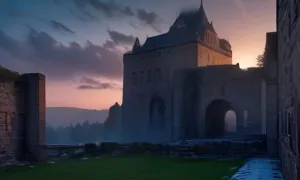
The visualisations are generated by artificial intelligence and serve as inspiration.
Photos from the area
Real photos taken near the monument

Zdroj a licence jsou uvedeny u každého snímku.
Tips from visitors
No tips yet. Be the first!
Log in and add your tip.
Sources and literature
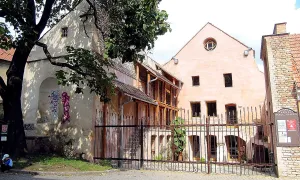
Photos: Zirland at Czech Wikipedia / CC BY-SA 3.0, rozlišení zvýšeno umělou inteligencí — Wikimedia Commons. The author and licence also appear when you hover over the image.
Faktickým podkladem tohoto textu byl článek na Wikipedii, jehož autory jsou přispěvatelé Wikipedie. Článek je dostupný pod licencí CC BY-SA 4.0.
Location on the map




Příběhy a pověsti
Legendy, pověsti a příběhy spjaté s touto památkou
Příběh: Cornštejn
Bylo to v pondělí ráno, kdy Jindřich z Cornštejna otevřel okno a vzal si nepravidelné dechy studeného víru, který se proháněl mezi kameny. Dál nahoře vypadal…
Číst příběh
Pověst: Cornštejn
Staří obyvatelé vranovského kraje vyprávějí, že název Cornštejn nevznikl náhodou. Říkají, že kdo hrad poprvé spatří za letního odpoledne, kdy se červánky odr…
Číst příběhFotografie návštěvníků
Zatím žádné fotografie. Buďte první, kdo přidá fotografii z návštěvy!
Log in a přidejte svou fotografii nebo hodnoťte.
Za ověřenou návštěvu v aplikaci získáte víc bodů — poznáme podle GPS, že jste na místě.
Reviews and comments