






Dačického náměstí 4 House
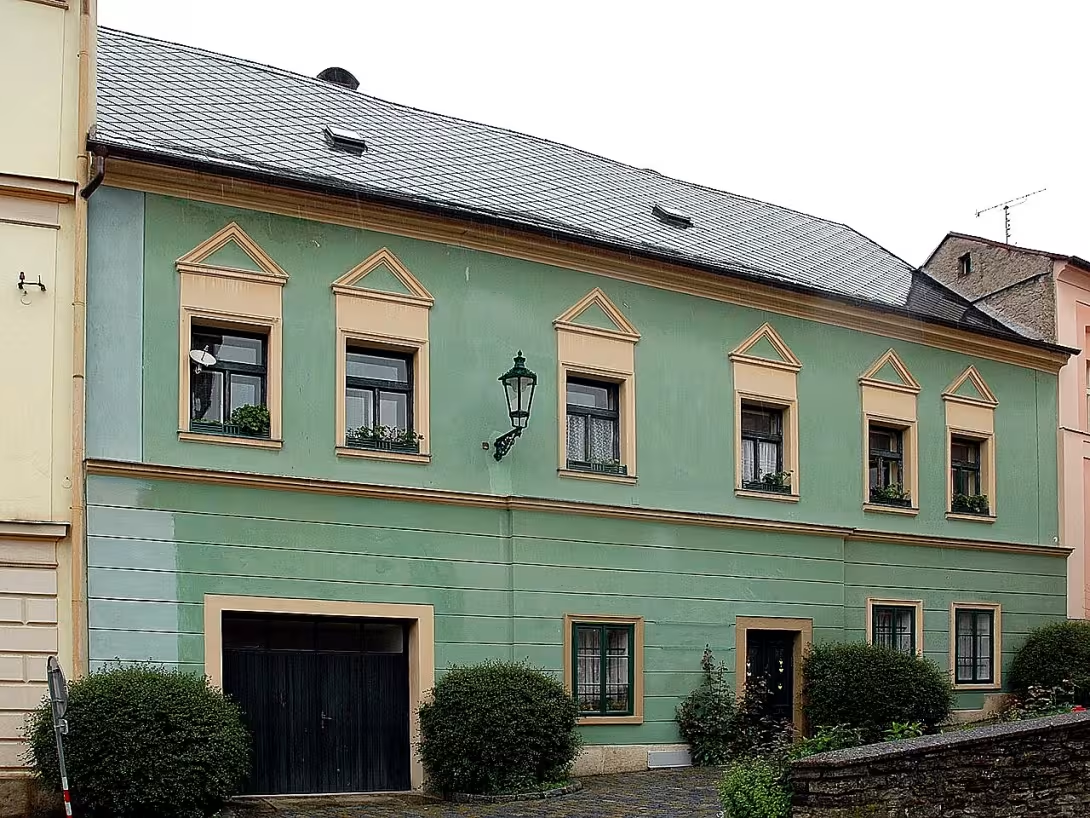
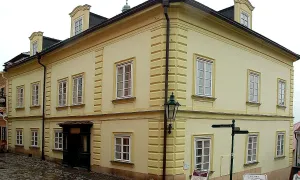
On Dačického náměstí 4 in Kutná Hora - The inner town is a townhouse that connects the medieval Gothic essence with the late Neo-Renaissance facade. It is a cultural monument with the register number SAR 44854 / 2-3172, which maintains a preserved Gothic part up to the first floor and cellar space with complicated layout. This object is an example of architectural transformation, when the original Gothic organism was transformed into a representative facade of a neo-Renaissance character in the 19th century.
House No. 18 at Dachický Square in Kutna Hora-Internal Town is a typical example of buildings that reflect the long-term history of the city. The Gothic part of the house was preserved up to the height of the first floor, suggesting its original medieval origin. The basement space, which is also of medieval origin, has a complex availability, which suggests that the house was probably part of an urban development since the Middle Ages. The Neo-Renaissance facade from the late 19th century then represents a later modification that adapted the house to the needs of the time.
The house features a combination of two significantly different styles. The Gothic part is visible in the construction of the first floor, while the facade is simply solved in the spirit of neo-Renaissance style. Sedlová roof is typical of terraced houses in the historical core of Kutná Hora. Neo-Renaissance adaptations from the 19th century brought a more representative look to the original Gothic house, which corresponded to the trends in urban architecture.
No specific information on the ownership and fate of the house is provided in the available sources. Nevertheless, it is clear that the house has undergone significant building modifications that reflect the changes of the city and its inhabitants. The Gothic organism of the building suggests that the house was built in the period of the High Middle Ages, when Kutná Hora was one of the major medieval cities with advanced craft and business activities. The Neo-Renaissance facade then points to a later adaptation of the house, which was probably associated with urban changes in the 19th century.
An interesting feature is the preserved medieval cellar with complicated disposition. In Kutná Hora, the cellars of this type were a common part of urban houses and used to store food, but also as shelters or workplaces. Their complex design often reflected the need to optimize space in the narrow and high homes of the medieval city.
Today house No. 18 at Dachický Square is part of the historical centre of Kutná Hora, which is listed on the UNESCO World Heritage List. Accessibility of the building is not public, but its existence is an important part of the city conservation. For the visitors of the city, it represents an interesting example of architectural transformation, when the medieval building turned into a representative house of modern character. This house is an example of how historical cities evolved and how their development adapted to changes in culture and social life. His visit offers an opportunity to understand the deeper layers of urban history that cannot be seen at first sight.
Historical milestones
- Supported gothic organism of the building up to the first floor.
- Renovated neo-Renaissance facade from the late 19th century.
Architectural development
The original Gothic part of the house was preserved to the first floor while the facade was modified in the late 19th century in a neo-Renaissance style. The basement space is of medieval origin with complex construction.
Points of interest
- The basement space of the house has an original medieval structure with a complex layout, typical of narrow houses from the high Middle Ages.
- The house connects the preserved Gothic section up to the height of the first floor with a later neoRenaissance facade from the 19th century.
- Sedlová roof is typical of terraced houses in the historic centre of Kutna Hora.
- The house is part of an urban conservation, even if it is not open to the public.
Guide
Show guide text
This text was created by artificial intelligence and has not been editorially reviewed. It may contain inaccuracies.
Welcome to the heart of Kutna Hora, the part called the inner city. Please stop for a moment and focus fully on the space you are currently in. You're standing in front of the house in Dachicka Square under number four. The first look at this building may tell you that this is an elegant storey house that harmoniously fits into the overall atmosphere of this historic space. Feel how past times intersect here with later times and how this house tells its story through layers of stone and plaster. Look at his face, what he offers you as a first impression, and let's try together to discover what's underneath this seemingly simple facade. When we look at the history of this place, we find that the house is a fascinating example of how architecture evolved over the centuries. This construction is not only one of a single period, but rather a layered record of time. The foundation of the house, its true core, is the so-called Gothic organism. This means that in the oldest parts of the house that reach the first floor, the elements from the Middle Ages are preserved. So imagine that by the time silver ruled in Kutna Hora and the city was one of the most important centers of the kingdom, there was already a construction that was part of the city's tissue. Gothic was a time of strength, faith and ascension, and although everything is not visible today, this old skeleton of the house still holds the whole building and reminds us of the time of craftsmen and merchants who lived and worked here centuries ago. Now please pay attention to what you see right in front of you, the exterior appearance of the house. Notice the facade that welcomes you. What you perceive is a neo-Renaissance facade from the late nineteenth century. It's a very interesting contrast. While medieval goth sleeps inside the house, from the outside the house dresses from a time when people began to return to the ideals of the Renaissance in the nineteenth century. The Neo-Renaissance style was at that time a symbol of elegance, education and a certain social status. The architects, even though we don't know their names today, wanted to give the house a new, more modern look, which would fit the style and fashion at the time. This facade thus serves as sorts of the outer mask, which protects the older core of the house while giving it a representative character. Look at the line of the house, its rhythm and the way it ranks next to other buildings in the square. It's a beautiful proof of how the city adapted to its new trends without completely deleting its past. Now let's think about what we can't see at first sight. That's where the biggest secret of this house lies. Under your feet, deep in the earth, there is a preserved medieval cellar. This space is one of the most valuable elements of the entire building. What's fascinating about this basement is its complicated disposition. This means that it is not a simple room, but a complex system of space, corridors and corners that reflects the complexity of medieval planning. At that time, cellars were used not only to store food, but often as a safe haven or craft space. Imagine the cold, the silence and the scent of an old stone that still persists in these areas. This underground part of the house is like a time capsule, which remained almost intact by changes that hit the upper floors. While the facade was changing according to the fashion of the nineteenth century, the cellar remained loyal to its Gothic roots. Although we do not know in historical records the specific names of the personalities who lived in this house or the names of the architects who modified it, the house itself is witnessing thousands of anonymous lives. Every rock in the foundation and every layer of plaster on the facade carries a trail of people who spent their days here. Perhaps there was a wealthy businessman who profited from the silver of Kutnohorsky or a craftsman whose work helped build this city. It is this ignorance that gives the place some charm and space for imagination. You can try to figure out what interviews were conducted in these walls, what plans were made here, and how the view from the windows to Dachicka Square changed over the centuries. Today, this house is protected as a cultural monument. This is not only a formal designation, but a promise that this architecture will be preserved for future generations. Protection as a cultural monument means that we recognise the value of this connection of the Gothic core and the neo-Renaissance appearance. It is a recognition that even a townhouse can be a historical document that tells us about changes in society, aesthetics and the techniques of the construction craft. When you look at the house, you don't just see walls, but you see layered time. From the dark and rugged Middle Ages to the blossom of urban life to the decoration of the late nineteenth century. Try to look at the whole building again. Feel the contrast between what is visible and what remains hidden. The Neo-Renaissance facade is like a greeting to the world, while the Gothic organism and complicated cellar are like intimate secrets that guard the house carefully. It's a fascinating game between visible and invisible, between new and old. It is this duality that makes the house in Dachicka Square number four such an extraordinary point on the map of the inner city. Now that you know what is behind this facade and what history in these walls is asleep, I suggest you move on slowly and explore the surrounding buildings. Kutná Hora is filled with similar hidden stories where centuries of history often hide behind modern looks. Let your curiosity guide you and note the details that others may overlook. Every house in this part of town has its own soul and its own layer of time you can reveal if you look at it with attention. Thank you for your short trip to this house. I hope this insight into the depth of architecture has helped you to feel the atmosphere of Kutna Hora more. I wish you a pleasant further walk through the city, full of new discoveries and inspiration. See you in other parts of our guide.
Tips for visitors
The best time to visit this house is in the summer months when the weather is pleasant and you can see the facade from outside without rain. It is convenient to visit him early in the morning or late in the afternoon when there are fewer tourists and you can enjoy the quieter atmosphere of the historical centre. In winter the visit is interesting thanks to the lighting and atmosphere, but some parts of the interior can be closed in winter.
This house is a typical example of architectural blending, which is best seen in sunny weather. Morning or evening is also ideal for photography, when light falls favourably and creates interesting shadows on the facade.
Parking near the house is possible on public parking lots in the centre of Kutná Hora. It is recommended to use public transport as the historical centre is often limited to cars. You can come by bus or tram to the centre and then walk, which takes only a few minutes. If you arrive by car, find the official parking lots that are marked and often located near the main sights.
The journey on foot will allow you to discover the other beauty of the city and avoid trouble finding parking places.
When visiting, wear comfortable shoes because the historic centre is full of coble pavement and stairs. It is also convenient to take a map or mobile application with navigation to help you navigate more easily. If you are planning to take photos, bring a lens with you with you with a higher resolution, because detailed facades and interiors require a high quality shot.
Comfortable shoes and map will help you avoid discomfort and ensure that you enjoy a visit without stress.
Photography is allowed in public spaces, but inside the house can vary. The best places for photos are the facade of the house and surrounding square, where there is pleasant lighting and a good capture of the historical look. It is recommended to photograph in sunny weather when light creates contrast shadows and highlights details. The inner space is better photographed in natural light to capture their original atmosphere.
The sunny afternoon or morning hours are ideal for quality images that capture the beauty of historical architecture.
There are several interesting places around the house that are worth a visit. In 30 minutes you can reach St. James Cathedral, which is one of the most important Gothic buildings in the Czech Republic. Another interesting thing is the church of St. Jacob the Elder, which is famous for its picturesque frescos. If you are interested in history, visit the Sedlecka church tomb, which is a unique monument with a rich history. If you prefer nature and pleasant walks, go to Káslav Castle, which is located in the nearby area.
These places will complement your visit and provide you with a comprehensive view of the history and culture of the region.
For families with children the visit of this house is interesting thanks to its historic atmosphere and the opportunity to explore the surrounding environment. Children can see the facade of the house and talk about the history of its walls. There are other interesting places in the area, such as the church of St. Jacob the Elder, where children can see the picturesque frescos. For a longer trip you can visit the castle Čáslav, where children will find plenty of space for movement and discovery. It is also recommended to visit local museums or interactive exhibitions which are often intended for younger visitors.
These places offer a combination of education and entertainment that is ideal for families with children.
Businesses nearby
Do you run a restaurant, accommodation, shop, museum, rental, wellness or other visitor service near this monument? Show yourself directly to the people heading to it — this is how they will see you in the app and on the web:
Nearby
V okolí se nachází historické centrum Kutné Hory s řadou dalších památek, jako je katedrála svatého Jakuba, kostel sv. Jakuba Staršího nebo Sedlecská kostelní hrobka. Do 5 km je také hrad Čáslav nebo historické jádro města Čáslav.
Accommodation nearby
Trips and activities nearby
Guided tours, tickets and activities nearby from GetYourGuide
Affiliate link: if you buy from the partner, we may receive a commission. The price for you does not change.
Search tours and activities →Themed route
Thematic cruise route in Kutna Hora
1.Dačického náměstí 4 (house) The house is a typical example of Baroque architecture from the 18th century, which was originally the seat of an important trader. He still preserved his original appearance with rich decoration and historical details that reveal life in the past.
2. St James's Cathedral The most important sacral building in Kutna Hora is a Gothic cathedral with impressive inner art. Its rich decoration and historical monuments attract a deep insight into medieval spiritual life.
3. Church of St. Jacob the Elder This Baroque church is famous for its beautiful interior and historical relics. Its architecture and decoration resemble the wealth and culture of the 17th century.
4. Seven Church Tomb The funeral ground from the 16th to 18th century is a fascinating example of historical burial art. Here lies many prominent personalities and local families who have their sights.
5. Castle Čáslav About 5 km from Kutná Hora is located the historical core of Káslav with well preserved castle complex. His remains point to significant medieval defensive structures and cultural heritage.
Visiting order: We start at Dačického náměstí 4, where we look at the house and its historical details. Then we will go to the centre of Kutná Hora to the Cathedral of St. James, where we will enjoy architecture and art. Another stop is the Church of St. Jacob the Elder, which offers other historical and artistic values. We're finally going to visit the Seven Church tomb, which is a fascinating burial ground. The end of the route is a visit to Castle Čáslav and its historical core.
Seasonal recommendations
Spring
On Dachický Square in Kutna Hora there is a spring full of vivid colors and fine flowering. The surrounding area is covered with green trees that are beginning to bloom, and the air is filled with the scent of the first flowers. The atmosphere is warm and pleasant, with mild rains that keep the soil moist for plants. The lighting is warm and natural, which makes the square rise in an amazing light when the sun returns from its winter bow.
It is advisable for a visit to come in the morning when there are fewer people. Dress in light but warm clothes because temperatures may vary during the day. Comfortable shoes are also suitable because the square is covered with stone. The best time to visit is from March to May, when the weather is most stable and nature is in full strength. However, avoid late spring days when crowds may increase.
Visualizations and artistic views


The visualisations are generated by artificial intelligence and serve as inspiration.
Photos from the area
Real photos taken near the monument


Zdroj a licence jsou uvedeny u každého snímku.
Tips from visitors
No tips yet. Be the first!
Log in and add your tip.
Sources and literature
Photos: Jindřich Nosek (NoJin) / CC BY-SA 3.0 — Wikimedia Commons. The author and licence also appear when you hover over the image.
Location on the map
More monuments – Kutná Hora-Vnitřní Město
Show all in the municipality

Příběhy a pověsti
Legendy, pověsti a příběhy spjaté s touto památkou

Fotografie návštěvníků
Zatím žádné fotografie. Buďte první, kdo přidá fotografii z návštěvy!
Log in a přidejte svou fotografii nebo hodnoťte.
Za ověřenou návštěvu v aplikaci získáte víc bodů — poznáme podle GPS, že jste na místě.
Reviews and comments