






Dänemark Archaeological site
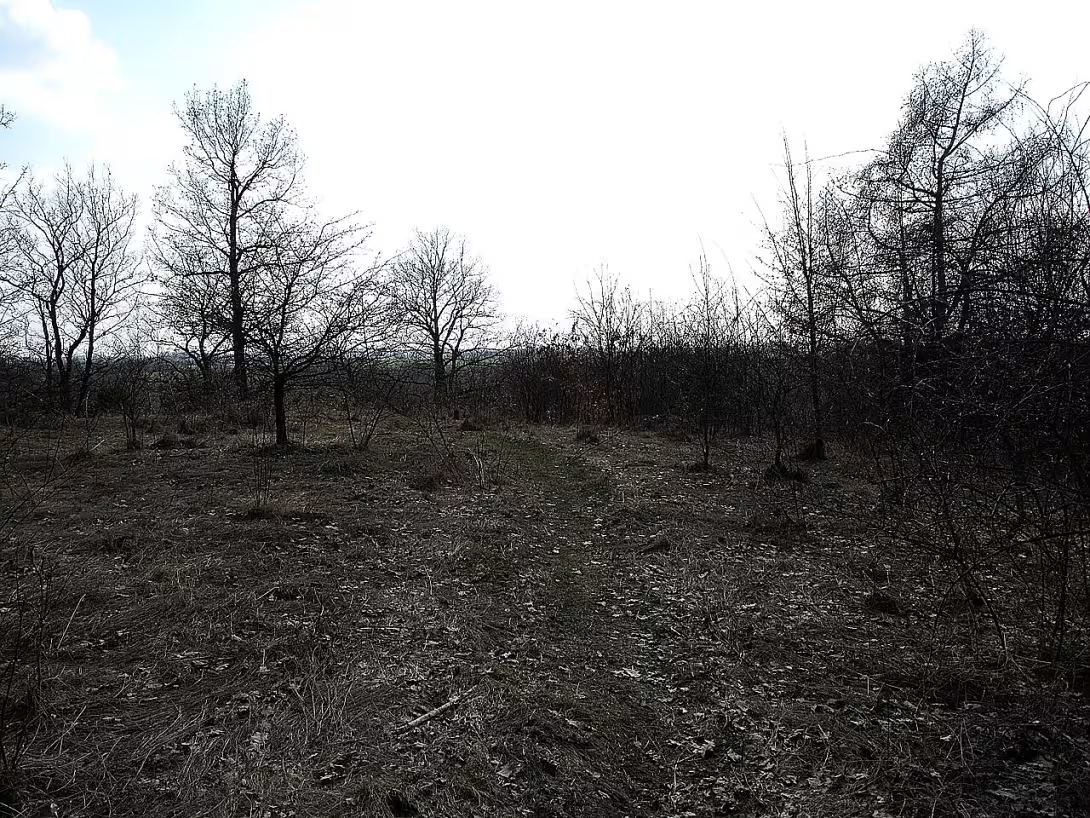
Near Kutná Hora, on the territory of Žižkova above the left bank of Vrchlice, lies the prehistoric castle Dänemark. He carries his name by the nearby mill, which was named because the Danes worked in his barn. Since 1987 it has been protected as a cultural monument. What makes this settlement special is the fact that here in the acropolis, the remains of the oldest known building from the painted wall in Czech territory - a stone-age building that lasted millennia.
The fort was built in the middle of the eneolite by members of the Jewish culture. The site has been inhabited for a long time: archaeologists have also managed to find ceramics from the bronze age belonging to the period of the Ukrainian and Shield culture. These discoveries, which were made in the 1980s by Milan and Marie Zapotský, indicate the persistence of the settlement over long periods of time.
The acropolis - the inner strength - was 60 to 20 metres and lay on narrow, sharp slopes from three sides. The north side, the only one accessible, led to a vast front. The fortification was created in two construction phases. In the first stage, the settlements were guarded by simple palisades from stakes. Inputs were cleverly solved: some of the gates formed from two six-metre pole walls perpendicular to the course of the palisade, others were formed by the interruption of the palisade with the mutual overlap of the ends, which formed a narrow entrance aisle.
In the younger phase, the defense has grown significantly. The forefront was now protected by three trenches in approximately five-metre intervals. Among the trenches were massive walls of folded facestones. The trenches were four to six metres wide; The deepest of them, excavated in the rock, overcame entry blocks or wooden bridges. The Acropolis was guarded by its own wall from various large stones. At a later stage, it was further divided by two rows of palisades separated by standing stones.
A number of residential buildings from different times were found in the front and in the acropolis. Archaeologists have unveiled post cottages four to five metres in size with inner bulkheads and furnaces, as well as deepened semi-earths. The outer space outside the forefront was also hidden by the stonemason workshop of the roving culture.
Today the visitor can imagine the power of these neolithic fortifications when he passes through Žižkov and sees the terrain relics of the waves and moats. The castle Dänemark testifies to the engineering skills of our oldest ancestors. The oldest painted building in the Czech Republic stands here as a silent testimony of the time when the first fortress in Europe was established.
Then and now
Drag the slider to compare how the landmark may have looked when it was built with the view today.
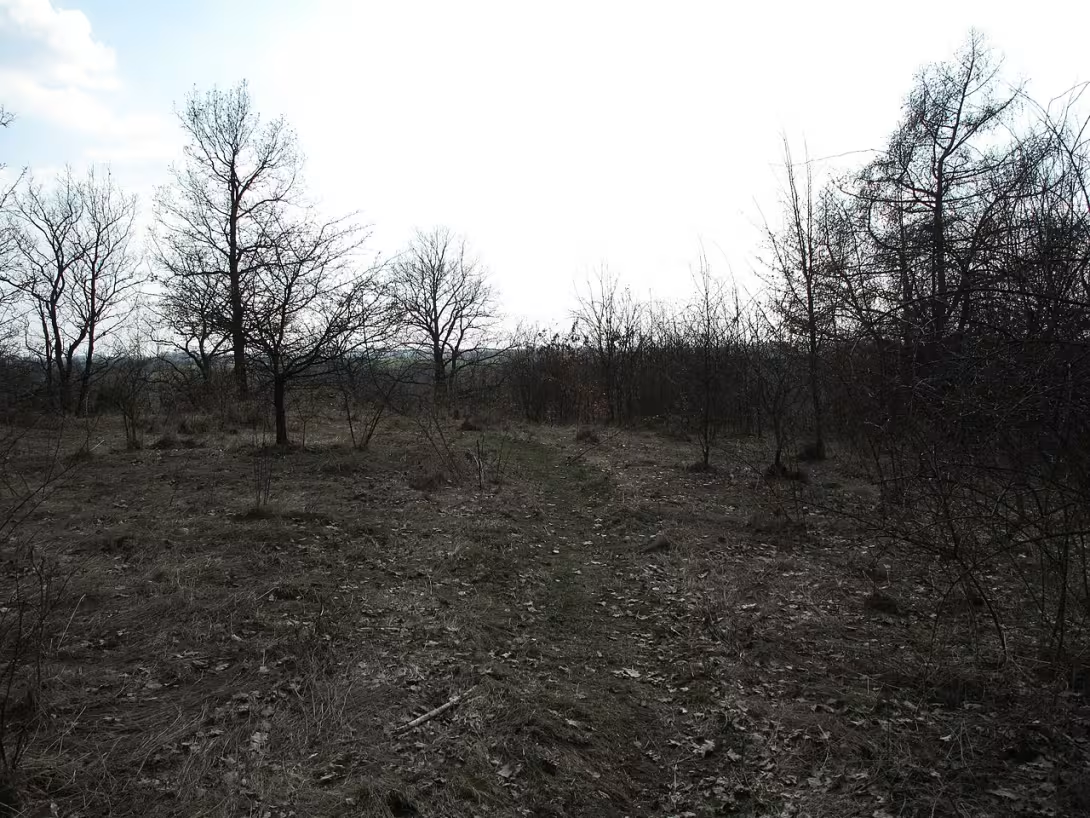
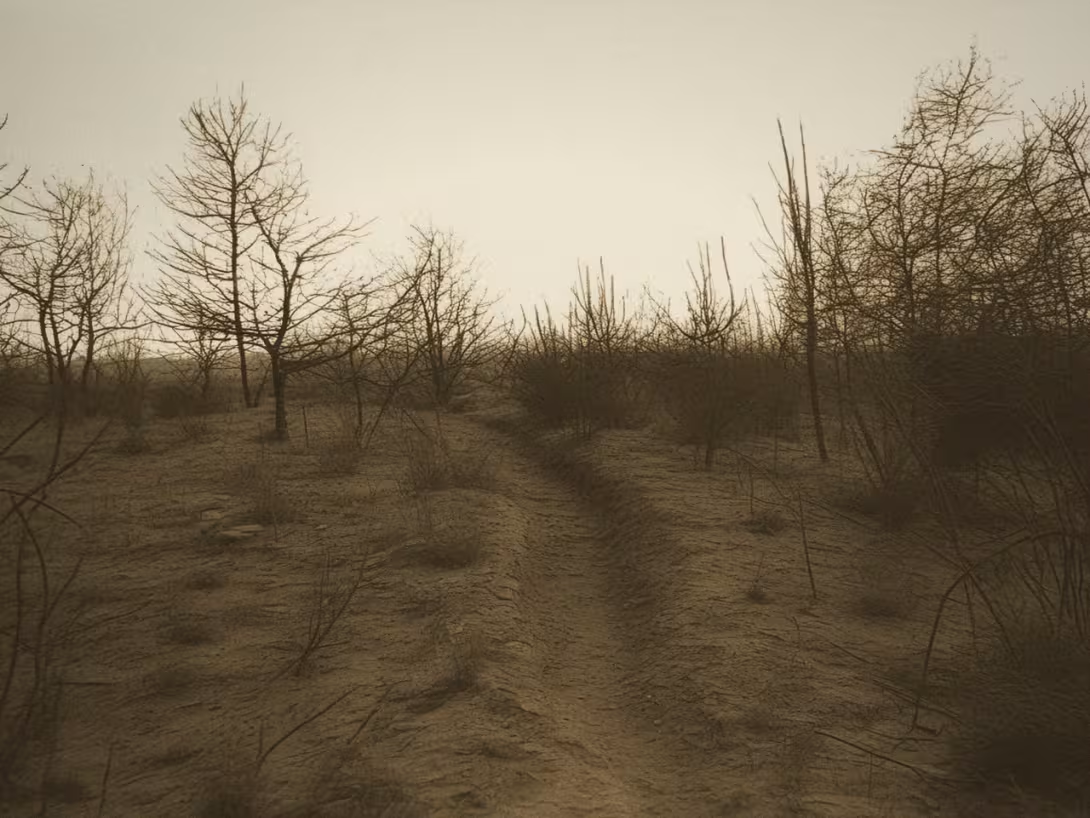
The historical appearance on the left is an AI-generated visualisation and serves as inspiration only.
Historical milestones
- None
- The oldest known building from the painted wall in Bohemia on acropolis.
- None
- A fortification with three moats and a wall supported by archaeological research.
Architectural development
The fort went through two construction phases. The original fortifications included a simple palisade, which was later significantly reinforced by a system of three moats and valiant walls. The acropolis had a wall made of the building material of folded molded stones.
Historical events
- medium eneolit
- The position of the castle members of the Roman culture.
- 20th years of the 20th century
- Archaeological research carried out by Milan Zapopocki and Maria Zapocki.
Points of interest
- The castle Dänemark is located near Kutná Hora and is protected as a cultural monument since 1987.
- The remains of the oldest known building from the painted masonry in the Czech territory, which dates from the stone age and lasted millennia, were preserved in the acropolis.
- The fort was built in the middle of the eneolite by members of the Roman culture and settled in the long term, as demonstrated by the findings of the bronze age ceramics.
- The fortification of the fort was created in two construction phases: the first with simple palisades and the second, when the defense was significantly reinforced by three moats and massive walls of folded molded stones.
- Different residential structures were discovered in the castle, including shed huts and buried semi-orchards, as well as the stonemasons' workshop of the ivory culture.
Guide
This guide is narrated by a synthetic voice generated by artificial intelligence.
Show guide text
This text was created by artificial intelligence and has not been editorially reviewed. It may contain inaccuracies.
Welcome to the historical monument Dänemark, where you are currently located in the heart of the Central Bohemia Region, specifically in the location Žižkov. In front of you is an archaeological site that witnessed thousands of years of stories and civilizations from ancient times. As you stand in this place, you feel like you've reached a time tunnel where every stone has its own history.
Dänemark is a prehistoric settlement near Kutná Hora, known for its acropolis with the oldest known remnants of the masonry building in Bohemia. This place bears traces of ancient fortifications from the age of eneolite, where there were diverse populated structures. It's like you're in front of the mysterious remnants of the past that tell about the lives of people who once lived here.
Let's look at the origin and historical context of this fascinating place. The castle Dänemark was built in middle eneolite, a period that preceded the bronze era. Although particular architects and historical personalities remain unknown, their work still amazes us. Fortification with three moats and walls were evidenced by archaeological research, which confirms the complexity and advanced techniques used by people at the time.
Now pay attention to the architecture of this place. Look up at the remains of the masonry masonry, which are the oldest known example of such construction in Bohemia. These reliefs have lasted millennia and today stand as a witness to the art and technology of our ancient past. Although the remains are extensive, every detail can tell you a story about the lives of people who once lived here.
Although specific historical personalities associated with Dänemark are not known, their work still amazes us. This archaeological site is a witness to the advanced techniques and lifestyles of people from the age of eneolite. It's like you can feel their presence when you're walking through the reliefs of waves and moats.
The interesting feature of this place is the fact that the Hradiště Dänemark is located near Kutná Hora and is protected as a cultural monument since 1987. This protection helps to preserve its historical value for future generations that can enjoy the same feelings and experiences as you do today.
Thank you for your visit to this fascinating place. I hope this guide has inspired you to further explore and curious about the history of our country. If you wish to see more places with a rich past, feel free to embark on further trips around the Central Bohemian region. When we meet in the future at another historical monument, we wish you always full of discoveries and fun!
Tips for visitors
The best time to visit the archaeological site Dänemark is in the early afternoon when the sun lights up the acropolis and increases the dramatic nature of its relics. This time also brings more moderate temperatures compared to mid-noon.
When planning a visit, remember the clothes suitable for walking on the terrain, which can be uneven. Traffic shoes and protective sunglasses are particularly useful. Don't forget the water and sun cream too.
For photo is the best place in front of the acropolis where you can look forward to impressive views from morning or evening. The sun in these hours illuminates the relict walls and ditches with beautiful light.
The surrounding archaeological site Dänemark is located Kutná Hora, which can be visited in less than 30 minutes. The city is known for its historic center and medieval monuments, making it an ideal supplement to your visit.
For families with children, the journey through the terrain of the archaeological site can be an interesting adventure. Children can look forward to discovering and finding the remains of ancient structures, which is a great opportunity for learning about ancient history.
Frequently asked questions
Can the monument be visited?
This is an archaeological site. Often there is little to see on the ground and the land may be private. We have not verified access.
Where is the monument?
Location: Žižkov, Středočeský kraj. The map on this page shows the exact spot.
Why is the monument protected?
It is listed in the Central List of Cultural Monuments of the Czech Republic as a cultural monument (register no. 36313/2-3549).
For kids
Hi! Imagine a world where people lived in fur clothes and walked on forest paths looking for food and protecting themselves from wild creatures. It's like an adventure full of secrets and hiding! It is in this world that you will find the castle Dänemark near Kutná Hora, where ancient times rise from the depths of history.
Businesses nearby
Do you run a restaurant, accommodation, shop, museum, rental, wellness or other visitor service near this monument? Show yourself directly to the people heading to it — this is how they will see you in the app and on the web:
Nearby
ITEX Show interactive overview of the surroundings - restaurants, accommodation, rentals and other places within a 15 km radius.
Data: OpenStreetMap contributors, 15 km radius.
‡ Historical monuments
- Cimburk (0.5 km)
- GASK (2.1 km - Barborská 51)
- Czech Silver Museum (2.3 km)
- Platoon of the Virgin Mary Immaculate (2.5 km)
- Kostnice in Sedlce (Ossuary) (4.5 km - Castle 284)
- Jan Žizka z Trocnova (10.3 km)
- TGM (11.0 km)
- J.A. Komenské (11.3 km)
Restaurant and catering
- Restaurant On Valek (2.3 km - Husova 16)
- Café on Goat Plack (2.4 km - Dachický Square 10)
- Blues café (2.4 km)
- New Beijing Restaurant (2.5 km - Czech 250 / 22)
- Restaurant & Café Harmonia (2.5 km - Husova 104 / 9)
- Prince Schwarzenberg Inn U Golden Iva (4.3 km)
- Bar Antique (4.4 km - Castle 20)
- Skalka (6.3 km)
Accommodation
- Vista Apartments (1.9 km - Kremnický 43 / 13)
- Elim (2.5 km)
- Golden Stoupa (2.6 km)
- Hotel Copper
- Hotel Anna (2.7 km)
- Hotel U Kata (2.8 km)
- Barbora Kemp (2.9 km - Tyršova 988)
- Hotel Creta (3.2 km)
› Rental and sports
- Tennis Club (1.6 km)
- SKP Olympia (2.2 km)
- TJ Sparta Kutná Hora (2.4 km)
- Kutnomountain flotation (2.7 km)
- Hala BIOS (2.7 km)
- Sokol Kutná Hora (2.7 km)
- Sparta Kutná Hora a.s. (3.5 km)
- KOLINOKRÁM (10.2 km - Havlickova 261)
© Tourism and nature
- Spring of St. Vojtěs (2.3 km)
- Kutná Hora - Palacky square (2.6 km)
- Na Rose (2.7 km)
- Ratbor - churches (8.6 km)
- Vandroving Podlipansk (8.7 km)
- Pashinka (8.9 km)
- Poleps (9.1 km)
- Kolín (crossroads on the Polepská stream) (9.6 km)
Accommodation nearby
Trips and activities nearby
Guided tours, tickets and activities nearby from GetYourGuide
Affiliate link: if you buy from the partner, we may receive a commission. The price for you does not change.
Search tours and activities →Themed route
Thematic cruise route: Dänemark (archaeological site)
1. Dänemark (archaeological site) * Type: * Archaeological site * Why is it worth a visit: * This place is a unique witness to prehistoric colonial activities, where you can discover ancient artifacts and understand the life of our long-distance ancestors. It's a great way to dive into the history of the village Žižkov.
2. Church of St. Lawrence * Type: * Church * Why is it worth visiting: * This church is not only a spiritual centre but also an architectural treasure with a rich history. Its interior offers beautiful artistic elements and an excellent opportunity for understanding local spiritual life.
3. Castle Park * Type: * Park * Why is it worth a visit: * Castle Park in Žižkov offers a peaceful and pleasant walk between the greenery, which is an ideal place to relax after exploring archaeological sites. It is also a great area for family walking and relaxation.
4. Castle tank * Type: * * Why is it worth a visit: * The castle tank is the historic heart of the village where you can appreciate the architectural beauty and atmosphere of past times. It is an ideal place for photography and tours to complete your experience with this area.
This route offers you a comprehensive view of the history and nature of Žižkova, making this trip unforgettable.
Seasonal recommendations
Spring: In the spring period, the historical archaeological site Dänemark in Žižkov is revived by warm sunlight and the first flowering plants that provide a lively atmosphere. The sun illuminates ancient structures in a subtle golden tone, adding touching and beauty to the memory. Visitors should bring light clothes that are suitable for changing spring weather, and perhaps an umbrella in case of sudden rainfall. The best time to visit is in the morning or in the evening when there are fewer people and the atmosphere is quieter.
Summer: Summer brings full sun days and high frequency of visitors at the archaeological site Dänemark. The sun illuminates structures in a special light, which can bring new views of historical details. When visiting in the summer, it is important to bring a protective hat and sunflowers, because the sun can be very strong. It is recommended to arrive early in the morning or late in the evening in order to avoid a peak flood of tourists and heat.
Autumn: In autumn, the archaeological site Dänemark gains an atmosphere resembling old stories when leaves fall and create a coloured carpet around historical structures. The sunlight is less intense, which gives the memory a tone-golden touch and contributes to the peaceful concept of the place. Visitors should bring warmer clothes because of a colder day, and perhaps an umbrella for sudden autumn rainfall. The best time to visit is usually at noon when the temperature is pleasant and the crowds are less.
Winter: Winter visit of the archaeological site Dänemark offers a unique atmosphere where the ice surface and snow provide a monument to mysterious and peaceful breaths. The sunlight in winter days is softer and illuminates the structures in a special, fine light. Visitors should be well dressed with warm clothes, gloves and shoes suitable for snow conditions. The opening time of the monument is often shorter, so it is important to check the current information about the operating hours before visiting. The best time for a tour is at noon, when the temperature is softer and sunlight best illuminates the structures.
Visualizations and artistic views


The visualisations are generated by artificial intelligence and serve as inspiration.
Photos from the area
Real photos taken near the monument


Zdroj a licence jsou uvedeny u každého snímku.
Atmosphere of the place
This atmospheric visualisation of the place and period was generated by artificial intelligence. It is not real footage of the location.
Tips from visitors
No tips yet. Be the first!
Log in and add your tip.
Sources and literature
Photos: Juan de Vojníkov / CC BY-SA 3.0 — Wikimedia Commons. The author and licence also appear when you hover over the image.
Faktickým podkladem tohoto textu byl článek na Wikipedii, jehož autory jsou přispěvatelé Wikipedie. Článek je dostupný pod licencí CC BY-SA 4.0.
Location on the map

Příběhy a pověsti
Legendy, pověsti a příběhy spjaté s touto památkou
Fotografie návštěvníků
Zatím žádné fotografie. Buďte první, kdo přidá fotografii z návštěvy!
Log in a přidejte svou fotografii nebo hodnoťte.
Za ověřenou návštěvu v aplikaci získáte víc bodů — poznáme podle GPS, že jste na místě.
Reviews and comments